
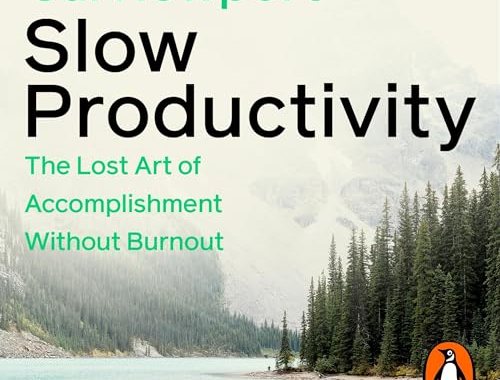
In the relentless pursuit of efficiency, modern work cultures often champion speed and quantity over depth and quality. However, Cal Newport’s “Slow Productivity” presents a compelling counter-narrative that challenges our conventional views on productivity. A transformative approach to productivity is presented, that emphasises doing fewer things, working at a natural pace, and focusing on quality rather than quantity. This philosophy encourages a shift away from the modern culture of busyness, aiming to produce more meaningful and sustainable work results.
This article delves into the foundational principles and transformative strategies Newport proposes, aimed at enhancing not only the quality of our work but also our overall well-being. By exploring how slowing down can paradoxically lead to more significant innovations, especially in technology-driven sectors, we unpack the profound implications of adopting a slower, more deliberate approach to productivity.
Key Topics & Srategies covered
“Slow Productivity” discusses several key topics and strategies aimed at enhancing work quality and efficiency by slowing down. Here are some detailed aspects covered:
- Reduction of Tasks: Newport emphasizes the importance of focusing on fewer but more important projects to reduce overhead and increase work quality.
- Natural Work Pace: Advocating for working at a pace that aligns with natural human rhythms rather than forced productivity schedules, which improves long-term output and creativity.
- Quality Over Quantity: The book pushes for prioritizing high-quality work over high-volume output, arguing that this will lead to better and more sustainable professional outcomes.
- Strategic Communication: Newport suggests replacing constant, asynchronous communication with scheduled, real-time interactions to reduce interruptions and increase meaningful collaboration.
- Investment in Tools: Advocating for spending on professional tools that streamline work and reduce unnecessary tasks, thereby focusing on important activities.
Each of these strategies is designed to combat the modern workplace’s emphasis on busyness, promoting instead a focus on meaningful and impactful work.
From a Technology Delivery perspective
From the perspective of a Chief Technology Officer driving technology innovation, the principles of “Slow Productivity” could be particularly impactful. By encouraging teams to focus deeply on fewer, high-impact projects and allowing for a natural workflow, organizations can foster an environment where creativity and innovation thrive. Implementing strategies such as prioritizing tasks, streamlining communication, and extending project timelines could help in maintaining a focus on quality. Such approaches align with the needs of technology-driven environments where the cost of rapid, unthoughtful development can be high, both in terms of resources and potential for burnout.
Conclusion
Embracing the principles of “Slow Productivity” offers a promising path for organizations and individuals alike, who are seeking sustainable ways to manage complex challenges and foster innovation. Cal Newport’s approach not only encourages a shift towards quality and meaningful work but also provides a blueprint for building resilience against the pressures of modern work environments. As we’ve explored, integrating these strategies can lead to more thoughtful, creative, and ultimately successful outcomes in the tech industry and beyond. By redefining what productivity means in the 21st century, Newport’s insights invite us to rethink how we work, prioritize, and define success.
 renierbotha ltd