
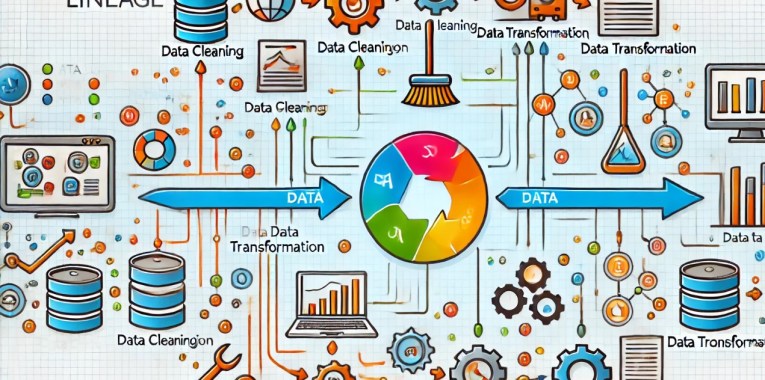
What is Data Lineage
Data lineage refers to the lifecycle of data as it travels through various processes in an information system. It is a comprehensive account or visualisation of where data originates, where it moves, and how it changes throughout its journey within an organisation. Essentially, data lineage provides a clear map or trace of the data’s journey from its source to its destination, including all the transformations it undergoes along the way.
Here are some key aspects of data lineage:
- Source of Data: Data lineage begins by identifying the source of the data, whether it’s from internal databases, external data sources, or real-time data streams.
- Data Transformations: It records each process or transformation the data undergoes, such as data cleansing, aggregation, and merging. This helps in understanding how the data is manipulated and refined.
- Data Movement: The path that data takes through different systems and processes is meticulously traced. This includes its movement across databases, servers, and applications within an organisation.
- Final Destination: Data lineage includes tracking the data to its final destination, which might be a data warehouse, report, or any other endpoint where the data is stored or utilised.
Importance of Data Lineage
Data lineage is crucial for several reasons:
- Transparency and Trust: It helps build confidence in data quality and accuracy by providing transparency on how data is handled and transformed.
- Compliance and Auditing: Many industries are subject to stringent regulatory requirements concerning data handling, privacy, and reporting. Data lineage allows for compliance tracking and simplifies the auditing process by providing a clear trace of data handling practices.
- Error Tracking and Correction: By understanding how data flows through systems, it becomes easier to identify the source of errors or discrepancies and correct them, thereby improving overall data quality.
- Impact Analysis: Data lineage is essential for impact analysis, enabling organisations to assess the potential effects of changes in data sources or processing algorithms on downstream systems and processes.
- Data Governance: Effective data governance relies on clear data lineage to enforce policies and rules regarding data access, usage, and security.
Tooling
Data lineage tools are essential for tracking the flow of data through various systems and transformations, providing transparency and facilitating better data management practices. Here’s a list of popular technology tools that can be used for data lineage:
- Informatica: A leader in data integration, Informatica offers powerful tools for managing data lineage, particularly with its Enterprise Data Catalogue, which helps organisations to discover and inventory data assets across the system.
- IBM InfoSphere Information Governance Catalogue: IBM’s solution provides extensive features for data governance, including data lineage. It helps users understand data origin, usage, and transformation within their enterprise environments.
- Talend: Talend’s Data Fabric includes data lineage capabilities that help map and visualise the flow of data through different systems, helping with compliance, data governance, and data quality management.
- Collibra: Collibra is known for its data governance and catalogue software that supports data lineage visualisation to manage compliance, data quality, and data usage across the organisation.
- Apache Atlas: Part of the Hadoop ecosystem, Apache Atlas provides open-source tools for metadata management and data governance, including data lineage for complex data environments.
- Alation: Alation offers a data catalogue tool that includes data lineage features, providing insights into data origin, context, and usage, which is beneficial for data governance and compliance.
- MANTA: MANTA focuses specifically on data lineage and provides visualisation tools that help organisations map out and understand their data flows and transformations.
- erwin Data Intelligence: erwin provides robust data modelling and metadata management solutions, including data lineage tools to help organisations understand the flow of data within their IT ecosystems.
- Microsoft Purview: This is a unified data governance service that helps manage and govern on-premises, multi-cloud, and software-as-a-service (SaaS) data. It includes automated data discovery, sensitivity classification, access controls and end-to-end data lineage.
- Google Cloud Data Catalogue: A fully managed and scalable metadata management service that allows organisations to quickly discover, manage, and understand their Google Cloud data assets. It includes data lineage capabilities to visualise relationships and data flows.
These tools cater to a variety of needs, from large enterprises to more specific requirements like compliance and data quality management. They can help organisations ensure that their data handling practices are transparent, efficient, and compliant with relevant regulations.
In summary, data lineage acts as a critical component of data management and governance frameworks, providing a clear and accountable method of tracking data from its origin through all its transformations and uses. This tracking is indispensable for maintaining the integrity, reliability, and trustworthiness of data in complex information systems.
 renierbotha ltd