
Ethics in Data and AI Management: A Detailed Article

As organisations collect more data and embed artificial intelligence into decision-making, the ethical implications become unavoidable. Ethical data and AI management is no longer a “nice to have”, it is a foundational requirement for trust, regulatory compliance, and long-term sustainability. This article explores the principles, challenges, and practical frameworks for managing data and AI responsibly.

1. Why Ethics in Data & AI Matters

AI systems increasingly influence everyday life – loan approvals, medical diagnostics, hiring, policing, education, marketing, and more. Without ethical oversight:

  • Bias amplifies discrimination.
  • Data can be misused or leaked.
  • Automated decisions can harm individuals and communities.
  • Organisations face reputational and legal risk.

Ethical management ensures AI systems serve people, not exploit them.

2. Core Principles of Ethical Data & AI Management

2.1 Transparency

AI systems should be understandable. Users deserve to know:

  • When AI is being used,
  • What data it consumes,
  • How decisions are made (in broad terms),
  • What recourse exists when decisions are disputed.

2.2 Fairness & Bias Mitigation

AI models learn patterns from historical data, meaning:

  • Biased data → biased outcomes
  • Underrepresented groups → inaccurate predictions

Fairness practices include:

  • Bias testing before deployment,
  • Diverse training datasets,
  • Human review for high-impact decisions.

2.3 Privacy & Data Protection

Ethical data management aligns with regulations (GDPR, POPIA, HIPAA, and others). Core obligations include:

  • Minimising data collection,
  • Anonymising where possible,
  • Strict access controls,
  • Retention and deletion schedules,
  • Clear consent for data use.

2.4 Accountability

A human must always be responsible for the outcomes of an AI system.
Key elements:

  • Documented decision logs,
  • Clear chain of responsibility,
  • Impact assessments before deployment.

2.5 Security

AI models and datasets should be protected from:

  • Data breaches,
  • Model theft,
  • Adversarial attacks (inputs designed to trick AI),
  • Internal misuse.

Security frameworks should be embedded from design to deployment.

2.6 Human-Centric Design

AI must augment—not replace—human judgment in critical domains (healthcare, justice systems, finance).
Ethical AI preserves:

  • Human dignity,
  • Autonomy,
  • The ability to contest machine decisions.

3. Ethical Risks Across the AI Lifecycle

3.1 Data Collection

Risks:

  • Collecting unnecessary personal information.
  • Hidden surveillance.
  • Data gathered without consent.
  • Data sourced from unethical or unverified origins.

Mitigation:

  • Explicit consent,
  • Data minimisation,
  • Clear purpose specification,
  • Vendor due diligence.

3.2 Data Preparation

Risks:

  • Hidden bias,
  • Wrong labels,
  • Inclusion of sensitive attributes (race, religion, etc.),
  • Poor data quality.

Mitigation:

  • Bias audits,
  • Diverse annotation teams,
  • Removing/obfuscating sensitive fields,
  • Rigorous cleaning and validation.

3.3 Model Training

Risks:

  • Propagation of historical inequities,
  • Black-box models with low transparency,
  • Overfitting leading to unreliable outcomes.

Mitigation:

  • Explainable AI models where possible,
  • Bias correction algorithms,
  • Continuous evaluation.

3.4 Deployment

Risks:

  • Misuse beyond original purpose,
  • Lack of monitoring,
  • Opaque automated decision-making.

Mitigation:

  • Usage policies,
  • Monitoring dashboards,
  • Human-in-the-loop review for critical decisions.

3.5 Monitoring & Maintenance

Risks:

  • Model drift (performance decays as conditions change),
  • New biases introduced as populations shift,
  • Adversarial exploitation.

Mitigation:

  • Regular retraining,
  • Ongoing compliance checks,
  • Ethical review committees.

4. Governance Structures for Ethical AI

4.1 AI Ethics Committees

Cross-functional groups providing oversight:

  • Data scientists,
  • Legal teams,
  • Business stakeholders,
  • Ethics officers,
  • Community/consumer representatives (where applicable).

4.2 Policy Frameworks

Organisations should adopt:

  • A Responsible AI Policy,
  • Data governance policies,
  • Consent and privacy frameworks,
  • Security and breach-response guidelines.

4.3 Auditing & Compliance

Regular audits ensure:

  • Traceability,
  • Fairness testing,
  • Documentation of model decisions,
  • Risk registers with mitigation steps.

4.4 Education & Upskilling

Training teams on:

  • Bias detection,
  • Data privacy laws,
  • Ethical design practices,
  • Risk management.

5. Real-World Examples

Example 1: Biased Hiring Algorithms

A major tech company’s automated CV-screening tool downgraded CVs from women because historical data reflected a male-dominated workforce.

Lessons: Models reflect society unless actively corrected.

Example 2: Predictive Policing

AI crime-prediction tools disproportionately targeted minority communities due to biased arrest data.

Lessons: Historical inequities must not guide future decisions.

Example 3: Health Prediction Algorithms

Medical AI underestimated illness severity in certain groups because algorithmic proxies (such as healthcare spending) did not accurately reflect need.

Lessons: Choosing the wrong variable can introduce systemic harm.

6. The Future of Ethical Data & AI

6.1 Regulation Will Intensify

Governments worldwide are introducing:

  • AI safety laws,
  • Algorithmic transparency acts,
  • Data sovereignty requirements.

Organisations that proactively implement ethics frameworks will adapt more easily.

6.2 Explainability Will Become Standard

As AI is embedded into critical systems, regulators will demand:

  • Clear logic,
  • Confidence scores,
  • Decision pathways.

6.3 User-Centric Data Ownership

Emerging trends include:

  • Personal data vaults,
  • User-controlled consent dashboards,
  • Zero-party data.

6.4 AI Sustainability

Ethics also includes environmental impact:

  • Model training consumes enormous energy,
  • Ethical AI optimises computation,
  • Encourages efficient architectures.

7. Conclusion

Ethical data and AI management is not just about avoiding legal consequences—it is about building systems that society can trust. By embedding transparency, fairness, privacy, and accountability throughout the AI lifecycle, organisations can deliver innovative solutions responsibly.

Ethics is no longer optional – it is a core part of building intelligent, human-aligned technology.

Strategic Steps for Implementing Generative AI in Your Enterprise

Generative AI (GenAI) has rapidly become a focal point of technological innovation, capturing the attention of enterprises across the globe. While the majority of organisations are still exploring the potential of AI, a select few have already mastered its deployment across various business units, achieving remarkable success. According to Gartner, these AI-savvy organisations represent just 10% of those currently experimenting with AI. However, their experiences provide invaluable insights for those looking to harness GenAI’s power effectively. This blog post outlines a strategic four-step approach to help enterprises implement GenAI in a manner that is both valuable and feasible.

1. Establish Your Vision for GenAI

The foundation of any successful GenAI implementation is a clear and strategic vision. Begin by defining how GenAI will contribute to your enterprise’s overarching goals. Consider the specific benefits you expect GenAI to deliver and how these will be measured. A well-articulated vision aligns your GenAI initiatives with your enterprise’s mission, ensuring that AI efforts are purposeful and integrated into broader business strategies.

For example, if your enterprise aims to enhance customer satisfaction, GenAI can play a crucial role by enabling advanced customer behaviour analytics or deploying virtual customer assistants. By linking GenAI objectives directly to enterprise goals, you foster organisation-wide fluency and pave the way for innovation that yields measurable returns.

2. Remove Barriers to Capturing Value

Once the vision is established, it’s essential to identify and eliminate any organisational barriers that could impede the realisation of GenAI’s potential. These barriers may include regulatory challenges, reputational risks, or competency gaps. Addressing these issues early on is crucial to maximising the value of your GenAI initiatives.

Strategic concerns, such as aligning AI projects with corporate goals, should be documented and addressed through a portfolio approach to AI opportunities. Metrics that serve as proxies for financial and risk outcomes should be selected to provide credibility and guide project maturity. Establishing formal accountability structures, such as a RACI (Responsible, Accountable, Consulted, and Informed) matrix, can further bolster AI results by clarifying roles and responsibilities throughout the AI strategy development and execution process.

By proactively addressing these barriers, you not only mitigate potential risks but also ensure that your GenAI initiatives are aligned with your organisation’s broader goals, increasing the likelihood of success.

3. Assess and Mitigate Risks

Implementing GenAI introduces a unique set of risks that need to be carefully assessed and mitigated. These risks can be broadly categorised into regulatory, reputational, and competency-related concerns. Each of these carries its own set of challenges:

  • Regulatory Risks: As AI technologies evolve, so too does the regulatory landscape. It is critical to stay informed about relevant regulations and ensure that your GenAI projects comply with these requirements. Establishing a collaborative framework between AI practitioners and legal, risk, and security teams can help evaluate the feasibility of AI use cases while maintaining compliance.
  • Reputational Risks: AI systems can be vulnerable to both intentional and unintentional misuse, potentially harming your organisation’s reputation. Implementing robust security measures across your enterprise, ensuring data integrity, and continuously monitoring AI models can help safeguard against these risks.
  • Competency Risks: The rapid pace of AI innovation can create a gap between your organisation’s current technical capabilities and what is required to effectively deploy GenAI. To bridge this gap, align your AI strategy with your cloud strategy, modernise data and analytics infrastructures, and consider creating programmes that foster incremental innovation and reduce technical debt.

By systematically identifying and addressing these risks, you can protect your organisation from potential setbacks and ensure that your GenAI initiatives are both safe and effective.

4. Prioritise Adoption Based on Value and Feasibility

Not all GenAI initiatives are created equal. To maximise the impact of your AI strategy, it is crucial to prioritise projects that offer the greatest value and are most feasible to implement. Begin by evaluating each potential project against a set of criteria, such as technical feasibility, alignment with your organisation’s mission, and the availability of necessary skills and resources.

Rate each project on its feasibility and value, and use these scores to rank initiatives. Projects that score high on both scales are ideal candidates for immediate pursuit, as they are likely to deliver significant business value with a reasonable chance of success. Conversely, projects with low feasibility, despite their potential value, may need to be reconsidered or postponed until the necessary conditions are in place.

By taking a methodical approach to prioritisation, you can ensure that your resources are directed towards the most promising GenAI initiatives, leading to more effective and impactful AI adoption.

Conclusion: A Strategic Approach to GenAI Implementation

Successfully implementing Generative AI in your enterprise requires more than just technical expertise—it demands a strategic approach that aligns AI initiatives with your business goals, removes barriers to value capture, mitigates risks, and prioritises projects based on their potential impact. By following the four steps outlined in this guide—establishing a clear vision, removing obstacles, assessing risks, and prioritising initiatives—you can set the stage for a GenAI strategy that drives real, measurable benefits for your organisation.

As with any transformative technology, the key to success lies in careful planning and execution. By learning from the experiences of AI pioneers and applying these best practices, your enterprise can navigate the complexities of GenAI adoption and unlock its full potential to drive innovation and growth.

Harnessing the Power of Generative AI: A Blueprint for Business Success

For businesses to stay relevant and ahead of the competition requires embracing cutting-edge technologies. One such transformative technology is generative AI. This blog post delves into how generative AI can revolutionise business operations, enhance creativity, and foster innovation. By establishing an AI Centre of Excellence, companies can effectively integrate AI into their workflows, empowering employees and driving efficiency. Whether you’re a large enterprise or a nimble start-up, this guide provides valuable insights into harnessing the power of generative AI to propel your business into the future. Join us as we explore the potential of AI and its impact on the modern workplace.

The Potential of Generative AI

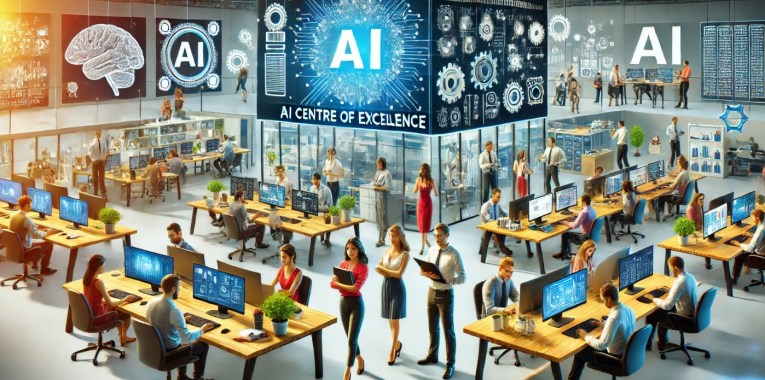
Generative AI, when harnessed correctly, has the power to revolutionise the way companies operate, innovate, and compete. The key to unlocking this potential lies in establishing an AI Centre of Excellence (CoE) that integrates IT with learning and development to meet business needs.

Establishing an AI Centre of Excellence

An AI Centre of Excellence is not exclusive to large enterprises; even smaller companies can set one up. In fact, smaller businesses can be more agile and flexible, enabling them to outpace larger competitors in AI adoption. The CoE requires a two-pronged approach: learning from external best practices and understanding internal AI usage.

Learning from Generative AI Best Practices

Look Outward: The first step is to observe how other companies have successfully integrated AI into their operations. These companies serve as valuable case studies, showcasing both successes and challenges. For example, some companies use AI for creative content generation in marketing, while others apply it to predict customer behaviour in sales. By studying these practices, businesses can formulate a unified AI strategy.

Look Inward: The second step is an internal audit to understand how employees are currently using generative AI. This can reveal unexpected insights and areas for improvement. Encouraging employees to share their AI experiences fosters a culture of innovation and makes AI integration a company-wide effort.

Overcoming Integration Challenges

Many companies face challenges when integrating AI into their workflows. However, initial evidence suggests that AI can boost individual productivity by 20% to 70%, with output quality often surpassing non-AI-assisted tasks. This highlights AI’s potential as a personal productivity tool, especially when used by experts in their fields.

Despite this, AI currently enhances individual productivity more than organisational productivity. As noted by Ethan Mollick from the Wharton School, AI can be unpredictable and error-prone, making it difficult to scale across an organisation. However, recognising AI’s potential as a personal productivity tool and leveraging it within your organisation can empower employees and improve efficiency. As AI technology evolves, it will become more reliable and scalable, eventually enhancing overall organisational productivity.

Key Principles for a Successful AI Centre of Excellence

Once a company has gathered the necessary information, the next step is to establish an AI Centre of Excellence. This centre should be co-led by teams from IT and HR, combining technical expertise with a focus on learning and development. The CoE serves as a hub for AI-related activities, providing guidance, setting best practices, and ensuring alignment across departments.

To ensure success, the AI Centre of Excellence should adhere to the following guiding principles:

  1. Clear Vision and Mission: Define the strategic objectives of the CoE and align them with the overall business strategy. For example, if the goal is to leverage AI for content creation, the mission could be to develop and implement best practices in this area.
  2. Foster Collaboration and Communication: Act as a bridge between departments, facilitating the sharing of knowledge and best practices. For instance, insights from the marketing team’s use of AI can benefit other departments through the CoE.
  3. Focus on Continuous Improvement: Regularly review and refine processes to remain effective and relevant. Stay updated with the latest AI technologies and incorporate them into the company’s practices.
  4. Promote a Culture of Learning and Development: Provide training and resources to enhance employees’ AI skills and knowledge. Offer workshops on using generative AI tools and resources for self-learning.

Serving Business Operations Through an AI Centre of Excellence

The ultimate goal of establishing an AI Centre of Excellence is to enhance business operations. Generative AI can streamline processes, improve efficiency, and drive innovation. By learning from others, understanding internal usage, and centralising AI initiatives, companies can harness AI’s potential and transform their operations.

The CoE plays a crucial role in this transformation, guiding the integration of AI into business operations. Whether it’s automating routine tasks, generating creative content, or predicting market trends, the CoE ensures these initiatives align with strategic objectives and best practices.

For example, to streamline customer service operations with AI, the CoE could develop a roadmap, identify the best AI tools, train staff, and set up a system for monitoring and improvement.

Moreover, the CoE fosters a culture of continuous learning and innovation, keeping the company up-to-date with AI advancements, encouraging exploration of new AI applications, and promoting experimentation and risk-taking.

Conclusion: GenAI – A Path to Growth and Success

The journey towards effective use of generative AI may seem daunting, but with the right approach, it can lead to unprecedented growth and success. Embrace the potential of AI, establish your Centre of Excellence, and watch as AI propels your business into the future.

Remember, the future of business lies in not just adopting new technologies, but understanding, integrating, and using them to drive operational excellence. Let the Centre of Excellence be your guide on this journey towards a future powered by generative AI.

Are you ready to unlock the full potential of generative AI and transform your business operations? At renierbotha Ltd, we specialise in helping companies of all sizes establish AI Centres of Excellence, ensuring seamless integration of AI technologies into your workflow. Our team of experts is dedicated to providing tailored solutions that drive innovation, enhance efficiency, and give you a competitive edge.

Get in touch with renierbotha Ltd today to start your journey towards a future powered by generative AI. Contact us directly to learn more about how we can support your AI initiatives and help your business thrive in the modern landscape.

Harnessing the Power of Artificial Intelligence and Machine Learning

Day 1 of Renier Botha’s 10-Day Blog Series on Navigating the Future: The Evolving Role of the CTO

Artificial Intelligence (AI) and Machine Learning (ML) have swiftly transitioned from futuristic concepts to fundamental components of modern business strategy. These technologies are revolutionizing industries by enhancing business processes and significantly improving customer experiences. For Chief Technology Officers (CTOs), understanding and leveraging AI and ML is essential to gaining a competitive edge in today’s fast-paced market.

The Transformative Power of AI and ML

AI and ML are not just buzzwords, they are transformative technologies that are reshaping industries. According to Sundar Pichai, CEO of Alphabet Inc., “AI is probably the most important thing humanity has ever worked on. I think of it as something more profound than electricity or fire.”

Enhancing Business Processes

AI and ML enhance business processes by automating repetitive tasks, improving decision-making, and enabling predictive analytics. For example, in manufacturing, AI-powered predictive maintenance systems can anticipate equipment failures before they occur, reducing downtime and saving costs. General Electric (GE) has implemented AI-driven predictive maintenance in its industrial operations, resulting in a 20% reduction in maintenance costs.

In the finance sector, AI algorithms analyze vast amounts of data to detect fraudulent activities in real-time. JPMorgan Chase’s COiN platform uses ML to review legal documents and extract critical data points, a task that previously took thousands of hours of manual review. This automation has drastically increased efficiency and accuracy.

Improving Customer Experiences

AI and ML also play a crucial role in enhancing customer experiences. Personalization is a prime example. Companies like Amazon and Netflix use ML algorithms to analyze user behavior and preferences, providing personalized recommendations that enhance customer satisfaction and loyalty. Reed Hastings, CEO of Netflix, stated, “Machine learning is the foundation for creating a personalized experience on a global scale.”

Chatbots and virtual assistants, powered by AI, offer another way to improve customer service. These tools provide instant responses to customer inquiries, handle routine tasks, and escalate complex issues to human agents. For instance, Bank of America’s virtual assistant, Erica, helps customers with banking transactions and financial advice, improving overall customer engagement and satisfaction.

Strategies for CTOs to Leverage AI and ML

To harness the power of AI and ML effectively, CTOs need to implement strategic approaches that align with their organization’s goals.

1. Building a Data-Driven Culture

AI and ML thrive on data. CTOs must foster a data-driven culture where data is seen as a valuable asset. This involves investing in data management, data cloud platforms and associated profesional data management and analytics tools, ensuring data quality, and promoting data literacy across the organization. As DJ Patil, former U.S. Chief Data Scientist, said, “Data science is a team sport.”

2. Investing in Talent and Training

The success of AI and ML initiatives depends on skilled talent. CTOs should invest in hiring and training data scientists, AI specialists, and ML engineers. Continuous learning and development programs help keep the team updated with the latest advancements in the field.

3. Collaborating with Experts

Collaborating with AI and ML experts, whether through partnerships with tech companies, research institutions, or hiring consultants, can provide valuable insights and accelerate AI adoption. For example, Airbus partnered with Palantir Technologies to develop Skywise, a data platform that improves aircraft maintenance and operations.

4. Implementing Scalable Infrastructure

AI and ML require significant computational power. CTOs should ensure their infrastructure can scale to meet the demands of AI workloads. Cloud-based solutions like AWS, Google Cloud, and Microsoft Azure offer scalable and cost-effective platforms for AI and ML applications.

5. Focusing on Ethical AI

As AI becomes more integrated into business processes, ethical considerations become paramount. CTOs must ensure that their AI systems are transparent, fair, and accountable. Addressing biases in AI algorithms and safeguarding data privacy are critical steps in building trust with customers and stakeholders.

Real-World Examples

Healthcare

In healthcare, AI and ML are driving innovations in diagnostics and treatment. IBM’s Watson Health uses AI to analyze medical data and provide insights for cancer treatment, helping doctors make more informed decisions. The technology has shown promise in identifying patterns that human doctors might miss, potentially leading to earlier and more accurate diagnoses.

Retail

Retailers are using AI to optimize inventory management and enhance the shopping experience. Zara, the global fashion retailer, employs AI to predict fashion trends and manage stock levels, ensuring that popular items are always available while minimizing overstock. This approach has improved operational efficiency and customer satisfaction.

Transportation

In transportation, AI-powered systems are enhancing safety and efficiency. Tesla’s Autopilot uses ML to improve its self-driving capabilities, learning from millions of miles driven by Tesla vehicles. This continuous learning loop enhances the system’s ability to navigate complex driving environments and improve overall safety.

Conclusion

AI and ML are no longer optional for businesses aiming to stay competitiv -they are essential. By harnessing these technologies, CTOs can transform business processes, enhance customer experiences, and drive innovation. As Satya Nadella, CEO of Microsoft, aptly puts it, “AI is the defining technology of our time.”

For CTOs, the journey of integrating AI and ML into their organizations is both challenging and rewarding. By building a data-driven culture, investing in talent, collaborating with experts, implementing scalable infrastructure, and focusing on ethical AI, they can unlock the full potential of these transformative technologies and lead their organizations into the future.

Read more blog post on AI here : https://renierbotha.com/tag/ai/

Stay tuned as we delve deeper into these topics and more in our 10-day blog series, “Navigating the Future: A 10-Day Blog Series on the Evolving Role of the CTO” by Renier Botha.

Visit www.renierbotha.com for more insights and expert advice.

The Transformative Impact of AI in the Workplace

In just a few short years, the landscape of work as we know it has undergone a dramatic transformation, driven largely by the rapid evolution of artificial intelligence (AI). What once seemed like futuristic technology is now an integral part of our daily professional lives, reshaping industries, workflows, and job markets at an unprecedented pace. From enhancing productivity and creativity to redefining job roles and career paths, AI’s influence is profound and far-reaching. This post delves into the findings of the 2024 Work Trend Index, offering a comprehensive look at how AI is revolutionising the workplace and setting the stage for future innovations.

The 2024 Work Trend Index, released jointly by Microsoft and LinkedIn, provides an in-depth look at how AI is reshaping the workplace and the broader labor market. This comprehensive report, based on data from 31,000 individuals across 31 countries, offers valuable insights into the current state and future trajectory of AI in professional settings.

The Proliferation of AI in the Workplace

In the past year, generative AI has emerged as a transformative force, fundamentally changing how employees interact with technology. The relentless pace of work, accelerated by the pandemic, has driven employees to adopt AI tools on a significant scale. However, while leaders acknowledge AI’s critical role in maintaining competitiveness, many are still grappling with how to implement and measure its impact effectively.

Key Findings from the Work Trend Index

  1. Employee-Driven AI Adoption:
    • Widespread AI Usage: A significant 75% of knowledge workers are now integrating AI into their daily tasks.
    • Productivity Boosts: AI is helping employees save time, enhance creativity, and focus on essential work.
    • Leadership Challenges: Despite the widespread use of AI, many leaders find it difficult to quantify its productivity gains and feel unprepared to create a comprehensive AI strategy.
  2. AI’s Influence on the Job Market:
    • Talent Shortages: More than half of business leaders (55%) express concerns about filling open positions, especially in fields like cybersecurity, engineering, and creative design.
    • Career Shifts: With a high number of professionals considering career changes, AI skills are becoming increasingly crucial. LinkedIn data reveals a significant rise in professionals adding AI competencies to their profiles.
    • Training Disparities: While leaders prefer hiring candidates with AI expertise, only 39% of employees have received formal AI training from their employers, prompting many to upskill independently.
  3. Emergence of AI Power Users:
    • Workflow Optimisation: Power users of AI have restructured their workdays, saving significant time and improving job satisfaction.
    • Supportive Work Environments: These users often work in companies where leadership actively promotes AI usage and provides tailored training.

Enhancing AI Utilisation with Copilot for Microsoft 365

To address the challenges of effectively utilising AI, Microsoft has introduced a suite of new features in Copilot for Microsoft 365. These innovations are meticulously designed to simplify AI interactions, making them more intuitive and significantly enhancing overall productivity. Here’s a closer look at the key features:

  • Prompt Auto-Completion: One of the standout features of Copilot for Microsoft 365 is the Prompt Auto-Completion tool. This functionality aims to streamline the process of interacting with AI by offering intelligent suggestions to complete user prompts. Here’s how it works:
    • Contextual Suggestions: When users begin typing a prompt, Copilot leverages contextual understanding to offer relevant completions. This helps in formulating more precise queries or commands, saving users time and effort.
    • Enhanced Creativity: By providing detailed and nuanced suggestions, Prompt Auto-Completion helps users explore new ways to leverage AI, sparking creativity and innovation in task execution.
    • Efficiency Boost: This feature reduces the cognitive load on users, allowing them to focus on critical aspects of their work while Copilot handles the intricacies of prompt formulation.
  • Rewrite Feature: The Rewrite Feature is another powerful tool within Copilot for Microsoft 365, designed to elevate the quality of AI interactions:
    • Transformation of Basic Prompts: Users can input basic, rudimentary prompts, and the Rewrite Feature will enhance them into rich, detailed commands. This ensures that users can maximize the capabilities of AI without needing to craft complex prompts themselves.
    • User Empowerment: This feature empowers all users, regardless of their technical proficiency, to harness the full potential of AI. It acts as a bridge, turning simple ideas into fully realised AI-driven solutions.
    • Consistency and Accuracy: By refining prompts, the Rewrite Feature helps in achieving more accurate and consistent results from AI, leading to better decision-making and outcomes.
  • Catch Up Interface: The Catch Up Interface is an innovative chat-based feature designed to keep users informed and prepared, enhancing their ability to manage tasks effectively:
    • Personalised Insights: This interface provides personalized insights based on the user’s recent activities and interactions. It surfaces relevant information, such as project updates, deadlines, and upcoming meetings, tailored to the individual’s workflow.
    • Responsive Recommendations: Catch Up Interface offers proactive recommendations, like preparing for meetings by providing detailed notes or suggesting resources. These recommendations are dynamically generated, helping users stay ahead of their schedule.
  • Streamlined Communication: By consolidating essential information into an easy-to-navigate chat format, this feature ensures that users have quick access to what they need, reducing the time spent searching for information and improving overall efficiency.
  • Seamless Integration and User Experience: These features within Copilot for Microsoft 365 are designed to work seamlessly together, providing a cohesive and intuitive user experience. The integration of these tools into daily workflows means that users can interact with AI in a more natural and productive manner. The aim is to not only simplify AI utilisation but also to enhance the overall quality of work by leveraging AI’s full potential.

The introduction of these advanced features in Copilot for Microsoft 365 marks a significant step forward in AI utilisation within the workplace. By simplifying interactions, enhancing prompt formulation, and providing personalised insights, Microsoft is making it easier for employees to integrate AI into their daily tasks. These innovations are set to transform the way we work, driving productivity and fostering a more creative and efficient work environment. As AI continues to evolve, tools like Copilot for Microsoft 365 will be crucial in helping businesses and employees stay competitive and ahead of the curve.

The Introduction of AI-Enabled PCs

Building on the momentum of AI integration, Microsoft has launched the CoPilot+ PC, marking a significant advancement in personal computing. This AI-enabled PC, powered by state-of-the-art processor technology, is designed to maximise AI capabilities, offering several key benefits:

  • Enhanced Performance: The new processors significantly boost computing power, enabling faster data processing and more efficient multitasking. This ensures that AI applications run smoothly, enhancing overall user experience.
  • Seamless AI Integration: CoPilot+ PCs are optimised to work seamlessly with AI tools like Microsoft 365’s Copilot, providing users with intuitive and responsive AI interactions that streamline workflows and boost productivity.
  • Improved Multitasking: With advanced hardware designed to handle multiple AI-driven tasks simultaneously, users can manage their workload more effectively, reducing downtime and increasing efficiency.
  • User-Friendly Experience: These PCs are designed to be user-friendly, making it easier for individuals to harness AI technology without needing extensive technical knowledge.

The launch of the CoPilot+ PC represents a significant leap forward in how hardware and AI can combine to enhance productivity and efficiency in the workplace. This innovation underscores the critical role that advanced technology will continue to play in driving the future of work.

Conclusion

The 2024 Work Trend Index underscores the transformative potential of AI in the workplace. As AI continues to evolve, both employees and leaders must adapt, upskill, and embrace new technologies to stay ahead. The introduction of AI-enabled PCs like the CoPilot+ marks an exciting development in this journey, promising to further revolutionize how we work. For a deeper exploration of these insights, the full Work Trend Index report is available on WorkLab, alongside extensive resources on AI and the labor market provided by LinkedIn.

The Evolution and Future of AI Prompt Engineering

The Shift from Human to Automated Prompt Engineering

In Jan’24 we wrote about Master the Art of AI through Prompt Engineering, an evolving skill to leverage the power of GenAI effectively. Initially, this practice involved crafting queries that elicited the best responses from large language models (LLMs) for applications in AI-driven art, video generation, and more. This niche skill has become so vital that it spurred a new profession: prompt engineers. However, recent research suggests that the era of human-led prompt engineering might be drawing to a close, making way for automated systems that could perform this task more effectively.

Insights from VMware: Autotuning Outperforms Human Efforts

Recent studies by Rick Battle and Teja Gollapudi from VMware have shown that human-crafted prompts, even those refined through trial and error, are less effective than those generated through automated systems. The researchers discovered that different strategies in prompt engineering could lead to inconsistent outcomes, highlighting the limitations of human input in refining LLM interactions.

The Rise of NeuroPrompts and Enhanced AI Functionality

Parallel advancements have been made in the realm of image generation. Intel Labs introduced NeuroPrompts, a tool that transforms basic prompts into detailed, optimised versions, significantly enhancing the output quality of models like Stable Diffusion XL. This tool exemplifies how automated prompt engineering not only streamlines the process but also produces superior results compared to its human-engineered counterparts.

What Does the Future Hold for Prompt Engineering?

Despite the shift towards automation, the need for human intervention in the broader AI application landscape remains robust. New roles are emerging, such as those in large language model operations (LLMOps), which encompass prompt engineering among other responsibilities. These roles are crucial for tailoring AI applications to meet industry-specific requirements, ensuring compliance, and maintaining operational safety.

Conclusion: A Continuing Role for Humans

As the field of AI continues to evolve, so too will the roles and techniques associated with it. While automated systems are set to take over the technical aspects of prompt engineering, human oversight will remain indispensable, especially in complex, real-world applications. The landscape of AI is changing rapidly, but the fusion of human expertise with advanced algorithms will continue to drive the industry forward.

Also Read: Mastering the Art of AI – A Guide to Excel in Prompt Engineering

Leveraging Generative AI to Boost Office Productivity

Generative AI tools like ChatGPT and CoPilot are revolutionising the way we approach office productivity. These tools are not only automating routine tasks but are also enhancing complex processes, boosting both efficiency and creativity in the workplace. In the modern fast-paced business environment, maximising productivity is crucial for success. Generative AI tools are at the forefront of this transformation, offering innovative ways to enhance efficiency across various office tasks. Here, we explore how these tools can revolutionise workplace productivity, focusing on email management, consultancy response documentation, data engineering, analytics coding, quality assurance in software development, and other areas.

Here’s how ChatGPT can be utilised in various aspects of office work:

  • Streamlining Email Communication – Email remains a fundamental communication tool in offices, but managing it can be time-consuming. ChatGPT can help streamline this process by generating draft responses, summarising long email threads, and even prioritising emails based on urgency and relevance. By automating routine correspondence, employees can focus more on critical tasks, enhancing overall productivity.
  • Writing Assistance – Whether drafting emails, creating content, or polishing documents, writing can be a significant drain on time. ChatGPT can act as a writing assistant, offering suggestions, correcting mistakes, and improving the overall quality of written communications. This support ensures that communications are not only efficient but also professionally presented.
  • Translating Texts – In a globalised work environment, the ability to communicate across languages is essential. ChatGPT can assist with translating documents and communications, ensuring clear and effective interaction with diverse teams and clients.
  • Enhancing Consultancy Response Documentation – For consultants, timely and accurate documentation is key. Generative AI can assist in drafting documents, proposals, and reports. By inputting the project’s parameters and objectives, tools like ChatGPT can produce comprehensive drafts that consultants can refine and finalise, significantly reducing the time spent on document creation.
  • Enhancing Research – Research can be made more efficient with ChatGPT’s ability to quickly find relevant information, summarise key articles, and provide deep insights. Whether for market research, academic purposes, or competitive analysis, ChatGPT can streamline the information gathering and analysis process.
  • Coding Assistance in Data Engineering and Analytics – For developers, coding can be enhanced with the help of AI tools. By describing a coding problem or requesting specific snippets, ChatGPT can provide relevant and accurate code suggestions. This assistance is invaluable for speeding up development cycles and reducing bugs in the code. CoPilot, powered by AI, transforms how data professionals write code. It suggests code snippets and entire functions based on the comments or the partial code already written. This is especially useful in data engineering and analytics, where writing efficient, error-free code can be complex and time-consuming. CoPilot helps in scripting data pipelines and performing data analysis, thereby reducing errors and improving the speed of development. More on this covered within the Microsoft Fabric and CoPilot section below.
  • Quality Assurance and Test-Driven Development (TDD) – In software development, ensuring quality and adhering to the principles of TDD can be enhanced using generative AI tools. These tools can suggest test cases, help write test scripts, and even provide feedback on the coverage of the tests written. By integrating AI into the development process, developers can ensure that their code not only functions correctly but also meets the required standards before deployment.
  • Automating Routine Office Tasks – Beyond specialised tasks, generative AI can automate various routine activities in the office. From generating financial reports to creating presentations and managing schedules, AI tools can take over repetitive tasks, freeing up employees to focus on more strategic activities. Repetitive tasks like scheduling, data entry, and routine inquiries can be automated with ChatGPT. This delegation of mundane tasks frees up valuable time for employees to engage in more significant, high-value work.
  • Planning Your Day – Effective time management is key to productivity. ChatGPT can help organise your day by taking into account your tasks, deadlines, and priorities, enabling a more structured and productive routine.
  • Summarising Reports and Meeting Notes – One of the most time-consuming tasks in any business setting is going through lengthy documents and meeting notes. ChatGPT can simplify this by quickly analysing large texts and extracting essential information. This capability allows employees to focus on decision-making and strategy rather than getting bogged down by details.
  • Training and Onboarding – Training new employees is another area where generative AI can play a pivotal role. AI-driven programs can provide personalised learning experiences, simulate different scenarios, and give feedback in real-time, making the onboarding process more efficient and effective.
  • Enhancing Creative Processes – Generative AI is not limited to routine or technical tasks. It can also contribute creatively, helping design marketing materials, write creative content, and even generate ideas for innovation within the company.
  • Brainstorming and Inspiration – Creativity is a crucial component of problem-solving and innovation. When you hit a creative block or need a fresh perspective, ChatGPT can serve as a brainstorming partner. By inputting a prompt related to your topic, ChatGPT can generate a range of creative suggestions and insights, sparking new ideas and solutions.
  • Participating in Team Discussions – In collaborative settings like Microsoft Teams, ChatGPT and CoPilot can contribute by providing relevant information during discussions. This capability improves communication and aids in more informed decision-making, making team collaborations more effective.
  • Entertainment – Finally, the workplace isn’t just about productivity, it’s also about culture and morale. ChatGPT can inject light-hearted fun into the day with jokes or fun facts, enhancing the work environment and strengthening team bonds.

Enhancing Productivity with CoPilot in Microsoft’s Fabric Data Platform

The Microsoft’s Fabric Data Platform, a comprehensive ecosystem for managing and analysing data, represents an advanced approach to enterprise data solutions. Integrating AI-driven tools like GitHub’s CoPilot into this environment, significantly enhance the efficiency and effectiveness of data operations. Here’s how CoPilot can be specifically utilised within Microsoft’s Fabric Data Platform to drive innovation and productivity.

  • Streamlined Code Development for Data Solutions – CoPilot, as an AI pair programmer, offers real-time code suggestions and snippets based on the context of the work being done. In the environment of Microsoft’s Fabric Data Platform, which handles large volumes of data and complex data models, CoPilot can assist data engineers and scientists by suggesting optimised data queries, schema designs, and data processing workflows. This reduces the cognitive load on developers and accelerates the development cycle, allowing more time for strategic tasks.
  • Enhanced Error Handling and Debugging – Error handling is critical in data platforms where the integrity of data is paramount. CoPilot can predict common errors in code based on its learning from a vast corpus of codebases and offer preemptive solutions. This capability not only speeds up the debugging process but also helps maintain the robustness of the data platform by reducing downtime and data processing errors.
  • Automated Documentation – Documentation is often a neglected aspect of data platform management due to the ongoing demand for delivering functional code. CoPilot can generate code comments and documentation as the developer writes code. This integration ensures that the Microsoft Fabric Data Platform is well-documented, facilitating easier maintenance and compliance with internal and external audit requirements.
  • Personalised Learning and Development – CoPilot can serve as an educational tool within Microsoft’s Fabric Data Platform by helping new developers understand the intricacies of the platform’s API and existing codebase. By suggesting code examples and guiding through best practices, CoPilot helps in upskilling team members, leading to a more competent and versatile workforce.
  • Proactive Optimisation Suggestions – In data platforms, optimisation is key to handling large datasets efficiently. CoPilot can analyse the patterns in data access and processing within the Fabric Data Platform and suggest optimisations in real-time. These suggestions might include better indexing strategies, more efficient data storage formats, or improved data retrieval methods, which can significantly enhance the performance of the platform.

Conclusion

As we integrate generative AI tools like ChatGPT and CoPilot into our daily workflows, their potential to transform office productivity is immense. By automating mundane tasks, assisting in complex processes, and enhancing creative outputs, these tools not only save time but also improve the quality of work, potentially leading to significant gains in efficiency and innovation. The integration of generative AI tools into office workflows not only automates and speeds up processes but also brings a new level of sophistication to how tasks are approached and executed. From enhancing creative processes to improving how teams function, the role of AI in the office is undeniably transformative, paving the way for a smarter, more efficient workplace.

The integration of GitHub’s CoPilot into Microsoft’s Fabric Data Platform offers a promising enhancement to the productivity and capabilities of data teams. By automating routine coding tasks, aiding in debugging and optimisation, and providing valuable educational support, CoPilot helps build a more efficient, robust, and scalable data management environment. This collaboration not only drives immediate operational efficiencies but also fosters long-term innovation in handling and analysing data at scale.

As businesses continue to adopt these technologies, the future of work looks increasingly promising, driven by intelligent automation and enhanced human-machine collaboration.

Digital Ghost Town: The Rise of AI and the Decline of Authentic Internet Content

For the past seven to eight years, a theory known as the “Dead Internet” has been circulating in conspiracy circles. This theory proposes that the authentic, human-generated content that characterised the internet in the 1990s and early 2000s has largely been replaced by content created by artificial intelligence. As a result, the internet is considered “dead” in the sense that most content consumed today is not produced by humans.

The theory further suggests that this shift from human to AI-generated content was deliberately orchestrated by governments and corporations to manipulate public perception. While this aspect sounds like the perfect premise for a suspenseful techno-thriller novel, it seems far-fetched to many, including journalists. However, recent developments have lent some credence to the idea that the internet is being overtaken by AI-generated content.

The term “AI slime” has been coined to describe the overwhelming amount of synthetic content on social media platforms. AI’s capabilities have evolved beyond simple bots to creating sophisticated images, videos, and articles. Since the advent of tools like ChatGPT and various AI image generators, there has been a notable increase in AI-generated content on platforms such as Instagram, Facebook, Twitter (X), YouTube, and TikTok. This influx is particularly prominent on TikTok, where AI-generated videos are becoming more common.

Many users, especially from older generations, may not realise that this content is AI-generated. Often, these AI-generated posts receive interaction predominantly from other AI-controlled accounts, which is problematic not only for users but also for advertisers who may end up funding ads that primarily engage AI bots instead of actual potential customers.

In response to this trend, social media platforms are reportedly considering expanding their use of AI-generated content. TikTok, for example, is exploring the creation of virtual influencers to compete for advertising deals, and Instagram is testing a programme to transform top influencers into AI-powered chatbots.

Elon Musk’s approach to managing AI-generated content on Twitter (now known as X) since his acquisition has been somewhat controversial. After taking over Twitter, Musk made significant changes to the platform’s policy on misinformation, which many have argued may exacerbate the spread of AI-generated disinformation. Specifically, he has been criticised for dismantling many of the platform’s previous misinformation safeguards, which could allow for greater proliferation of AI-generated content without adequate checks. Moreover, Musk’s decision to reintroduce and monetise accounts that had previously been banned for spreading misinformation is seen as potentially incentivising the creation and dissemination of low-quality, viral content. This includes AI-generated material that can be particularly deceptive. Despite these criticisms, there are broader movements in the tech industry where companies are signing accords to combat AI-generated misinformation, especially around elections. These accords are intended to foster commitments among tech companies to implement necessary safeguards against the misuse of AI in generating disinformation. However, Musk’s direct actions or strategies to specifically combat AI-generated content on X have not been explicitly detailed in these discussions.

To support the “Dead Internet” theory and the rise of AI-generated content, here are some examples and case studies:

  • Increased Presence of AI in Content Creation:
    • Case Study: GPT-3 and GPT-4 in Journalism: Publications like The Guardian have experimented with using OpenAI’s GPT technology to write articles. An example is an editorial entirely generated by GPT-3. The experiment highlighted the potential for AI to produce coherent and contextually relevant text, posing questions about the future role of human journalists.
  • AI in Social Media and Influencer Marketing:
    • Case Study: Virtual Influencers on Instagram: Lil Miquela is a virtual influencer created using CGI technology who has amassed millions of followers on Instagram. Brands like Calvin Klein and Prada have partnered with her, showing the commercial viability of AI-generated personalities in marketing campaigns. This indicates a shift towards acceptance of synthetic content in mainstream media.
  • Synthetic Media in Advertising:
    • Case Study: Deepfake Technology in Advertising: Several companies have started to use deepfake technology to create more engaging and personalised ad campaigns. For instance, a notable beverage company used AI to resurrect a famous singer’s likeness for a commercial, showcasing how AI can blur the lines between reality and artificiality in media.
  • AI-generated Content on Video Platforms:
    • Case Study: TikTok’s AI Algorithms: TikTok has been at the forefront of using sophisticated AI algorithms to curate and generate content. The platform’s ability to personalise feeds based on user interaction patterns significantly influences content creation and consumption. Reports suggest that AI-generated videos are becoming increasingly common, indicating a shift towards automated content production.
  • Impact on Perception and Trust:
    • Case Study: AI and Misinformation: During elections and public health crises, AI-generated fake news and deepfakes have proven to be a potent tool for spreading misinformation. Studies have shown that fabricated content can spread faster and be more damaging than traditional false reports, challenging the public’s ability to discern truth in digital spaces.

These examples and case studies illustrate the significant impact AI is having on content creation across various platforms, supporting the concerns raised by the “Dead Internet” theory about the authenticity and integrity of online content.

Reports indicate that by 2026, up to 90% of online content could be synthetically generated by AI. This potential reality suggests that individuals seeking authentic human interactions might soon have to look beyond the internet and return to real-world connections and collaboration.

AI Revolution 2023: Transforming Businesses with Cutting-Edge Innovations and Ethical Challenges


Introduction

The blog post Artificial Intelligence Capabilities written in Nov’18 discusses the significance and capabilities of AI in the modern business world. It emphasises that AI’s real business value is often overshadowed by hype, unrealistic expectations, and concerns about machine control.

The post clarifies AI’s objectives and capabilities, defining AI simply as using computers to perform tasks typically requiring human intelligence. It outlines AI’s three main goals: capturing information, determining what is happening, and understanding why it is happening. I used an example of a lion chase to illustrate how humans and machines process information differently, highlighting that machines, despite their advancements, still struggle with understanding context as humans do (causality).

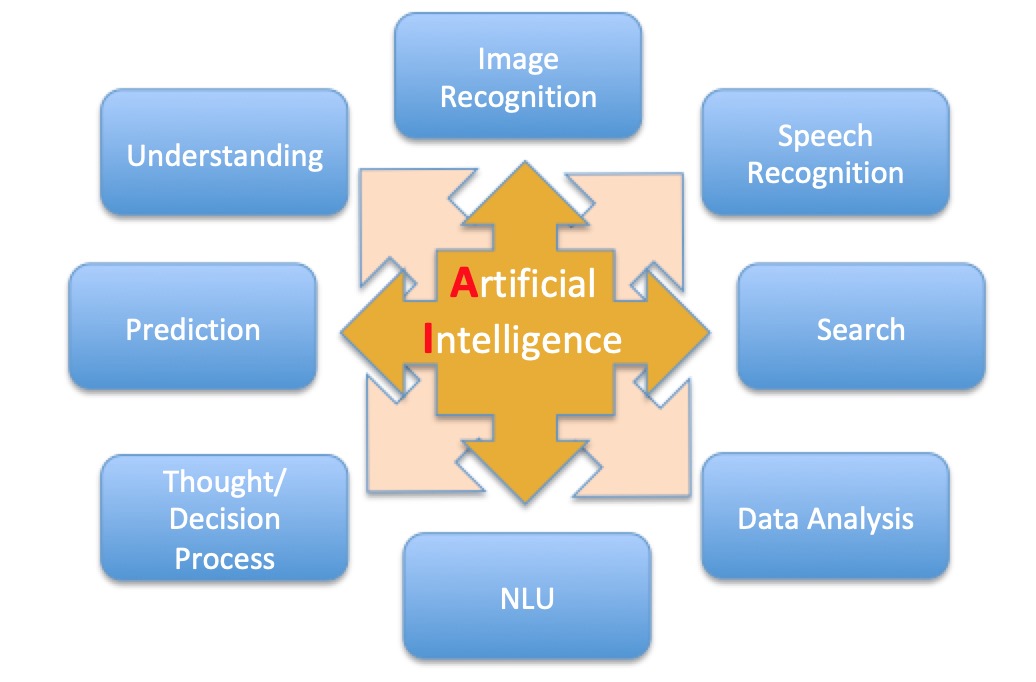
Additionally, it lists eight AI capabilities in use at the time: Image Recognition, Speech Recognition, Data Search, Data Patterns, Language Understanding, Thought/Decision Process, Prediction, and Understanding.

Each capability, like Image Recognition and Speech Recognition, is explained in terms of its function and technological requirements. The post emphasises that while machines have made significant progress, they still have limitations compared to human reasoning and understanding.

The landscape of artificial intelligence (AI) capabilities has evolved significantly since that earlier focus on objectives like capturing information, determining events, and understanding causality. In 2023, AI has reached impressive technical capabilities and has become deeply integrated into various aspects of everyday life and business operations.

2023 AI technical capabilities and daily use examples

Generative AI’s Breakout: AI in 2023 has been marked by the explosive growth of generative AI tools. Companies like OpenAI have revolutionised how businesses approach tasks that traditionally required human creativity and intelligence. Advanced models like GPT-4 and DALL-E 2, which have demonstrated remarkable humanlike outputs, significantly impacting the way businesses operate in the generation of unique content, design graphics, or even code software more efficiently, thereby reducing operational costs and enhancing productivity. For example, organisations are using generative AI in product and service development, risk and supply chain management, and other business functions. This shift has allowed companies to optimise product development cycles, enhance existing products, and create new AI-based products, leading to increased revenue and innovative business models​​​​.

AI in Data Management and Analytics: The use of AI in data management and analytics has revolutionised the way businesses approach data-driven decision-making. AI algorithms and machine learning models are adept at processing large volumes of data rapidly, identifying patterns and insights that would be challenging for humans to discern. These technologies enable predictive analytics, where AI models can forecast trends and outcomes based on historical data. In customer analytics, AI is used to segment customers, predict buying behaviours, and personalise marketing efforts. Financial institutions leverage AI in risk assessment and fraud detection, analysing transaction patterns to identify anomalies that may indicate fraudulent activities. In healthcare, AI-driven data analytics assists in diagnosing diseases, predicting patient outcomes, and optimizing treatment plans. In the realm of supply chain and logistics, AI algorithms forecast demand, optimise inventory levels, and improve delivery routes. The integration of AI with big data technologies also enhances real-time analytics, allowing businesses to respond swiftly to changing market dynamics. Moreover, AI contributes to the democratisation of data analytics by providing tools that require less technical expertise. Platforms like Microsoft Fabric and Power BI, integrate AI (Microsoft Copilot) to enable users to generate insights through natural language queries, making data analytics more accessible across organizational levels. Microsoft Fabric, with its integration of Azure AI, represents a significant advancement in the realm of AI and analytics. This innovative platform, as of 2023, offers a unified solution for enterprises, covering a range of functions from data movement to data warehousing, data science, real-time analytics, and business intelligence. The integration with Azure AI services, especially the Azure OpenAI Service, enables the deployment of powerful language models, which facilitates a variety of AI applications such as data cleansing, content generation, summarisation, and natural language to code translation, auto-completion and quality assurance. Overall, AI in data management covering data engineering, analytics and science not only improves efficiency and accuracy but also drives innovation and strategic planning in various industries.

Regulatory Developments: The AI industry is experiencing increased regulation. For example, the U.S. has introduced guidelines to protect personal data and limit surveillance, and the EU is working on the AI Act, potentially the world’s first broad standard for AI regulation. These developments are likely to make AI systems more transparent, with an emphasis on disclosing data usage, limitations, and biases​​.

AI in Recruitment and Equality: AI is increasingly being used in recruitment processes. LinkedIn, a leader in professional networking and recruitment, has been utilising AI to enhance their recruitment processes. AI algorithms help filter through vast numbers of applications to identify the most suitable candidates. However, there’s a growing concern about potential discrimination, as AI systems can inherit biases from their training data, leading to a push for more impartial data sets and algorithms. The UK’s Equality Act 2010 and the General Data Protection Regulation in Europe regulate such automated decision-making, emphasising the importance of unbiased and fair AI use in recruitment​​. Moreover, LinkedIn has been working on AI systems that aim to minimise bias in recruitment, ensuring a more equitable and diverse hiring process.

AI in Healthcare: AI’s application in healthcare is growing rapidly. It ranges from analysing patient records to aiding in drug discovery and patient monitoring through to the resource demand and supply management of healthcare professionals. The global market for AI in healthcare, valued at approximately $11 billion in 2021, is expected to rise significantly. This includes using AI for real-time data acquisition from patient health records and in medical robotics, underscoring the need for safeguards to protect sensitive data​​. Companies like Google Health and IBM Watson Heath are utilizing AI to revolutionise healthcare with AI algorithms being used to analyse medical images for diagnostics, predict patient outcomes, and assist in drug discovery. Google’s AI system for diabetic retinopathy screening has shown to be effective in identifying patients at risk, thereby aiding in early intervention and treatment.

AI for Face Recognition: AI-powered face recognition technology is widely used, from banking apps to public surveillance. Face recognition technology is widely used in various applications, from unlocking smartphones to enhancing security systems. Apple’s Face ID technology, used in iPhones and iPads, is an example of AI-powered face recognition providing both convenience and security to users. Similarly, banks and financial institutions are using face recognition for secure customer authentication in mobile banking applications. However, this has raised concerns about privacy and fundamental rights. The EU’s forthcoming AI Act is expected to regulate such technologies, highlighting the importance of responsible and ethical AI usage​​.

AI’s Role in Scientific Progress: AI models like PaLM and Nvidia’s reinforcement learning agents have been used to accelerate scientific developments, from controlling hydrogen fusion to improving chip designs. This showcases AI’s potential to not only aid in commercial ventures but also to contribute significantly to scientific and technological advancements​​. AI’s impact on scientific progress can be seen in projects like AlphaFold by DeepMind (a subsidiary of Alphabet, Google’s parent company). AlphaFold’s AI-driven predictions of protein structures have significant implications for drug discovery and understanding diseases at a molecular level, potentially revolutionising medical research.

AI in Retail and E-commerce: Amazon’s use of AI in its recommendation system exemplifies how AI can drive sales and improve customer experience. The system analyses customer data to provide personalized product recommendations, significantly enhancing the shopping experience and increasing sales.

AI’s ambition of causality – the 3rd AI goal

AI’s ambition to evolve towards understanding and establishing causality represents a significant leap beyond its current capabilities in pattern recognition and prediction. Causality, unlike mere correlation, involves understanding the underlying reasons why events occur, which is a complex challenge for AI. This ambition stems from the need to make more informed and reliable decisions based on AI analyses.

For instance, in healthcare, an AI that understands causality could distinguish between factors that contribute to a disease and those that are merely associated with it. This would lead to more effective treatments and preventative strategies. In business and economics, AI capable of causal inference could revolutionise decision-making processes by accurately predicting the outcomes of various strategies, taking into account complex, interdependent factors. This would allow companies to make more strategic and effective decisions.

The journey towards AI understanding causality involves developing algorithms that can not only process vast amounts of data but also recognise and interpret the intricate web of cause-and-effect relationships within that data. This is a significant challenge because it requires the AI to have a more nuanced understanding of the world, akin to human-like reasoning. The development of such AI would mark a significant milestone in the field, bridging the gap between artificial intelligence and human-like intelligence – then it will know why the lion is chasing and why the human is running away – achieving the third AI goal.

In conclusion

AI in 2023 is not only more advanced but also more embedded in various sectors than ever before. Its rapid development brings both significant opportunities and challenges. The examples highlight the diverse applications of AI across different industries, demonstrating its potential to drive innovation, optimise operations, and create value in various business contexts.

For organisations, leveraging AI means balancing innovation with responsible use, ensuring ethical standards, and staying ahead in a rapidly evolving regulatory landscape. The potential for AI to transform industries, drive growth, and contribute to scientific progress is immense, but it requires a careful and informed approach to harness these benefits effectively.

The development of AI capable of understanding causality represents a significant milestone, as it would enable AI to have a nuanced, human-like understanding of complex cause-and-effect relationships, fundamentally enhancing its decision-making capabilities.

Looking forward to see where this technology will be in 2028…?