

The Ultimate Guide to Product Operations: Navigating the Emerging Field

Introduction

Product Operations, often referred to as Product Ops, is a relatively new yet increasingly vital role within technology companies, particularly those experiencing rapid growth. While operations functions like Sales Operations (Sales Ops) and Marketing Operations (Marketing Ops) have been well-established for years, Product Ops is just beginning to gain traction. However, for companies scaling their operations, the presence of a dedicated Product Ops team can be the difference between seamless expansion and significant operational challenges.

This comprehensive guide delves into the role of Product Ops, its importance within an organization, how it functions, and why it is becoming indispensable. We will also explore the different models of Product Ops, its core responsibilities, and how to get started with implementing this function in your organization.

Understanding Product Operations

At its core, Product Ops is the intersection of Product Management, Engineering, and Customer Success. It acts as a bridge, ensuring that these departments are aligned and working together efficiently to support the Research and Development (R&D) team as well as the go-to-market strategies. The role of Product Ops involves streamlining communication, refining processes, and fostering better alignment during the entire product lifecycle—from development to launch and subsequent iterations.

However, the definition and responsibilities of Product Ops can vary significantly depending on the organization. This variation is largely due to the novelty of the role and the specific needs of different teams and businesses. Despite these differences, there are three primary models of Product Ops that have emerged:

  1. Outcomes-driven Model: In this model, Product Ops focuses on gathering insights and scoping out business needs at the very beginning of the product development process. This often involves going out into the field, talking to users, and understanding their needs. Product Ops plays a critical role in launch execution, working closely with operations counterparts globally to ensure that the go-to-market strategy is effective. Uber is a prime example of a company that uses an outcomes-driven approach in its Product Ops function.
  2. Efficiency-focused Model: Here, the primary objective of Product Ops is to deliver more value to users more quickly. This model emphasizes strengthening product feedback loops, operationalizing products, and scaling product knowledge across the organization. Stripe employs this efficiency-focused model, where Product Ops ensures that the product delivers maximum value at the fastest pace possible.
  3. Customer-centric Model: In this model, Product Ops is heavily involved in the customer experience, providing insights that span the entire customer journey through the lens of the product. Theresa Baker’s role at Comcast exemplifies this approach, where Product Ops focuses on understanding and enhancing the end-to-end customer experience for their Digital Home product.

Where Does Product Ops Fit in an Organization?

Product Ops is typically embedded within the Product Management team or positioned in an adjacent function that reports directly to the Head of Product. The role serves as a shared resource across the product management organization, driving initiatives that enhance product efficiency, effectiveness, and alignment with broader business objectives.

The Dual Nature of Product Ops: Role and Skillset

Product Ops is not just a job title; it’s also a critical skill set that can benefit any product professional. Some organizations view Product Ops as a specific role that needs to be filled, while others see it as a capability that should be developed across the entire product team. Ideally, product-led organizations should have a designated Product Ops leader, but they should also encourage all product team members to cultivate an operational mindset.

The demand for Product Ops professionals is on the rise. A search on LinkedIn reveals nearly 5,700 users with the title “Product Operations,” an 8% increase in the last year alone. Even more striking is the 80% year-over-year increase in LinkedIn users listing Product Operations as a skill. This surge indicates that while the role is still evolving, its importance is being increasingly recognized across the industry.

The Growing Importance of Product Ops

Several key factors contribute to the rising prominence of Product Ops:

  1. Heightened Customer Expectations: Today’s customers demand seamless, personalized experiences. Product Ops ensures that the product meets these expectations by optimizing the development process and enhancing the customer experience from trial and purchase through onboarding, expansion, and referrals.
  2. The Proliferation of Operations Roles: The success of other operational roles, such as Sales Ops and Marketing Ops, has paved the way for Product Ops. As companies recognize the value of operations in driving efficiency and effectiveness, they are beginning to apply these principles to product development.
  3. Availability of Product Usage Data: The explosion of data has made it essential for organizations to have dedicated roles focused on analyzing and acting on this information. Product Ops plays a crucial role in turning product usage data into actionable insights that inform decision-making.
  4. Product-Led Growth: Companies that adopt a product-led growth strategy—where the product itself is the primary driver of customer acquisition, retention, and expansion—tend to outperform their peers. These companies are more likely to employ a Product Ops leader or even an entire team to ensure that their product development and go-to-market strategies are optimized for success.

Core Responsibilities of Product Ops

The responsibilities of Product Ops can be broadly categorized into five key areas:

  1. Tools Management: Product Ops is responsible for managing the product team’s tech stack, including tool selection, integration, and maintenance. This role involves overseeing relationships with vendors and ensuring that the tools are used effectively across the organization. Product Ops also establishes best practices for tool usage, ensuring that the team operates efficiently and effectively.
  2. Data Management and Analysis: With the proliferation of tools comes an increase in available data. Product Ops ensures that this data is clean, organized, and easily accessible, providing a strong foundation for data-driven decision-making. Product Ops plays a critical role in collecting, analyzing, and synthesizing data from multiple sources to inform product strategy and improve product outcomes. This includes reconciling usage data with customer feedback, performing data analysis, and providing insights to necessary stakeholders.
  3. Experimentation: One of the key benefits of having a dedicated Product Ops role is the ability to run more experiments with less friction. Product Ops tracks all active experiments, ensuring they do not overlap or interfere with each other. This role also streamlines the sequencing and implementation of experiments, establishing workflows, documentation, and segmentation of user populations to ensure clean and accurate data collection.
  4. Strategy and Cross-Team Collaboration: Product Ops acts as a strategic partner to teams across the organization, driving collaboration around product initiatives. This role involves aligning with teams like Revenue Operations (RevOps), Development Operations (DevOps), Customer Success, Marketing, and Sales to ensure that product data informs broader business decisions. Product Ops also scales product knowledge across the organization, acting as a central resource for product information, new learnings, and roadmap updates.
  5. Trusted Advisor to Leadership: As companies scale, the need for informed decision-making becomes critical. Product Ops serves as a trusted advisor to Chief Product Officers (CPOs), VPs of Product, and other R&D leaders, providing data-driven insights that guide strategic decisions. This role involves advising on the product roadmap, supplying product health data to the executive team, and ensuring that product decisions align with overall business objectives.

The Impact of Product Ops on the Organization

The introduction of a Product Ops function can significantly impact the organization in several ways:

  • Shifts in Ownership: Product Ops takes on many of the administrative and organizational tasks that Product Managers previously handled, allowing them to focus more on product strategy and development. This shift includes gathering and organizing data, running experimentation processes, collecting customer feedback, and training and enabling other teams.
  • Improved Cross-Team Communication: By serving as the product expert for other teams, Product Ops establishes clearer communication channels and ensures that everyone knows where to find the information they need. This improves communication around the product and enhances collaboration across the organization.
  • Increased Efficiency: Better communication leads to greater efficiency. When teams have access to the right information at the right time, they can make decisions more quickly and effectively. Additionally, by relieving Product Managers of operational tasks, Product Ops enables them to build and release products faster.
  • Connecting Product to the Bottom Line: Product Ops helps organizations connect product decisions with their overall business strategy, driving key business objectives and positively impacting the bottom line. For example, at Comcast, the Product Ops team helps identify product enhancements that reduce support calls or technician visits, leading to operational savings.

The Future of Product Ops

As more companies adopt data-driven approaches and recognize the value of product-led growth, the role of Product Ops is expected to continue evolving and growing in importance. The future of Product Ops may involve the merging of different analytical and operational functions, creating a more comprehensive product operations team.

Industry experts predict that the number of tools available for Product Ops will increase, mirroring the maturity of tools in Sales Ops. Additionally, the role may become more strategic, with Product Ops leaders acting as mini Chief Operating Officers (COOs) within product teams.

Getting Started with Product Ops

For organizations looking to implement a Product Ops function, the best approach is to start small and demonstrate results. Begin by identifying a few key areas where Product Ops can add value, such as managing the tech stack, improving data quality, or streamlining experimentation processes. As the function proves its worth, it can be scaled to take on additional responsibilities.

It’s also important to hire or develop the right talent for Product Ops. Successful Product Ops professionals are analytical, comfortable with systems, collaborative, great communicators, entrepreneurial, and have strong business acumen. They should also have a solid understanding of product management and leadership skills, even if they do not have direct reports.

Conclusion

Product Ops is an emerging function that is quickly becoming a cornerstone of successful product-led organizations. As technology companies scale, the need for a dedicated function to manage the complexities of product development, data analysis, and cross-team collaboration becomes increasingly apparent. Product Ops fills this gap, providing the necessary infrastructure to ensure that products are developed efficiently, aligned with customer needs, and contribute to the overall business strategy.

The Long-Term Vision for Product Ops

Looking ahead, the evolution of Product Ops will likely involve deeper integration with other operational roles and a more pronounced influence on strategic decision-making within organizations. Here are some key trends and developments that could shape the future of Product Ops:

  1. Greater Emphasis on Data-Driven Decision Making: As companies continue to accumulate vast amounts of data, the role of Product Ops in synthesizing this information into actionable insights will become even more critical. This will likely lead to the development of more sophisticated data tools and methodologies, enabling Product Ops teams to provide even more granular and impactful recommendations.
  2. Integration with Emerging Technologies: The rise of artificial intelligence (AI) and machine learning (ML) will offer new opportunities for Product Ops to enhance their data analysis capabilities. By leveraging AI and ML, Product Ops can automate routine tasks, identify patterns and trends that may not be immediately apparent, and make more accurate predictions about product performance and customer behavior.
  3. Expansion of the Product Ops Skill Set: As the role of Product Ops expands, so too will the skill set required to succeed in this field. Future Product Ops professionals will need to be well-versed not only in data analysis and product management but also in emerging technologies, customer experience strategies, and advanced project management techniques.
  4. Cross-Functional Leadership: Product Ops is poised to become a key player in cross-functional leadership, bridging the gap between product teams and other departments such as marketing, sales, and customer success. As the role becomes more strategic, Product Ops leaders may find themselves involved in broader organizational decisions, influencing everything from go-to-market strategies to company-wide operational efficiencies.
  5. Product Ops as a Strategic Partner: The evolution of Product Ops into a strategic partner means that this function will not only support product development but also shape the direction of the company’s growth. This shift will require Product Ops teams to develop a deep understanding of the business landscape, competitive dynamics, and customer expectations, allowing them to contribute to high-level strategic planning.
  6. Educational and Professional Development Opportunities: As the importance of Product Ops continues to grow, educational institutions and professional organizations are likely to develop specialized programs and certifications to prepare the next generation of Product Ops leaders. These programs could cover a wide range of topics, from data science and analytics to product strategy and customer experience management.

Getting Started: Building Your Product Ops Function

For organizations considering the implementation of a Product Ops function, here are some practical steps to get started:

  1. Assess Your Current Needs: Begin by evaluating where your current product processes are experiencing friction or inefficiencies. Identify areas where improved alignment, data analysis, or process optimization could have the most significant impact. This assessment will help you determine the specific responsibilities and focus areas for your Product Ops team.
  2. Define the Scope and Structure: Based on your needs assessment, define the scope of your Product Ops function. Will it primarily focus on data management, experimentation, or cross-team collaboration? Consider the structure of the team—will it be a small, centralized group, or will Product Ops professionals be embedded within different product teams?
  3. Start Small and Scale: Start by implementing Product Ops on a small scale, focusing on one or two key areas where you can quickly demonstrate value. As the function proves its worth, you can expand the team’s responsibilities and scale the function across the organization.
  4. Hire or Develop the Right Talent: Look for individuals who possess the core skills needed for Product Ops: strong analytical abilities, comfort with systems, excellent communication skills, and a collaborative mindset. Consider providing training or professional development opportunities to help your team members grow into their roles.
  5. Establish Clear Processes and Best Practices: Develop clear processes and best practices for the Product Ops function. This includes defining workflows for data collection and analysis, setting up tools and systems for experimentation, and creating communication channels between Product Ops and other departments.
  6. Measure and Iterate: Continuously measure the impact of your Product Ops function and be prepared to iterate on your approach. Use key performance indicators (KPIs) such as product delivery predictability, feature adoption rates, and customer satisfaction scores to assess the effectiveness of Product Ops and make data-driven adjustments as needed.

Final Thoughts

The rise of Product Ops represents a significant shift in how technology companies approach product development and operational efficiency. By centralizing and optimizing key processes, Product Ops enables organizations to build better products, respond more effectively to customer needs, and achieve sustainable growth.

As the role of Product Ops continues to evolve, it will undoubtedly become a strategic pillar within the most successful organizations. Those who invest in developing a robust Product Ops function today will be well-positioned to navigate the complexities of tomorrow’s business landscape, ensuring that their products—and their companies—thrive in an increasingly competitive market.

Whether you are just starting to explore Product Ops or looking to refine an existing function, this guide provides the foundational knowledge and actionable insights needed to succeed. Embrace the potential of Product Ops, and watch as it transforms your product team into a powerhouse of efficiency, innovation, and customer satisfaction.

Join the Product Ops Revolution

Ready to elevate your product operations to the next level? Explore the Radical Product Thinking: Vision Setting course today, or request a demo to see how we can help your team achieve operational excellence. Together, we can build great products and drive transformative success in the digital era.

DevSecOps Tool Chain: Integrating Security into the DevOps Pipeline

Introduction

In today’s rapidly evolving digital landscape, the security of applications and services is paramount. With the rise of cloud computing, microservices, and containerised architectures, the traditional boundaries between development, operations, and security have blurred. This has led to the emergence of DevSecOps, a philosophy that emphasises the need to integrate security practices into every phase of the DevOps pipeline.

Rather than treating security as an afterthought, DevSecOps promotes “security as code” to ensure vulnerabilities are addressed early in the development cycle. One of the key enablers of this philosophy is the DevSecOps tool chain. This collection of tools ensures that security is embedded seamlessly within development workflows, from coding and testing to deployment and monitoring.

What is the DevSecOps Tool Chain?

The DevSecOps tool chain is a set of tools and practices designed to automate the integration of security into the software development lifecycle (SDLC). It spans multiple phases of the DevOps process, ensuring that security is considered from the initial coding stage through to production. The goal is to streamline security checks, reduce vulnerabilities, and maintain compliance without slowing down development or deployment speeds.

The tool chain typically includes:

  • Code Analysis Tools
  • Vulnerability Scanning Tools
  • CI/CD Pipeline Tools
  • Configuration Management Tools
  • Monitoring and Incident Response Tools

Each tool in the chain performs a specific function, contributing to the overall security posture of the software.

Key Components of the DevSecOps Tool Chain

Let’s break down the essential components of the DevSecOps tool chain and their roles in maintaining security across the SDLC.

1. Source Code Management (SCM) Tools

SCM tools are the foundation of the DevSecOps pipeline, as they manage and track changes to the source code. By integrating security checks at the SCM stage, vulnerabilities can be identified early in the development process.

  • Examples: Git, GitLab, Bitbucket, GitHub
  • Security Role: SCM tools support static code analysis (SCA) plugins that automatically scan code for vulnerabilities during commits. Integrating SAST (Static Application Security Testing) tools directly into SCM platforms helps detect coding errors, misconfigurations, or malicious code at an early stage.
2. Static Application Security Testing (SAST) Tools

SAST tools analyse the source code for potential vulnerabilities, such as insecure coding practices and known vulnerabilities in dependencies. These tools ensure security flaws are caught before the code is compiled or deployed.

  • Examples: SonarQube, Veracode, Checkmarx
  • Security Role: SAST tools scan the application code to identify security vulnerabilities, such as SQL injection, cross-site scripting (XSS), and buffer overflows, which can compromise the application if not addressed.
3. Dependency Management Tools

Modern applications are built using multiple third-party libraries and dependencies. These tools scan for vulnerabilities in dependencies, ensuring that known security flaws in external libraries are mitigated.

  • Examples: Snyk, WhiteSource, OWASP Dependency-Check
  • Security Role: These tools continuously monitor open-source libraries and third-party dependencies for vulnerabilities, ensuring that outdated or insecure components are flagged and updated in the CI/CD pipeline.
4. Container Security Tools

Containers are widely used in modern microservices architectures. Ensuring the security of containers requires specific tools that can scan container images for vulnerabilities and apply best practices in container management.

  • Examples: Aqua Security, Twistlock, Clair
  • Security Role: Container security tools scan container images for vulnerabilities, such as misconfigurations or exposed secrets. They also ensure that containers follow secure runtime practices, such as restricting privileges and minimising attack surfaces.
5. Continuous Integration/Continuous Deployment (CI/CD) Tools

CI/CD tools automate the process of building, testing, and deploying applications. In a DevSecOps pipeline, these tools also integrate security checks to ensure that every deployment adheres to security policies.

  • Examples: Jenkins, CircleCI, GitLab CI, Travis CI
  • Security Role: CI/CD tools are integrated with SAST and DAST tools to automatically trigger security scans with every build or deployment. If vulnerabilities are detected, they can block deployments or notify the development team.
6. Dynamic Application Security Testing (DAST) Tools

DAST tools focus on runtime security, scanning applications in their deployed state to identify vulnerabilities that may not be evident in the source code alone.

  • Examples: OWASP ZAP, Burp Suite, AppScan
  • Security Role: DAST tools simulate attacks on the running application to detect issues like improper authentication, insecure APIs, or misconfigured web servers. These tools help detect vulnerabilities that only surface when the application is running.
7. Infrastructure as Code (IaC) Security Tools

As infrastructure management shifts towards automation and code-based deployments, ensuring the security of Infrastructure as Code (IaC) becomes critical. These tools validate that cloud resources are configured securely.

  • Examples: Terraform, Pulumi, Chef, Puppet, Ansible
  • Security Role: IaC security tools analyse infrastructure code to identify potential security misconfigurations, such as open network ports or improperly set access controls, which could lead to data breaches or unauthorised access.
8. Vulnerability Scanning Tools

Vulnerability scanning tools scan the application and infrastructure for known security flaws. These scans can be performed on code repositories, container images, and cloud environments.

  • Examples: Qualys, Nessus, OpenVAS
  • Security Role: These tools continuously monitor for known vulnerabilities across the entire environment, including applications, containers, and cloud services, providing comprehensive reports on security risks.
9. Security Information and Event Management (SIEM) Tools

SIEM tools monitor application logs and event data in real-time, helping security teams detect potential threats and respond to incidents quickly.

  • Examples: Splunk, LogRhythm, ELK Stack
  • Security Role: SIEM tools aggregate and analyse security-related data from various sources, helping identify and mitigate potential security incidents by providing centralised visibility.
10. Security Orchestration, Automation, and Response (SOAR) Tools

SOAR tools go beyond simple monitoring by automating incident response and threat mitigation. They help organisations respond quickly to security incidents by integrating security workflows and automating repetitive tasks.

  • Examples: Phantom, Demisto, IBM Resilient
  • Security Role: SOAR tools improve incident response times by automating threat detection and response processes. These tools can trigger automatic mitigation steps, such as isolating compromised systems or triggering vulnerability scans.
11. Cloud Security Posture Management (CSPM) Tools

With cloud environments being a significant part of modern infrastructures, CSPM tools ensure that cloud configurations are secure and adhere to compliance standards.

  • Examples: Prisma Cloud, Dome9, Lacework
  • Security Role: CSPM tools continuously monitor cloud environments for misconfigurations, ensuring compliance with security policies like encryption and access controls, and preventing exposure to potential threats.
The Benefits of a Robust DevSecOps Tool Chain

By integrating a comprehensive DevSecOps tool chain into your SDLC, organisations gain several key advantages:

  1. Shift-Left Security: Security is integrated early in the development process, reducing the risk of vulnerabilities making it into production.
  2. Automated Security: Automation ensures security checks happen consistently and without manual intervention, leading to faster and more reliable results.
  3. Continuous Compliance: With built-in compliance checks, the DevSecOps tool chain helps organisations adhere to industry standards and regulatory requirements.
  4. Faster Time-to-Market: Automated security processes reduce delays, allowing organisations to innovate and deliver faster without compromising on security.
  5. Reduced Costs: Catching vulnerabilities early in the development lifecycle reduces the costs associated with fixing security flaws in production.

Conclusion

The DevSecOps tool chain is essential for organisations seeking to integrate security into their DevOps practices seamlessly. By leveraging a combination of automated tools that address various aspects of security—from code analysis and vulnerability scanning to infrastructure monitoring and incident response—organisations can build and deploy secure applications at scale.

DevSecOps is not just about tools; it’s a cultural shift that ensures security is everyone’s responsibility. With the right tool chain in place, teams can ensure that security is embedded into every stage of the development lifecycle, enabling faster, safer, and more reliable software delivery.

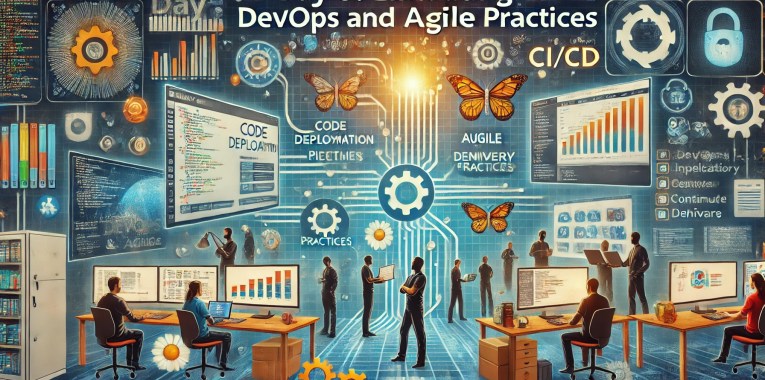
Embracing DevOps and Agile Practices

Day 6 of Renier Botha’s 10-Day Blog Series on Navigating the Future: The Evolving Role of the CTO

In the fast-paced world of technology, businesses must continually adapt and innovate to stay competitive. DevOps and agile methodologies have emerged as critical frameworks for enhancing collaboration, improving software quality, and accelerating deployment speeds. By fostering a culture that embraces these practices, organizations can streamline their operations, reduce time-to-market, and deliver high-quality products that meet customer needs. This comprehensive blog post explores how to effectively implement DevOps and agile methodologies, featuring insights from industry leaders and real-world examples.

Understanding DevOps and Agile Methodologies

What is DevOps?

DevOps is a set of practices that combines software development (Dev) and IT operations (Ops) to shorten the development lifecycle and deliver high-quality software continuously. DevOps emphasizes collaboration, automation, and integration, breaking down silos between development and operations teams.

Quote: “DevOps is not a goal, but a never-ending process of continual improvement.” – Jez Humble, Co-Author of “The DevOps Handbook”

What is Agile?

Agile is a methodology that promotes iterative development, where requirements and solutions evolve through collaboration between cross-functional teams. Agile focuses on customer satisfaction, flexibility, and rapid delivery of small, incremental changes.

Quote: “Agile is not a noun; agile is how you do something. It’s an approach, it’s a way of thinking, it’s a philosophy.” – Dave West, CEO of Scrum.org

Benefits of Embracing DevOps and Agile Practices

  • Improved Collaboration: DevOps and agile methodologies foster better communication and collaboration between development, operations, and other stakeholders.
  • Increased Efficiency: Automation and continuous integration/continuous deployment (CI/CD) pipelines streamline processes and reduce manual errors.
  • Faster Time-to-Market: Iterative development and rapid feedback loops enable quicker releases and faster response to market changes.
  • Higher Quality: Continuous testing and integration improve software quality and reduce the risk of defects.
  • Enhanced Customer Satisfaction: Agile practices ensure that customer feedback is incorporated into development, leading to products that better meet user needs.

Strategies for Fostering a DevOps and Agile Culture

1. Promote Collaboration and Communication

Break down silos between teams by fostering a culture of collaboration and open communication. Encourage cross-functional teams to work together, share knowledge, and align their goals.

Example: At Spotify, autonomous squads work collaboratively on different parts of the product. Each squad includes members from various disciplines, such as development, design, and operations, enabling seamless collaboration and rapid delivery.

2. Implement Automation

Automate repetitive tasks to increase efficiency and reduce the risk of human error. Implement CI/CD pipelines to automate code integration, testing, and deployment processes.

Example: Amazon uses automation extensively in its DevOps practices. By automating deployment and testing processes, Amazon can release new features and updates multiple times a day, ensuring continuous delivery and high availability.

3. Adopt Continuous Integration and Continuous Deployment (CI/CD)

CI/CD practices involve integrating code changes frequently and deploying them automatically to production environments. This approach reduces integration issues, accelerates delivery, and ensures that software is always in a releasable state.

Quote: “The first step towards a successful CI/CD pipeline is having your development team work closely with your operations team, ensuring smooth code integration and delivery.” – Gene Kim, Co-Author of “The Phoenix Project”

4. Focus on Iterative Development

Embrace agile practices such as Scrum or Kanban to implement iterative development. Break down projects into smaller, manageable tasks and deliver incremental improvements through regular sprints or iterations.

Example: Atlassian, the company behind Jira and Confluence, uses agile methodologies to manage its development process. Agile practices enable Atlassian to release updates frequently, respond to customer feedback, and continuously improve its products.

5. Encourage a Learning and Experimentation Culture

Foster a culture of continuous learning and experimentation. Encourage teams to try new approaches, learn from failures, and share their experiences. Provide training and resources to keep team members updated with the latest practices and technologies.

Example: Google’s Site Reliability Engineering (SRE) teams are known for their culture of learning and experimentation. SREs are encouraged to innovate and improve systems, and the organization supports a blameless post-mortem culture to learn from failures.

6. Measure and Improve

Regularly measure the performance of your DevOps and agile practices using key performance indicators (KPIs) such as deployment frequency, lead time for changes, mean time to recovery (MTTR), and change failure rate. Use these metrics to identify areas for improvement and continuously refine your processes.

Quote: “You can’t improve what you don’t measure. Metrics are essential to understand how well your DevOps and agile practices are working and where you can make improvements.” – Nicole Forsgren, Co-Author of “Accelerate: The Science of Lean Software and DevOps”

Real-World Examples of DevOps and Agile Practices

Example 1: Netflix

Netflix is renowned for its innovative use of DevOps and agile practices. The company’s deployment automation and continuous delivery systems allow engineers to release code frequently and reliably. Netflix’s “Simian Army” tools, such as Chaos Monkey, test the resilience of its infrastructure by randomly shutting down instances, ensuring the system can handle failures.

Example 2: Microsoft

Microsoft’s transformation under CEO Satya Nadella has been marked by a strong emphasis on DevOps and agile methodologies. The company adopted agile practices to improve collaboration between development and operations teams, leading to faster releases and enhanced software quality. Azure DevOps, Microsoft’s set of development tools, exemplifies the company’s commitment to DevOps principles.

Example 3: Etsy

Etsy, an online marketplace, has successfully integrated DevOps and agile practices to improve its deployment process. By adopting continuous integration, continuous delivery, and automated testing, Etsy reduced deployment times from hours to minutes. The company also fosters a blameless post-mortem culture, encouraging teams to learn from failures and continuously improve.

Conclusion

Embracing DevOps and agile practices is essential for organizations looking to enhance collaboration, improve software quality, and achieve faster deployment speeds. By promoting a culture of collaboration, implementing automation, adopting CI/CD practices, focusing on iterative development, encouraging learning and experimentation, and measuring performance, organizations can successfully integrate these methodologies into their operations.

As technology continues to evolve, staying agile and adaptable is crucial for maintaining a competitive edge. By leveraging the power of DevOps and agile practices, businesses can drive innovation, deliver high-quality products, and meet the ever-changing needs of their customers.

Read more blog post on Methodologies here : https://renierbotha.com/tag/methodologies/

Stay tuned as we continue to explore critical topics in our 10-day blog series, “Navigating the Future: A 10-Day Blog Series on the Evolving Role of the CTO” by Renier Botha.

Visit www.renierbotha.com for more insights and expert advice.

DevOps – The Methodology

Understanding DevOps: Bridging the Gap Between Development and Operations

In the past 15 years, driven by demand on the effective development, depoloyment and support of software solutions, the DevOps methodology has emerged as a transformative approach seemlessly melting together software development and IT operations. It aims to enhance collaboration, streamline processes, and accelerate the delivery of high-quality software products. This blog post will delve into the core principles, benefits, and key practices of DevOps, providing a comprehensive overview of why this methodology has become indispensable for modern organisations.

What is DevOps?

DevOps is a cultural and technical movement that combines software development (Dev) and IT operations (Ops) with the goal of shortening the system development lifecycle and delivering high-quality software continuously. It emphasises collaboration, communication, and integration between developers and IT operations teams, fostering a unified approach to problem-solving and productivity.

Core Principles of DevOps

  • Collaboration and Communication:
    DevOps breaks down silos between development and operations teams, encouraging continuous collaboration and open communication. This alignment helps in understanding each other’s challenges and working towards common goals.
  • Continuous Integration and Continuous Delivery (CI/CD):
    CI/CD practices automate the integration and deployment process, ensuring that code changes are automatically tested and deployed to production. This reduces manual intervention, minimises errors, and speeds up the release cycle.
  • Infrastructure as Code (IaC):
    IaC involves managing and provisioning computing infrastructure through machine-readable scripts, rather than physical hardware configuration or interactive configuration tools. This practice promotes consistency, repeatability, and scalability.
  • Automation:
    Automation is a cornerstone of DevOps, encompassing everything from code testing to infrastructure provisioning. Automated processes reduce human error, increase efficiency, and free up time for more strategic tasks.
  • Monitoring and Logging:
    Continuous monitoring and logging of applications and infrastructure help in early detection of issues, performance optimisation, and informed decision-making. It ensures that systems are running smoothly and any anomalies are quickly addressed.
  • Security:
    DevSecOps integrates security practices into the DevOps pipeline, ensuring that security is an integral part of the development process rather than an afterthought. This proactive approach to security helps in identifying vulnerabilities early and mitigating risks effectively.

Benefits of DevOps

  • Faster Time-to-Market:
    By automating processes and fostering collaboration, DevOps significantly reduces the time taken to develop, test, and deploy software. This agility allows organisations to respond quickly to market changes and customer demands.
  • Improved Quality:
    Continuous testing and integration ensure that code is frequently checked for errors, leading to higher-quality software releases. Automated testing helps in identifying and fixing issues early in the development cycle.
  • Enhanced Collaboration:
    DevOps promotes a culture of shared responsibility and transparency, enhancing teamwork and communication between development, operations, and other stakeholders. This collective approach leads to better problem-solving and innovation.
  • Scalability and Flexibility:
    With practices like IaC and automated provisioning, scaling infrastructure becomes more efficient and flexible. Organisations can quickly adapt to changing requirements and scale their operations seamlessly.
  • Increased Efficiency:
    Automation of repetitive tasks reduces manual effort and allows teams to focus on more strategic initiatives. This efficiency leads to cost savings and better resource utilisation.
  • Greater Reliability:
    Continuous monitoring and proactive issue resolution ensure higher system reliability and uptime. DevOps practices help in maintaining stable and resilient production environments.

Key DevOps Practices

  1. Version Control:
    Using version control systems like Git to manage code changes ensures that all changes are tracked, reversible, and collaborative.
  2. Automated Testing:
    Implementing automated testing frameworks to continuously test code changes helps in identifying and addressing issues early.
  3. Configuration Management:
    Tools like Ansible, Puppet, and Chef automate the configuration of servers and environments, ensuring consistency across development, testing, and production environments.
  4. Continuous Deployment:
    Deploying code changes automatically to production environments after passing automated tests ensures that new features and fixes are delivered rapidly and reliably.
  5. Containerisation:
    Using containers (e.g., Docker) to package applications and their dependencies ensures consistency across different environments and simplifies deployment.
  6. Monitoring and Alerting:
    Implementing comprehensive monitoring solutions (e.g., Prometheus, Grafana) to track system performance and set up alerts for potential issues helps in maintaining system health.

Recommended Reading

For those looking to dive deeper into the principles and real-world applications of DevOps, several books offer valuable insights:

  • “The DevOps Handbook” by Gene Kim, Jez Humble, Patrick Debois, and John Willis:
    This book is a comprehensive guide to the DevOps methodology, offering practical advice and real-world case studies on how to implement DevOps practices effectively. It covers everything from continuous integration to monitoring and security, making it an essential resource for anyone interested in DevOps.
  • “The Phoenix Project” by Gene Kim, Kevin Behr, and George Spafford:
    Presented as a novel, this book tells the story of an IT manager tasked with saving a failing project. Through its engaging narrative, “The Phoenix Project” illustrates the challenges and benefits of adopting DevOps principles. It provides a compelling look at how organisations can transform their IT operations to achieve better business outcomes.
  • “The Unicorn Project” by Gene Kim:
    A follow-up to “The Phoenix Project,” this novel focuses on the perspective of a software engineer within the same organisation. It delves deeper into the technical and cultural aspects of DevOps, exploring themes of autonomy, mastery, and purpose. “The Unicorn Project” offers a detailed look at the developer’s role in driving DevOps transformation.

Conclusion

DevOps is more than just a set of practices, it’s a cultural shift that transforms how organisations develop, deploy, and manage software. By fostering collaboration, automation, and continuous improvement, DevOps helps organisations deliver high-quality software faster and more reliably. Embracing DevOps can lead to significant improvements in efficiency, productivity, and customer satisfaction, making it an essential methodology for any modern IT organisation.

By understanding and implementing the core principles and practices of DevOps, organisations can navigate the complexities of today’s technological landscape and achieve sustained success in their software development endeavours. Reading foundational books like “The DevOps Handbook,” “The Phoenix Project,” and “The Unicorn Project” can provide valuable insights and practical guidance on this transformative journey.

Striking the Balance: Using Technology Effort Estimates as Targets, Not Deadlines

Striking the Balance Between Accuracy and Realism

To ensure commercial awareness, accurate effort estimates are crucial for project planning and execution. However, treating these estimates as strict deadlines can lead to unrealistic expectations and project failures. Instead, they should be used as targets, guiding the project towards completion while allowing flexibility. In this blog post, we will delve into the importance of accurate estimates, various estimation methods, and the significance of the KPI of forecast vs. actuals. We’ll also discuss why estimates should be seen as targets rather than deadlines and explore ways to improve estimation accuracy. Finally, we’ll examine the value to businesses in getting these aspects right.

The Importance of Accurate Estimates

Accurate effort estimates are foundational to successful project management. They help in:

  • Resource Allocation: Properly estimated efforts ensure that the right amount of resources—time, money, and manpower—are allocated to the project.
  • Budget Planning: Accurate estimates prevent cost overruns by aligning the budget with the project’s scope and timeline.
  • Stakeholder Communication: Clear estimates foster transparent communication with stakeholders, setting realistic expectations and building trust.
  • Risk Management: By understanding the effort involved, potential risks can be identified and mitigated early in the project lifecycle.

Estimation Methods

Several methods are used to estimate project efforts, each with its strengths and weaknesses:

  1. Expert Judgement: Involves consulting with experienced team members or industry experts to make educated guesses. It’s quick but can be biased and subjective.
  2. Analogous Estimation: Uses historical data from similar projects as a reference. It’s useful for quick estimates but may not account for project-specific nuances.
  3. Parametric Estimation: Applies statistical models based on historical data and project variables. It’s more accurate but requires extensive data.
  4. Bottom-Up Estimation: Breaks down the project into smaller tasks, estimates each, and aggregates them. It’s detailed and accurate but time-consuming.
  5. Three-Point Estimation: Calculates optimistic, pessimistic, and most likely estimates to provide a range. This method accounts for uncertainty but requires careful analysis.
  6. Agile Poker (Planning Poker): This collaborative estimation technique is widely used in Agile development. Team members use a deck of cards with numbers representing the complexity of tasks. Each member selects a card anonymously, and the team discusses discrepancies before converging on an estimate. This method promotes team consensus and leverages collective intelligence.

The Significance of Forecast vs. Actuals

The KPI of forecast vs. actuals measures the accuracy of estimates by comparing predicted efforts with actual efforts expended. This metric is significant because:

  • Performance Tracking: It helps track the performance of estimation practices over time, highlighting areas for improvement.
  • Continuous Improvement: By analysing discrepancies between forecasts and actuals, teams can refine their estimation processes.
  • Accountability: It holds project managers and teams accountable for their estimates, fostering a culture of precision and reliability.
  • Stakeholder Confidence: Consistently meeting forecasted targets builds stakeholder confidence and supports long-term project planning.

Deadlines vs. Targets: The Right Perspective

While deadlines are essential for maintaining project momentum and ensuring timely delivery, treating effort estimates as strict deadlines can be problematic:

  • Inherent Uncertainty: Estimates are inherently uncertain and subject to change due to unforeseen circumstances.
  • Flexibility: Viewing estimates as targets rather than rigid deadlines allows for flexibility, accommodating changes and adjustments without compromising project quality.
  • Realistic Expectations: Setting targets based on estimates helps in setting realistic expectations with stakeholders, reducing stress and pressure on the team.

Improving Estimation Accuracy

To improve the accuracy of estimates and align them more closely with project deadlines, consider the following methods:

  • Historical Data Analysis: Use data from previous projects to inform current estimates, identifying patterns and common pitfalls.
  • Regular Reviews: Conduct regular reviews and updates of estimates throughout the project lifecycle to account for changes and new information.
  • Collaboration: Involve the entire team in the estimation process to leverage diverse perspectives and expertise.
  • Training: Invest in training team members on estimation techniques and tools to enhance their skills and confidence.
  • Use of Tools: Utilise estimation tools and software that can provide data-driven insights and improve estimation accuracy.

The Value to Business

Getting estimates and deadlines right provides immense value to businesses:

  • Efficiency: Accurate estimates lead to better resource management and efficient project execution.
  • Cost Savings: Reducing the risk of budget overruns and delays results in significant cost savings.
  • Competitive Advantage: Reliable project delivery enhances the company’s reputation and competitiveness in the market.
  • Employee Morale: Realistic targets and manageable deadlines contribute to higher employee satisfaction and productivity.
  • Stakeholder Trust: Consistently delivering projects on time and within budget strengthens stakeholder trust and long-term relationships.

Conclusion

Effort estimates play a critical role in technology project management, but they should be treated as targets rather than strict deadlines. By using accurate estimation methods and regularly comparing forecasts with actuals, businesses can improve their project planning and execution. This approach not only enhances efficiency and cost savings but also builds stakeholder trust and supports sustainable business growth. Investing in improving estimation accuracy is a strategic move that pays dividends in the long run, ensuring successful project outcomes and a competitive edge in the technology landscape.

Also ReadThe Art of IT Effort Estimation