Background: Shawbrook Bank, a specialised savings and lending institution, faced the challenge of enhancing its service delivery, operational efficiency, and fostering a culture of innovation. In late 2019, Renier Botha, the Head of Delivery and Innovation (Central Functions), took charge to lead the bank’s central functions, including Risk & Regulatory, Compliance, Finance, Human Resources, Procurement, Cyber Security, and IT Infrastructure, towards achieving annual growth and service delivery targets.
Challenge: Renier Botha was tasked with initiating and sustaining strategic changes across various departments. The objective was not just to meet the annual growth and service delivery targets but also to establish a culture of innovation and excellence within the bank.
Solution: 1. Strategic Change Leadership: Renier Botha played a pivotal role in overseeing a £5.5m Central Functions strategic & continuous change portfolio. Under his guidance, 16 programmes, projects, and continuous change workstreams were executed, resulting in a 10.1% saving against the budget.
2. Talent Empowerment: Botha’s key initiative involved building a highly skilled and customer-focused core change team. By empowering the team and ensuring knowledge retention, Shawbrook Bank could rely on a group of experts capable of driving change and innovation forward.
3. Vendor Management and Partnerships: Effective negotiation of commercial and Service Level Agreements (SLAs) ensured strong relationships with vendors and flexible resource partners. This approach guaranteed specialised service delivery and viable solutions for the bank’s diverse needs.
4. Innovation and Automation: The establishment of the Change Portfolio Management Office (PMO), under Renier Botha’s leadership, marked a significant milestone. Skilled staff, mentored by Botha, collected key performance metrics to produce real-time Management Information (MI). Automation and data-driven insights facilitated proactive governance, setting new standards for efficiency and decision-making.
5. Mentorship and Coaching: Renier Botha took on the responsibility of coaching and mentoring technology and project management staff. This personalised approach not only helped individuals achieve their career objectives but also aligned their goals with the broader business strategy.
Results:
Operational Efficiency: Streamlining processes and embracing automation led to a substantial increase in operational efficiency. Issues that previously took over 30 days to resolve were now tackled within 2 days, ensuring uninterrupted services.
Innovation Culture: The bank’s culture shifted towards innovation, with the establishment of the Testing Capability initiative being a testament to this. By reducing regression testing efforts by 95%, continuous delivery became a reality, fostering a culture of innovation and rapid adaptation.
Recognition and Acclaim: Shawbrook Bank’s transformation efforts, especially the successful Ambit Enterprise upgrade, received accolades from the board, positioning the bank as a leader in managed delivery practices.
Conclusion: Under the leadership of Renier Botha, the Head of Delivery and Innovation, Shawbrook Bank successfully reshaped its central functions. By embracing change and cultivating a culture of excellence and innovation, Shawbrook Bank not only met its growth and service delivery targets but also set new industry standards, positioning itself as a beacon of success and innovation in the competitive financial sector. Renier Botha’s strategic vision and hands-on leadership were instrumental in this transformative journey, making Shawbrook Bank a leader in the ever-evolving landscape of banking and finance.
A business case of how technology innovation successfully integrated into the business operations an improved the way of working that supported business success.
Areas of Science and Technology
Data Engineering, Computer Science
R&D Start Date
Dec 2018
R&D End Date
September 2019
Competent Professional
Renier Botha
Overview and Available Baseline Technologies
Within the scope of the project, the competent professionals sought to develop a regression testing framework aimed at testing the work carried out to upgrade the Ambit application[1] from a client service solution to a software as a service solution (SaaS) operating in the Cloud. The test framework developed is now used to define and support any testing initiatives across the Bank. The team also sought to automate the process, however this failed due to lack of existing infrastructure in the Bank.
Initial attempts to achieve this by way of third-party solution providers, such as Qualitest, were unsuccessful, as these providers were unable to develop a framework or methodology which could be documented and reused across different projects. For this the team sought to develop the framework from the ground up. The project was successfully completed in September 2019.
Technological Advances
The upgrade would enable access to the system via the internet, meaning users would no longer need a Cisco connection onto the specific servers to engage with the application. The upgrade would also enable the system to be accessed from devices other than a PC or laptop. Business Finance at Shawbrook is comprised of 14 different business units, with each unit having a different product which is captured and processed through Ambit. All the existing functionality, and business specific configuration needed to be transferred into the new Enterprise platform, as well as the migration of all the associated data. The competent professionals at Shawbrook sought to appreciably improve the current application through the following technological advances:
Development of an Automated Test Framework which could be used across different projects
Comprehensive, well executed testing is essential for mitigating risks to deployment. Shawbrook did not have a documented, standardised, and proven methodology that could be adopted by different projects to ensure that proper testing practises are incorporated into project delivery. There was a requirement to develop a test framework to plan, manage, govern and support testing across the agreed phases, using tools and practices that help mitigate risks in a cost-effective and commensurate way.
The test team sought to develop a continuous delivery framework, which could be used across all units within Business Finance. The Ambit Enterprise Upgrade was the first project at Shawbrook to adopt this framework, which lead to the development of a regression test pack and the subsequent successful delivery of the Ambit upgrade. The Ambit Enterprise project was the first project within the Bank which was delivered with no issues raised post release.
The development of a regression test pack which would enable automated testing of future changes or upgrades to the Ambit platform
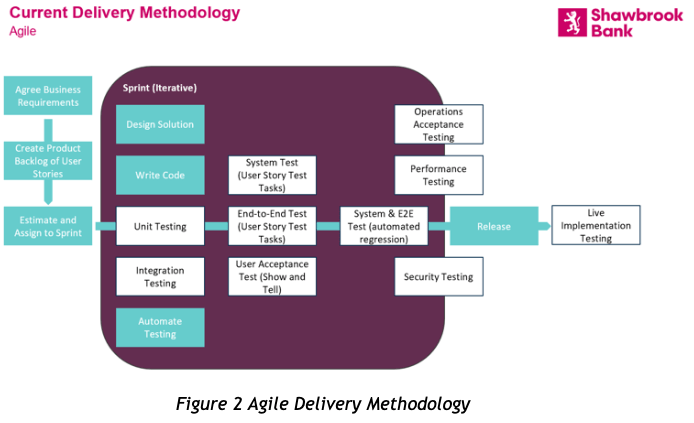
Regression testing is a fundamental part of the software development lifecycle. With the increased popularity of the Agile development methodology, regression testing has taken on added importance. The team at Shawbrook sought to adopt an iterative, Agile approach to software development.
A manual regression test pack was developed which could be used for future testing without the need for the involvement of business users. This was delivered over three test cycles with the team using the results of each cycle (bugs identified and resolved) to issue new releases.
173 user paths were captured in the regression test pack, across 14 different divisions within Business Finance. 251 issues were found during testing, with some being within the Ambit application. Identifying and resolving these issues resulted in the advancement of Ambit Enterprise platform itself. This regression test pack can now be used for future changes to the Ambit Enterprise application, as well as future FIS[2] releases, change requests and enhancements, without being dependent on the business users to undertake UAT. The competent professionals at Shawbrook are currently using the regression test pack to test the integration functionality of the Ambit Enterprise platform.
Development of a costing tool to generate cost estimates for cloud test environment requirements
In order to resolve issues, solutions need to be tested within test environments. A lack of supply was identified within Shawbrook and there was an initiative to increase supply using the Azure cloud environment. The objective was to increase the capability within Business Finance to manage an Azure flexible hosting environment where necessary test environments could be set up on demand. There was also a requirement to plan and justify the expense of test environment management. The competent professionals sought to develop a costing tool, based on the Azure costing model, which could be used by project managers within Business Application Support (“BAS”) to quickly generate what the environment cost would be on a per day or per hour running basis. Costs were calculated based on the environment specification required and number of running hours required. Environment specification was classified as either “high”, “medium” or “low”. For example, the test environment specification required for a web server is low, an application server is medium while a database server is high. Shawbrook gained knowledge and increase its capability of the use of the Azure cloud environment and as a result are actively using the platform to undertake cloud-based testing.
The above constitutes an advance in knowledge and capability in the field of Data Engineering and Computer Science, as per sections 9 a) and c) of the BEIS Guidelines.
Technological Uncertainties and activities carried out to address them
The following technological uncertainties were encountered while developing the Ambit Enterprise upgrade, mainly pertaining to system uncertainty:
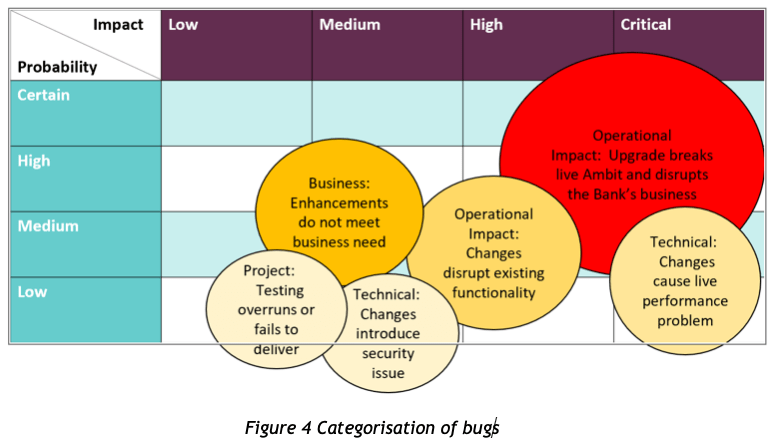
Implementation of the new Ambit Enterprise application could disrupt existing business processes
The biggest risks for the programme of change, was the potential disruption of existing business processes due to the implementation of the change without validation of the upgraded application against the existing functionality. This was the primary focus of the risk mitigation process for the project. Following the test phases set out in the test framework would enable a clear understanding of all the residual risks encountered approaching implementation, providing stakeholders with the context required to make a calculated judgement on these risks.
When an issue was identified through testing, a triage process was undertaken to categorise the issues as either a technical issue, or a user issue. User issues were further classified as “training” or “change of business process”. Technical issues were classified as “showstoppers”, “high”, “medium” and “low”. These were further categorised by priority as “must haves” and “won’t haves” in order to get well-defined acceptance criteria for the substantial list of bugs that arose from the testing cycles. In total, 251 technical issues were identified.
The acceptance criteria for the resolution of issues were:
A code fix was implemented
A business approved work around was implemented
The business accepted the risk
All showstoppers were resolved with either a code fix or and an acceptable work around. Configuration issues were within the remit of Shawbrook’s business application support (“BAS”) team to resolve, whilst other issues could only be resolved by the FIS development team. When the application went live, there were no issues raised post release, and all issues present were known and met the acceptance criteria of the business.
Business processes may no longer align with the new web-based application
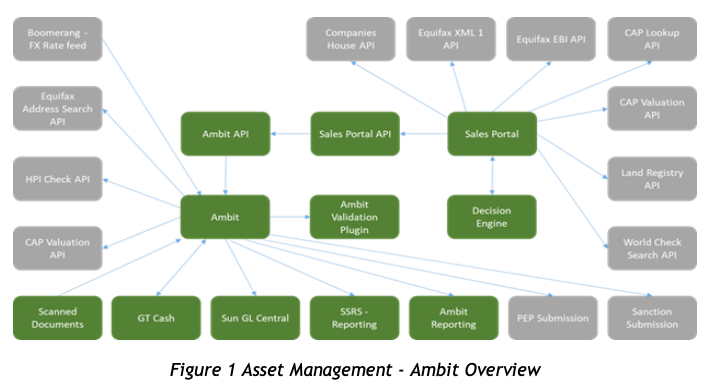
Since the project was an upgrade, there was the potential for operational impact of existing functionality due to differences between the Ambit client server solution, and the upgraded Ambit Enterprise web-based solution. The BAS team at Shawbrook were required to make changes to the business processes in order to align with the way the Ambit Enterprise solution now operated. Where Shawbrook specific issues could not be resolved through the configuration of the application with the business processes, changes were made to the functionality within Ambit, for example, additional plug-ins were developed for the Sales Portal platform to integrate with the Ambit Enterprise application.
Because Ambit Enterprise was a web-based application, application and security vulnerabilities needed to be identified so that the correct security level was achieved. Because of this, performance and security testing, which was currently not being executed, needed to be introduced to the test framework. Performance testing also needed to be executed so that speed and stability requirements under the expected workloads were met.
Summary and Conclusions
The team at Shawbrook successfully developed a test framework which could be used across all projects within Business Finance. The development of the test framework lead to the generation of a regression test pack for the Ambit Enterprise upgrade. By undertaking these R&D activities, Shawbrook gained knowledge in the use of Azure Cloud Environment for testing, and increased its automated testing capabilities, enabling the transition to a continuous delivery framework whereby the majority of testing is automated.
[1] Ambit is the asset finance application operating within the business unit, 70-80 percent of transactions on all lending is captured and managed through Ambit
Sep ’19 – The latest version of Ambit Enterprise software have been deployed for Shawbrook Bank’s Business Finance division.
As Programme Director, Renier was responsible for managing the integration and delivery, software development and implementation of the Enterprise version of Ambit for 15 specialist asset-finance business units and their associated product offerings.
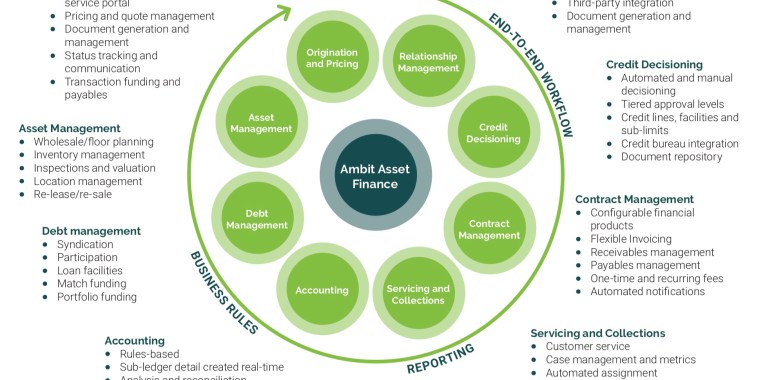
Ambit Asset Finance Software meets its customer’s diverse set of requirements by not only bringing to market scalable, flexible, and industry-leading software solutions, but delivering and supporting these applications in fully managed and hosted environments.




 renierbotha ltd