
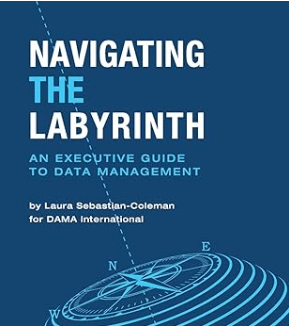
Navigating the Labyrinth: A Comprehensive Guide to Data Management for Executives

As a consultant focussed to helping organisations maximise their efficiency and strategic advantage, I cannot overstate the importance of effective data management. “Navigating the Labyrinth: An Executive Guide to Data Management” by Laura Sebastian-Coleman is an invaluable resource that provides a detailed and insightful roadmap for executives to understand the complexities and significance of data management within their organisations. The book’s guidance is essential for ensuring that your data is accurate, accessible, and actionable, thus enabling better decision-making and organisational efficiency. Here’s a summary of the key points covered in this highly recommended book covering core data management practices.

Introduction

Sebastian-Coleman begins by highlighting the importance of data in the modern business environment. She compares data to physical or financial assets, underscoring that it requires proper management to extract its full value.

Part I: The Case for Data Management

The book makes a compelling case for the necessity of data management. Poor data quality can lead to significant business issues, including faulty decision-making, inefficiencies, and increased costs. Conversely, effective data management provides a competitive edge by enabling more precise analytics and insights.

Part II: Foundations of Data Management

The foundational concepts and principles of data management are thoroughly explained. Key topics include:

  • Data Governance: Establishing policies, procedures, and standards to ensure data quality and compliance.
  • Data Quality: Ensuring the accuracy, completeness, reliability, and timeliness of data.
  • Metadata Management: Managing data about data to improve its usability and understanding.
  • Master Data Management (MDM): Creating a single source of truth for key business entities like customers, products, and employees.

Part III: Implementing Data Management

Sebastian-Coleman offers practical advice on implementing data management practices within an organisation. She stresses the importance of having a clear strategy, aligning data management efforts with business objectives, and securing executive sponsorship. The book also covers:

  • Data Management Frameworks: Structured approaches to implementing data management.
  • Technology and Tools: Leveraging software and tools to support data management activities.
  • Change Management: Ensuring that data management initiatives are adopted and sustained across the organisation.

Part IV: Measuring Data Management Success

Measuring and monitoring the success of data management initiatives is crucial. The author introduces various metrics and KPIs (Key Performance Indicators) that organisations can use to assess data quality, governance, and overall data management effectiveness.

Part V: Case Studies and Examples

The book includes real-world case studies and examples to illustrate how different organisations have successfully implemented data management practices. These examples provide practical insights and lessons learned, demonstrating the tangible benefits of effective data management.

Conclusion

Sebastian-Coleman concludes by reiterating the importance of data management as a strategic priority for organisations. While the journey to effective data management can be complex and challenging, the rewards in terms of improved decision-making, efficiency, and competitive advantage make it a worthwhile endeavour.

Key Takeaways for Executives

  1. Strategic Importance: Data management is essential for leveraging data as a strategic asset.
  2. Foundational Elements: Effective data management relies on strong governance, quality, and metadata practices.
  3. Implementation: A clear strategy, proper tools, and change management are crucial for successful data management initiatives.
  4. Measurement: Regular assessment through metrics and KPIs is necessary to ensure the effectiveness of data management.
  5. Real-world Application: Learning from case studies and practical examples can guide organisations in their data management efforts.

In conclusion, “Navigating the Labyrinth” is an essential guide that equips executives and data professionals with the knowledge and tools needed to manage data effectively. By following the structured and strategic data management practices outlined in the book, your organisation can unlock the full potential of its data, leading to improved business outcomes. I highly recommend this book for any executive looking to understand and improve their data management capabilities and to better understand the importance of data management within their organisation, as it provides essential insights and practical guidance to navigate the complexities of this crucial field.

Driving Digital Transformation: Insights from ‘Project to Product’

Synopsis

“Project to Product: How to Survive and Thrive in the Age of Digital Disruption with the Flow Framework” by Mik Kersten presents a revolutionary approach for organisations navigating the complex landscape of digital transformation. The book addresses a critical challenge faced by many companies: the shift from traditional project-based work models to product-centric models in order to better adapt to the fast-paced, technology-driven market.

Kersten introduces the Flow Framework™ as a solution to this challenge. The framework is designed to bridge the gap between the business and IT, enabling organisations to thrive in the digital age by focusing on value delivery rather than just project completion. The author argues that in the era of software becoming a crucial part of every aspect of the business, companies need to transform their management and development practices to stay competitive.

The book is divided into several parts, beginning with an analysis of why the traditional project management approaches are failing to meet the demands of modern digital business. Kersten then delves into the details of the Flow Framework™, explaining its core components: Flow Items, Flow Metrics, and Flow Distribution. These elements help organisations to measure and manage the flow of business value from ideation to customer delivery.

“Project to Product” emphasises the importance of focusing on products rather than projects, advocating for a shift in how teams are organised, how work is prioritised, and how success is measured. By adopting the Flow Framework™, businesses can improve their software delivery performance, enhance strategic decision-making, and ultimately, increase their competitiveness in the digital era.

The book provides actionable insights, real-world examples, and practical advice for leaders and practitioners aiming to transform their organisations by moving from project to product. Mik Kersten draws from his extensive experience in the field to guide readers through the journey of digital transformation, making “Project to Product” an essential read for anyone involved in software development, IT management, or organisational change.

The Flow Framework Explained

The Flow Framework™, introduced by Mik Kersten in “Project to Product,” is a strategic model designed to aid organisations in navigating the complexities of digital transformation. It aims to shift the focus from traditional project-centric operations to a product-centric approach, aligning IT and software development processes with business outcomes. The framework is particularly geared towards enhancing how businesses deliver value in an era dominated by digital technologies. Here’s a breakdown of its key components and principles:

Core Components

  • Flow Items: These are the work items that move through the IT value stream, categorised into Features (new business value), Defects (quality issues), Risks (security, compliance, and technical debt), and Debts (technical debt reduction). The categorisation helps organisations prioritise and track the value delivery.
  • Flow Metrics: The framework introduces four key metrics to manage and measure the flow of work:
    • Flow Time: Measures the time taken from work initiation to delivery, providing insight into the overall responsiveness of the value stream.
    • Flow Velocity: Measures the number of flow items completed over a given period, indicating the speed of value delivery.
    • Flow Efficiency: Assesses the proportion of time flow items spend in active work versus waiting or blocked, highlighting process efficiency and waste.
    • Flow Load: Tracks the work in progress within the system, ensuring teams are not overburdened and can maintain a sustainable pace.
  • Flow Distribution: This component analyses the distribution of flow items across the different categories (Features, Defects, Risks, Debts), helping teams to balance their efforts and ensure a focus on delivering customer value while maintaining system health and compliance.

Principles

  • Product-Centric: Shifts the focus from managing projects to nurturing products, aligning IT work with business outcomes and customer value.
  • Feedback and Adaptation: Encourages rapid feedback loops within and between IT and business, fostering continuous improvement and adaptation to change.
  • Value Stream Management: Emphasises the importance of visualising and managing the entire value stream from idea to delivery, identifying bottlenecks and opportunities for optimisation.

Benefits

By implementing the Flow Framework™, organisations can achieve several key benefits:

  • Improved visibility into IT operations and their impact on business outcomes.
  • Enhanced alignment between IT and business strategies.
  • Increased efficiency and speed of software delivery.
  • Better prioritisation of work, focusing on delivering customer value.
  • A more agile and responsive IT organisation, capable of adapting to changes in the market and technology landscape.

The Flow Framework™ offers a comprehensive approach to managing and measuring IT and software development work, making it an essential tool for organisations looking to thrive in the digital age.

Key Learnings & Benefits

From “Project to Product” readers can derive several key learnings and benefits, particularly relevant to leaders and practitioners navigating digital transformations within their organisations. The book not only introduces the Flow Framework™ but also delves into the necessity of evolving from project-oriented to product-oriented IT and software development approaches. Here are the core takeaways and benefits:

Key Learnings:

  1. Shift from Project to Product: One of the main themes of the book is the critical shift that organisations must make from focusing on projects to concentrating on products. This shift enables a closer alignment with business outcomes and customer value.
  2. Introduction to the Flow Framework™: The book presents the Flow Framework™ as a methodology to enable this transition, providing a language and set of metrics for business and IT to communicate effectively and drive value delivery.
  3. Understanding Value Stream Management: Kersten emphasises the importance of value stream management, encouraging organisations to visualise and optimise the flow of value from idea to delivery. This is vital for identifying bottlenecks and improving delivery speed and quality.
  4. Emphasis on Continuous Feedback: The book highlights the necessity of establishing feedback loops to swiftly and efficiently adapt to changes, ensuring that product development is aligned with customer needs and market demands.
  5. Cultural Transformation: “Project to Product” underlines the need for a cultural shift within organisations, fostering an environment that supports continual learning, collaboration, and innovation.

Benefits:

  1. Enhanced Visibility and Alignment: By adopting the principles outlined in the book, organisations can achieve greater visibility into their IT operations and ensure that they are closely aligned with their business goals.
  2. Increased Efficiency and Agility: The Flow Framework™ helps organisations streamline their processes, reducing waste and enabling them to respond more quickly to market changes and customer needs.
  3. Improved Decision-Making: With clear metrics and a focus on value delivery, leaders can make more informed decisions about where to allocate resources and how to prioritise work.
  4. Competitive Advantage: Organisations that successfully shift from project to product and implement the Flow Framework™ can gain a significant competitive advantage by being more innovative, agile, and customer-focused.
  5. Sustainable Transformation: The book provides a roadmap for sustainable digital transformation, helping organisations navigate the challenges of the digital age and emerge more resilient and adaptable.

“Project to Product” offers valuable insights for any leader or practitioner involved in software development, IT management, or organisational change, providing a practical framework for navigating the complexities of digital transformation and driving long-term value.

Transformative IT: Lessons from “The Phoenix Project” on Embracing DevOps and Fostering Innovation

Synopsis

“The Phoenix Project: A Novel About IT, DevOps, and Helping Your Business Win” is a book by Gene Kim, Kevin Behr, and George Spafford that uses a fictional narrative to explore the real-world challenges faced by IT departments in modern enterprises. The story follows Bill Palmer, an IT manager at Parts Unlimited, an auto parts company on the brink of collapse due to its outdated and inefficient IT infrastructure.

The book is structured around Bill’s journey as he is unexpectedly promoted to VP of IT Operations and tasked with salvaging a critical project, code-named The Phoenix Project, which is massively over budget and behind schedule. Through his efforts to save the project and the company, Bill is introduced to the principles of DevOps, a set of practices that aim to unify software development (Dev) and software operation (Ops).

As Bill navigates a series of crises, he learns from a mysterious mentor named Erik, who introduces him to the “Three Ways”: The principles of flow (making work move faster through the system), feedback (creating short feedback loops to learn and adapt), and continual learning and experimentation. These principles guide Bill and his team in transforming their IT department from a bottleneck into a competitive advantage for Parts Unlimited.

“The Phoenix Project” is not just a story about IT and DevOps, it’s a tale about leadership, collaboration, and the importance of aligning technology with business objectives. It’s praised for its insightful depiction of the challenges faced by IT professionals and for offering practical solutions through the lens of a compelling narrative. The book has become essential reading for anyone involved in IT management, software development, and organisational change.

Learnings

“The Phoenix Project” offers numerous key learnings and benefits for IT professionals, encapsulating valuable lessons in IT management, DevOps practices, and organizational culture. Here are some of the most significant takeaways:

  • The Importance of DevOps: The book illustrates how integrating development and operations teams can lead to more efficient and effective processes, emphasizing collaboration, automation, continuous delivery, and quick feedback loops.
  • The Three Ways:
    • The First Way focuses on the flow of work from Development to IT Operations to the customer, encouraging the streamlining of processes and reduction of bottlenecks.
    • The Second Way emphasizes the importance of feedback loops. Quick and effective feedback can help in early identification and resolution of issues, leading to improved quality and customer satisfaction.
    • The Third Way is about creating a culture of continual experimentation, learning, and taking risks. Encouraging continuous improvement and innovation can lead to better processes and products.
  • Understanding and Managing Work in Progress (WIP): Limiting the amount of work in progress can improve focus, speed up delivery times, and reduce burnout among team members.
  • Automation: Automating repetitive tasks can reduce errors, free up valuable resources, and speed up the delivery of software updates.
  • Breaking Down Silos: Encouraging collaboration and communication between different departments (not just IT and development) can lead to a more cohesive and agile organization.
  • Focus on the Value Stream: Identifying and focusing on the value stream, or the steps that directly contribute to delivering value to the customer, can help in prioritizing work and eliminating waste.
  • Leadership and Culture: The book underscores the critical role of leadership in driving change and fostering a culture that values continuous improvement, collaboration, and innovation.
  • Learning from Failures: Encouraging a culture where failures are seen as opportunities for learning and growth can help organizations innovate and improve continuously.

For IT professionals, “The Phoenix Project” is more than just a guide to implementing DevOps practices, it’s a manifesto for a cultural shift towards more agile, collaborative, and efficient IT management approaches. It offers insights into how IT can transform from a cost center to a strategic partner capable of delivering significant business value.

Book Summary: “Staying in the Helicopter: The Key to Sustained Strategic Success” by Richard Harrop

“Staying in the Helicopter: The Key to Sustained Strategic Success” by Richard Harrop is a business leadership book that emphasises the importance of maintaining a strategic, high-level perspective to achieve long-term success. Harrop uses the metaphor of “staying in the helicopter” to illustrate the necessity for leaders to rise above daily operations and view their organisation and its environment from a broader perspective.

Key themes of the book include:

  • Strategic Vision: Encourages leaders to develop and maintain a clear, long-term vision for their organisations.
  • Adaptability: Stresses the need for organisations to be flexible and adaptable in response to changing market conditions.
  • Leadership Skills: Discusses the qualities and skills necessary for effective leadership, including decision-making, communication, and the ability to inspire and motivate others.
  • Continuous Improvement: Advocates for a culture of continuous learning and improvement within organisations.
  • Balanced Perspective: Emphasises balancing short-term operational demands with long-term strategic goals.

Through practical advice, case studies, and personal anecdotes, Harrop provides insights and tools for leaders to enhance their strategic thinking and ensure sustained success in their organisations.

As a senior business leader, I highly recommend reading “Staying in the Helicopter: The Key to Sustained Strategic Success” by Richard Harrop. This book has been invaluable in helping me understand the importance of maintaining a high-level perspective while managing the complexities of daily operations. Harrop’s practical advice and compelling case studies provide the tools needed to balance immediate demands with long-term vision, ensuring sustained success and growth. This guide has enhanced my strategic thinking and enabled me to lead my organisation with greater clarity and foresight.