Data Lineage

What is Data Lineage

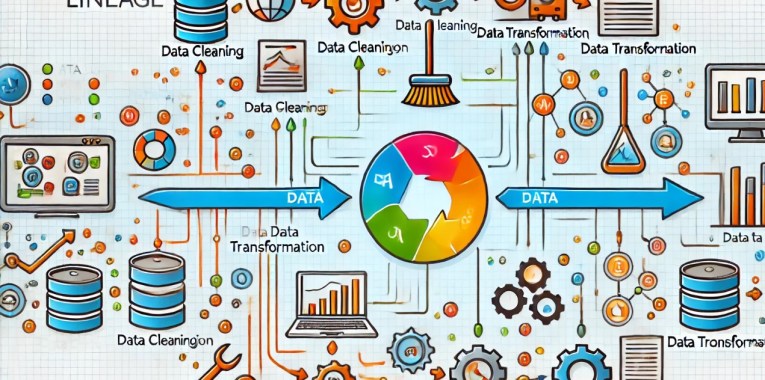
Data lineage refers to the lifecycle of data as it travels through various processes in an information system. It is a comprehensive account or visualisation of where data originates, where it moves, and how it changes throughout its journey within an organisation. Essentially, data lineage provides a clear map or trace of the data’s journey from its source to its destination, including all the transformations it undergoes along the way.

Here are some key aspects of data lineage:

  • Source of Data: Data lineage begins by identifying the source of the data, whether it’s from internal databases, external data sources, or real-time data streams.
  • Data Transformations: It records each process or transformation the data undergoes, such as data cleansing, aggregation, and merging. This helps in understanding how the data is manipulated and refined.
  • Data Movement: The path that data takes through different systems and processes is meticulously traced. This includes its movement across databases, servers, and applications within an organisation.
  • Final Destination: Data lineage includes tracking the data to its final destination, which might be a data warehouse, report, or any other endpoint where the data is stored or utilised.

Importance of Data Lineage

Data lineage is crucial for several reasons:

  • Transparency and Trust: It helps build confidence in data quality and accuracy by providing transparency on how data is handled and transformed.
  • Compliance and Auditing: Many industries are subject to stringent regulatory requirements concerning data handling, privacy, and reporting. Data lineage allows for compliance tracking and simplifies the auditing process by providing a clear trace of data handling practices.
  • Error Tracking and Correction: By understanding how data flows through systems, it becomes easier to identify the source of errors or discrepancies and correct them, thereby improving overall data quality.
  • Impact Analysis: Data lineage is essential for impact analysis, enabling organisations to assess the potential effects of changes in data sources or processing algorithms on downstream systems and processes.
  • Data Governance: Effective data governance relies on clear data lineage to enforce policies and rules regarding data access, usage, and security.

Tooling

Data lineage tools are essential for tracking the flow of data through various systems and transformations, providing transparency and facilitating better data management practices. Here’s a list of popular technology tools that can be used for data lineage:

  • Informatica: A leader in data integration, Informatica offers powerful tools for managing data lineage, particularly with its Enterprise Data Catalogue, which helps organisations to discover and inventory data assets across the system.
  • IBM InfoSphere Information Governance Catalogue: IBM’s solution provides extensive features for data governance, including data lineage. It helps users understand data origin, usage, and transformation within their enterprise environments.
  • Talend: Talend’s Data Fabric includes data lineage capabilities that help map and visualise the flow of data through different systems, helping with compliance, data governance, and data quality management.
  • Collibra: Collibra is known for its data governance and catalogue software that supports data lineage visualisation to manage compliance, data quality, and data usage across the organisation.
  • Apache Atlas: Part of the Hadoop ecosystem, Apache Atlas provides open-source tools for metadata management and data governance, including data lineage for complex data environments.
  • Alation: Alation offers a data catalogue tool that includes data lineage features, providing insights into data origin, context, and usage, which is beneficial for data governance and compliance.
  • MANTA: MANTA focuses specifically on data lineage and provides visualisation tools that help organisations map out and understand their data flows and transformations.
  • erwin Data Intelligence: erwin provides robust data modelling and metadata management solutions, including data lineage tools to help organisations understand the flow of data within their IT ecosystems.
  • Microsoft Purview: This is a unified data governance service that helps manage and govern on-premises, multi-cloud, and software-as-a-service (SaaS) data. It includes automated data discovery, sensitivity classification, access controls and end-to-end data lineage.
  • Google Cloud Data Catalogue: A fully managed and scalable metadata management service that allows organisations to quickly discover, manage, and understand their Google Cloud data assets. It includes data lineage capabilities to visualise relationships and data flows.

These tools cater to a variety of needs, from large enterprises to more specific requirements like compliance and data quality management. They can help organisations ensure that their data handling practices are transparent, efficient, and compliant with relevant regulations.

In summary, data lineage acts as a critical component of data management and governance frameworks, providing a clear and accountable method of tracking data from its origin through all its transformations and uses. This tracking is indispensable for maintaining the integrity, reliability, and trustworthiness of data in complex information systems.

Mastering Data Cataloguing: A Comprehensive Guide for Modern Businesses

Introduction: The Importance of Data Cataloguing in Modern Business

With big data now mainstream, managing vast amounts of information has become a critical challenge for businesses across the globe. Effective data management transcends mere data storage, focusing equally on accessibility and governability. “Data cataloguing is critical because it not only organizes data but also makes it accessible and actionable,” notes Susan White, a renowned data management strategist. This process is a vital component of any robust data management strategy.

Today, we’ll explore the necessary steps to establish a successful data catalogue. We’ll also highlight some industry-leading tools that can help streamline this complex process. “A well-implemented data catalogue is the backbone of data-driven decision-making,” adds Dr. Raj Singh, an expert in data analytics. “It provides the transparency needed for businesses to effectively use their data, ensuring compliance and enhancing operational efficiency.”

By integrating these expert perspectives, we aim to provide a comprehensive overview of how data cataloguing can significantly benefit your organization, supporting more informed decision-making and strategic planning.

Understanding Data Cataloguing

Data cataloguing involves creating a central repository that organises, manages, and maintains an organisation’s data to make it easily discoverable and usable. It not only enhances data accessibility but also supports compliance and governance, making it an indispensable tool for businesses.

Step-by-Step Guide to Data Cataloguing

1. Define Objectives and Scope

Firstly, identify what you aim to achieve with your data catalogue. Goals may include compliance, improved data discovery, or better data governance. Decide on the scope – whether it’s for the entire enterprise or specific departments.

2. Gather Stakeholder Requirements

Involve stakeholders such as data scientists, IT professionals, and business analysts early in the process. Understanding their needs – from search capabilities to data lineage – is crucial for designing a functional catalogue.

3. Choose the Right Tools

Selecting the right tools is critical for effective data cataloguing. Consider platforms like Azure Purview, which offers extensive metadata management and governance capabilities within the Microsoft ecosystem. For those embedded in the Google Cloud Platform, Google Cloud Data Catalog provides powerful search functionalities and automated schema management. Meanwhile, AWS Glue Data Catalog is a great choice for AWS users, offering seamless integration with other AWS services. More detail on tooling below.

4. Develop a Data Governance Framework

Set clear policies on who can access and modify the catalogue. Standardise how metadata is collected, stored, and updated to ensure consistency and reliability.

5. Collect and Integrate Data

Document all data sources and use automation tools to extract metadata. This step reduces manual errors and saves significant time.

6. Implement Metadata Management

Decide on the types of metadata to catalogue (technical, business, operational) and ensure consistency in its description and format.

  • Business Metadata: This type of metadata provides context to data by defining commonly used terms in a way that is independent of technical implementation. The Data Management Body of Knowledge (DMBoK) notes that business metadata primarily focuses on the nature and condition of the data, incorporating elements related to Data Governance.
  • Technical Metadata: This metadata supplies computer systems with the necessary information about data’s format and structure. It includes details such as physical database tables, access restrictions, data models, backup procedures, mapping specifications, data lineage, and more.
  • Operational Metadata: As defined by the DMBoK, operational metadata pertains to the specifics of data processing and access. This includes information such as job execution logs, data sharing policies, error logs, audit trails, maintenance plans for multiple versions, archiving practices, and retention policies.

7. Populate the Catalogue

Use automated tools (see section on tooling below) and manual processes to populate the catalogue. Regularly verify the integrity of the data to ensure accuracy.

8. Enable Data Discovery and Access

A user-friendly interface is key to enhancing engagement and making data discovery intuitive. Implement robust security measures to protect sensitive information.

9. Train Users

Provide comprehensive training and create detailed documentation to help users effectively utilise the catalogue.

10. Monitor and Maintain

Keep the catalogue updated with regular reviews and revisions. Establish a feedback loop to continuously improve functionality based on user input.

11. Evaluate and Iterate

Use metrics to assess the impact of the catalogue and make necessary adjustments to meet evolving business needs.

Data Catalogue’s Value Proposition

Data catalogues are critical assets in modern data management, helping businesses harness the full potential of their data. Here are several real-life examples illustrating how data catalogues deliver value to businesses across various industries:

  • Financial Services: Improved Compliance and Risk Management – A major bank implemented a data catalogue to manage its vast data landscape, which includes data spread across different systems and geographies. The data catalogue enabled the bank to enhance its data governance practices, ensuring compliance with global financial regulations such as GDPR and SOX. By providing a clear view of where and how data is stored and used, the bank was able to effectively manage risks and respond to regulatory inquiries quickly, thus avoiding potential fines and reputational damage.
  • Healthcare: Enhancing Patient Care through Data Accessibility – A large healthcare provider used a data catalogue to centralise metadata from various sources, including electronic health records (EHR), clinical trials, and patient feedback systems. This centralisation allowed healthcare professionals to access and correlate data more efficiently, leading to better patient outcomes. For instance, by analysing a unified view of patient data, researchers were able to identify patterns that led to faster diagnoses and more personalised treatment plans.
  • Retail: Personalisation and Customer Experience Enhancement – A global retail chain implemented a data catalogue to better manage and analyse customer data collected from online and in-store interactions. With a better-organised data environment, the retailer was able to deploy advanced analytics to understand customer preferences and shopping behaviour. This insight enabled the retailer to offer personalised shopping experiences, targeted marketing campaigns, and optimised inventory management, resulting in increased sales and customer satisfaction.
  • Telecommunications: Network Optimisation and Fraud Detection – A telecommunications company utilised a data catalogue to manage data from network traffic, customer service interactions, and billing systems. This comprehensive metadata management facilitated advanced analytics applications for network optimisation and fraud detection. Network engineers were able to predict and mitigate network outages before they affected customers, while the fraud detection teams used insights from integrated data sources to identify and prevent billing fraud effectively.
  • Manufacturing: Streamlining Operations and Predictive Maintenance – In the manufacturing sector, a data catalogue was instrumental for a company specialising in high-precision equipment. The catalogue helped integrate data from production line sensors, machine logs, and quality control to create a unified view of the manufacturing process. This integration enabled predictive maintenance strategies that reduced downtime by identifying potential machine failures before they occurred. Additionally, the insights gained from the data helped streamline operations, improve product quality, and reduce waste.

These examples highlight how a well-implemented data catalogue can transform data into a strategic asset, enabling more informed decision-making, enhancing operational efficiencies, and creating a competitive advantage in various industry sectors.

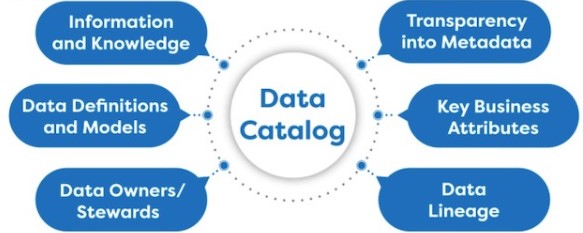
A data catalog is an organized inventory of data assets in an organization, designed to help data professionals and business users find and understand data. It serves as a critical component of modern data management and governance frameworks, facilitating better data accessibility, quality, and understanding. Below, we discuss the key components of a data catalog and provide examples of the types of information and features that are typically included.

Key Components of a Data Catalog

  1. Metadata Repository
    • Description: The core of a data catalog, containing detailed information about various data assets.
    • Examples: Metadata could include the names, types, and descriptions of datasets, data schemas, tables, and fields. It might also contain tags, annotations, and extended properties like data type, length, and nullable status.
  2. Data Dictionary
    • Description: A descriptive list of all data items in the catalog, providing context for each item.
    • Examples: For each data element, the dictionary would provide a clear definition, source of origin, usage guidelines, and information about data sensitivity and ownership.
  3. Data Lineage
    • Description: Visualization or documentation that explains where data comes from, how it moves through systems, and how it is transformed.
    • Examples: Lineage might include diagrams showing data flow from one system to another, transformations applied during data processing, and dependencies between datasets.
  4. Search and Discovery Tools
    • Description: Mechanisms that allow users to easily search for and find data across the organization.
    • Examples: Search capabilities might include keyword search, faceted search (filtering based on specific attributes), and full-text search across metadata descriptions.
  5. User Interface
    • Description: The front-end application through which users interact with the data catalog.
    • Examples: A web-based interface that provides a user-friendly dashboard to browse, search, and manage data assets.
  6. Access and Security Controls
    • Description: Features that manage who can view or edit data in the catalog.
    • Examples: Role-based access controls that limit users to certain actions based on their roles, such as read-only access for some users and edit permissions for others.
  7. Integration Capabilities
    • Description: The ability of the data catalog to integrate with other tools and systems in the data ecosystem.
    • Examples: APIs that allow integration with data management tools, BI platforms, and data lakes, enabling automated metadata updates and interoperability.
  8. Quality Metrics
    • Description: Measures and indicators related to the quality of data.
    • Examples: Data quality scores, reports on data accuracy, completeness, consistency, and timeliness.
  9. Usage Tracking and Analytics
    • Description: Tools to monitor how and by whom the data assets are accessed and used.
    • Examples: Logs and analytics that track user queries, most accessed datasets, and patterns of data usage.
  10. Collaboration Tools
    • Description: Features that facilitate collaboration among users of the data catalog.
    • Examples: Commenting capabilities, user forums, and shared workflows that allow users to discuss data, share insights, and collaborate on data governance tasks.
  11. Organisational Framework and Structure
    • The structure of an organisation itself is not typically a direct component of a data catalog. However, understanding and aligning the data catalog with the organizational structure is crucial for several reasons:
      • Role-Based Access Control: The data catalog often needs to reflect the organizational hierarchy or roles to manage permissions effectively. This involves setting up access controls that align with job roles and responsibilities, ensuring that users have appropriate access to data assets based on their position within the organization.
      • Data Stewardship and Ownership: The data catalog can include information about data stewards or owners who are typically assigned according to the organizational structure. These roles are responsible for the quality, integrity, and security of the data, and they often correspond to specific departments or business units.
      • Customization and Relevance: The data catalog can be customized to meet the specific needs of different departments or teams within the organization. For instance, marketing data might be more accessible and prominently featured for the marketing department in the catalog, while financial data might be prioritized for the finance team.
      • Collaboration and Communication: Understanding the organizational structure helps in designing the collaboration features of the data catalog. It can facilitate better communication and data sharing practices among different parts of the organization, promoting a more integrated approach to data management.
    • In essence, while the organisational structure isn’t stored as a component in the data catalog, it profoundly influences how the data catalog is structured, accessed, and utilised. The effectiveness of a data catalog often depends on how well it is tailored and integrated into the organizational framework, helping ensure that the right people have the right access to the right data at the right time.

Example of a Data Catalog in Use

Imagine a large financial institution that uses a data catalog to manage its extensive data assets. The catalog includes:

  • Metadata Repository: Contains information on thousands of datasets related to transactions, customer interactions, and compliance reports.
  • Data Dictionary: Provides definitions and usage guidelines for key financial metrics and customer demographic indicators.
  • Data Lineage: Shows the flow of transaction data through various security and compliance checks before it is used for reporting.
  • Search and Discovery Tools: Enable analysts to find and utilize specific datasets for developing insights into customer behavior and market trends.
  • Quality Metrics: Offer insights into the reliability of datasets used for critical financial forecasting.

By incorporating these components, the institution ensures that its data is well-managed, compliant with regulations, and effectively used to drive business decisions.

Tiveness of a data catalog often depends on how well it is tailored and integrated into the organisational framework, helping ensure that the right people have the right access to the right data at the right time.

Tooling

For organizations looking to implement data cataloging in cloud environments, the major cloud providers – Azure, Google Cloud Platform (GCP), and Amazon Web Services (AWS) – each offer their own specialised tools.

Here’s a comparison table that summarises the key features, descriptions, and use cases of data cataloging tools offered by Azure, Google Cloud Platform (GCP), and Amazon Web Services (AWS):

FeatureAzure PurviewGoogle Cloud Data CatalogAWS Glue Data Catalog
DescriptionA unified data governance service that automates the discovery of data and cataloging. It helps manage and govern on-premise, multi-cloud, and SaaS data.A fully managed and scalable metadata management service that enhances data discovery and understanding within Google Cloud.A central repository that stores structural and operational metadata, integrating with other AWS services.
Key Features– Automated data discovery and classification.
– Data lineage for end-to-end data insight.
– Integration with Azure services like Azure Data Lake, SQL Database, and Power BI.
– Metadata storage for Google Cloud and external data sources.
– Advanced search functionality using Google Search technology.
– Automatic schema management and discovery.
– Automatic schema discovery and generation.
– Serverless design, scales with data.
– Integration with AWS services like Amazon Athena, Amazon EMR, and Amazon Redshift.
Use CaseBest for organizations deeply integrated into the Microsoft ecosystem, seeking comprehensive governance and compliance capabilities.Ideal for businesses using multiple Google Cloud services, needing a simple, integrated approach to metadata management.Suitable for AWS-centric environments that require a robust, scalable solution for ETL jobs and data querying.
Data Catalogue Tooling Comparison

This table provides a quick overview to help you compare the offerings and decide which tool might be best suited for your organizational needs based on the environment you are most invested in.

Conclusion

Implementing a data catalogue can dramatically enhance an organisation’s ability to manage data efficiently. By following these steps and choosing the right tools, businesses can ensure their data assets are well-organised, easily accessible, and securely governed. Whether you’re part of a small team or a large enterprise, embracing these practices can lead to more informed decision-making and a competitive edge in today’s data-driven world.

A Concise Guide to Key Data Management Components and Their Interdependencies in the Data Lifecycle

Introduction

In the contemporary landscape of data-driven decision-making, robust data management practices are critical for organisations seeking to harness the full potential of their data assets. Effective data management encompasses various components, each playing a vital role in ensuring data integrity, accessibility, and usability.

Key components such as data catalogues, taxonomies, common data models, data dictionaries, master data, data lineage, data lakes, data warehouses, data lakehouses, and data marts, along with their interdependencies and sequences within the data lifecycle, form the backbone of a sound data management strategy.

This cocise guide explores these components in detail, elucidating their definitions, uses, and how they interrelate to support seamless data management throughout the data lifecycle.

Definitions and Usage of Key Data Management Components

  • Data Catalogue
    • Definition: A data catalogue is a comprehensive inventory of data assets within an organisation. It provides metadata, data classification, and information on data lineage, data quality, and data governance.
    • Usage: Data catalogues help data users discover, understand, and manage data. They enable efficient data asset management and ensure compliance with data governance policies.
  • Data Taxonomy
    • Definition: Data taxonomy is a hierarchical structure that organises data into categories and subcategories based on shared characteristics or business relevance.
    • Usage: It facilitates data discovery, improves data quality, and aids in the consistent application of data governance policies by providing a clear structure for data classification.
  • Data Dictionary
    • Definition: A data dictionary is a centralised repository that describes the structure, content, and relationships of data elements within a database or information system.
    • Usage: Data dictionaries provide metadata about data, ensuring consistency in data usage and interpretation. They support database management, data governance, and facilitate communication among stakeholders.
  • Master Data
    • Definition: Master data represents the core data entities that are essential for business operations, such as customers, products, employees, and suppliers. It is a single source of truth for these key entities.
    • Usage: Master data management (MDM) ensures data consistency, accuracy, and reliability across different systems and processes, supporting operational efficiency and decision-making.
  • Common Data Model (CDM)
    • Definition: A common data model is a standardised framework for organising and structuring data across disparate systems and platforms, enabling data interoperability and consistency.
    • Usage: CDMs facilitate data integration, sharing, and analysis across different applications and organisations, enhancing data governance and reducing data silos.
  • Data Lake
    • Definition: A data lake is a centralised repository that stores raw, unprocessed data in its native format, including structured, semi-structured, and unstructured data.
    • Usage: Data lakes enable large-scale data storage and processing, supporting advanced analytics, machine learning, and big data initiatives. They offer flexibility in data ingestion and analysis.
  • Data Warehouse
    • Definition: A data warehouse is a centralised repository that stores processed and structured data from multiple sources, optimised for query and analysis.
    • Usage: Data warehouses support business intelligence, reporting, and data analytics by providing a consolidated view of historical data, facilitating decision-making and strategic planning.
  • Data Lakehouse
    • Definition: A data lakehouse is a modern data management architecture that combines the capabilities of data lakes and data warehouses. It integrates the flexibility and scalability of data lakes with the data management and ACID (Atomicity, Consistency, Isolation, Durability) transaction support of data warehouses.
    • Usage: Data lakehouses provide a unified platform for data storage, processing, and analytics. They allow organisations to store raw and processed data in a single location, making it easier to perform data engineering, data science, and business analytics. The architecture supports both structured and unstructured data, enabling advanced analytics and machine learning workflows while ensuring data integrity and governance.
  • Data Mart
    • Definition: A data mart is a subset of a data warehouse that is focused on a specific business line, department, or subject area. It contains a curated collection of data tailored to meet the specific needs of a particular group of users within an organisation.
    • Usage: Data marts are used to provide a more accessible and simplified view of data for specific business functions, such as sales, finance, or marketing. By focusing on a narrower scope of data, data marts allow for quicker query performance and more relevant data analysis for the target users. They support tactical decision-making by enabling departments to access the specific data they need without sifting through the entire data warehouse. Data marts can be implemented using star schema or snowflake schema to optimize data retrieval and analysis.
  • Data Lineage
    • Definition: Data lineage refers to the tracking and visualisation of data as it flows from its source to its destination, showing how data is transformed, processed, and used over time.
    • Usage: Data lineage provides transparency into data processes, supporting data governance, compliance, and troubleshooting. It helps understand data origin, transformations, and data usage across the organisation.

Dependencies and Sequence in the Data Life Cycle

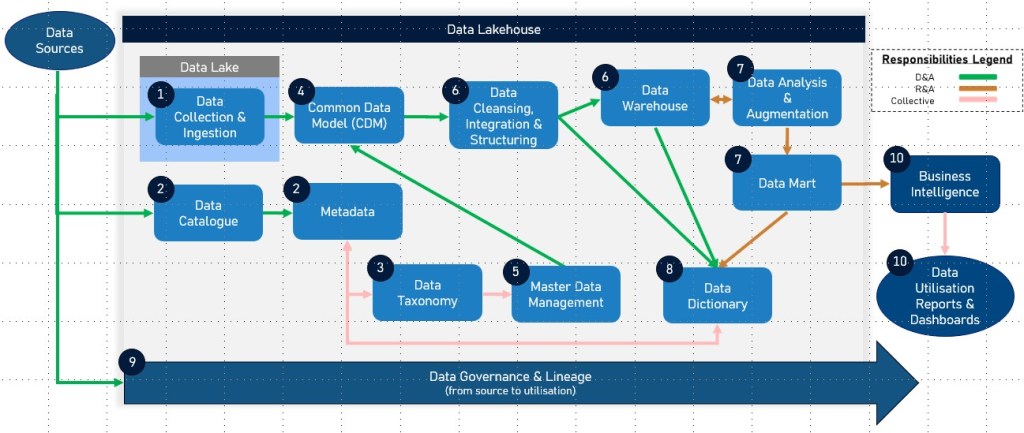
  1. Data Collection and Ingestion – Data is collected from various sources and ingested into a data lake for storage in its raw format.
  2. Data Cataloguing and Metadata Management – A data catalogue is used to inventory and organise data assets in the data lake, providing metadata and improving data discoverability. The data catalogue often includes data lineage information to track data flows and transformations.
  3. Data Classification and Taxonomy – Data is categorised using a data taxonomy to facilitate organisation and retrieval, ensuring data is easily accessible and understandable.
  4. Data Structuring and Integration – Relevant data is structured and integrated into a common data model to ensure consistency and interoperability across systems.
  5. Master Data ManagementMaster data is identified, cleansed, and managed to ensure consistency and accuracy across into the datawarehouse and other systems.
  6. Data Transformation and Loading – Data is processed, transformed, and loaded into a data warehouse for efficient querying and analysis.
  7. Focused Data Subset – Data relevant to and required for business a sepcific domain i.e. Financial data analytics and reporting are augmented into a Domain Specific Data Mart.
  8. Data Dictionary Creation – A data dictionary is developed to provide detailed metadata about the structured data, supporting accurate data usage and interpretation.
  9. Data Lineage Tracking – Throughout the data lifecycle, data lineage is tracked to document the origin, transformations, and usage of data, ensuring transparency and aiding in compliance and governance.
  10. Data Utilisation and Analysis – Structured data in the data warehouse and/or data mart is used for business intelligence, reporting, and analytics, driving insights and decision-making.

Summary of Dependencies

Data Sources → Data Catalogue → Data Taxonomy → Data Dictionary → Master Data → Common Data Model → Data Lineage → Data Lake → Data Warehouse → Data Lakehouse → Data Mart → Reports & Dashboards

  • Data Lake: Initial storage for raw data.
  • Data Catalogue: Provides metadata, including data lineage, and improves data discoverability in the data lake.
  • Data Taxonomy: Organises data for better accessibility and understanding.
  • Common Data Model: Standardises data structure for integration and interoperability.
  • Data Dictionary: Documents metadata for structured data.
  • Data Lakehouse: Integrates the capabilities of data lakes and data warehouses, supporting efficient data processing and analysis.
  • Data Warehouse: Stores processed data for analysis and reporting.
  • Data Mart: Focused subset of the data warehouse tailored for specific business lines or departments.
  • Master Data: Ensures consistency and accuracy of key business entities across systems.
  • Data Lineage: Tracks data flows and transformations throughout the data lifecycle, supporting governance and compliance.

Each component plays a crucial role in the data lifecycle, with dependencies that ensure data is efficiently collected, managed, and utilised for business value. The inclusion of Data Lakehouse and Data Mart enhances the architecture by providing integrated, flexible, and focused data management solutions, supporting advanced analytics and decision-making processes. Data lineage, in particular, provides critical insights into the data’s journey, enhancing transparency and trust in data processes.

Tooling for key data management components

Selecting the right tools to govern, protect, and manage data is paramount for organisations aiming to maximise the value of their data assets. Microsoft Purview and CluedIn are two leading solutions that offer comprehensive capabilities in this domain. This comparison table provides a detailed analysis of how each platform addresses key data management components, including data catalogues, taxonomies, common data models, data dictionaries, master data, data lineage, data lakes, data warehouses, data lakehouses, and data marts. By understanding the strengths and functionalities of Microsoft Purview and CluedIn, organisations can make informed decisions to enhance their data management strategies and achieve better business outcomes.

Data Management ComponentMicrosoft PurviewCluedIn
Data CatalogueProvides a unified data catalog that captures and describes data metadata automatically. Facilitates data discovery and governance with a business glossary and technical search terms.Offers a comprehensive data catalog with metadata management, improving discoverability and governance of data assets across various sources.
Data TaxonomySupports data classification and organization using built-in and custom classifiers. Enhances data discoverability through a structured taxonomy.Enables data classification and organization using vocabularies and custom taxonomies. Facilitates better data understanding and accessibility.
Common Data Model (CDM)Facilitates data integration and interoperability by supporting standard data models and classifications. Integrates with Microsoft Dataverse.Natively supports the Common Data Model and integrates seamlessly with Microsoft Dataverse and other Azure services, ensuring flexible data integration.
Data DictionaryFunctions as a detailed data dictionary through its data catalog, documenting metadata for structured data and providing detailed descriptions.Provides a data dictionary through comprehensive metadata management, documenting and describing data elements across systems.
Data LineageOffers end-to-end data lineage, visualizing data flows across various platforms like Data Factory, Azure Synapse, and Power BI.Provides detailed data lineage tracking, extending Purview’s lineage capabilities with additional processing logs and insights.
Data LakeIntegrates with Azure Data Lake, managing metadata and governance policies to ensure consistency and compliance.Supports integration with data lakes, managing and governing the data stored within them through comprehensive metadata management.
Data WarehouseSupports data warehouses by cataloging and managing metadata for structured data used in analytics and business intelligence.Integrates with data warehouses, ensuring data governance and quality management, and supporting analytics with tools like Azure Synapse and Power BI.
Data LakehouseNot explicitly defined as a data lakehouse, but integrates capabilities of data lakes and warehouses to support hybrid data environments.Integrates with both data lakes and data warehouses, effectively supporting the data lakehouse model for seamless data management and governance.
Master DataManages master data effectively by ensuring consistency and accuracy across systems through robust governance and classification.Excels in master data management by consolidating, cleansing, and connecting data sources into a unified view, ensuring data quality and reliability.
Data GovernanceProvides comprehensive data governance solutions, including automated data discovery, classification, and policy enforcemen.Offers robust data governance features, integrating with Azure Purview for enhanced governance capabilities and compliance tracking.
Data governance tooling: Purview vs CluedIn

Conclusion

Navigating the complexities of data management requires a thorough understanding of the various components and their roles within the data lifecycle. From initial data collection and ingestion into data lakes to the structuring and integration within common data models and the ultimate utilisation in data warehouses and data marts, each component serves a distinct purpose. Effective data management solutions like Microsoft Purview and CluedIn exemplify how these components can be integrated to provide robust governance, ensure data quality, and facilitate advanced analytics. By leveraging these tools and understanding their interdependencies, organisations can build a resilient data infrastructure that supports informed decision-making, drives innovation, and maintains regulatory compliance.

Navigating the Labyrinth: A Comprehensive Guide to Data Management for Executives

As a consultant focussed to helping organisations maximise their efficiency and strategic advantage, I cannot overstate the importance of effective data management. “Navigating the Labyrinth: An Executive Guide to Data Management” by Laura Sebastian-Coleman is an invaluable resource that provides a detailed and insightful roadmap for executives to understand the complexities and significance of data management within their organisations. The book’s guidance is essential for ensuring that your data is accurate, accessible, and actionable, thus enabling better decision-making and organisational efficiency. Here’s a summary of the key points covered in this highly recommended book covering core data management practices.

Introduction

Sebastian-Coleman begins by highlighting the importance of data in the modern business environment. She compares data to physical or financial assets, underscoring that it requires proper management to extract its full value.

Part I: The Case for Data Management

The book makes a compelling case for the necessity of data management. Poor data quality can lead to significant business issues, including faulty decision-making, inefficiencies, and increased costs. Conversely, effective data management provides a competitive edge by enabling more precise analytics and insights.

Part II: Foundations of Data Management

The foundational concepts and principles of data management are thoroughly explained. Key topics include:

  • Data Governance: Establishing policies, procedures, and standards to ensure data quality and compliance.
  • Data Quality: Ensuring the accuracy, completeness, reliability, and timeliness of data.
  • Metadata Management: Managing data about data to improve its usability and understanding.
  • Master Data Management (MDM): Creating a single source of truth for key business entities like customers, products, and employees.

Part III: Implementing Data Management

Sebastian-Coleman offers practical advice on implementing data management practices within an organisation. She stresses the importance of having a clear strategy, aligning data management efforts with business objectives, and securing executive sponsorship. The book also covers:

  • Data Management Frameworks: Structured approaches to implementing data management.
  • Technology and Tools: Leveraging software and tools to support data management activities.
  • Change Management: Ensuring that data management initiatives are adopted and sustained across the organisation.

Part IV: Measuring Data Management Success

Measuring and monitoring the success of data management initiatives is crucial. The author introduces various metrics and KPIs (Key Performance Indicators) that organisations can use to assess data quality, governance, and overall data management effectiveness.

Part V: Case Studies and Examples

The book includes real-world case studies and examples to illustrate how different organisations have successfully implemented data management practices. These examples provide practical insights and lessons learned, demonstrating the tangible benefits of effective data management.

Conclusion

Sebastian-Coleman concludes by reiterating the importance of data management as a strategic priority for organisations. While the journey to effective data management can be complex and challenging, the rewards in terms of improved decision-making, efficiency, and competitive advantage make it a worthwhile endeavour.

Key Takeaways for Executives

  1. Strategic Importance: Data management is essential for leveraging data as a strategic asset.
  2. Foundational Elements: Effective data management relies on strong governance, quality, and metadata practices.
  3. Implementation: A clear strategy, proper tools, and change management are crucial for successful data management initiatives.
  4. Measurement: Regular assessment through metrics and KPIs is necessary to ensure the effectiveness of data management.
  5. Real-world Application: Learning from case studies and practical examples can guide organisations in their data management efforts.

In conclusion, “Navigating the Labyrinth” is an essential guide that equips executives and data professionals with the knowledge and tools needed to manage data effectively. By following the structured and strategic data management practices outlined in the book, your organisation can unlock the full potential of its data, leading to improved business outcomes. I highly recommend this book for any executive looking to understand and improve their data management capabilities and to better understand the importance of data management within their organisation, as it provides essential insights and practical guidance to navigate the complexities of this crucial field.

AI Revolution 2023: Transforming Businesses with Cutting-Edge Innovations and Ethical Challenges


Introduction

The blog post Artificial Intelligence Capabilities written in Nov’18 discusses the significance and capabilities of AI in the modern business world. It emphasises that AI’s real business value is often overshadowed by hype, unrealistic expectations, and concerns about machine control.

The post clarifies AI’s objectives and capabilities, defining AI simply as using computers to perform tasks typically requiring human intelligence. It outlines AI’s three main goals: capturing information, determining what is happening, and understanding why it is happening. I used an example of a lion chase to illustrate how humans and machines process information differently, highlighting that machines, despite their advancements, still struggle with understanding context as humans do (causality).

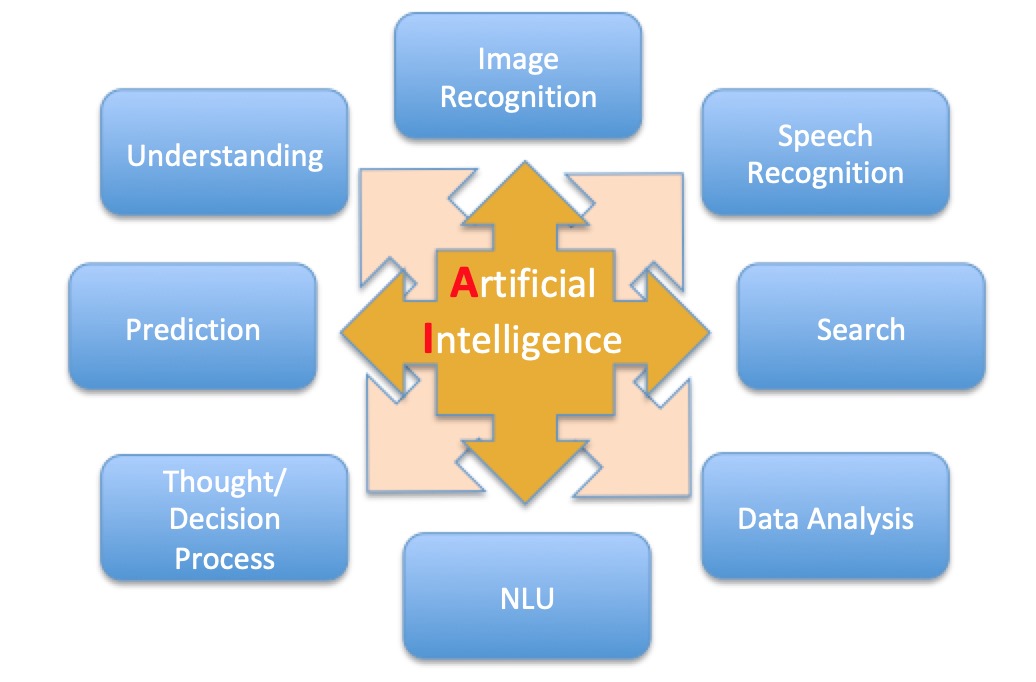
Additionally, it lists eight AI capabilities in use at the time: Image Recognition, Speech Recognition, Data Search, Data Patterns, Language Understanding, Thought/Decision Process, Prediction, and Understanding.

Each capability, like Image Recognition and Speech Recognition, is explained in terms of its function and technological requirements. The post emphasises that while machines have made significant progress, they still have limitations compared to human reasoning and understanding.

The landscape of artificial intelligence (AI) capabilities has evolved significantly since that earlier focus on objectives like capturing information, determining events, and understanding causality. In 2023, AI has reached impressive technical capabilities and has become deeply integrated into various aspects of everyday life and business operations.

2023 AI technical capabilities and daily use examples

Generative AI’s Breakout: AI in 2023 has been marked by the explosive growth of generative AI tools. Companies like OpenAI have revolutionised how businesses approach tasks that traditionally required human creativity and intelligence. Advanced models like GPT-4 and DALL-E 2, which have demonstrated remarkable humanlike outputs, significantly impacting the way businesses operate in the generation of unique content, design graphics, or even code software more efficiently, thereby reducing operational costs and enhancing productivity. For example, organisations are using generative AI in product and service development, risk and supply chain management, and other business functions. This shift has allowed companies to optimise product development cycles, enhance existing products, and create new AI-based products, leading to increased revenue and innovative business models​​​​.

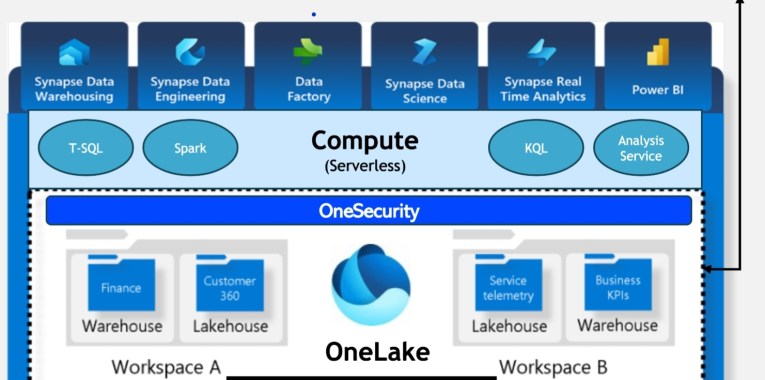
AI in Data Management and Analytics: The use of AI in data management and analytics has revolutionised the way businesses approach data-driven decision-making. AI algorithms and machine learning models are adept at processing large volumes of data rapidly, identifying patterns and insights that would be challenging for humans to discern. These technologies enable predictive analytics, where AI models can forecast trends and outcomes based on historical data. In customer analytics, AI is used to segment customers, predict buying behaviours, and personalise marketing efforts. Financial institutions leverage AI in risk assessment and fraud detection, analysing transaction patterns to identify anomalies that may indicate fraudulent activities. In healthcare, AI-driven data analytics assists in diagnosing diseases, predicting patient outcomes, and optimizing treatment plans. In the realm of supply chain and logistics, AI algorithms forecast demand, optimise inventory levels, and improve delivery routes. The integration of AI with big data technologies also enhances real-time analytics, allowing businesses to respond swiftly to changing market dynamics. Moreover, AI contributes to the democratisation of data analytics by providing tools that require less technical expertise. Platforms like Microsoft Fabric and Power BI, integrate AI (Microsoft Copilot) to enable users to generate insights through natural language queries, making data analytics more accessible across organizational levels. Microsoft Fabric, with its integration of Azure AI, represents a significant advancement in the realm of AI and analytics. This innovative platform, as of 2023, offers a unified solution for enterprises, covering a range of functions from data movement to data warehousing, data science, real-time analytics, and business intelligence. The integration with Azure AI services, especially the Azure OpenAI Service, enables the deployment of powerful language models, which facilitates a variety of AI applications such as data cleansing, content generation, summarisation, and natural language to code translation, auto-completion and quality assurance. Overall, AI in data management covering data engineering, analytics and science not only improves efficiency and accuracy but also drives innovation and strategic planning in various industries.

Regulatory Developments: The AI industry is experiencing increased regulation. For example, the U.S. has introduced guidelines to protect personal data and limit surveillance, and the EU is working on the AI Act, potentially the world’s first broad standard for AI regulation. These developments are likely to make AI systems more transparent, with an emphasis on disclosing data usage, limitations, and biases​​.

AI in Recruitment and Equality: AI is increasingly being used in recruitment processes. LinkedIn, a leader in professional networking and recruitment, has been utilising AI to enhance their recruitment processes. AI algorithms help filter through vast numbers of applications to identify the most suitable candidates. However, there’s a growing concern about potential discrimination, as AI systems can inherit biases from their training data, leading to a push for more impartial data sets and algorithms. The UK’s Equality Act 2010 and the General Data Protection Regulation in Europe regulate such automated decision-making, emphasising the importance of unbiased and fair AI use in recruitment​​. Moreover, LinkedIn has been working on AI systems that aim to minimise bias in recruitment, ensuring a more equitable and diverse hiring process.

AI in Healthcare: AI’s application in healthcare is growing rapidly. It ranges from analysing patient records to aiding in drug discovery and patient monitoring through to the resource demand and supply management of healthcare professionals. The global market for AI in healthcare, valued at approximately $11 billion in 2021, is expected to rise significantly. This includes using AI for real-time data acquisition from patient health records and in medical robotics, underscoring the need for safeguards to protect sensitive data​​. Companies like Google Health and IBM Watson Heath are utilizing AI to revolutionise healthcare with AI algorithms being used to analyse medical images for diagnostics, predict patient outcomes, and assist in drug discovery. Google’s AI system for diabetic retinopathy screening has shown to be effective in identifying patients at risk, thereby aiding in early intervention and treatment.

AI for Face Recognition: AI-powered face recognition technology is widely used, from banking apps to public surveillance. Face recognition technology is widely used in various applications, from unlocking smartphones to enhancing security systems. Apple’s Face ID technology, used in iPhones and iPads, is an example of AI-powered face recognition providing both convenience and security to users. Similarly, banks and financial institutions are using face recognition for secure customer authentication in mobile banking applications. However, this has raised concerns about privacy and fundamental rights. The EU’s forthcoming AI Act is expected to regulate such technologies, highlighting the importance of responsible and ethical AI usage​​.

AI’s Role in Scientific Progress: AI models like PaLM and Nvidia’s reinforcement learning agents have been used to accelerate scientific developments, from controlling hydrogen fusion to improving chip designs. This showcases AI’s potential to not only aid in commercial ventures but also to contribute significantly to scientific and technological advancements​​. AI’s impact on scientific progress can be seen in projects like AlphaFold by DeepMind (a subsidiary of Alphabet, Google’s parent company). AlphaFold’s AI-driven predictions of protein structures have significant implications for drug discovery and understanding diseases at a molecular level, potentially revolutionising medical research.

AI in Retail and E-commerce: Amazon’s use of AI in its recommendation system exemplifies how AI can drive sales and improve customer experience. The system analyses customer data to provide personalized product recommendations, significantly enhancing the shopping experience and increasing sales.

AI’s ambition of causality – the 3rd AI goal

AI’s ambition to evolve towards understanding and establishing causality represents a significant leap beyond its current capabilities in pattern recognition and prediction. Causality, unlike mere correlation, involves understanding the underlying reasons why events occur, which is a complex challenge for AI. This ambition stems from the need to make more informed and reliable decisions based on AI analyses.

For instance, in healthcare, an AI that understands causality could distinguish between factors that contribute to a disease and those that are merely associated with it. This would lead to more effective treatments and preventative strategies. In business and economics, AI capable of causal inference could revolutionise decision-making processes by accurately predicting the outcomes of various strategies, taking into account complex, interdependent factors. This would allow companies to make more strategic and effective decisions.

The journey towards AI understanding causality involves developing algorithms that can not only process vast amounts of data but also recognise and interpret the intricate web of cause-and-effect relationships within that data. This is a significant challenge because it requires the AI to have a more nuanced understanding of the world, akin to human-like reasoning. The development of such AI would mark a significant milestone in the field, bridging the gap between artificial intelligence and human-like intelligence – then it will know why the lion is chasing and why the human is running away – achieving the third AI goal.

In conclusion

AI in 2023 is not only more advanced but also more embedded in various sectors than ever before. Its rapid development brings both significant opportunities and challenges. The examples highlight the diverse applications of AI across different industries, demonstrating its potential to drive innovation, optimise operations, and create value in various business contexts.

For organisations, leveraging AI means balancing innovation with responsible use, ensuring ethical standards, and staying ahead in a rapidly evolving regulatory landscape. The potential for AI to transform industries, drive growth, and contribute to scientific progress is immense, but it requires a careful and informed approach to harness these benefits effectively.

The development of AI capable of understanding causality represents a significant milestone, as it would enable AI to have a nuanced, human-like understanding of complex cause-and-effect relationships, fundamentally enhancing its decision-making capabilities.

Looking forward to see where this technology will be in 2028…?

Transforming Data and Analytics Delivery Management: The Rise of Platform-Based Delivery

Artificial Intelligence (AI) has already started to transform the way businesses make decisions which is placing ‘n microscope on data as the life blood of AI engines. This emphasises the importance of efficient data management pushing delivery and data professionals to a pivotal challenge – the need to enhance the efficiency and predictability of delivering intricate and tailored data-driven insights. Similar to the UK Government’s call for transformation in the construction sector, there’s a parallel movement within the data and analytics domain suggesting that product platform-based delivery could be the catalyst for radical improvements.

Visionary firms in the data and analytics sector are strategically investing in product platforms to provide cost-effective and configurable data solutions. This innovative approach involves leveraging standardised core components, much like the foundational algorithms or data structures, and allowing platform customisation through the configuration of a variety of modular data processing elements. This strategy empowers the creation of a cohesive set of components with established data supply chains, offering flexibility in designing a wide array of data-driven solutions.

The adoption of product platform-based delivery in the data and analytics discipline, is reshaping the role of delivery (project and product) managers in several profound ways:

  1. Pre-Integrated Data Solutions and Established Supply Chains:
    In an environment where multiple firms develop proprietary data platforms, the traditional hurdles of integrating diverse data sources are already overcome, and supply chains are well-established. This significantly mitigates many key risks upfront. Consequently, product managers transition into roles focused on guiding clients in selecting the most suitable data platform, each with its own dedicated delivery managers. The focus shifts from integrating disparate data sources to choosing between pre-integrated data solutions.
  2. Data Technological Fluency:
    To assist clients in selecting the right platform, project professionals must cultivate a deep understanding of each firm’s data platform approach, technologies, and delivery mechanisms. This heightened engagement with data technology represents a shift for project managers accustomed to more traditional planning approaches. Adapting to this change becomes essential to provide informed guidance in a rapidly evolving data and analytics landscape.
  3. Advisory Role in Data Platform Selection:
    As product platform delivery gains traction, the demand for advice on data platform selection is on the rise. To be a player in the market, data solution providers should be offering business solutions aimed at helping clients define and deliver data-driven insights using product platforms. Delivery managers who resist embracing this advisory role risk falling behind in the competitive data and analytics market.

The future of data and analytics seems poised for a significant shift from project-based to product-focused. This transition demands that project professionals adapt to the changing landscape by developing the capabilities and knowledge necessary to thrive in this new and competitive environment.

In conclusion, the adoption of platform-based delivery for complex data solutions is not just a trend but a fundamental change that is reshaping the role of delivery management. Technology delivery professionals must proactively engage with this evolution, embracing the advisory role, and staying abreast of technological advancements to ensure their continued success in the dynamic data and analytics industry.

Embracing Bimodal Model: A Data-Driven Journey for Modern Organisations

With data being the live blood of organisations the emphasis on data management places organisations on a continuous search for innovative approaches to harness and optimise the power of their data assets. In this pursuit, the bimodal model is a well established strategy that can be successfully employed by data-driven enterprises. This approach, which combines the stability of traditional data management with the agility of modern data practices, while providing a delivery methodology facilitating rapid innovation and resilient technology service provision.

Understanding the Bimodal Model

Gartner states: “Bimodal IT is the practice of managing two separate, coherent modes of IT delivery, one focused on stability and the other on agility. Mode 1 is traditional and sequential, emphasising safety and accuracy. Mode 2 is exploratory and nonlinear, emphasising agility and speed.

At its core, the bimodal model advocates for a dual approach to data management. Mode 1 focuses on the stable, predictable aspects of data, ensuring the integrity, security, and reliability of core business processes. This mode aligns with traditional data management practices, where accuracy and consistency are paramount. On the other hand, Mode 2 emphasizes agility, innovation, and responsiveness to change. It enables organizations to explore emerging technologies, experiment with new data sources, and adapt swiftly to evolving business needs.

Benefits of Bimodal Data Management

1. Optimised Performance and Stability: Mode 1 ensures that essential business functions operate smoothly, providing a stable foundation for the organization.

Mode 1 of the bimodal model is dedicated to maintaining the stability and reliability of core business processes. This is achieved through robust data governance, stringent quality controls, and established best practices in data management. By ensuring the integrity of data and the reliability of systems, organizations can optimise the performance of critical operations. This stability is especially crucial for industries where downtime or errors can have significant financial or operational consequences, such as finance, healthcare, and manufacturing.

Example: In the financial sector, a major bank implemented the bimodal model to enhance its core banking operations. Through Mode 1, the bank ensured the stability of its transaction processing systems, reducing system downtime by 20% and minimizing errors in financial transactions. This stability not only improved customer satisfaction but also resulted in a 15% increase in operational efficiency, as reported in the bank’s annual report.

2. Innovation and Agility: Mode 2 allows businesses to experiment with cutting-edge technologies like AI, machine learning, and big data analytics, fostering innovation and agility in decision-making processes.

Mode 2 is the engine of innovation within the bimodal model. It provides the space for experimentation with emerging technologies and methodologies. Businesses can leverage AI, machine learning, and big data analytics to uncover new insights, identify patterns, and make informed decisions. This mode fosters agility by encouraging a culture of continuous improvement and adaptation to technological advancements. It enables organizations to respond quickly to market trends, customer preferences, and competitive challenges, giving them a competitive edge in dynamic industries.

Example: A leading e-commerce giant adopted the bimodal model to balance stability and innovation in its operations. Through Mode 2, the company integrated machine learning algorithms into its recommendation engine. As a result, the accuracy of personalized product recommendations increased by 25%, leading to a 10% rise in customer engagement and a subsequent 12% growth in overall sales. This successful integration of Mode 2 practices directly contributed to the company’s market leadership in the highly competitive online retail space.

3. Enhanced Scalability: The bimodal approach accommodates the scalable growth of data-driven initiatives, ensuring that the organization can handle increased data volumes efficiently.

In the modern data landscape, the volume of data generated is growing exponentially. Mode 1 ensures that foundational systems are equipped to handle increasing data loads without compromising performance or stability. Meanwhile, Mode 2 facilitates the implementation of scalable technologies and architectures, such as cloud computing and distributed databases. This combination allows organizations to seamlessly scale their data infrastructure, supporting the growth of data-driven initiatives without experiencing bottlenecks or diminishing performance.

Example: A global technology firm leveraged the bimodal model to address the challenges of data scalability in its cloud-based services. In Mode 1, the company optimized its foundational cloud infrastructure, ensuring uninterrupted service during periods of increased data traffic. Simultaneously, through Mode 2 practices, the firm adopted containerization and microservices architecture, resulting in a 30% improvement in scalability. This enhanced scalability enabled the company to handle a 50% surge in user data without compromising performance, leading to increased customer satisfaction and retention.

4. Faster Time-to-Insights: By leveraging Mode 2 practices, organizations can swiftly analyze new data sources, enabling faster extraction of valuable insights for strategic decision-making.

Mode 2 excels in rapidly exploring and analyzing new and diverse data sources. This capability significantly reduces the time it takes to transform raw data into actionable insights. Whether it’s customer feedback, market trends, or operational metrics, Mode 2 practices facilitate agile and quick analysis. This speed in obtaining insights is crucial in fast-paced industries where timely decision-making is a competitive advantage.

Example: A healthcare organization implemented the bimodal model to expedite the analysis of patient data for clinical decision-making. Through Mode 2, the organization utilized advanced analytics and machine learning algorithms to process diagnostic data. The implementation led to a 40% reduction in the time required for diagnosis, enabling medical professionals to make quicker and more accurate decisions. This accelerated time-to-insights not only improved patient outcomes but also contributed to the organization’s reputation as a leader in adopting innovative healthcare technologies.

5. Adaptability in a Dynamic Environment: Bimodal data management equips organizations to adapt to market changes, regulatory requirements, and emerging technologies effectively.

In an era of constant change, adaptability is a key determinant of organizational success. Mode 2’s emphasis on experimentation and innovation ensures that organizations can swiftly adopt and integrate new technologies as they emerge. Additionally, the bimodal model allows organizations to navigate changing regulatory landscapes by ensuring that core business processes (Mode 1) comply with existing regulations while simultaneously exploring new approaches to meet evolving requirements. This adaptability is particularly valuable in industries facing rapid technological advancements or regulatory shifts, such as fintech, healthcare, and telecommunications.

Example: A telecommunications company embraced the bimodal model to navigate the dynamic landscape of regulatory changes and emerging technologies. In Mode 1, the company ensured compliance with existing telecommunications regulations. Meanwhile, through Mode 2, the organization invested in exploring and adopting 5G technologies. This strategic approach allowed the company to maintain regulatory compliance while positioning itself as an early adopter of 5G, resulting in a 25% increase in market share and a 15% growth in revenue within the first year of implementation.

Implementation Challenges and Solutions

Implementing a bimodal model in data management is not without its challenges. Legacy systems, resistance to change, and ensuring a seamless integration between modes can pose significant hurdles. However, these challenges can be overcome through a strategic approach that involves comprehensive training, fostering a culture of innovation, and investing in robust data integration tools.

1. Legacy Systems: Overcoming the Weight of Tradition

Challenge: Many organizations operate on legacy systems that are deeply ingrained in their processes. These systems, often built on older technologies, can be resistant to change, making it challenging to introduce the agility required by Mode 2.

Solution: A phased approach is crucial when dealing with legacy systems. Organizations can gradually modernize their infrastructure, introducing new technologies and methodologies incrementally. This could involve the development of APIs to bridge old and new systems, adopting microservices architectures, or even considering a hybrid cloud approach. Legacy system integration specialists can play a key role in ensuring a smooth transition and minimizing disruptions.

2. Resistance to Change: Shifting Organizational Mindsets

Challenge: Resistance to change is a common challenge when implementing a bimodal model. Employees accustomed to traditional modes of operation may be skeptical or uncomfortable with the introduction of new, innovative practices.

Solution: Fostering a culture of change is essential. This involves comprehensive training programs to upskill employees on new technologies and methodologies. Additionally, leadership plays a pivotal role in communicating the benefits of the bimodal model, emphasizing how it contributes to both stability and innovation. Creating cross-functional teams that include members from different departments and levels of expertise can also promote collaboration and facilitate a smoother transition.

3. Seamless Integration Between Modes: Ensuring Cohesion

Challenge: Integrating Mode 1 (stability-focused) and Mode 2 (innovation-focused) operations seamlessly can be complex. Ensuring that both modes work cohesively without compromising the integrity of data or system reliability is a critical challenge.

Solution: Implementing robust data governance frameworks is essential for maintaining cohesion between modes. This involves establishing clear protocols for data quality, security, and compliance. Organizations should invest in integration tools that facilitate communication and data flow between different modes. Collaboration platforms and project management tools that promote transparency and communication can bridge the gap between teams operating in different modes, fostering a shared understanding of goals and processes.

4. Lack of Skillset: Nurturing Expertise for Innovation

Challenge: Mode 2 often requires skills in emerging technologies such as artificial intelligence, machine learning, and big data analytics. Organizations may face challenges in recruiting or upskilling their workforce to meet the demands of this innovative mode.

Solution: Investing in training programs, workshops, and certifications can help bridge the skills gap. Collaboration with educational institutions or partnerships with specialized training providers can ensure that employees have access to the latest knowledge and skills. Creating a learning culture within the organization, where employees are encouraged to explore and acquire new skills, is vital for the success of Mode 2.

5. Overcoming Silos: Encouraging Cross-Functional Collaboration

Challenge: Siloed departments and teams can hinder the flow of information and collaboration between Mode 1 and Mode 2 operations. Communication breakdowns can lead to inefficiencies and conflicts.

Solution: Breaking down silos requires a cultural shift and the implementation of cross-functional teams. Encouraging open communication channels, regular meetings between teams from different modes, and fostering a shared sense of purpose can facilitate collaboration. Leadership should promote a collaborative mindset, emphasizing that both stability and innovation are integral to the organization’s success.

By addressing these challenges strategically, organizations can create a harmonious bimodal environment that combines the best of both worlds—ensuring stability in core operations while fostering innovation to stay ahead in the dynamic landscape of data-driven decision-making.

Case Studies: Bimodal Success Stories

Several forward-thinking organiSations have successfully implemented the bimodal model to enhance their data management capabilities. Companies like Netflix, Amazon, and Airbnb have embraced this approach, allowing them to balance stability with innovation, leading to improved customer experiences and increased operational efficiency.

Netflix: Balancing Stability and Innovation in Entertainment

Netflix, a pioneer in the streaming industry, has successfully implemented the bimodal model to revolutionize the way people consume entertainment. In Mode 1, Netflix ensures the stability of its streaming platform, focusing on delivering content reliably and securely. This includes optimizing server performance, ensuring data integrity, and maintaining a seamless user experience. Simultaneously, in Mode 2, Netflix harnesses the power of data analytics and machine learning to personalize content recommendations, optimize streaming quality, and forecast viewer preferences. This innovative approach has not only enhanced customer experiences but also allowed Netflix to stay ahead in a highly competitive and rapidly evolving industry.

Amazon: Transforming Retail with Data-Driven Agility

Amazon, a global e-commerce giant, employs the bimodal model to maintain the stability of its core retail operations while continually innovating to meet customer expectations. In Mode 1, Amazon focuses on the stability and efficiency of its e-commerce platform, ensuring seamless transactions and reliable order fulfillment. Meanwhile, in Mode 2, Amazon leverages advanced analytics and artificial intelligence to enhance the customer shopping experience. This includes personalized product recommendations, dynamic pricing strategies, and the use of machine learning algorithms to optimize supply chain logistics. The bimodal model has allowed Amazon to adapt to changing market dynamics swiftly, shaping the future of e-commerce through a combination of stability and innovation.

Airbnb: Personalizing Experiences through Data Agility

Airbnb, a disruptor in the hospitality industry, has embraced the bimodal model to balance the stability of its booking platform with continuous innovation in user experiences. In Mode 1, Airbnb ensures the stability and security of its platform, facilitating millions of transactions globally. In Mode 2, the company leverages data analytics and machine learning to personalize user experiences, providing tailored recommendations for accommodations, activities, and travel destinations. This approach not only enhances customer satisfaction but also allows Airbnb to adapt to evolving travel trends and preferences. The bimodal model has played a pivotal role in Airbnb’s ability to remain agile in a dynamic market while maintaining the reliability essential for its users.

Key Takeaways from Case Studies:

  1. Strategic Balance: Each of these case studies highlights the strategic balance achieved by these organizations through the bimodal model. They effectively manage the stability of core operations while innovating to meet evolving customer demands.
  2. Customer-Centric Innovation: The bimodal model enables organizations to innovate in ways that directly benefit customers. Whether through personalized content recommendations (Netflix), dynamic pricing strategies (Amazon), or tailored travel experiences (Airbnb), these companies use Mode 2 to create value for their users.
  3. Agile Response to Change: The case studies demonstrate how the bimodal model allows organizations to respond rapidly to market changes. Whether it’s shifts in consumer behavior, emerging technologies, or regulatory requirements, the dual approach ensures adaptability without compromising operational stability.
  4. Competitive Edge: By leveraging the bimodal model, these organizations gain a competitive edge in their respective industries. They can navigate challenges, seize opportunities, and continually evolve their offerings to stay ahead in a fast-paced and competitive landscape.

Conclusion

In the contemporary business landscape, characterised by the pivotal role of data as the cornerstone of organizational vitality, the bimodal model emerges as a strategic cornerstone for enterprises grappling with the intricacies of modern data management. Through the harmonious integration of stability and agility, organizations can unveil the full potential inherent in their data resources. This synergy propels innovation, enhances decision-making processes, and, fundamentally, positions businesses to achieve a competitive advantage within the dynamic and data-centric business environment. Embracing the bimodal model transcends mere preference; it represents a strategic imperative for businesses aspiring to not only survive but thrive in the digital epoch.

Also read – “How to Innovate to Stay Relevant

Cloud Provider Showdown: Unravelling Data, Analytics and Reporting Services for Medallion Architecture Lakehouse

Cloud Wars: A Deep Dive into Data, Analytics and Reporting Services for Medallion Architecture Lakehouse in AWS, Azure, and GCS

Introduction

Crafting a medallion architecture lakehouse demands precision and foresight. Amazon Web Services (AWS), Microsoft Azure, and Google Cloud Platform (GCP) emerge as juggernauts, each offering a rich tapestry of data and reporting services. This blog post delves into the intricacies of these offerings, unravelling the nuances that can influence your decision-making process for constructing a medallion architecture lakehouse that stands the test of time.

1. Understanding Medallion Architecture: Where Lakes and Warehouses Converge

Medallion architecture represents the pinnacle of data integration, harmonising the flexibility of data lakes with the analytical prowess of data warehouses, combined forming a lakehouse. By fusing these components seamlessly, organisations can facilitate efficient storage, processing, and analysis of vast and varied datasets, setting the stage for data-driven decision-making.

The medallion architecture is a data design pattern used to logically organise data in a lakehouse, with the goal of incrementally and progressively improving the structure and quality of data as it flows through each layer of the architecture. The architecture describes a series of data layers that denote the quality of data stored in the lakehouse. It is highly recommended, by Microsoft and Databricks, to take a multi-layered approach to building a single source of truth (golden source) for enterprise data products. This architecture guarantees atomicity, consistency, isolation, and durability as data passes through multiple layers of validations and transformations before being stored in a layout optimised for efficient analytics. The terms bronze (raw), silver (validated), and gold (enriched) describe the quality of the data in each of these layers. It is important to note that this medallion architecture does not replace other dimensional modelling techniques. Schemas and tables within each layer can take on a variety of forms and degrees of normalisation depending on the frequency and nature of data updates and the downstream use cases for the data.

2. Data Services

Amazon Web Services (AWS):

  • Storage:
    • Amazon S3: A scalable object storage service, ideal for storing and retrieving any amount of data.
  • ETL/ELT:
    • AWS Glue: An ETL service that automates the process of discovering, cataloguing, and transforming data.
  • Data Warehousing:
    • Amazon Redshift: A fully managed data warehousing service that makes it simple and cost-effective to analyse all your data using standard SQL and your existing Business Intelligence (BI) tools.

Microsoft Azure:

  • Storage:
    • Azure Blob Storage: A massively scalable object storage for unstructured data.
  • ETL/ELT:
    • Azure Data Factory: A cloud-based data integration service for orchestrating and automating data workflows.
  • Data Warehousing
    • Azure Synapse Analytics (formerly Azure SQL Data Warehouse): Integrates big data and data warehousing. It allows you to analyse both relational and non-relational data at petabyte-scale.

Google Cloud Platform (GCP):

  • Storage:
    • Google Cloud Storage: A unified object storage service with strong consistency and global scalability.
  • ETL/ELT:
    • Cloud Dataflow: A fully managed service for stream and batch processing.
  • Data Warehousing:
    • BigQuery: A fully-managed, serverless, and highly scalable data warehouse that enables super-fast SQL queries using the processing power of Google’s infrastructure.

3 . Analytics

Google Cloud Platform (GCP):

  • Dataproc: A fast, easy-to-use, fully managed cloud service for running Apache Spark and Apache Hadoop clusters.
  • Dataflow: A fully managed service for stream and batch processing.
  • Bigtable: A NoSQL database service for large analytical and operational workloads.
  • Pub/Sub: A messaging service for event-driven systems and real-time analytics.

Microsoft Azure:

  • Azure Data Lake Analytics: Allows you to run big data analytics and provides integration with Azure Data Lake Storage.
  • Azure HDInsight: A cloud-based service that makes it easy to process big data using popular frameworks like Hadoop, Spark, Hive, and more.
  • Azure Databricks: An Apache Spark-based analytics platform that provides collaborative environment and tools for data scientists, engineers, and analysts.
  • Azure Stream Analytics: Helps in processing and analysing real-time streaming data.
  • Azure Synapse Analytics: An analytics service that brings together big data and data warehousing.

Amazon Web Services (AWS):

  • Amazon EMR (Elastic MapReduce): A cloud-native big data platform, allowing processing of vast amounts of data quickly and cost-effectively across resizable clusters of Amazon EC2 instances.
  • Amazon Kinesis: Helps in real-time processing of streaming data at scale.
  • Amazon Athena: A serverless, interactive analytics service that provides a simplified and flexible way to analyse petabytes of data where it lives in Amazon S3 using standard SQL expressions. 

4. Report Writing Services: Transforming Data into Insights

  • AWS QuickSight: A business intelligence service that allows creating interactive dashboards and reports.
  • Microsoft Power BI: A suite of business analytics tools for analysing data and sharing insights.
  • Google Data Studio: A free and collaborative tool for creating interactive reports and dashboards.

5. Comparison Summary:

  • Storage: All three providers offer reliable and scalable storage solutions. AWS S3, Azure Blob Storage, and GCS provide similar functionalities for storing structured and unstructured data.
  • ETL/ELT: AWS Glue, Azure Data Factory, and Cloud Dataflow offer ETL/ELT capabilities, allowing you to transform and prepare data for analysis.
  • Data Warehousing: Amazon Redshift, Azure Synapse Analytics, and BigQuery are powerful data warehousing solutions that can handle large-scale analytics workloads.
  • Analytics: Azure, AWS, and GCP are leading cloud service providers, each offering a comprehensive suite of analytics services tailored to diverse data processing needs. The choice between them depends on specific project needs, existing infrastructure, and the level of expertise within the development team.
  • Report Writing: QuickSight, Power BI, and Data Studio offer intuitive interfaces for creating interactive reports and dashboards.
  • Integration: AWS, Azure, and GCS services can be integrated within their respective ecosystems, providing seamless connectivity and data flow between different components of the lakehouse architecture. Azure integrates well with other Microsoft services. AWS has a vast ecosystem and supports a wide variety of third-party integrations. GCP is known for its seamless integration with other Google services and tools.
  • Cost: Pricing models vary across providers and services. It’s essential to compare the costs based on your specific usage patterns and requirements. Each provider offers calculators to estimate costs.
  • Ease of Use: All three platforms offer user-friendly interfaces and APIs. The choice often depends on the specific needs of the project and the familiarity of the development team.
  • Scalability: All three platforms provide scalability options, allowing you to scale your resources up or down based on demand.
  • Performance: Performance can vary based on the specific service and configuration. It’s recommended to run benchmarks or tests based on your use case to determine the best-performing platform for your needs.

6. Decision-Making Factors: Integration, Cost, and Expertise

  • Integration: Evaluate how well the services integrate within their respective ecosystems. Seamless integration ensures efficient data flow and interoperability.
  • Cost Analysis: Conduct a detailed analysis of pricing structures based on storage, processing, and data transfer requirements. Consider potential scalability and growth factors in your evaluation.
  • Team Expertise: Assess your team’s proficiency with specific tools. Adequate training resources and community support are crucial for leveraging the full potential of chosen services.

Conclusion: Navigating the Cloud Maze for Medallion Architecture Excellence

Selecting the right combination of data and reporting services for your medallion architecture lakehouse is not a decision to be taken lightly. AWS, Azure, and GCP offer powerful solutions, each tailored to different organisational needs. By comprehensively evaluating your unique requirements against the strengths of these platforms, you can embark on your data management journey with confidence. Stay vigilant, adapt to innovations, and let your data flourish in the cloud – ushering in a new era of data-driven excellence.

Microsoft Fabric: Revolutionising Data Management in the Digital Age

In the ever-evolving landscape of data management, Microsoft Fabric emerges as a beacon of innovation, promising to redefine the way we approach data science, data analytics, data engineering, and data reporting. In this blog post, we will delve into the intricacies of Microsoft Fabric, exploring its transformative potential and the impact it is poised to make on the data industry.

Understanding Microsoft Fabric: A Paradigm Shift in Data Management

Seamless Integration of Data Sources
Microsoft Fabric serves as a unified platform that seamlessly integrates diverse data sources, erasing the boundaries between structured and unstructured data. This integration empowers data scientists, analysts, and engineers to access a comprehensive view of data, fostering more informed decision-making processes.

Advanced Data Processing Capabilities
Fabric boasts cutting-edge data processing capabilities, enabling real-time data analysis and complex computations. Its scalable architecture ensures that it can handle vast datasets with ease, paving the way for more sophisticated algorithms and in-depth analyses.

AI-Powered Insights
At the heart of Microsoft Fabric lies the power of artificial intelligence. By harnessing machine learning algorithms, Fabric identifies patterns, predicts trends, and provides actionable insights, allowing businesses to stay ahead of the curve and make data-driven decisions in real time.

Micosoft Fabric Experiences (Workloads) and Components

Microsoft Fabric, is the evolutionary next step in cloud data management, providing an all-in-one analytics solution for enterprises that covers everything from data movement to data science, Real-Time Analytics, and business intelligence – all in one place. Microsoft Fabric brings together new and existing components from Azure Power BI, Azure Synapse Analytics, and Azure Data Factory into a single integrated environment. These components are then presented in various customised user experiences or Fabric workloads (the compute layer) including Data Factory, Data Engineering, Data Warehousing, Data Science, Realtime Analytics and Power BI with OneLake as the storage layer.

  1. Data Factory: Combine the simplicity of Power Query with the scalability of Azure Data Factory. Utilize over 200 native connectors to seamlessly connect to on-premises and cloud data sources.
  2. Data Engineering: Experience seamless data transformation and democratization through our world-class Spark platform. Microsoft Fabric Spark integrates with Data Factory, allowing scheduling and orchestration of notebooks and Spark jobs, enabling large-scale data transformation and lakehouse democratization.
  3. Data Warehousing: Experience industry-leading SQL performance and scalability with our Data Warehouse. Separating compute from storage allows independent scaling of components. Data is natively stored in the open Delta Lake format.
  4. Data Science: Build, deploy, and operationalise machine learning models effortlessly within your Fabric experience. Integrated with Azure Machine Learning, it offers experiment tracking and model registry. Empower data scientists to enrich organisational data with predictions, enabling business analysts to integrate these insights into their reports, shifting from descriptive to predictive analytics.
  5. Real-Time Analytics: Handle observational data from diverse sources such as apps and IoT devices with ease. Real-Time Analytics, the ultimate engine for observatio nal data, excels in managing high-volume, semi-structured data like JSON or Text, providing unmatched analytics capabilities.
  6. Power BI: As the world’s leading Business Intelligence platform, Power BI grants intuitive access to all Fabric data. Empowering business owners to make informed decisions swiftly.
  7. OneLake: …the OneDrive for data. OneLake, catering to both professional and citizen developers, offers an open and versatile data storage solution. It supports a wide array of file types, structured or unstructured, storing them in delta parquet format atop Azure Data Lake Storage Gen2 (ADLS). All Fabric data, including data warehouses and lakehouses, automatically store their data in OneLake, simplifying the process for users who need not grapple with infrastructure complexities such as resource groups, RBAC, or Azure regions. Remarkably, it operates without requiring users to 1possess an Azure account. OneLake resolves the issue of scattered data silos by providing a unified storage system, ensuring effortless data discovery, sharing, and compliance with policies and security settings. Each workspace appears as a container within the storage account, and different data items are organized as folders under these containers. Furthermore, OneLake allows data to be accessed as a single ADLS storage account for the entire organization, fostering seamless connectivity across various domains without necessitating data movement. Additionally, users can effortlessly explore OneLake data using the OneLake file explorer for Windows, enabling convenient navigation, uploading, downloading, and modification of files, akin to familiar office tasks.
  8. Unified governance and security within Microsoft Fabric provide a comprehensive framework for managing data, ensuring compliance, and safeguarding sensitive information across the platform. It integrates robust governance policies, access controls, and security measures to create a unified and consistent approach. This unified governance enables seamless collaboration, data sharing, and compliance adherence while maintaining airtight security protocols. Through centralised management and standardised policies, Fabric ensures data integrity, privacy, and regulatory compliance, enhancing overall trust in the system. Users can confidently work with data, knowing that it is protected, compliant, and efficiently governed throughout its lifecycle within the Fabric environment.

Revolutionising Data Science: Unleashing the Power of Predictive Analytics

Microsoft Fabric’s advanced analytics capabilities empower data scientists to delve deeper into data. Its predictive analytics tools enable the creation of robust machine learning models, leading to more accurate forecasts and enhanced risk management strategies. With Fabric, data scientists can focus on refining models and deriving meaningful insights, rather than grappling with data integration challenges.

Transforming Data Analytics: From Descriptive to Prescriptive Analysis

Fabric’s intuitive analytics interface allows data analysts to transition from descriptive analytics to prescriptive analysis effortlessly. By identifying patterns and correlations in real time, analysts can offer actionable recommendations that drive business growth. With Fabric, businesses can optimize their operations, enhance customer experiences, and streamline decision-making processes based on comprehensive, up-to-the-minute data insights.

Empowering Data Engineering: Streamlining Complex Data Pipelines

Data engineers play a pivotal role in any data-driven organization. Microsoft Fabric simplifies their tasks by offering robust tools to streamline complex data pipelines. Its ETL (Extract, Transform, Load) capabilities automate data integration processes, ensuring data accuracy and consistency across the organization. This automation not only saves time but also reduces the risk of errors, making data engineering more efficient and reliable.

Elevating Data Reporting: Dynamic, Interactive, and Insightful Reports

Gone are the days of static, one-dimensional reports. With Microsoft Fabric, data reporting takes a quantum leap forward. Its interactive reporting features allow users to explore data dynamically, drilling down into specific metrics and dimensions. This interactivity enhances collaboration and enables stakeholders to gain a deeper understanding of the underlying data, fostering data-driven decision-making at all levels of the organization.

Conclusion: Embracing the Future of Data Management with Microsoft Fabric

In conclusion, Microsoft Fabric stands as a testament to Microsoft’s commitment to innovation in the realm of data management. By seamlessly integrating data sources, harnessing the power of AI, and providing advanced analytics and reporting capabilities, Fabric is set to revolutionize the way we perceive and utilise data. As businesses and organisations embrace Microsoft Fabric, they will find themselves at the forefront of the data revolution, equipped with the tools and insights needed to thrive in the digital age. The future of data management has arrived, and its name is Microsoft Fabric.