Data Analytics and Big Data: Turning Insights into Action

Day 5 of Renier Botha’s 10-Day Blog Series on Navigating the Future: The Evolving Role of the CTO

Today, in the digital age, data has become one of the most valuable assets for organizations. When used effectively, data analytics and big data can drive decision-making, optimize operations, and create data-driven strategies that propel businesses forward. This comprehensive blog post will explore how organizations can harness the power of data analytics and big data to turn insights into actionable strategies, featuring quotes from industry leaders and real-world examples.

The Power of Data

Data analytics involves examining raw data to draw conclusions and uncover patterns, trends, and insights. Big data refers to the vast volumes of data generated at high velocity from various sources, including social media, sensors, and transactional systems. Together, they provide a powerful combination that enables organizations to make informed decisions, predict future trends, and enhance overall performance.

Quote: “Data is the new oil. It’s valuable, but if unrefined, it cannot really be used. It has to be changed into gas, plastic, chemicals, etc., to create a valuable entity that drives profitable activity; so must data be broken down, analyzed for it to have value.” – Clive Humby, Data Scientist

Key Benefits of Data Analytics and Big Data

  • Enhanced Decision-Making: Data-driven insights enable organizations to make informed and strategic decisions.
  • Operational Efficiency: Analyzing data can streamline processes, reduce waste, and optimize resources.
  • Customer Insights: Understanding customer behavior and preferences leads to personalized experiences and improved satisfaction.
  • Competitive Advantage: Leveraging data provides a competitive edge by uncovering market trends and opportunities.
  • Innovation and Growth: Data analytics fosters innovation by identifying new products, services, and business models.

Strategies for Utilizing Data Analytics and Big Data

1. Establish a Data-Driven Culture

Creating a data-driven culture involves integrating data into every aspect of the organization. This means encouraging employees to rely on data for decision-making, investing in data literacy programs, and promoting transparency and collaboration.

Example: Google is known for its data-driven culture. The company uses data to inform everything from product development to employee performance. Google’s data-driven approach has been instrumental in its success and innovation.

2. Invest in the Right Tools and Technologies

Leveraging data analytics and big data requires the right tools and technologies. This includes data storage solutions, analytics platforms, and visualization tools that help organizations process and analyze data effectively.

Example: Netflix uses advanced analytics tools to analyze viewer data and deliver personalized content recommendations. By understanding viewing habits and preferences, Netflix enhances user satisfaction and retention.

3. Implement Robust Data Governance

Data governance involves establishing policies and procedures to ensure data quality, security, and compliance. This includes data stewardship, data management practices, and regulatory adherence.

Quote: “Without proper data governance, organizations will struggle to maintain data quality and ensure compliance, which are critical for driving actionable insights.” – Michael Dell, CEO of Dell Technologies

4. Utilize Predictive Analytics

Predictive analytics uses historical data, statistical algorithms, and machine learning techniques to predict future outcomes. This approach helps organizations anticipate trends, identify risks, and seize opportunities.

Example: Walmart uses predictive analytics to manage its supply chain and inventory. By analyzing sales data, weather patterns, and other factors, Walmart can predict demand and optimize stock levels, reducing waste and improving efficiency.

5. Focus on Data Visualization

Data visualization transforms complex data sets into visual representations, making it easier to understand and interpret data. Effective visualization helps stakeholders grasp insights quickly and make informed decisions.

Example: Tableau, a leading data visualization tool, enables organizations to create interactive and shareable dashboards. Companies like Airbnb use Tableau to visualize data and gain insights into user behavior, market trends, and operational performance.

6. Embrace Advanced Analytics and AI

Advanced analytics and AI, including machine learning and natural language processing, enhance data analysis capabilities. These technologies can uncover hidden patterns, automate tasks, and provide deeper insights.

Quote: “AI and advanced analytics are transforming industries by unlocking the value of data and enabling smarter decision-making.” – Ginni Rometty, Former CEO of IBM

7. Ensure Data Security and Privacy

With the increasing volume of data, ensuring data security and privacy is paramount. Organizations must implement robust security measures, comply with regulations, and build trust with customers.

Example: Apple’s commitment to data privacy is evident in its products and services. The company emphasizes encryption, user consent, and transparency, ensuring that customer data is protected and used responsibly.

Real-World Examples of Data Analytics and Big Data in Action

Example 1: Procter & Gamble (P&G)

P&G uses data analytics to optimize its supply chain and improve product development. By analyzing consumer data, market trends, and supply chain metrics, P&G can make data-driven decisions that enhance efficiency and drive innovation. For example, the company uses data to predict demand for products, manage inventory levels, and streamline production processes.

Example 2: Uber

Uber leverages big data to improve its ride-hailing services and enhance the customer experience. The company collects and analyzes data on rider behavior, traffic patterns, and driver performance. This data-driven approach allows Uber to optimize routes, predict demand, and provide personalized recommendations to users.

Example 3: Amazon

Amazon uses data analytics to deliver personalized shopping experiences and optimize its supply chain. The company’s recommendation engine analyzes customer data to suggest products that align with their preferences. Additionally, Amazon uses big data to manage inventory, forecast demand, and streamline logistics, ensuring timely delivery of products.

Conclusion

Data analytics and big data have the potential to transform organizations by turning insights into actionable strategies. By establishing a data-driven culture, investing in the right tools, implementing robust data governance, and leveraging advanced analytics and AI, organizations can unlock the full value of their data. Real-world examples from leading companies like Google, Netflix, Walmart, P&G, Uber, and Amazon demonstrate the power of data-driven decision-making and innovation.

As the volume and complexity of data continue to grow, organizations must embrace data analytics and big data to stay competitive and drive growth. By doing so, they can gain valuable insights, optimize operations, and create data-driven strategies that propel them into the future.

Read more blog post on Data here : https://renierbotha.com/tag/data/

Stay tuned as we continue to explore critical topics in our 10-day blog series, “Navigating the Future: A 10-Day Blog Series on the Evolving Role of the CTO” by Renier Botha.

Visit www.renierbotha.com for more insights and expert advice.

Making your digital business resilient using AI

To staying relevant in a swift-moving digital marketplace, resilience isn’t merely about survival, it’s about flourishing. Artificial Intelligence (AI) stands at the vanguard of empowering businesses not only to navigate the complex tapestry of supply and demand but also to derive insights and foster innovation in ways previously unthinkable. Let’s explore how AI can transform your digital business into a resilient, future-proof entity.

Navigating Supply vs. Demand with AI

Balancing supply with demand is a perennial challenge for any business. Excess supply leads to wastage and increased costs, while insufficient supply can result in missed opportunities and dissatisfied customers. AI, with its predictive analytics capabilities, offers a potent tool for forecasting demand with great accuracy. By analysing vast quantities of data, AI algorithms can predict fluctuations in demand based on seasonal trends, market dynamics, and even consumer behaviour on social media. This predictive prowess allows businesses to optimise their supply chains, ensuring they have the appropriate amount of product available at the right time, thereby maximising efficiency and customer satisfaction.

Deriving Robust and Scientific Insights

In the era of information, data is plentiful, but deriving meaningful insights from this data poses a significant challenge. AI and machine learning algorithms excel at sifting through large data sets to identify patterns, trends, and correlations that might not be apparent to human analysts. This capability enables businesses to make decisions based on robust and scientific insights rather than intuition or guesswork. For instance, AI can help identify which customer segments are most profitable, which products are likely to become bestsellers, and even predict churn rates. These insights are invaluable for strategic planning and can significantly enhance a company’s competitive edge.

Balancing Innovation with Business as Usual (BAU)

While innovation is crucial for growth and staying ahead of the competition, businesses must also maintain their BAU activities. AI can play a pivotal role in striking this balance. On one hand, AI-driven automation can take over repetitive, time-consuming tasks, freeing up human resources to focus on more strategic, innovative projects. On the other hand, AI itself can be a source of innovation, enabling businesses to explore new products, services, and business models. For example, AI can help create personalised customer experiences, develop new delivery methods, or even identify untapped markets.

Fostering a Culture of Innovation

For AI to truly make an impact, it’s insufficient for it to be merely a tool that is used—it needs to be part of the company’s DNA. This means fostering a culture of innovation where experimentation is encouraged, failure is seen as a learning opportunity, and employees at all levels are empowered to think creatively. Access to innovation should not be confined to a select few; instead, an environment where everyone is encouraged to contribute ideas can lead to breakthroughs that significantly enhance business resilience.

In conclusion, making your digital business resilient in today’s volatile market requires a strategic embrace of AI. By leveraging AI to balance supply and demand, derive scientific insights, balance innovation with BAU, and foster a culture of innovation, businesses can not only withstand the challenges of today but also thrive in the uncertainties of tomorrow. The future belongs to those who are prepared to innovate, adapt, and lead with intelligence. AI is not just a tool in this journey; it is a transformative force that can redefine what it means to be resilient.

The Future of AI: Emerging Trends and it’s Disruptive Potential

The AI field is rapidly evolving, with several key trends shaping the future of data analysis and the broader landscape of technology and business. Here’s a concise overview of some of the latest trends:

Shift Towards Smaller, Explainable AI Models: There’s a growing trend towards developing smaller, more efficient AI models that can run on local devices such as smartphones, facilitating edge computing and Internet of Things (IoT) applications. These models address privacy and cybersecurity concerns more effectively and are becoming easier to understand and trust due to advancements in explainable AI. This shift is partly driven by necessity, owing to increasing cloud computing costs and GPU shortages, pushing for optimisation and accessibility of AI technologies.

This trend has the capacity to significantly lower the barrier to entry for smaller enterprises wishing to implement AI solutions, democratising access to AI technologies. By enabling AI to run efficiently on local devices, it opens up new possibilities for edge computing and IoT applications in sectors such as healthcare, manufacturing, and smart cities, whilst also addressing crucial privacy and cybersecurity concerns.

Generative AI’s Promise and Challenges: Generative AI has captured significant attention but remains in the phase of proving its economic value. Despite the excitement and investment in this area, with many companies exploring its potential, actual production deployments that deliver substantial value are still few. This underscores a critical period of transition from experimentation to operational integration, necessitating enhancements in data strategies and organisational changes.

Generative AI holds transformative potential across creative industries, content generation, design, and more, offering the capability to create highly personalised content at scale. However, its economic viability and ethical implications, including the risks of deepfakes and misinformation, present significant challenges that need to be navigated.

From Artisanal to Industrial Data Science: The field of data science is becoming more industrialised, moving away from an artisanal approach. This shift involves investing in platforms, processes, and tools like MLOps systems to increase the productivity and deployment rates of data science models. Such changes are facilitated by external vendors, but some organisations are developing their own platforms, pointing towards a more systematic and efficient production of data models.

The industrialisation of data science signifies a shift towards more scalable, efficient data processing and model development processes. This could disrupt traditional data analysis roles and demand new skills and approaches to data science work, potentially leading to increased automation and efficiency in insights generation.

The Democratisation of AI: Tools like ChatGPT have played a significant role in making AI technologies more accessible to a broader audience. This democratisation is characterised by easy access, user-friendly interfaces, and affordable or free usage. Such trends not only bring AI tools closer to users but also open up new opportunities for personal and business applications, reshaping the cultural understanding of media and communication.

Making AI more accessible to a broader audience has the potential to spur innovation across various sectors by enabling more individuals and businesses to apply AI solutions to their problems. This could lead to new startups and business models that leverage AI in novel ways, potentially disrupting established markets and industries.

Emergence of New AI-Driven Occupations and Skills: As AI technologies evolve, new job roles and skill requirements are emerging, signalling a transformation in the workforce landscape. This includes roles like prompt engineers, AI ethicists, and others that don’t currently exist but are anticipated to become relevant. The ongoing integration of AI into various industries underscores the need for reskilling and upskilling to thrive in this changing environment.

As AI technologies evolve, they will create new job roles and transform existing ones, disrupting the job market and necessitating significant shifts in workforce skills and education. Industries will need to adapt to these changes by investing in reskilling and upskilling initiatives to prepare for future job landscapes.

Personalisation at Scale: AI is enabling unprecedented levels of personalisation, transforming communication from mass messaging to niche, individual-focused interactions. This trend is evident in the success of platforms like Netflix, Spotify, and TikTok, which leverage sophisticated recommendation algorithms to deliver highly personalised content.

AI’s ability to enable personalisation at unprecedented levels could significantly impact retail, entertainment, education, and marketing, offering more tailored experiences to individuals and potentially increasing engagement and customer satisfaction. However, it also raises concerns about privacy and data security, necessitating careful consideration of ethical and regulatory frameworks.

Augmented Analytics: Augmented analytics is emerging as a pivotal trend in the landscape of data analysis, combining advanced AI and machine learning technologies to enhance data preparation, insight generation, and explanation capabilities. This approach automates the process of turning vast amounts of data into actionable insights, empowering analysts and business users alike with powerful analytical tools that require minimal technical expertise.

The disruptive potential of augmented analytics lies in its ability to democratize data analytics, making it accessible to a broader range of users within an organization. By reducing reliance on specialized data scientists and significantly speeding up decision-making processes, augmented analytics stands to transform how businesses strategize, innovate, and compete in increasingly data-driven markets. Its adoption can lead to more informed decision-making across all levels of an organization, fostering a culture of data-driven agility that can adapt to changes and discover opportunities in real-time.

Decision Intelligence: Decision Intelligence represents a significant shift in how organizations approach decision-making, blending data analytics, artificial intelligence, and decision theory into a cohesive framework. This trend aims to improve decision quality across all sectors by providing a structured approach to solving complex problems, considering the myriad of variables and outcomes involved.

The disruptive potential of Decision Intelligence lies in its capacity to transform businesses into more agile, informed entities that can not only predict outcomes but also understand the intricate web of cause and effect that leads to them. By leveraging data and AI to map out potential scenarios and their implications, organizations can make more strategic, data-driven decisions. This approach moves beyond traditional analytics by integrating cross-disciplinary knowledge, thereby enhancing strategic planning, operational efficiency, and risk management. As Decision Intelligence becomes more embedded in organizational processes, it could significantly alter competitive dynamics by privileging those who can swiftly adapt to and anticipate market changes and consumer needs.

Quantum Computing: The future trend of integrating quantum computers into AI and data analytics signals a paradigm shift with profound implications for processing speed and problem-solving capabilities. Quantum computing, characterised by its ability to process complex calculations exponentially faster than classical computers, is poised to unlock new frontiers in AI and data analytics. This integration could revolutionise areas requiring massive computational power, such as simulating molecular interactions for drug discovery, optimising large-scale logistics and supply chains, or enhancing the capabilities of machine learning models. By harnessing quantum computers, AI systems could analyse data sets of unprecedented size and complexity, uncovering insights and patterns beyond the reach of current technologies. Furthermore, quantum-enhanced machine learning algorithms could learn from data more efficiently, leading to more accurate predictions and decision-making processes in real-time. As research and development in quantum computing continue to advance, its convergence with AI and data analytics is expected to catalyse a new wave of innovations across various industries, reshaping the technological landscape and opening up possibilities that are currently unimaginable.

The disruptive potential of quantum computing for AI and Data Analytics is profound, promising to reshape the foundational structures of these fields. Quantum computing operates on principles of quantum mechanics, enabling it to process complex computations at speeds unattainable by classical computers. This leap in computational capabilities opens up new horizons for AI and data analytics in several key areas:

  • Complex Problem Solving: Quantum computing can efficiently solve complex optimisation problems that are currently intractable for classical computers. This could revolutionise industries like logistics, where quantum algorithms optimise routes and supply chains, or finance, where they could be used for portfolio optimisation and risk analysis at a scale and speed previously unimaginable.
  • Machine Learning Enhancements: Quantum computing has the potential to significantly enhance machine learning algorithms through quantum parallelism. This allows for the processing of vast datasets simultaneously, making the training of machine learning models exponentially faster and potentially more accurate. It opens the door to new AI capabilities, from more sophisticated natural language processing systems to more accurate predictive models in healthcare diagnostics.
  • Drug Discovery and Material Science: Quantum computing could dramatically accelerate the discovery of new drugs and materials by simulating molecular and quantum systems directly. For AI and data analytics, this means being able to analyse and understand complex chemical reactions and properties that were previously beyond reach, leading to faster innovation cycles in pharmaceuticals and materials engineering.
  • Data Encryption and Security: The advent of quantum computing poses significant challenges to current encryption methods, potentially rendering them obsolete. However, it also introduces quantum cryptography, providing new ways to secure data transmission—a critical aspect of data analytics in maintaining the privacy and integrity of data.
  • Big Data Processing: The sheer volume of data generated today poses significant challenges in storage, processing, and analysis. Quantum computing could enable the processing of this “big data” in ways that extract more meaningful insights in real-time, enhancing decision-making processes in business, science, and government.
  • Enhancing Simulation Capabilities: Quantum computers can simulate complex systems much more efficiently than classical computers. This capability could be leveraged in AI and data analytics to create more accurate models of real-world phenomena, from climate models to economic simulations, leading to better predictions and strategies.

The disruptive potential of quantum computing in AI and data analytics lies in its ability to process information in fundamentally new ways, offering solutions to currently unsolvable problems and significantly accelerating the development of new technologies and innovations. However, the realisation of this potential is contingent upon overcoming significant technical challenges, including error rates and qubit coherence times. As research progresses, the integration of quantum computing into AI and data analytics could herald a new era of technological advancement and innovation.

Practical Examples of these Trends

Some notable examples where the latest trends in AI are already being put into practice. These highlight the practical applications of the latest trends in AI, including the development of smaller, more efficient AI models, the push towards open and responsible AI development, and the innovative use of APIs and energy networking to leverage AI’s benefits more sustainably and effectiv:

  1. Smaller AI Models in Business Applications: Inflection’s Pi chatbot upgrade to the new Inflection 2.5 model is a prime example of smaller, more cost-effective AI models making advanced AI more accessible to businesses. This model achieves close to GPT-4’s effectiveness with significantly lower computational resources, demonstrating that smaller language models can still deliver strong performance efficiently. Businesses like Dialpad and Lyric are exploring these smaller, customizable models for various applications, highlighting a broader industry trend towards efficient, scalable AI solutions.
  2. Google’s Gemma Models for Open and Responsible AI Development: Google introduced Gemma, a family of lightweight, open models built for responsible AI development. Available in two sizes, Gemma 2B and Gemma 7B, these models are designed to be accessible and efficient, enabling developers and researchers to build AI responsibly. Google also released a Responsible Generative AI Toolkit alongside Gemma models, supporting a safer and more ethical approach to AI application development. These models can run on standard hardware and are optimized for performance across multiple AI platforms, including NVIDIA GPUs and Google Cloud TPUs.
  3. API-Driven Customization and Energy Networking for AI: Cisco’s insights into the future of AI-driven customization and the emerging field of energy networking reflect a strategic approach to leveraging AI. The idea of API abstraction, acting as a bridge to integrate a multitude of pre-built AI tools and services, is set to empower businesses to leverage AI’s benefits without the complexity and cost of building their own platforms. Moreover, the concept of energy networking combines software-defined networking with electric power systems to enhance energy efficiency, demonstrating an innovative approach to managing the energy consumption of AI technologies.
  4. Augmented Analytics: An example of augmented analytics in action is the integration of AI-driven insights into customer relationship management (CRM) systems. Consider a company using a CRM system enhanced with augmented analytics capabilities to analyze customer data and interactions. This system can automatically sift through millions of data points from emails, call transcripts, purchase histories, and social media interactions to identify patterns and trends. For instance, it might uncover that customers from a specific demographic tend to churn after six months without engaging in a particular loyalty program. Or, it could predict which customers are most likely to upgrade their services based on their interaction history and product usage patterns. By applying machine learning models, the system can generate recommendations for sales teams on which customers to contact, the best time for contact, and even suggest personalized offers that are most likely to result in a successful upsell. This level of analysis and insight generation, which would be impractical for human analysts to perform at scale, allows businesses to make data-driven decisions quickly and efficiently. Sales teams can focus their efforts more strategically, marketing can tailor campaigns with precision, and customer service can anticipate issues before they escalate, significantly enhancing the customer experience and potentially boosting revenue.
  5. Decision Intelligence: An example of Decision Intelligence in action can be observed in the realm of supply chain management for a large manufacturing company. Facing the complex challenge of optimizing its supply chain for cost, speed, and reliability, the company implements a Decision Intelligence platform. This platform integrates data from various sources, including supplier performance records, logistics costs, real-time market demand signals, and geopolitical risk assessments. Using advanced analytics and machine learning, the platform models various scenarios to predict the impact of different decisions, such as changing suppliers, altering transportation routes, or adjusting inventory levels in response to anticipated market demand changes. For instance, it might reveal that diversifying suppliers for critical components could reduce the risk of production halts due to geopolitical tensions in a supplier’s region, even if it slightly increases costs. Alternatively, it could suggest reallocating inventory to different warehouses to mitigate potential delivery delays caused by predicted shipping disruptions. By providing a comprehensive view of potential outcomes and their implications, the Decision Intelligence platform enables the company’s leadership to make informed, strategic decisions that balance cost, risk, and efficiency. Over time, the system learns from past outcomes to refine its predictions and recommendations, further enhancing the company’s ability to navigate the complexities of global supply chain management. This approach not only improves operational efficiency and resilience but also provides a competitive advantage in rapidly changing markets.
  6. Quantum Computing: One real-world example of the emerging intersection between quantum computing, AI, and data analytics is the collaboration between Volkswagen and D-Wave Systems on optimising traffic flow for public transportation systems. This project aimed to leverage quantum computing’s power to reduce congestion and improve the efficiency of public transport in large metropolitan areas. In this initiative, Volkswagen used D-Wave’s quantum computing capabilities to analyse and optimise the traffic flow of taxis in Beijing, China. The project involved processing vast amounts of GPS data from approximately 10,000 taxis operating within the city. The goal was to develop a quantum computing-driven algorithm that could predict traffic congestion and calculate the fastest routes in real-time, considering various factors such as current traffic conditions and the most efficient paths for multiple vehicles simultaneously. By applying quantum computing to this complex optimisation problem, Volkswagen was able to develop a system that suggested optimal routes, potentially reducing traffic congestion and decreasing the overall travel time for public transport vehicles. This not only illustrates the practical application of quantum computing in solving real-world problems but also highlights its potential to revolutionise urban planning and transportation management through enhanced data analytics and AI-driven insights. This example underscores the disruptive potential of quantum computing in AI and data analytics, demonstrating how it can be applied to tackle large-scale, complex challenges that classical computing approaches find difficult to solve efficiently.

Conclusion

These trends indicate a dynamic period of growth and challenge for the AI field, with significant implications for data analysis, business strategies, and societal interactions. As AI technologies continue to develop, their integration into various domains will likely create new opportunities and require adaptations in how we work, communicate, and engage with the digital world.

Together, these trends highlight a future where AI integration becomes more widespread, efficient, and personalised, leading to significant economic, societal, and ethical implications. Businesses and policymakers will need to navigate these changes carefully, considering both the opportunities and challenges they present, to harness the disruptive potential of AI positively.

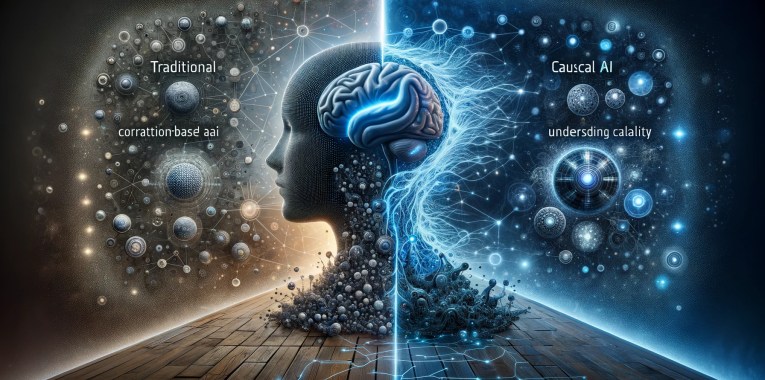
You have been doing your insights wrong: The Imperative Shift to Causal AI

We stand on the brink of a paradigm shift. Traditional AI, with its heavy reliance on correlation-based insights, has undeniably transformed industries, driving efficiencies and fostering innovations that once seemed beyond our reach. However, as we delve deeper into AI’s potential, a critical realisation dawns upon us: we have been doing AI wrong. The next frontier? Causal AI. This approach, focused on understanding the ‘why’ behind data, is not just another advancement; it’s a necessary evolution. Let’s explore why adopting Causal AI today is better late than never.

The Limitation of Correlation in AI

Traditional AI models thrive on correlation, mining vast datasets to identify patterns and predict outcomes. While powerful, this approach has a fundamental flaw: correlation does not always/necessarily imply causation. These models often fail to grasp the underlying causal relationships that drive the patterns they detect, leading to inaccuracies or misguided decisions when the context shifts. Imagine a healthcare AI predicting patient outcomes without understanding the causal factors behind the symptoms. The result? Potentially life-threatening recommendations based on superficial associations. This underscores the necessity for extensive timelines in the meticulous examination and understanding of pharmaceuticals during clinical trials. Historically, the process has spanned years to solidify the comprehension of cause-and-effect relationships. Businesses, constrained by time, cannot afford such protracted periods. Causal AI emerges as a pivotal solution in contexts where A/B testing is impractical, offering significant enhancements to A/B testing and experimentation methodologies within organisations.

The Rise of Causal AI: Understanding the ‘Why’

Causal AI represents a paradigm shift, focusing on understanding the causal relationships between variables rather than mere correlations. It seeks to answer not just what is likely to happen, but why it might happen, enabling more robust predictions, insights, and decisions. By incorporating causality, AI can model complex systems more accurately, anticipate changes in dynamics, and provide explanations for its predictions, fostering trust and transparency.

Four key Advantages of Causal AI

1. Improved Decision-Making: Causal AI provides a deeper understanding of the mechanisms driving outcomes, enabling better-informed decisions. In business, for instance, it can reveal not just which factors are associated with success, but which ones cause it, guiding strategic planning and resource allocation. For example It can help in scenarios where A/B testing is not feasible or can enhance the robustness of A/B testing.

2. Enhanced Predictive Power: By understanding causality, AI models can make more accurate predictions under varying conditions, including scenarios they haven’t encountered before. This is invaluable in dynamic environments where external factors frequently change.

3. Accountability and Ethics: Causal AI’s ability to explain its reasoning addresses the “black box” critique of traditional AI, enhancing accountability and facilitating ethical AI implementations. This is critical in sectors like healthcare and criminal justice, where decisions have profound impacts on lives.

4. Preparedness for Unseen Challenges: Causal models can better anticipate the outcomes of interventions, a feature especially useful in policy-making, strategy and crisis management. They can simulate “what-if” scenarios, helping leaders prepare for and mitigate potential future crises.

Making the Shift: Why It’s Better Late Than Never

The transition to Causal AI requires a re-evaluation of existing data practices, an investment in new technologies, and a commitment to developing or acquiring new expertise. While daunting, the benefits far outweigh the costs. Adopting Causal AI is not just about keeping pace with technological advances; it’s about redefining what’s possible, making decisions with a deeper understanding of causality, enhancing the intelligence of machine learning models by integrating business acumen, nuances of business operations and contextual understanding behind the data, and ultimately achieving outcomes that are more ethical, effective, and aligned with our objectives.

Conclusion

As we stand at this crossroads, the choice is clear: continue down the path of correlation-based AI, with its limitations and missed opportunities, or embrace the future with Causal AI. The shift towards understanding the ‘why’—not just the ‘what’—is imperative. It’s a journey that demands our immediate attention and effort, promising a future where AI’s potential is not just realised but expanded in ways we have yet to imagine. The adoption of Causal AI today is not just advisable; it’s essential. Better late than never.

Building Bridges in Tech: The Power of Practice Communities in Data Engineering, Data Science, and BI Analytics

Technology team practice communities, for example those within a Data Specialist organisation focused on Business Intelligence (BI) Analytics & Reporting, Data Engineering and Data Science, play a pivotal role in fostering innovation, collaboration, and operational excellence within organisations. These communities, often comprised of professionals from various departments and teams, unite under the common goal of enhancing the company’s technological capabilities and outputs. Let’s delve into the purpose of these communities and the value they bring to a data specialist services provider.

Community Unity

At the heart of practice communities is the principle of unity. By bringing together professionals from data engineering, data science, and BI Analytics & Reporting, companies can foster a sense of belonging and shared purpose. This unity is crucial for cultivating trust, facilitating open communication and collaboration across different teams, breaking down silos that often hinder progress and innovation. When team members feel connected to a larger community, they are more likely to contribute positively and share knowledge, leading to a more cohesive and productive work environment.

Standardisation

Standardisation is another key benefit of establishing technology team practice communities. With professionals from diverse backgrounds and areas of expertise coming together, companies can develop and implement standardised practices, tools, and methodologies. This standardisation ensures consistency in work processes, data management, and reporting, significantly improving efficiency and reducing errors. By establishing best practices across data engineering, data science, and BI Analytics & Reporting, companies can ensure that their technology initiatives are scalable and sustainable.

Collaboration

Collaboration is at the core of technology team practice communities. These communities provide a safe platform for professionals to share ideas, challenges, and solutions, fostering an environment of continuous learning and improvement. Through regular meetings, workshops, and forums, members can collaborate on projects, explore new technologies, and share insights that can lead to breakthrough innovations. This collaborative culture not only accelerates problem-solving but also promotes a more dynamic and agile approach to technology development.

Mission to Build Centres of Excellence

The ultimate goal of technology team practice communities is to build centres of excellence within the company. These centres serve as hubs of expertise and innovation, driving forward the company’s technology agenda. By concentrating knowledge, skills, and resources, companies can create a competitive edge, staying ahead of technological trends and developments. Centres of excellence also act as incubators for talent development, nurturing the next generation of technology leaders who can drive the company’s success.

Value to the Company

The value of establishing technology team practice communities is multifaceted. Beyond enhancing collaboration and standardisation, these communities contribute to a company’s ability to innovate and adapt to change. They enable faster decision-making, improve the quality of technology outputs, and increase employee engagement and satisfaction. Furthermore, by fostering a culture of excellence and continuous improvement, companies can better meet customer needs and stay competitive in an ever-evolving technological landscape.

In conclusion, technology team practice communities, encompassing data engineering, data science, and BI Analytics & Reporting, are essential for companies looking to harness the full potential of their technology teams. Through community unity, standardisation, collaboration, and a mission to build centres of excellence, companies can achieve operational excellence, drive innovation, and secure a competitive advantage in the marketplace. These communities not only elevate the company’s technological capabilities but also cultivate a culture of learning, growth, and shared success.

Data as the Currency of Technology: Unlocking the Potential of the Digital Age

Introduction

In the digital age, data has emerged as the new currency that fuels technological advancements and shapes the way societies function. The rapid proliferation of technology has led to an unprecedented surge in the generation, collection, and utilization of data. Data, in various forms, has become the cornerstone of technological innovation, enabling businesses, governments, and individuals to make informed decisions, enhance efficiency, and create personalised experiences.

This blog post delves into the multifaceted aspects of data as the currency of technology, exploring its significance, challenges, and the transformative impact it has on our lives.

1. The Rise of Data: A Historical Perspective

The evolution of data as a valuable asset can be traced back to the early days of computing. However, the exponential growth of digital information in the late 20th and early 21st centuries marked a paradigm shift. The advent of the internet, coupled with advances in computing power and storage capabilities, laid the foundation for the data-driven era we live in today. From social media interactions to online transactions, data is constantly being generated, offering unparalleled insights into human behaviour and societal trends.

2. Data in the Digital Economy

In the digital economy, data serves as the lifeblood of businesses. Companies harness vast amounts of data to gain competitive advantages, optimise operations, and understand consumer preferences. Through techniques involving Data Engineering, Data Analytics and Data Science, businesses extract meaningful patterns and trends from raw data, enabling them to make strategic decisions, tailor marketing strategies, and improve customer satisfaction. Data-driven decision-making not only enhances profitability but also fosters innovation, paving the way for ground-breaking technologies like artificial intelligence and machine learning.

3. Data and Personalisation

One of the significant impacts of data in the technological landscape is its role in personalisation. From streaming services to online retailers, platforms leverage user data to deliver personalised content and recommendations. Algorithms analyse user preferences, browsing history, and demographics to curate tailored experiences. Personalisation not only enhances user engagement but also creates a sense of connection between individuals and the digital services they use, fostering brand loyalty and customer retention.

4. Data and Governance

While data offers immense opportunities, it also raises concerns related to privacy, security, and ethics. The proliferation of data collection has prompted debates about user consent, data ownership, and the responsible use of personal information. Governments and regulatory bodies are enacting laws such as the General Data Protection Regulation (GDPR) in Europe and the California Consumer Privacy Act (CCPA) in the United States to safeguard individuals’ privacy rights. Balancing innovation with ethical considerations is crucial to building a trustworthy digital ecosystem.

5. Challenges in Data Utilization

Despite its potential, the effective utilization of data is not without challenges. The sheer volume of data generated daily poses issues related to storage, processing, and analysis. Additionally, ensuring data quality and accuracy is paramount, as decisions based on faulty or incomplete data can lead to undesirable outcomes. Moreover, addressing biases in data collection and algorithms is crucial to prevent discrimination and promote fairness. Data security threats, such as cyber-attacks and data breaches, also pose significant risks, necessitating robust cybersecurity measures to safeguard sensitive information.

6. The Future of Data-Driven Innovation

Looking ahead, data-driven innovation is poised to revolutionize various sectors, including healthcare, transportation, and education. In healthcare, data analytics can improve patient outcomes through predictive analysis and personalized treatment plans. In transportation, data facilitates the development of autonomous vehicles, optimizing traffic flow and enhancing road safety. In education, personalized learning platforms adapt to students’ needs, improving educational outcomes and fostering lifelong learning.

Conclusion

Data, as the currency of technology, underpins the digital transformation reshaping societies globally. Its pervasive influence permeates every aspect of our lives, from personalized online experiences to innovative solutions addressing complex societal challenges. However, the responsible use of data is paramount, requiring a delicate balance between technological advancement and ethical considerations. As we navigate the data-driven future, fostering collaboration between governments, businesses, and individuals is essential to harness the full potential of data while ensuring a fair, secure, and inclusive digital society. Embracing the power of data as a force for positive change will undoubtedly shape a future where technology serves humanity, enriching lives and driving progress.

Microsoft Fabric: Revolutionising Data Management in the Digital Age

In the ever-evolving landscape of data management, Microsoft Fabric emerges as a beacon of innovation, promising to redefine the way we approach data science, data analytics, data engineering, and data reporting. In this blog post, we will delve into the intricacies of Microsoft Fabric, exploring its transformative potential and the impact it is poised to make on the data industry.

Understanding Microsoft Fabric: A Paradigm Shift in Data Management

Seamless Integration of Data Sources
Microsoft Fabric serves as a unified platform that seamlessly integrates diverse data sources, erasing the boundaries between structured and unstructured data. This integration empowers data scientists, analysts, and engineers to access a comprehensive view of data, fostering more informed decision-making processes.

Advanced Data Processing Capabilities
Fabric boasts cutting-edge data processing capabilities, enabling real-time data analysis and complex computations. Its scalable architecture ensures that it can handle vast datasets with ease, paving the way for more sophisticated algorithms and in-depth analyses.

AI-Powered Insights
At the heart of Microsoft Fabric lies the power of artificial intelligence. By harnessing machine learning algorithms, Fabric identifies patterns, predicts trends, and provides actionable insights, allowing businesses to stay ahead of the curve and make data-driven decisions in real time.

Micosoft Fabric Experiences (Workloads) and Components

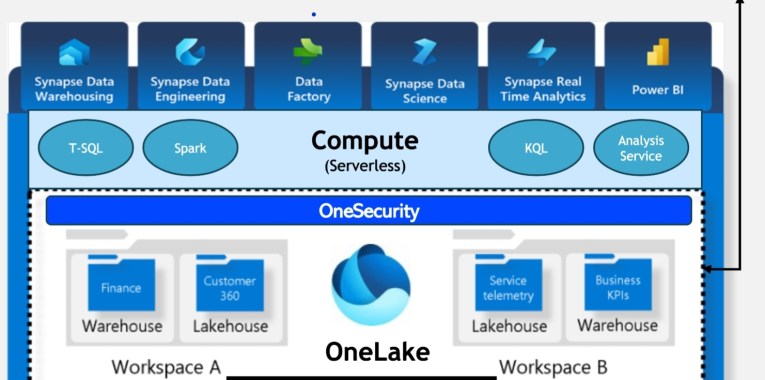
Microsoft Fabric, is the evolutionary next step in cloud data management, providing an all-in-one analytics solution for enterprises that covers everything from data movement to data science, Real-Time Analytics, and business intelligence – all in one place. Microsoft Fabric brings together new and existing components from Azure Power BI, Azure Synapse Analytics, and Azure Data Factory into a single integrated environment. These components are then presented in various customised user experiences or Fabric workloads (the compute layer) including Data Factory, Data Engineering, Data Warehousing, Data Science, Realtime Analytics and Power BI with OneLake as the storage layer.

  1. Data Factory: Combine the simplicity of Power Query with the scalability of Azure Data Factory. Utilize over 200 native connectors to seamlessly connect to on-premises and cloud data sources.
  2. Data Engineering: Experience seamless data transformation and democratization through our world-class Spark platform. Microsoft Fabric Spark integrates with Data Factory, allowing scheduling and orchestration of notebooks and Spark jobs, enabling large-scale data transformation and lakehouse democratization.
  3. Data Warehousing: Experience industry-leading SQL performance and scalability with our Data Warehouse. Separating compute from storage allows independent scaling of components. Data is natively stored in the open Delta Lake format.
  4. Data Science: Build, deploy, and operationalise machine learning models effortlessly within your Fabric experience. Integrated with Azure Machine Learning, it offers experiment tracking and model registry. Empower data scientists to enrich organisational data with predictions, enabling business analysts to integrate these insights into their reports, shifting from descriptive to predictive analytics.
  5. Real-Time Analytics: Handle observational data from diverse sources such as apps and IoT devices with ease. Real-Time Analytics, the ultimate engine for observatio nal data, excels in managing high-volume, semi-structured data like JSON or Text, providing unmatched analytics capabilities.
  6. Power BI: As the world’s leading Business Intelligence platform, Power BI grants intuitive access to all Fabric data. Empowering business owners to make informed decisions swiftly.
  7. OneLake: …the OneDrive for data. OneLake, catering to both professional and citizen developers, offers an open and versatile data storage solution. It supports a wide array of file types, structured or unstructured, storing them in delta parquet format atop Azure Data Lake Storage Gen2 (ADLS). All Fabric data, including data warehouses and lakehouses, automatically store their data in OneLake, simplifying the process for users who need not grapple with infrastructure complexities such as resource groups, RBAC, or Azure regions. Remarkably, it operates without requiring users to 1possess an Azure account. OneLake resolves the issue of scattered data silos by providing a unified storage system, ensuring effortless data discovery, sharing, and compliance with policies and security settings. Each workspace appears as a container within the storage account, and different data items are organized as folders under these containers. Furthermore, OneLake allows data to be accessed as a single ADLS storage account for the entire organization, fostering seamless connectivity across various domains without necessitating data movement. Additionally, users can effortlessly explore OneLake data using the OneLake file explorer for Windows, enabling convenient navigation, uploading, downloading, and modification of files, akin to familiar office tasks.
  8. Unified governance and security within Microsoft Fabric provide a comprehensive framework for managing data, ensuring compliance, and safeguarding sensitive information across the platform. It integrates robust governance policies, access controls, and security measures to create a unified and consistent approach. This unified governance enables seamless collaboration, data sharing, and compliance adherence while maintaining airtight security protocols. Through centralised management and standardised policies, Fabric ensures data integrity, privacy, and regulatory compliance, enhancing overall trust in the system. Users can confidently work with data, knowing that it is protected, compliant, and efficiently governed throughout its lifecycle within the Fabric environment.

Revolutionising Data Science: Unleashing the Power of Predictive Analytics

Microsoft Fabric’s advanced analytics capabilities empower data scientists to delve deeper into data. Its predictive analytics tools enable the creation of robust machine learning models, leading to more accurate forecasts and enhanced risk management strategies. With Fabric, data scientists can focus on refining models and deriving meaningful insights, rather than grappling with data integration challenges.

Transforming Data Analytics: From Descriptive to Prescriptive Analysis

Fabric’s intuitive analytics interface allows data analysts to transition from descriptive analytics to prescriptive analysis effortlessly. By identifying patterns and correlations in real time, analysts can offer actionable recommendations that drive business growth. With Fabric, businesses can optimize their operations, enhance customer experiences, and streamline decision-making processes based on comprehensive, up-to-the-minute data insights.

Empowering Data Engineering: Streamlining Complex Data Pipelines

Data engineers play a pivotal role in any data-driven organization. Microsoft Fabric simplifies their tasks by offering robust tools to streamline complex data pipelines. Its ETL (Extract, Transform, Load) capabilities automate data integration processes, ensuring data accuracy and consistency across the organization. This automation not only saves time but also reduces the risk of errors, making data engineering more efficient and reliable.

Elevating Data Reporting: Dynamic, Interactive, and Insightful Reports

Gone are the days of static, one-dimensional reports. With Microsoft Fabric, data reporting takes a quantum leap forward. Its interactive reporting features allow users to explore data dynamically, drilling down into specific metrics and dimensions. This interactivity enhances collaboration and enables stakeholders to gain a deeper understanding of the underlying data, fostering data-driven decision-making at all levels of the organization.

Conclusion: Embracing the Future of Data Management with Microsoft Fabric

In conclusion, Microsoft Fabric stands as a testament to Microsoft’s commitment to innovation in the realm of data management. By seamlessly integrating data sources, harnessing the power of AI, and providing advanced analytics and reporting capabilities, Fabric is set to revolutionize the way we perceive and utilise data. As businesses and organisations embrace Microsoft Fabric, they will find themselves at the forefront of the data revolution, equipped with the tools and insights needed to thrive in the digital age. The future of data management has arrived, and its name is Microsoft Fabric.