
In the digital age, data has become the lifeblood of businesses, driving innovation, enhancing customer experiences, and providing a competitive edge. However, the mere existence of data is not enough; what truly matters is how organisations harness and manage this valuable resource. Enter the realm of a good data strategy – a meticulously crafted plan that delineates the path for effective data management.
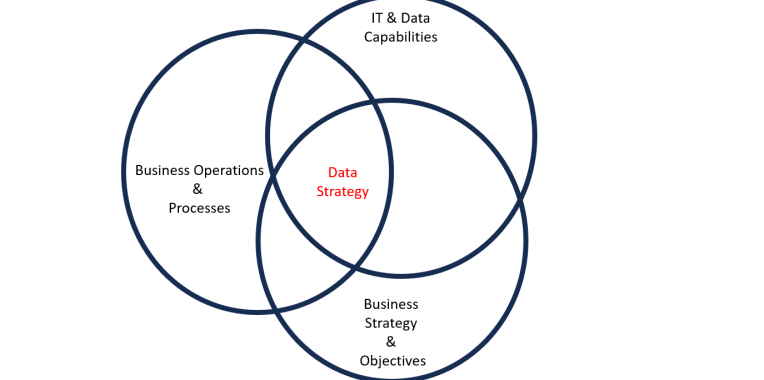
To unlock its true potential, a data strategy must be carefully aligned with the core pillars of an organisation: its operations, its current IT and data capabilities, and its strategic objectives.
Alignment with Business Operations and Processes:
The heart of any business beats to the rhythm of its operations and processes. A well-crafted data strategy ensures that this heartbeat remains strong and steady. It’s about understanding how data can be seamlessly integrated into everyday workflows to streamline operations, increase efficiency, and reduce costs.
As an example, consider a retail company, for instance. By aligning its data strategy with business operations, it can optimise inventory management through real-time data analysis. This allows for better stock replenishment decisions, reducing excess inventory and minimising stockouts. In turn, this alignment not only cuts costs but also enhances customer satisfaction by ensuring products are readily available.
Leveraging Current IT and Data Capabilities:
No data strategy exists in a vacuum – it must be rooted in the organisation’s existing IT and data capabilities. The alignment of these elements is akin to synchronising gears in a well-oiled machine. A data strategy that acknowledges the current technological landscape ensures a smooth transition from theory to practice.
Suppose an insurance company wishes to harness AI and machine learning to enhance fraud detection. An effective data strategy must take into account the available data sources, the capabilities of existing IT systems, and the skill sets of the workforce. It’s about leveraging what’s in place to create a more data-savvy organization.
Supporting Strategic Business Objectives:
Every business sets its course with strategic objectives as the guiding star. A data strategy must be a companion on this voyage, steering the ship towards these goals. Whether it’s revenue growth, customer acquisition, or market expansion, data can be a compass to navigate the path effectively.
For a healthcare provider, strategic objectives might include improving patient outcomes and reducing costs. By aligning the data strategy with these objectives, the organisation can use data to identify trends in patient care, optimising treatments and resource allocation. This not only furthers the business’s strategic goals but also enhances the quality of care provided.
Components of a Data Strategy
Let’s delve into the significance and essential components of a robust data strategy that forms the cornerstone of success in today’s data-driven world.
- Informed Decision-Making – A well-structured data strategy empowers businesses to make informed decisions. By analysing relevant data, organisations gain profound insights into market trends, customer behaviour, and operational efficiency. Informed decision-making becomes the guiding light, steering businesses away from guesswork towards calculated strategies.
- Strategic Planning and Forecasting – A good data strategy provides the foundation for strategic planning and forecasting. By evaluating historical data and patterns, businesses can anticipate future trends, enabling them to adapt proactively to market shifts and customer demands. This foresight is invaluable, especially in dynamic industries where agility is key.
- Enhanced Customer Experiences – Understanding customer preferences and behaviour is pivotal in delivering exceptional experiences. A data strategy facilitates the collection and analysis of customer data, enabling businesses to personalise offerings, optimise interactions, and foster stronger customer relationships. In essence, it’s the key to creating memorable customer journeys.
- Operational Efficiency and Cost Reduction – Efficient data management reduces operational complexities and costs. A well-designed data strategy streamlines data collection, storage, and analysis processes, eliminating redundancies and ensuring optimal resource allocation. This efficiency not only saves costs but also frees up valuable human resources for more strategic tasks.
- Risk Mitigation and Security – Data breaches and cyber threats pose significant risks to businesses. A robust data strategy includes stringent security measures and compliance protocols, safeguarding sensitive information and ensuring regulatory adherence. By mitigating risks, businesses can protect their reputation and build trust with customers.
- Innovation and Growth – Data-driven insights fuel innovation. By analysing data, businesses can identify emerging trends, unmet customer needs, and untapped market segments. This knowledge forms the bedrock for innovative product development and business expansion, driving sustained growth and competitiveness.
- Continuous Improvement – A data strategy is not static; it evolves with the business landscape. Regular assessment and feedback loops enable organisations to refine their strategies, incorporating new technologies and methodologies. This adaptability ensures that businesses remain at the forefront of the data revolution.
In summary, a data strategy’s success hinges on its alignment with the intricate web of business operations, current IT and data capabilities, and strategic objectives. The beauty lies in the harmony it creates, the symphony of data-driven insights that empowers an organization to thrive in a data-rich world. It is more than a strategy; it is a journey, a roadmap to a future where data is not just a resource but a strategic ally, guiding businesses to new horizons of success. A good data strategy is not merely a luxury; it is a necessity for any organisation aspiring to thrive in the digital era. It empowers businesses to make strategic decisions, enhance customer experiences, optimise operations, mitigate risks, foster innovation, and achieve sustained growth. As businesses continue to navigate the complex terrain of data, a well-crafted data strategy stands as a beacon, illuminating the path to success and ensuring a future that is both data-driven and prosperous.
 renierbotha ltd