Top 10 Strategic Technology Trends for 2025 -Aligning Your Technology Strategy

A Guide for Forward-Thinking CIOs

As 2025 approaches, organisations must prepare for a wave of technological advancements that will shape the business landscape. This year’s Gartner Top Strategic Technology Trends serves as a roadmap for CIOs and IT leaders, guiding them to navigate a future marked by both opportunity and challenge. These trends reveal new ways to overcome obstacles in productivity, security, and innovation, helping organisations embrace a future driven by responsible innovation.

Planning for the Future: Why These Trends Matter

CIOs and IT leaders face unprecedented social and economic shifts. To thrive in this environment, they need to look beyond immediate challenges and position themselves for long-term success. Gartner’s Top Strategic Technology Trends for 2025 encapsulates the transformative technologies reshaping how organisations operate, compete, and grow. Each trend provides a pathway towards enhanced operational efficiency, security, and engagement, serving as powerful tools for navigating the future.

Using Gartner’s Strategic Technology Trends to Shape Tomorrow

Gartner has organised this year’s trends into three main themes: AI imperatives and risks, new frontiers of computing, and human-machine synergy. Each theme presents a unique perspective on technology’s evolving role in business and society, offering strategic insights to help organisations innovate responsibly.


Theme 1: AI Imperatives and Risks – Balancing Innovation with Safety

1. Agentic AI

Agentic AI represents the next generation of autonomous systems capable of planning and acting to achieve user-defined goals. By creating virtual agents that work alongside human employees, businesses can improve productivity and efficiency.

  • Benefits: Virtual agents augment human work, enhance productivity, and streamline operations.
  • Challenges: Agentic AI requires strict guardrails to align with user intentions and ensure responsible use.

2. AI Governance Platforms

AI governance platforms are emerging to help organisations manage the ethical, legal, and operational facets of AI, providing transparency and building trust.

  • Benefits: Enables policy management for responsible AI, enhances transparency, and builds accountability.
  • Challenges: Consistency in AI governance can be difficult due to varied guidelines across regions and industries.

3. Disinformation Security

As misinformation and cyber threats increase, disinformation security technologies are designed to verify identity, detect harmful narratives, and protect brand reputation.

  • Benefits: Reduces fraud, strengthens identity validation, and protects brand reputation.
  • Challenges: Requires adaptive, multi-layered security strategies to stay current against evolving threats.

Theme 2: New Frontiers of Computing – Expanding the Possibilities of Technology

4. Post-Quantum Cryptography (PQC)

With quantum computing on the horizon, PQC technologies are essential for protecting data from potential decryption by quantum computers.

  • Benefits: Ensures data protection against emerging quantum threats.
  • Challenges: PQC requires rigorous testing and often needs to replace existing encryption algorithms, which can be complex and costly.

5. Ambient Invisible Intelligence

This technology integrates unobtrusively into the environment, enabling real-time tracking and sensing while enhancing the user experience.

  • Benefits: Enhances efficiency and visibility with low-cost, intuitive technology.
  • Challenges: Privacy concerns must be addressed, and user consent obtained, for certain data uses.

6. Energy-Efficient Computing

Driven by the demand for sustainability, energy-efficient computing focuses on greener computing practices, optimised architecture, and renewable energy.

  • Benefits: Reduces carbon footprint, meets sustainability goals, and addresses regulatory and commercial pressures.
  • Challenges: Requires substantial investment in new hardware, training, and tools, which can be complex and costly to implement.

7. Hybrid Computing

Hybrid computing blends multiple computing methods to solve complex problems, offering a flexible approach for various applications.

  • Benefits: Unlocks new levels of AI performance, enables real-time personalisation, and supports automation.
  • Challenges: The complexity of these systems and the need for specialised skills can present significant hurdles.

Theme 3: Human-Machine Synergy – Bridging Physical and Digital Worlds

8. Spatial Computing

Spatial computing utilises AR and VR to create immersive digital experiences, reshaping sectors like gaming, healthcare, and e-commerce.

  • Benefits: Enhances user experience with immersive interactions, meeting demands in gaming, education, and beyond.
  • Challenges: High costs, complex interfaces, and data privacy concerns can limit adoption.

9. Polyfunctional Robots

With the ability to switch between tasks, polyfunctional robots offer flexibility, enabling faster return on investment without significant infrastructure changes.

  • Benefits: Provides scalability and flexibility, reduces reliance on specialised labour, and improves ROI.
  • Challenges: Lack of industry standards on price and functionality makes adoption unpredictable.

10. Neurological Enhancement

Neurological enhancement technologies, such as brain-machine interfaces, have the potential to enhance cognitive abilities, creating new opportunities for personalised education and workforce productivity.

  • Benefits: Enhances human skills, improves safety, and supports longevity in the workforce.
  • Challenges: Ethical concerns, high costs, and security risks associated with direct brain interaction present significant challenges.

Embrace the Future with Responsible Innovation

As 2025 nears, these technological trends provide organisations with the strategic insights needed to navigate a rapidly evolving landscape. Whether adopting AI-powered agents, protecting against quantum threats, or integrating human-machine interfaces, these trends offer a framework for responsible and innovative growth. Embracing them will allow CIOs and IT leaders to shape a future where technology serves as a bridge to more efficient, ethical, and impactful business practices.

Ready to Dive Deeper?

Partnering with RenierBotha Ltd (reierbotha.com) provides your organisation with the expertise needed to seamlessly align your technology strategy with emerging trends that will shape the future of business. With a focus on driving digital transformation through strategic planning, RenierBotha Ltd helps organisations incorporate top technology advancements into their digital ambitions, ensuring that each step is optimised for impact, scalability, and long-term success. By leveraging our deep industry knowledge, innovative approaches, and tailored solutions, RenierBotha Ltd empowers your team to navigate complex challenges, integrate cutting-edge technologies, and lead responsibly in a rapidly evolving digital landscape. Together, we can shape a future where technology and business strategies converge to unlock sustainable growth, resilience, and a competitive edge.


Unleashing the Power of 5G and Edge Computing

Day 8 of Renier Botha’s 10-Day Blog Series on Navigating the Future: The Evolving Role of the CTO

The advent of 5G and edge computing is set to revolutionize the technology landscape, offering unprecedented speed, low latency, and enhanced data processing capabilities. These technologies promise to drive innovation, support emerging applications, and significantly impact various industries. This comprehensive blog post explores how 5G and edge computing can be leveraged to transform business operations, featuring insights from industry leaders and real-world examples.

Understanding 5G and Edge Computing

What is 5G?

5G is the fifth generation of wireless technology, offering faster speeds, higher bandwidth, and lower latency than its predecessors. It is designed to connect virtually everyone and everything, including machines, objects, and devices.

Quote: “5G will enable a new era of connectivity, powering everything from smart cities to autonomous vehicles and advanced manufacturing.” – Hans Vestberg, CEO of Verizon

What is Edge Computing?

Edge computing involves processing data closer to the source of data generation, such as IoT devices, rather than relying solely on centralized cloud servers. This approach reduces latency, decreases bandwidth usage, and improves response times.

Quote: “Edge computing brings computation and data storage closer to the devices where it’s being gathered, rather than relying on a central location that can be thousands of miles away.” – Satya Nadella, CEO of Microsoft

Benefits of 5G and Edge Computing

  • Reduced Latency: With data processed closer to the source, latency is significantly reduced, enabling real-time applications and enhancing user experiences.
  • Enhanced Data Processing: Edge computing allows for efficient data processing, reducing the load on central servers and ensuring faster insights.
  • Increased Bandwidth: 5G provides higher bandwidth, supporting more devices and data-intensive applications.
  • Improved Reliability: Both technologies enhance network reliability, ensuring consistent performance even in remote or challenging environments.
  • Support for Emerging Technologies: 5G and edge computing are foundational for emerging innovations such as autonomous vehicles, smart cities, and advanced manufacturing.

Strategies for Leveraging 5G and Edge Computing

1. Identify Use Cases

Determine specific use cases where 5G and edge computing can deliver the most value. Focus on applications that require low latency, high bandwidth, and real-time data processing.

Example: In healthcare, 5G and edge computing can enable remote surgeries and real-time monitoring of patient vitals, improving outcomes and expanding access to care.

2. Invest in Infrastructure

Build the necessary infrastructure to support 5G and edge computing. This includes deploying edge nodes, upgrading network components, and ensuring seamless integration with existing systems.

Example: Verizon has invested heavily in its 5G infrastructure, deploying small cells and edge computing nodes across major cities to ensure robust and reliable coverage.

3. Collaborate with Industry Partners

Partner with technology providers, telecom companies, and industry experts to leverage their expertise and resources. Collaboration can accelerate deployment and ensure successful integration.

Quote: “Collaboration is key to unlocking the full potential of 5G and edge computing. By working together, we can drive innovation and create new opportunities for businesses and consumers.” – Ajit Pai, Former Chairman of the FCC

4. Prioritize Security

Implement robust security measures to protect data and ensure the integrity of edge devices and networks. This includes encryption, authentication, and regular security audits.

Example: IBM’s Edge Application Manager provides a secure platform for managing and deploying edge applications, ensuring data integrity and protecting against cyber threats.

5. Leverage Data Analytics

Utilize data analytics to derive insights from the vast amounts of data generated by edge devices. Real-time analytics can drive informed decision-making and optimize operations.

Example: Siemens uses edge computing and data analytics to monitor and optimize its industrial equipment. By analyzing data at the edge, Siemens can predict maintenance needs and improve operational efficiency.

Real-World Examples of 5G and Edge Computing

Example 1: Autonomous Vehicles

Autonomous vehicles rely on real-time data processing to navigate and make decisions. 5G and edge computing enable ultra-low latency and high-speed data transfer, ensuring safe and efficient operation. Companies like Tesla and Waymo are leveraging these technologies to enhance the capabilities of their autonomous fleets.

Example 2: Smart Cities

Smart cities use 5G and edge computing to manage infrastructure, improve public services, and enhance the quality of life for residents. Barcelona, for instance, employs these technologies to optimize traffic management, reduce energy consumption, and enhance public safety through real-time surveillance and data analysis.

Example 3: Manufacturing

In manufacturing, 5G and edge computing support advanced automation and predictive maintenance. Bosch utilizes these technologies to monitor equipment in real-time, predict failures, and optimize production processes, leading to reduced downtime and increased efficiency.

Example 4: Gaming

The gaming industry benefits from 5G and edge computing by delivering immersive experiences with minimal latency. NVIDIA’s GeForce Now platform leverages edge computing to provide high-performance cloud gaming, ensuring smooth gameplay and real-time interactions.

Conclusion

5G and edge computing represent a transformative shift in how data is processed and transmitted, offering unparalleled speed, low latency, and enhanced capabilities. By leveraging these technologies, organizations can drive innovation, improve operational efficiency, and unlock new business opportunities.

To successfully integrate 5G and edge computing, businesses should identify relevant use cases, invest in infrastructure, collaborate with industry partners, prioritize security, and leverage data analytics. Real-world examples from healthcare, autonomous vehicles, smart cities, manufacturing, and gaming demonstrate the vast potential of these technologies.

As 5G and edge computing continue to evolve, staying ahead of the curve will require strategic planning, continuous innovation, and a commitment to embracing new technologies. By doing so, organizations can harness the power of 5G and edge computing to drive success and shape the future.

Stay tuned as we continue to explore critical topics in our 10-day blog series, “Navigating the Future: A 10-Day Blog Series on the Evolving Role of the CTO” by Renier Botha.

Visit www.renierbotha.com for more insights and expert advice.

Cloud Computing: Strategies for Scalability and Flexibility

Day 3 of Renier Botha’s 10-Day Blog Series on Navigating the Future: The Evolving Role of the CTO

Cloud computing has transformed the way businesses operate, offering unparalleled scalability, flexibility, and cost savings. However, as organizations increasingly rely on cloud technologies, they also face unique challenges. This blog post explores hybrid and multi-cloud strategies that CTOs can adopt to maximize the benefits of cloud computing while navigating its complexities. We will also include insights from industry leaders and real-world examples to illustrate these concepts.

The Benefits of Cloud Computing

Cloud computing allows businesses to access and manage data and applications over the internet, eliminating the need for on-premises infrastructure. The key benefits include:

  • Scalability: Easily scale resources up or down based on demand, ensuring optimal performance without overprovisioning.
  • Flexibility: Access applications and data from anywhere, supporting remote work and collaboration.
  • Cost Savings: Pay-as-you-go pricing models reduce capital expenditures on hardware and software.
  • Resilience: Ensure continuous operation and rapid recovery from disruptions by leveraging robust, redundant cloud infrastructure and advanced failover mechanisms.
  • Disaster Recovery: Cloud services offer robust backup and disaster recovery solutions.
  • Innovation: Accelerate the deployment of new applications and services, fostering innovation and competitive advantage.

Challenges of Cloud Computing

Despite these advantages, cloud computing presents several challenges:

  • Security and Compliance: Ensuring data security and regulatory compliance in the cloud.
  • Cost Management: Controlling and optimizing cloud costs.
  • Vendor Lock-In: Avoiding dependency on a single cloud provider.
  • Performance Issues: Managing latency and ensuring consistent performance.

Hybrid and Multi-Cloud Strategies

To address these challenges and harness the full potential of cloud computing, many organizations are adopting hybrid and multi-cloud strategies.

Hybrid Cloud Strategy

A hybrid cloud strategy combines on-premises infrastructure with public and private cloud services. This approach offers greater flexibility and control, allowing businesses to:

  • Maintain Control Over Critical Data: Keep sensitive data on-premises while leveraging the cloud for less critical workloads.
  • Optimize Workloads: Run workloads where they perform best, whether on-premises or in the cloud.
  • Improve Disaster Recovery: Use cloud resources for backup and disaster recovery while maintaining primary operations on-premises.

Quote: “Hybrid cloud is about having the freedom to choose the best location for your workloads, balancing the need for control with the benefits of cloud agility.” – Arvind Krishna, CEO of IBM

Multi-Cloud Strategy

A multi-cloud strategy involves using multiple cloud services from different providers. This approach helps organizations avoid vendor lock-in, optimize costs, and enhance resilience. Benefits include:

  • Avoiding Vendor Lock-In: Flexibility to switch providers based on performance, cost, and features.
  • Cost Optimization: Choose the most cost-effective services for different workloads.
  • Enhanced Resilience: Distribute workloads across multiple providers to improve availability and disaster recovery.

Quote: “The future of cloud is multi-cloud. Organizations are looking for flexibility and the ability to innovate without being constrained by a single vendor.” – Thomas Kurian, CEO of Google Cloud

Real-World Examples

Example 1: Netflix

Netflix is a prime example of a company leveraging a multi-cloud strategy. While AWS is its primary cloud provider, Netflix also uses Google Cloud and Azure to enhance resilience and avoid downtime. By distributing its workloads across multiple clouds, Netflix ensures high availability and performance for its global user base.

Example 2: General Electric (GE)

GE employs a hybrid cloud strategy to optimize its industrial operations. By keeping critical data on-premises and using the cloud for analytics and IoT applications, GE balances control and agility. This approach has enabled GE to improve predictive maintenance, reduce downtime, and enhance operational efficiency.

Example 3: Capital One

Capital One uses a hybrid cloud strategy to meet regulatory requirements while benefiting from cloud scalability. Sensitive financial data is stored on-premises, while less sensitive workloads are run in the cloud. This strategy allows Capital One to innovate rapidly while ensuring data security and compliance.

Implementing Hybrid and Multi-Cloud Strategies

To successfully implement hybrid and multi-cloud strategies, CTOs should consider the following steps:

  1. Assess Workloads: Identify which workloads are best suited for on-premises, public cloud, or private cloud environments.
  2. Select Cloud Providers: Choose cloud providers based on their strengths, cost, and compatibility with your existing infrastructure.
  3. Implement Cloud Management Tools: Use cloud management platforms to monitor and optimize multi-cloud environments.
  4. Ensure Security and Compliance: Implement robust security measures and ensure compliance with industry regulations.
  5. Train Staff: Provide training for IT staff to manage and optimize hybrid and multi-cloud environments effectively.

The Three Major Cloud Providers: Microsoft Azure, AWS, and GCP

When selecting cloud providers, many organizations consider the three major players in the market: Microsoft Azure, Amazon Web Services (AWS), and Google Cloud Platform (GCP). Each of these providers offers unique strengths and capabilities.

Microsoft Azure

Microsoft Azure is known for its seamless integration with Microsoft’s software ecosystem, making it a popular choice for businesses already using Windows Server, SQL Server, and other Microsoft products.

  • Strengths: Strong enterprise integration, extensive hybrid cloud capabilities, comprehensive AI and ML tools.
  • Use Case: Johnson Controls uses Azure for its OpenBlue platform, integrating IoT and AI to enhance building management and energy efficiency.

Quote: “Microsoft Azure is a trusted cloud platform for enterprises, enabling seamless integration with existing Microsoft tools and services.” – Satya Nadella, CEO of Microsoft

Amazon Web Services (AWS)

AWS is the largest and most widely adopted cloud platform, known for its extensive range of services, scalability, and reliability. It offers a robust infrastructure and a vast ecosystem of third-party integrations.

  • Strengths: Wide range of services, scalability, strong developer tools, global presence.
  • Use Case: Airbnb uses AWS to handle its massive scale of operations, leveraging AWS’s compute and storage services to manage millions of bookings and users.

Quote: “AWS enables businesses to scale and innovate faster, providing the most comprehensive and broadly adopted cloud platform.” – Andy Jassy, CEO of Amazon

Google Cloud Platform (GCP)

GCP is recognized for its strong capabilities in data analytics, machine learning, and artificial intelligence. Google’s expertise in these areas makes GCP a preferred choice for data-intensive and AI-driven applications.

  • Strengths: Superior data analytics and AI capabilities, Kubernetes (container management), competitive pricing.
  • Use Case: Spotify uses GCP for its data analytics and machine learning needs, processing massive amounts of data to deliver personalized music recommendations.

Quote: “Google Cloud Platform excels in data analytics and AI, providing businesses with the tools to harness the power of their data.” – Thomas Kurian, CEO of Google Cloud

Conclusion

Cloud computing offers significant benefits in terms of scalability, flexibility, and cost savings. However, to fully realize these benefits and overcome associated challenges, CTOs should adopt hybrid and multi-cloud strategies. By doing so, organizations can optimize workloads, avoid vendor lock-in, enhance resilience, and drive innovation.

As Diane Greene, former CEO of Google Cloud, aptly puts it, “Cloud is not a destination, it’s a journey.” For CTOs, this journey involves continuously evolving strategies to leverage the full potential of cloud technologies while addressing the dynamic needs of their organizations.

Read more blog post on Cloud Infrastructure here : https://renierbotha.com/tag/cloud/

Stay tuned as we continue to explore critical topics in our 10-day blog series, “Navigating the Future: A 10-Day Blog Series on the Evolving Role of the CTO” by Renier Botha.

Visit www.renierbotha.com for more insights and expert advice.

Cyber-Security 101 for Business Owners

Running a business require skill with multiple things happening simultaneously that require your attention. One of those critical things is cyber-security – critical today to have your focus on.

In the digital world today, all businesses have a dependency on the Internet in one way or the other… For SMEs (Small Medium Enterprise) that uses the Internet exclusively as their sales channel the Internet is not only a source of opportunity but the lifeblood of the organisation. An enterprise has the ability, through the Internet, to operate 24×7 with digitally an enabled workforce bringing unprecedented business value.

Like any opportunity though, this also comes with a level of risk that must be mitigated and continuously governed, not just by the board but also by every member within the team. Some of these risks can have a seriously detrimental impact to the business, ranging from financial and data loss to downtime and reputational damage. It is therefore your duty ensuring your IT network is fully protected and secure to protect your business.

Statistics show that cybercrime is exponentially rising. This is mainly due to enhancements in technology enabling and giving access to inexpensive but sophisticated tools. Used by experienced and inexperienced cyber criminals alike, this is causing havoc across networks resulting in business downtime that costs the economy millions every year.

If your business is not trading for 100 hours, what is the financial and reputational impact? That could be the downtime caused by, for example, a ransomware attack – yes, that’s almost 5 days of no business, costly for any business!

Understanding the threat

Cyber threats take many forms and is an academic subject on it’s own. So where do you start?

First you need to understand the threat before you can take preventative action.

Definition: Cyber security or information technology security are the techniques of protecting computers, networks, programs and data from unauthorized access or attacks that are aimed for exploitation.

A good start is to understand the following cyber threats:

  • Malware
  • Worms
  • Trojans
  • IoT (Internet of Things)
  • Crypto-jacking

Malware

Definition:Malware (a portmanteau for malicious software) is any software intentionally designed to cause damage to a computer, server, client, or computer network.

During 2nd Q’18, the VPNFilter malware reportedly infected more than half a million small business routers and NAS devices and malware is still one of the top risks for SMEs. With the ability of data exfiltration back to the attackers, businesses are at risk of the loss of sensitive information such as usernames and passwords.

Potentially these attacks can remain hidden and undetected. Businesses can overcome these styles of attacks by employing an advanced threat prevention solution for their endpoints (i.e. user PCs). A layered approach with multiple detection techniques will give businesses full attack chain protection as well as reducing the complexity and costs associated with the deployment of multiple individual solutions.

Worms

Definition:A computer worm is a standalone malware computer program that replicates itself in order to spread to other computers. Often, it uses a computer network to spread itself, relying on security failures on the target computer to access it.

Recent attacks, including WannaCry and Trickbot, used worm functionality to spread malware. The worm approach tends to make more noise and can be detected faster, but it has the ability to affect a large number of victims very quickly.For businesses, this may mean your entire team can be impacted (spreading to every endpoint in the network) before the attack can be stopped.

Approximately 20% of UK businesses that had been infected with malware had to cease business operations immediately resulting in lost revenue.

Internet of Things (IoT)

Definition:The Internet of things (IoT) is the network of devices such as vehicles, and home appliances that contain electronics, software, actuators, and connectivity.

More devices are able to connect directly to the web, which has a number of benefits, including greater connectivity, meaning better data and analytics. However, various threats and business risks are lurking in the use of these devices, including data loss, data manipulation and unauthorised access to devices leading to access to the network, etc.

To mitigate this threat, devices should have strict authentication, limited access and heavily monitored device-to-device communications. Crucially, these devices will need to be encrypted – a responsibility that is likely to be driven by third-party security providers but should to be enforced by businesses as part of their cyber-security policies and standard operating procedures.

Cryptojacking

Definition:Cryptojacking is defined as the secret use of your computing device to mine cryptocurrency. Cryptojacking used to be confined to the victim unknowingly installing a program that secretly mines cryptocurrency.

With the introduction and rise in popularity and value of crypto currencies, cryptojacking emerged as a cyber-security threat. On the surface, cryptomining may not seem particularly malicious or damaging, however, the costs that it can incur are. If the cryptomining script gets into servers, it can send energy bills through the roof or, if you find it has reached your cloud servers, can hike up usage bills (the biggest commercial concern for IT operations utilising cloud computing). It can also pose a potential threat to your computer hardware from overloading CPUs.

A recent survey, 1 in 3 of all UK businesses were hit by cryptojacking with statistics rising.

Mitigating the risk 

With these few simple and easy steps you can make a good start in protecting your business:

  • Education: At the core of any cyber-security protection plan, there needs to be an education campaign for all in the business. They must understand the gravity of the threat posed – regular training sessions can help here. And this shouldn’t be viewed as a one-off box-ticking exercise then forgotten about. Having rolling, regularly updated training sessions will ensure that staff members are aware of the changing threats and how they can best be avoided.
  • Endpoint protection: Adopt a layered approach to cyber security and deploy endpoint protection that monitor processes in real-time and seek out suspicious patterns, enhancing threat hunting capabilities that eliminate threats (quarantine or delete), and reducing the downtime and impact of attacks.
  • Lead by example: Cyber-security awareness should come from the top down. The time is long gone where cyber-security has been the domain of IT teams. If you are a business stakeholder, you need to lead by example by promoting and practicing a security-first mindset.

Release Management as a Competitive Advantage

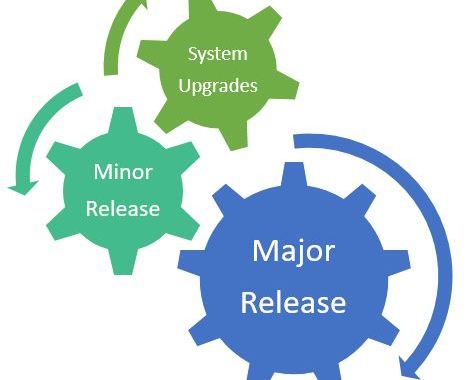
“Delivery focussed”, “Getting the job done”, “Results driven”, “The proof is in the pudding” – we are all familiar with these phrases and in Information Technology it means getting the solutions into operations through effective Release Management, quickly.

In the increasingly competitive market, where digital is enabling rapid change, time to market is king. Translated into IT terms – you must get your solution into production before the competition does, through an effective ability to do frequent releases. Doing frequent releases benefit teams as features can be validated earlier and bugs detected and resolved rapidly. The smaller iteration cycles provide flexibility, making adjustments to unforeseen scope changes easier and reducing the overall risk of change while rapidly enhancing stability and reliability in the production environment.

IT teams with well governed agile and robust release management practices have a significant competitive advantage. This advantage materialises through self-managed teams consisting of highly skilled technologist who collaborative work according to a team defined release management process enabled by continuous integration and continuous delivery (CICD), that continuously improves through constructive feedback loops and corrective actions.

The process of implementing such agile practices, can be challenging as building software becomes increasingly more complex due to factors such as technical debt, increasing legacy code, resource movements, globally distributed development teams, and the increasing number of platforms to be supported.

To realise this advantage, an organisation must first optimise its release management process and identify the most appropriate platform and release management tools.

Here are three well known trends that every technology team can use to optimise delivery:

1. Agile delivery practises – with automation at the core 

So, you have adopted an agile delivery methodology and you’re having daily scrum meetings – but you know that is not enough. Sprint planning as well as review and retrospection are all essential elements for a successful release, but in order to gain substantial and meaningful deliverables within the time constraints of agile iterations, you need to invest in automation.

An automation ability brings measurable benefits to the delivery team as it reduces the pressure on people in minimising human error and increasing overall productivity and delivery quality into your production environment that shows in key metrics like team velocity. Another benefit automation introduces is consistent and repeatable process, enabling easily scalable teams while reducing errors and release times. Agile delivery practices (see “Executive Summary of 4 commonly used Agile Methodologies“) all embrace and promote the use of automation across the delivery lifecycle, especially in build, test and deployment automation. Proper automation support delivery teams in reducing overhead of time-consuming repetitive tasks in configuration and testing so them can focus on the core of customer centric product/service development with quality build in. Also read How to Innovate to stay Relevant“; “Agile Software Development – What Business Executives need to know” for further insight in Agile methodologies…

Example:

Code Repository (version Control) –> Automated Integration –> Automated Deployment of changes to Test Environments –> Platform & Environment Changes automated build into Testbed –> Automated Build Acceptance Tests –> Automated Release

When a software developer commits changes to the version control, these changes automatically get integrated with the rest of the modules. Integrated assembles are then automatically deployed to a test environment – changes to the platform or the environment, gets automatically built and deployed on the test bed. Next, build acceptance tests are automatically kicked off, which would include capacity tests, performance, and reliability tests. Developers and/or leads are notified only when something fails. Therefore, the focus remains on core development and not just on other overhead activities. Of course, there will be some manual check points that the release management team will have to pass in order to trigger next the phase, but each activity within this deployment pipeline can be more or less automated. As your software passes all quality checkpoints, product version releases are automatically pushed to the release repository from which new versions can be pulled automatically by systems or downloaded by customers.

Example Technologies:

  • Build Automation:  Ant, Maven, Make
  • Continuous Integration: Jenkins, Cruise Control, Bamboo
  • Test Automation: Silk Test, EggPlant, Test Complete, Coded UI, Selenium, Postman
  • Continuous Deployment: Jenkins, Bamboo, Prism, Microsoft DevOps

2. Cloud platforms and Virtualisation as development and test environments

Today, most software products are built to support multiple platforms, be it operating systems, application servers, databases, or Internet browsers. Software development teams need to test their products in all of these environments in-house prior to releasing them to the market.

This presents the challenge of creating all of these environments as well as maintaining them. These challenges increase in complexity as development and test teams become more geographically distributed. In these circumstances, the use of cloud platforms and virtualisation helps, especially as these platforms have recently been widely adopted in all industries.

Automation on cloud and virtualised platforms enables delivery teams to rapidly spin up/down environments optimising infrastructure utilisation aligned with demand while, similar to maintaining code and configuration version history for our products, also maintain the version history of all supported platforms. Automated cloud platforms and virtualisation introduces flexibility that optimises infrastructure utilisation and the delivery footprint as demand changes – bringing savings across the overall delivery life-cycle.

Example:

When a build and release engineer changes configurations for the target platform – the operating system, database, or application server settings – the whole platform can be built and a snapshot of it created and deployed to the relevant target platforms.

Virtualisation: The virtual machine (VM) is automatically provisioned from the snapshot of base operating system VM, appropriate configurations are deployed and the rest of the platform and application components are automatically deployed.

Cloud: Using a solution provider like Azure or AWS to deliver Infrastructure-as-a-Service (IaaS) and Platform as a Service (PaaS), new configurations can be introduced in a new environment instance, instantiated, and configured as an environment for development, testing, staging or production hosting. This is crucial for flexibility and productivity, as it takes minutes instead of weeks to adapt to configuration changes. With automation, the process becomes repeatable, quick, and streamlines communication across different teams within the Tech-hub.

3. Distributed version control systems

Distributed version control systems (DVCS), for example GIT, Perforce or Mercurial, introduces flexibility for teams to collaborate at the code level. The fundamental design principle behind DVCS is that each user keeps a self-contained repository with complete version history on one’s local computer. There is no need for a privileged master repository, although most teams designate one as a best practice. DVCS allow developers to work offline and commit changes locally.

As developers complete their changes for an assigned story or feature set, they push their changes to the central repository as a release candidate. DVCS offers a fundamentally new way to collaborate, as  developers can commit their changes frequently without disrupting the main codebase or trunk. This becomes useful when teams are exploring new ideas or experimenting as well as enabling rapid team scalability with reduced disruption.

DVCS is a powerful enabler for the team that utilise an agile-feature-based branching strategy. This encourages development teams to continue to work on their features (branches) as they get ready, having fully tested their changes locally, to load them into next release cycle. In this scenario, developers are able to work on and merge their feature branches to a local copy of the repository.After standard reviews and quality checks will the changes then be merged into the main repository.

To conclude

Adopting these three major trends in the delivery life-cycle enables a organisation to imbed proper release management as a strategic competitive advantage. Implementing these best practices will obviously require strategic planning and an investment of time in the early phases of your project or team maturity journey – this will reduce the organisational and change management efforts to get to market quicker.