
Get the Top Line Right, and the Bottom Line Will Follow

“Get the Top Line Right, and the Bottom Line Will Follow: The Role of the Right People”

Every company dreams of a healthy bottom line – profitability that ensures sustainability and growth. But too often, leaders and teams focus solely on cost-cutting measures and operational efficiency in a desperate attempt to shore up their bottom line. While these are important, they are only half the story. True success lies in focusing on the top line – revenue generation. Why? Because when you get the top line right, the bottom line will naturally follow. However, there’s a critical factor that underpins both top-line growth and bottom-line stability: your people.

The right team can supercharge your top-line growth, ensuring sustained success. After all, when you get the top line—and your people—right, the bottom line will naturally follow.

The Top Line vs. The Bottom Line: A Quick Overview

The top line refers to your business’s gross revenue or total sales, while the bottom line represents net profit after deducting expenses. While businesses often focus on improving the bottom line (net income – what’s left after deducting all expenses, taxes, and costs from revenue) by cutting costs, it’s a short-term strategy with diminishing returns. Instead, driving top-line growth – through sales, customer acquisition, and retention – is critical for lasting profitability. While both are crucial indicators of a business’s health, prioritizing the top line creates a foundation for sustainable profitability.

Why the Top Line Matters

  1. Revenue Drives Growth Opportunities
    Revenue is the lifeblood of a business. A strong top line means your business has the means to invest in new products, enter new markets, and scale operations. Without sufficient revenue, even the most cost-efficient operations can’t thrive.
  2. Top-Line Growth Inspires Confidence
    Investors, partners, and employees look for signs of growth. A consistently increasing top line signals a growing market presence and customer demand, instilling confidence in stakeholders and boosting morale.
  3. Cost-Cutting Has Limits
    While reducing expenses is important, there’s only so much you can cut. Revenue, on the other hand, has virtually no ceiling. A laser focus on driving sales and expanding market share is the only way to unlock unlimited potential.

Strategies to Get the Top Line Right

  1. Customer-Centric Approach
    Happy customers mean repeat business and referrals, which drive revenue. Focus on delivering exceptional value and improving the customer experience to build loyalty.
  2. Invest in Marketing and Sales
    Effective marketing and a high-performing sales team are essential for attracting and converting leads. Adopt data-driven strategies, leverage digital tools, and invest in training to maximize their impact.
  3. Innovate Constantly
    Offer products or services that solve real problems or provide unique value. Whether through innovation or iteration, keeping your offerings relevant and appealing ensures sustained customer interest.
  4. Expand Your Reach
    Enter new markets, diversify your product lines, or explore partnerships to tap into new revenue streams. The more diversified your top line, the more resilient your business becomes.
  5. Empower Your Team
    Employees are at the core of driving revenue. Equip them with the tools, training, and motivation they need to perform at their best.

The Bottom Line Follows

Once you’ve secured a robust and growing top line, optimizing the bottom line becomes significantly easier. Increased revenue allows you to:

  • Absorb Costs: With more cash flow, fixed costs become a smaller percentage of revenue, improving profit margins.
  • Reinvest Wisely: You can allocate resources to high-return initiatives like R&D, employee development, and customer acquisition.
  • Weather Challenges: A strong revenue base provides a cushion during economic downturns or industry disruptions.

But what many businesses overlook is that the key to both revenue growth and efficiency is having the right people in the right roles.

Why People Are the Key to Driving the Top Line

  1. Innovators Bring Unique Value
    Innovation is essential for creating products or services that attract and retain customers. The right employees are those who bring creativity, problem-solving skills, and a commitment to improvement. They generate ideas that keep your offerings relevant and competitive.
  2. Customer Experience Starts with Employees
    Happy, engaged employees deliver better service. This translates to higher customer satisfaction, retention, and word-of-mouth referrals, which all drive revenue growth. The right people are those who align with your values and prioritize your customers’ success.
  3. A High-Performing Sales and Marketing Team
    Your sales and marketing team directly impacts the top line. Talented professionals who understand your market and know how to communicate value effectively will help capture leads, close deals, and drive sustainable growth.
  4. Strategic Thinkers Create Growth Opportunities
    The right leaders and strategists within your organization will find ways to expand your market share, enter new verticals, and develop partnerships that increase revenue streams. These visionaries take your business to the next level.

The Cost of the Wrong People

Just as the right employees are your greatest asset, the wrong ones can hinder growth. Poorly aligned team members may drain resources, slow productivity, and negatively affect morale. High turnover, which often results from hiring misfits, not only disrupts operations but also creates significant recruitment and onboarding costs.

Retaining the right people is as important as hiring them. Employees need a culture that fosters growth, collaboration, and purpose. Without it, even the best talent may disengage or leave.

Strategies to Hire and Retain the Right People

  1. Focus on Cultural Fit and Values
    Skills can be taught, but values and attitudes are harder to change. Hire people who align with your company’s mission, vision, and culture. They’ll be more motivated to contribute to long-term success.
  2. Invest in Employee Development
    Top performers want opportunities to learn and grow. By offering training, mentoring, and career advancement opportunities, you build a loyal team that consistently drives top-line results.
  3. Compensation and Recognition
    A competitive compensation package and recognition of achievements are essential for attracting and retaining top talent. When employees feel valued, they’re more likely to go above and beyond for your business.
  4. Create an Inclusive and Collaborative Culture
    Foster an environment where diverse perspectives are welcomed, and collaboration is encouraged. A strong team dynamic results in better ideas, solutions, and customer experiences.
  5. Measure and Optimize Engagement
    Use tools like employee satisfaction surveys to understand your team’s needs and identify potential pain points. Addressing these proactively helps retain your best talent.

Getting the Top Line and Your People Right

To achieve top-line growth, focus on building a team that can execute your vision and deliver results. Employees who are aligned, motivated, and engaged will naturally contribute to higher sales, better customer experiences, and a stronger brand.

Once you have the right people driving your revenue, the bottom line becomes a byproduct of their success. Higher revenue provides the flexibility to invest further in your workforce, fueling a cycle of growth and profitability.

Conclusion: The People Factor

The phrase “Get the top line right, and the bottom line will follow” rings true, but it’s incomplete without the recognition that the right people are what make the top line soar. Hiring and retaining the right employees isn’t just an HR function, it’s a growth strategy.

Prioritizing revenue generation fuels growth, inspires confidence, and lays the groundwork for long-term profitability. While keeping an eye on the bottom line is essential, don’t lose sight of the bigger picture: if you’re not actively working to grow your top line, you’re limiting your potential. Focus on the top line, and let your success cascade down to the bottom.

When you combine top-line focus with a strong, capable team, you create a resilient business that’s ready to tackle challenges, seize opportunities, and achieve sustainable success. Remember: invest in your people, prioritize growth, and the bottom line will take care of itself.

“Get the Top Line Right, and the Bottom Line Will Follow”

You have been doing your insights wrong: The Imperative Shift to Causal AI

We stand on the brink of a paradigm shift. Traditional AI, with its heavy reliance on correlation-based insights, has undeniably transformed industries, driving efficiencies and fostering innovations that once seemed beyond our reach. However, as we delve deeper into AI’s potential, a critical realisation dawns upon us: we have been doing AI wrong. The next frontier? Causal AI. This approach, focused on understanding the ‘why’ behind data, is not just another advancement; it’s a necessary evolution. Let’s explore why adopting Causal AI today is better late than never.

The Limitation of Correlation in AI

Traditional AI models thrive on correlation, mining vast datasets to identify patterns and predict outcomes. While powerful, this approach has a fundamental flaw: correlation does not always/necessarily imply causation. These models often fail to grasp the underlying causal relationships that drive the patterns they detect, leading to inaccuracies or misguided decisions when the context shifts. Imagine a healthcare AI predicting patient outcomes without understanding the causal factors behind the symptoms. The result? Potentially life-threatening recommendations based on superficial associations. This underscores the necessity for extensive timelines in the meticulous examination and understanding of pharmaceuticals during clinical trials. Historically, the process has spanned years to solidify the comprehension of cause-and-effect relationships. Businesses, constrained by time, cannot afford such protracted periods. Causal AI emerges as a pivotal solution in contexts where A/B testing is impractical, offering significant enhancements to A/B testing and experimentation methodologies within organisations.

The Rise of Causal AI: Understanding the ‘Why’

Causal AI represents a paradigm shift, focusing on understanding the causal relationships between variables rather than mere correlations. It seeks to answer not just what is likely to happen, but why it might happen, enabling more robust predictions, insights, and decisions. By incorporating causality, AI can model complex systems more accurately, anticipate changes in dynamics, and provide explanations for its predictions, fostering trust and transparency.

Four key Advantages of Causal AI

1. Improved Decision-Making: Causal AI provides a deeper understanding of the mechanisms driving outcomes, enabling better-informed decisions. In business, for instance, it can reveal not just which factors are associated with success, but which ones cause it, guiding strategic planning and resource allocation. For example It can help in scenarios where A/B testing is not feasible or can enhance the robustness of A/B testing.

2. Enhanced Predictive Power: By understanding causality, AI models can make more accurate predictions under varying conditions, including scenarios they haven’t encountered before. This is invaluable in dynamic environments where external factors frequently change.

3. Accountability and Ethics: Causal AI’s ability to explain its reasoning addresses the “black box” critique of traditional AI, enhancing accountability and facilitating ethical AI implementations. This is critical in sectors like healthcare and criminal justice, where decisions have profound impacts on lives.

4. Preparedness for Unseen Challenges: Causal models can better anticipate the outcomes of interventions, a feature especially useful in policy-making, strategy and crisis management. They can simulate “what-if” scenarios, helping leaders prepare for and mitigate potential future crises.

Making the Shift: Why It’s Better Late Than Never

The transition to Causal AI requires a re-evaluation of existing data practices, an investment in new technologies, and a commitment to developing or acquiring new expertise. While daunting, the benefits far outweigh the costs. Adopting Causal AI is not just about keeping pace with technological advances; it’s about redefining what’s possible, making decisions with a deeper understanding of causality, enhancing the intelligence of machine learning models by integrating business acumen, nuances of business operations and contextual understanding behind the data, and ultimately achieving outcomes that are more ethical, effective, and aligned with our objectives.

Conclusion

As we stand at this crossroads, the choice is clear: continue down the path of correlation-based AI, with its limitations and missed opportunities, or embrace the future with Causal AI. The shift towards understanding the ‘why’—not just the ‘what’—is imperative. It’s a journey that demands our immediate attention and effort, promising a future where AI’s potential is not just realised but expanded in ways we have yet to imagine. The adoption of Causal AI today is not just advisable; it’s essential. Better late than never.

AI in practice for the enterprise: Navigating the Path to Success

In just a few years, Artificial Intelligence (AI) has emerged as a transformative force for businesses across sectors. Its potential to drive innovation, efficiency, and competitive advantage is undeniable. Yet, many enterprises find themselves grappling with the challenge of harnessing AI’s full potential. This blog post delves into the critical aspects that can set businesses up for success with AI, exploring the common pitfalls, the risks of staying on the sidelines, and the foundational pillars necessary for AI readiness.

Why Many Enterprises Struggle to Use AI Effectively

Despite the buzz around AI, a significant number of enterprises struggle to integrate it effectively into their operations. The reasons are manifold:

  • Lack of Clear Strategy: Many organisations dive into AI without a strategic framework, leading to disjointed efforts and initiatives that fail to align with business objectives.
  • Data Challenges: AI thrives on data. However, issues with data quality, accessibility, and integration can severely limit AI’s effectiveness. Many enterprises are sitting on vast amounts of unstructured data, which remains untapped due to these challenges.
  • Skill Gap: There’s a notable skill gap in the market. The demand for AI expertise far outweighs the supply, leaving many enterprises scrambling to build or acquire the necessary talent.
  • Cultural Resistance: Implementing AI often requires significant cultural and operational shifts. Resistance to change can stifle innovation and slow down AI adoption.

The Risks of Ignoring AI

In the digital age, failing to leverage AI can leave enterprises at a significant disadvantage. Here are some of the critical opportunities missed:

  • Lost Competitive Edge: Competitors who effectively utilise AI can gain a significant advantage in terms of efficiency, customer insights, and innovation, leaving others behind.
  • Inefficiency: Without AI, businesses may continue to rely on manual, time-consuming processes, leading to higher costs and lower productivity.
  • Missed Insights: AI has the power to unlock deep insights from data. Without it, enterprises miss out on opportunities to make informed decisions and anticipate market trends.

Pillars of Data and AI Readiness

To harness the power of AI, enterprises need to build on the following foundational pillars:

  • Data Governance and Quality: Establishing strong data governance practices ensures that data is accurate, accessible, and secure. Quality data is the lifeblood of effective AI systems.
  • Strategic Alignment: AI initiatives must be closely aligned with business goals and integrated into the broader digital transformation strategy.
  • Talent and Culture: Building or acquiring AI expertise is crucial. Equally important is fostering a culture that embraces change, innovation, and continuous learning.
  • Technology Infrastructure: A robust and scalable technology infrastructure, including cloud computing and data analytics platforms, is essential to support AI initiatives.

Best Practices for AI Success

To maximise the benefits of AI, enterprises should consider the following best practices:

  • Start with a Pilot: Begin with manageable, high-impact projects. This approach allows for learning and adjustments before scaling up.
  • Focus on Data Quality: Invest in systems and processes to clean, organise, and enrich data. High-quality data is essential for training effective AI models.
  • Embrace Collaboration: AI success often requires collaboration across departments and with external partners. This approach ensures a diversity of skills and perspectives.
  • Continuous Learning and Adaptation: The AI landscape is constantly evolving. Enterprises must commit to ongoing learning and adaptation to stay ahead.

Conclusion

While integrating AI into enterprise operations presents challenges, the potential rewards are too significant to ignore. By understanding the common pitfalls, the risks of inaction, and the foundational pillars of AI readiness, businesses can set themselves up for success. Embracing best practices will not only facilitate the effective use of AI but also ensure that enterprises remain competitive in the digital era.

Business Driven IT KPIs

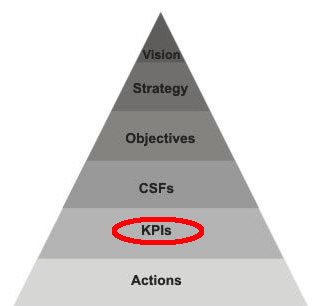
KPIs (Key Performance Indicators) are a critical management tool to measure the success and progress of effort put in towards achieving goals and targets – to continually improve performance.

Every business set their specific KPIs to measure the criteria that drive the business success – these vary from business to business. One thing every modern business has in common though, is IT – the enabler that underpin operational processes and tools used to commerce daily. Setting KPIs that measure the success of IT operations does not just help IT leadership to continuously improve but also proof the value of IT to the business.

Here are ten IT KPIs that matter most to modern business

1. % of IT investment into business initiative (customer-facing services and business units)
How well does the IT strategy, reflected in the projects it is executing, align with the business strategy? This metrics can help to align IT spend with business strategy and potentially eliminate IT projects for IT that does not align directly with business objectives.

2. % Business/Customer facing Services meeting SLAs (Service Level Agreements)
IT is delivering service to customers; these are internal to the business but can also be delivered external to the business’ client/customers directly. Are these services meeting required expectations and quality – in the eye of the customer? What can be done to improve.

3. IT Spend vs Plan/Budget
Budgets are set for a purpose – it is a financial guideline that indicates the route to success. How is IT performing against budget, against plans? Are you over-spending against the set plans? Why? Is it because of a problem in the planning cycle or something else? If you are over-spending/under-spending, in which areas do this occur?

Knowing this metrics give you the insight to take corrective actions and bring IT spend inline with budgets.

4. IT spend by business unit
IT service consumptione is driven by user demand. How is IT costs affected by the user demands by business unit – are business units responsible to cover their IT cost, hence owning up to the overall business efficiency. This metrics put the spotlight on the fact that IT is not free and give business unit manager visibility of their IT consumption and spend.

5. % Split of IT investment to Run, Grow, Transform the business
This is an interesting one for the CIO. Businesses usually expects IT to spend more money in growing the business but reality is that the IT cost of running the business is driven by the demand from IT users with an increased cost implication. Business transformation, now a key topic in every board meeting, needs a dedicated budget to succeed. How do these three investment compare in comparison with business strategic priorities.

6. Application & Service TCO (Total Cost of Ownership)
What is the real cost of delivering IT services and application. Understanding the facts behind what makes up the total cost of IT and which applications/services are the most expensive, can help to identify initiatives to improve.

7. Infrastructure Unit Cost vs Target & Benchmarks
How do you measure the efficiency of your IT infrastructure and how does this compare with the industry benchmark? This is a powerful metrics to justify ROI (Return on Investment), IT’s value proposition, IT strategy and the associated budget.

8. % Projects on Time, Budget & Spec
Is the project portfolio under control? Which projects need remediation to get back on track and what can be learned from projects that do run smoothly?

9. % Project spend on customer-facing initiatives
How much is invested in IT projects in the business for the business (affecting the bottom line) in comparison with customer-centric projects that impacts the business’ top line.

10. Customer satisfaction scores for business/customer facing services

Measure the satisfaction of not just the internal business units that consume IT services but also the business’ customer’s satisfaction with customer-facing IT services. Understand what the customer wants and make the needed changes to IT operations to continuously improve customer satisfaction.

KPI vs Vision

In the famous words of Peter Drucker “What gets measured gets improved”, KPIs give you the insight to understand:

  • your customer
  • your market
  • your financial performance
  • your internal process efficiency
  • your employee performance

Insight brings understanding that leads to actions driving continuously improve.

DevOps: An Immersive Simulation

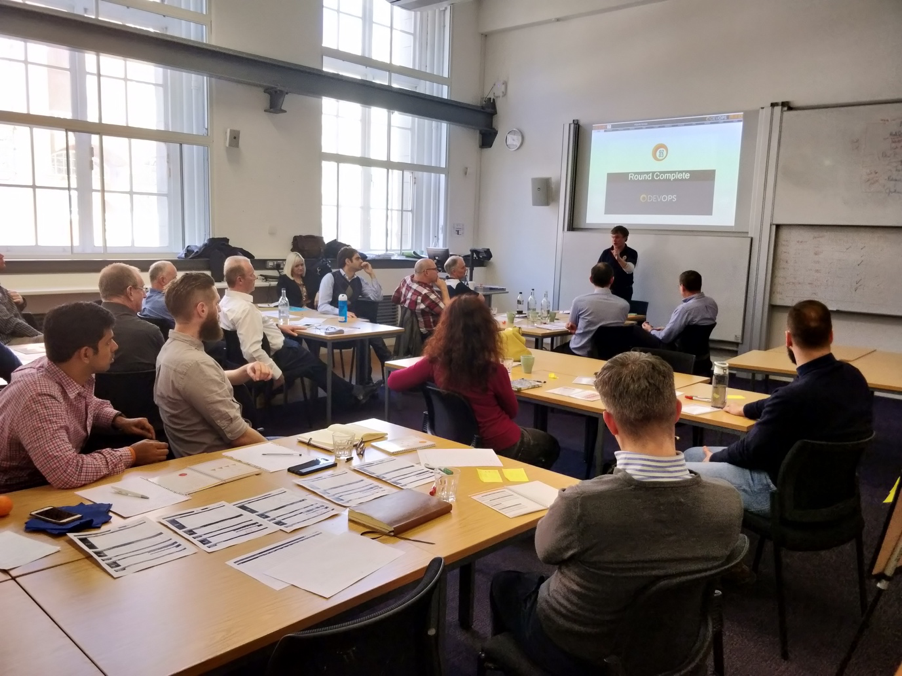
It’s 8:15 am on Thursday 5th April and I’m on the 360 bus to Imperial College, London. No — I’ve not decided to go back to college, I am attending a DevOps (a software engineering culture and practice that aims at unifying software development and software operation) simulation day being run by the fabulous guys from G2G3.

I’ve known the G2G3 team for several years now, having been on my very first ITSM (IT Service Management) simulation way back in 2010 when I worked for the NHS in Norfolk and I can honestly say that that first simulation blew me away! In fact, I was so impressed with that I have helped deliver almost 25 ITSM sims since that day, in partnership with G2G3.

Having worked with ITIL (IT Infrastructure Library) based operations teams for most of my career, I remember when DevOps first became “a thing”. I was sharing an office with the Application Manager at the time and I can honestly say that it seemed a very chaotic way of justifying throwing fixes/enhancements into a live service. This really conflicted with my traditional ITSM beliefs that you should try to stop fires happening in the first place, so as you can imagine, we had some lively conversations in the office.

Since then, DevOps has grown into the significant, best practice approach that it is today. DevOps has found its place alongside service management best practice, allowing the two to complement each other.

Anyway, back to the 360 bus — let me tell you a bit about the day…

On arrival, I met with Jaro and Chris from G2G3 who were leading the day. The participants consisted of a variety of people from different backgrounds, some trainers, some practitioners, but all with a shared interest in DevOps. Big shout out as well to the guys who came all the way from Brazil!!! Shows how good these sessions are!

The day kicked off with us taking our places at the tables that are scattered around the room as we are given an explanation of how the sim works. I do not want to go into detail about what happens over the day, as you really need to approach these sessions with an open mind, rather than know the answers. What I can tell you is that the rest of the day consisted of rounds of activity, with each one followed by opportunities for learning and improving and planning. There are times when you find yourself doing something you would never normally do, amidst the chaos of the first round. This was summed up by my colleague, another service management professional, who had to admit that they “put it in untested”, much to the enjoyment of the rest of the room!

The day itself went by in a blur! People who you met at the beginning of the day, are now old friends that you go down the pub with at the end of the day! These new-found friends are also a fantastic pot of knowledge, with everyone able to share ideas and approaches.

The day was a rollercoaster of emotions — At the beginning of the day, I was apprehensive about whether I had enough knowledge of DevOps. Apprehension quickly changed to a general feeling of frustration and confusion through round one, as I tried to use my Tetris knowledge to develop products! I finished the day with a real sense of satisfaction — I had held my own and the whole team had been successful in developing products and delivering a profit for the business. There were some light-bulb moments for me along the way, in particular around needing to make sure that any developments should integrate with each other and also meet the user acceptance criteria. I also realised that DevOps is more structured than I thought with checkpoints along the way to ensure success. The unique way in which simulations are delivered serves to immerse people in a subject whilst encouraging them to change behaviours through self-discovery.

I have always received very good feedback for ITSM simulations, and I can see that the DevOps simulation will prove to be as successful.

Several of us also returned to Imperial College the next day to attend the Train the Trainer session for the DevOps simulation. This means that we can now offer tailored simulations either as an individual session or as part of a wider programme of change.

Simulations are always difficult to explain, without giving away the content of the day, but if you would like to find out more, please contact me onsandra.lewis@bedifrent.com


Written by Sandra Lewis — Difrent Service Mannagement Lead
@sandraattp | sandra.lewis@bedifrent.com | +44(0) 1753 752 220

Structure Technology for Success – using SOA

How do you structure your technology department for success?

What is your definition of success?

Business success is usually measured in monetary terms – does the business make a profit, does the business grow?

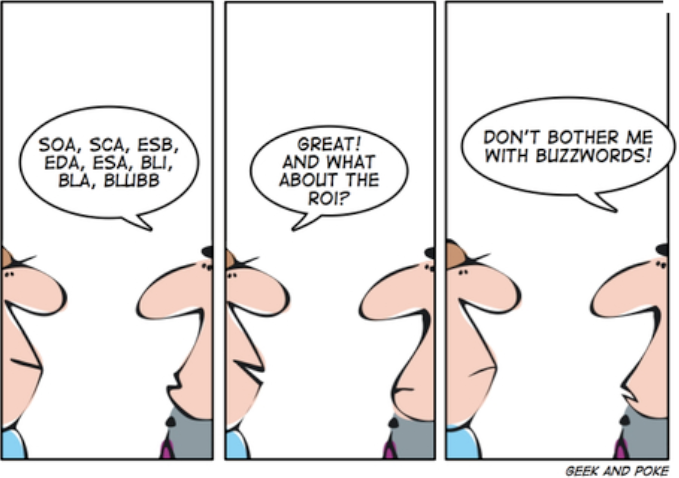
What_about_ROI

What is the value contribution on IT within the business?

Are the IT staff financially intelligent & commercially aware?

Renier spoke at Meet-Up about how you can design your IT function, using Service Orientated Architecture (SOA) to design a Service Orientated Organisation (SOO), to directly  contribute to the business success.

Slide Presentation pdf: Structure Technology for Success

Slide Share via LinkedIn: Structure technology for success

Also Read:

Managing Outsourced Relationships – an in-source approach

IT outsourcing is big business and a provide real business value, financial savings and resource flexibility.

But is cheaper really better?

Dilbert Outsourcing

You cannot outsource a mess! Get your own house in order first before engage in a outsourcing partnership and managing IT vendors.

You should not outsource your core business proposition! Determine what your business is about and excel in the delivery of that – everything that is not core can be candidates for outsourcing.

Renier Botha spoke at the CIO Dialogue in Brighton about the value and risk associated with IT outsourcing. He introduced an insource Service Orientated (SOA) approach to outsourcing to mitigate the risks and ensure the appropriate governance delivering the right quality and customer service are achieved.

Slide Presentation pdf: Managing Outsourced Relationships

Slide Share via LinkedIn: Managing Outsourced Relationships

Renier’s Biog for the Conference:

CIO-Dialogue8 Biog