DevSecOps Tool Chain: Integrating Security into the DevOps Pipeline

Introduction

In today’s rapidly evolving digital landscape, the security of applications and services is paramount. With the rise of cloud computing, microservices, and containerised architectures, the traditional boundaries between development, operations, and security have blurred. This has led to the emergence of DevSecOps, a philosophy that emphasises the need to integrate security practices into every phase of the DevOps pipeline.

Rather than treating security as an afterthought, DevSecOps promotes “security as code” to ensure vulnerabilities are addressed early in the development cycle. One of the key enablers of this philosophy is the DevSecOps tool chain. This collection of tools ensures that security is embedded seamlessly within development workflows, from coding and testing to deployment and monitoring.

What is the DevSecOps Tool Chain?

The DevSecOps tool chain is a set of tools and practices designed to automate the integration of security into the software development lifecycle (SDLC). It spans multiple phases of the DevOps process, ensuring that security is considered from the initial coding stage through to production. The goal is to streamline security checks, reduce vulnerabilities, and maintain compliance without slowing down development or deployment speeds.

The tool chain typically includes:

  • Code Analysis Tools
  • Vulnerability Scanning Tools
  • CI/CD Pipeline Tools
  • Configuration Management Tools
  • Monitoring and Incident Response Tools

Each tool in the chain performs a specific function, contributing to the overall security posture of the software.

Key Components of the DevSecOps Tool Chain

Let’s break down the essential components of the DevSecOps tool chain and their roles in maintaining security across the SDLC.

1. Source Code Management (SCM) Tools

SCM tools are the foundation of the DevSecOps pipeline, as they manage and track changes to the source code. By integrating security checks at the SCM stage, vulnerabilities can be identified early in the development process.

  • Examples: Git, GitLab, Bitbucket, GitHub
  • Security Role: SCM tools support static code analysis (SCA) plugins that automatically scan code for vulnerabilities during commits. Integrating SAST (Static Application Security Testing) tools directly into SCM platforms helps detect coding errors, misconfigurations, or malicious code at an early stage.
2. Static Application Security Testing (SAST) Tools

SAST tools analyse the source code for potential vulnerabilities, such as insecure coding practices and known vulnerabilities in dependencies. These tools ensure security flaws are caught before the code is compiled or deployed.

  • Examples: SonarQube, Veracode, Checkmarx
  • Security Role: SAST tools scan the application code to identify security vulnerabilities, such as SQL injection, cross-site scripting (XSS), and buffer overflows, which can compromise the application if not addressed.
3. Dependency Management Tools

Modern applications are built using multiple third-party libraries and dependencies. These tools scan for vulnerabilities in dependencies, ensuring that known security flaws in external libraries are mitigated.

  • Examples: Snyk, WhiteSource, OWASP Dependency-Check
  • Security Role: These tools continuously monitor open-source libraries and third-party dependencies for vulnerabilities, ensuring that outdated or insecure components are flagged and updated in the CI/CD pipeline.
4. Container Security Tools

Containers are widely used in modern microservices architectures. Ensuring the security of containers requires specific tools that can scan container images for vulnerabilities and apply best practices in container management.

  • Examples: Aqua Security, Twistlock, Clair
  • Security Role: Container security tools scan container images for vulnerabilities, such as misconfigurations or exposed secrets. They also ensure that containers follow secure runtime practices, such as restricting privileges and minimising attack surfaces.
5. Continuous Integration/Continuous Deployment (CI/CD) Tools

CI/CD tools automate the process of building, testing, and deploying applications. In a DevSecOps pipeline, these tools also integrate security checks to ensure that every deployment adheres to security policies.

  • Examples: Jenkins, CircleCI, GitLab CI, Travis CI
  • Security Role: CI/CD tools are integrated with SAST and DAST tools to automatically trigger security scans with every build or deployment. If vulnerabilities are detected, they can block deployments or notify the development team.
6. Dynamic Application Security Testing (DAST) Tools

DAST tools focus on runtime security, scanning applications in their deployed state to identify vulnerabilities that may not be evident in the source code alone.

  • Examples: OWASP ZAP, Burp Suite, AppScan
  • Security Role: DAST tools simulate attacks on the running application to detect issues like improper authentication, insecure APIs, or misconfigured web servers. These tools help detect vulnerabilities that only surface when the application is running.
7. Infrastructure as Code (IaC) Security Tools

As infrastructure management shifts towards automation and code-based deployments, ensuring the security of Infrastructure as Code (IaC) becomes critical. These tools validate that cloud resources are configured securely.

  • Examples: Terraform, Pulumi, Chef, Puppet, Ansible
  • Security Role: IaC security tools analyse infrastructure code to identify potential security misconfigurations, such as open network ports or improperly set access controls, which could lead to data breaches or unauthorised access.
8. Vulnerability Scanning Tools

Vulnerability scanning tools scan the application and infrastructure for known security flaws. These scans can be performed on code repositories, container images, and cloud environments.

  • Examples: Qualys, Nessus, OpenVAS
  • Security Role: These tools continuously monitor for known vulnerabilities across the entire environment, including applications, containers, and cloud services, providing comprehensive reports on security risks.
9. Security Information and Event Management (SIEM) Tools

SIEM tools monitor application logs and event data in real-time, helping security teams detect potential threats and respond to incidents quickly.

  • Examples: Splunk, LogRhythm, ELK Stack
  • Security Role: SIEM tools aggregate and analyse security-related data from various sources, helping identify and mitigate potential security incidents by providing centralised visibility.
10. Security Orchestration, Automation, and Response (SOAR) Tools

SOAR tools go beyond simple monitoring by automating incident response and threat mitigation. They help organisations respond quickly to security incidents by integrating security workflows and automating repetitive tasks.

  • Examples: Phantom, Demisto, IBM Resilient
  • Security Role: SOAR tools improve incident response times by automating threat detection and response processes. These tools can trigger automatic mitigation steps, such as isolating compromised systems or triggering vulnerability scans.
11. Cloud Security Posture Management (CSPM) Tools

With cloud environments being a significant part of modern infrastructures, CSPM tools ensure that cloud configurations are secure and adhere to compliance standards.

  • Examples: Prisma Cloud, Dome9, Lacework
  • Security Role: CSPM tools continuously monitor cloud environments for misconfigurations, ensuring compliance with security policies like encryption and access controls, and preventing exposure to potential threats.
The Benefits of a Robust DevSecOps Tool Chain

By integrating a comprehensive DevSecOps tool chain into your SDLC, organisations gain several key advantages:

  1. Shift-Left Security: Security is integrated early in the development process, reducing the risk of vulnerabilities making it into production.
  2. Automated Security: Automation ensures security checks happen consistently and without manual intervention, leading to faster and more reliable results.
  3. Continuous Compliance: With built-in compliance checks, the DevSecOps tool chain helps organisations adhere to industry standards and regulatory requirements.
  4. Faster Time-to-Market: Automated security processes reduce delays, allowing organisations to innovate and deliver faster without compromising on security.
  5. Reduced Costs: Catching vulnerabilities early in the development lifecycle reduces the costs associated with fixing security flaws in production.

Conclusion

The DevSecOps tool chain is essential for organisations seeking to integrate security into their DevOps practices seamlessly. By leveraging a combination of automated tools that address various aspects of security—from code analysis and vulnerability scanning to infrastructure monitoring and incident response—organisations can build and deploy secure applications at scale.

DevSecOps is not just about tools; it’s a cultural shift that ensures security is everyone’s responsibility. With the right tool chain in place, teams can ensure that security is embedded into every stage of the development lifecycle, enabling faster, safer, and more reliable software delivery.

Embracing Bimodal Model: A Data-Driven Journey for Modern Organisations

With data being the live blood of organisations the emphasis on data management places organisations on a continuous search for innovative approaches to harness and optimise the power of their data assets. In this pursuit, the bimodal model is a well established strategy that can be successfully employed by data-driven enterprises. This approach, which combines the stability of traditional data management with the agility of modern data practices, while providing a delivery methodology facilitating rapid innovation and resilient technology service provision.

Understanding the Bimodal Model

Gartner states: “Bimodal IT is the practice of managing two separate, coherent modes of IT delivery, one focused on stability and the other on agility. Mode 1 is traditional and sequential, emphasising safety and accuracy. Mode 2 is exploratory and nonlinear, emphasising agility and speed.

At its core, the bimodal model advocates for a dual approach to data management. Mode 1 focuses on the stable, predictable aspects of data, ensuring the integrity, security, and reliability of core business processes. This mode aligns with traditional data management practices, where accuracy and consistency are paramount. On the other hand, Mode 2 emphasizes agility, innovation, and responsiveness to change. It enables organizations to explore emerging technologies, experiment with new data sources, and adapt swiftly to evolving business needs.

Benefits of Bimodal Data Management

1. Optimised Performance and Stability: Mode 1 ensures that essential business functions operate smoothly, providing a stable foundation for the organization.

Mode 1 of the bimodal model is dedicated to maintaining the stability and reliability of core business processes. This is achieved through robust data governance, stringent quality controls, and established best practices in data management. By ensuring the integrity of data and the reliability of systems, organizations can optimise the performance of critical operations. This stability is especially crucial for industries where downtime or errors can have significant financial or operational consequences, such as finance, healthcare, and manufacturing.

Example: In the financial sector, a major bank implemented the bimodal model to enhance its core banking operations. Through Mode 1, the bank ensured the stability of its transaction processing systems, reducing system downtime by 20% and minimizing errors in financial transactions. This stability not only improved customer satisfaction but also resulted in a 15% increase in operational efficiency, as reported in the bank’s annual report.

2. Innovation and Agility: Mode 2 allows businesses to experiment with cutting-edge technologies like AI, machine learning, and big data analytics, fostering innovation and agility in decision-making processes.

Mode 2 is the engine of innovation within the bimodal model. It provides the space for experimentation with emerging technologies and methodologies. Businesses can leverage AI, machine learning, and big data analytics to uncover new insights, identify patterns, and make informed decisions. This mode fosters agility by encouraging a culture of continuous improvement and adaptation to technological advancements. It enables organizations to respond quickly to market trends, customer preferences, and competitive challenges, giving them a competitive edge in dynamic industries.

Example: A leading e-commerce giant adopted the bimodal model to balance stability and innovation in its operations. Through Mode 2, the company integrated machine learning algorithms into its recommendation engine. As a result, the accuracy of personalized product recommendations increased by 25%, leading to a 10% rise in customer engagement and a subsequent 12% growth in overall sales. This successful integration of Mode 2 practices directly contributed to the company’s market leadership in the highly competitive online retail space.

3. Enhanced Scalability: The bimodal approach accommodates the scalable growth of data-driven initiatives, ensuring that the organization can handle increased data volumes efficiently.

In the modern data landscape, the volume of data generated is growing exponentially. Mode 1 ensures that foundational systems are equipped to handle increasing data loads without compromising performance or stability. Meanwhile, Mode 2 facilitates the implementation of scalable technologies and architectures, such as cloud computing and distributed databases. This combination allows organizations to seamlessly scale their data infrastructure, supporting the growth of data-driven initiatives without experiencing bottlenecks or diminishing performance.

Example: A global technology firm leveraged the bimodal model to address the challenges of data scalability in its cloud-based services. In Mode 1, the company optimized its foundational cloud infrastructure, ensuring uninterrupted service during periods of increased data traffic. Simultaneously, through Mode 2 practices, the firm adopted containerization and microservices architecture, resulting in a 30% improvement in scalability. This enhanced scalability enabled the company to handle a 50% surge in user data without compromising performance, leading to increased customer satisfaction and retention.

4. Faster Time-to-Insights: By leveraging Mode 2 practices, organizations can swiftly analyze new data sources, enabling faster extraction of valuable insights for strategic decision-making.

Mode 2 excels in rapidly exploring and analyzing new and diverse data sources. This capability significantly reduces the time it takes to transform raw data into actionable insights. Whether it’s customer feedback, market trends, or operational metrics, Mode 2 practices facilitate agile and quick analysis. This speed in obtaining insights is crucial in fast-paced industries where timely decision-making is a competitive advantage.

Example: A healthcare organization implemented the bimodal model to expedite the analysis of patient data for clinical decision-making. Through Mode 2, the organization utilized advanced analytics and machine learning algorithms to process diagnostic data. The implementation led to a 40% reduction in the time required for diagnosis, enabling medical professionals to make quicker and more accurate decisions. This accelerated time-to-insights not only improved patient outcomes but also contributed to the organization’s reputation as a leader in adopting innovative healthcare technologies.

5. Adaptability in a Dynamic Environment: Bimodal data management equips organizations to adapt to market changes, regulatory requirements, and emerging technologies effectively.

In an era of constant change, adaptability is a key determinant of organizational success. Mode 2’s emphasis on experimentation and innovation ensures that organizations can swiftly adopt and integrate new technologies as they emerge. Additionally, the bimodal model allows organizations to navigate changing regulatory landscapes by ensuring that core business processes (Mode 1) comply with existing regulations while simultaneously exploring new approaches to meet evolving requirements. This adaptability is particularly valuable in industries facing rapid technological advancements or regulatory shifts, such as fintech, healthcare, and telecommunications.

Example: A telecommunications company embraced the bimodal model to navigate the dynamic landscape of regulatory changes and emerging technologies. In Mode 1, the company ensured compliance with existing telecommunications regulations. Meanwhile, through Mode 2, the organization invested in exploring and adopting 5G technologies. This strategic approach allowed the company to maintain regulatory compliance while positioning itself as an early adopter of 5G, resulting in a 25% increase in market share and a 15% growth in revenue within the first year of implementation.

Implementation Challenges and Solutions

Implementing a bimodal model in data management is not without its challenges. Legacy systems, resistance to change, and ensuring a seamless integration between modes can pose significant hurdles. However, these challenges can be overcome through a strategic approach that involves comprehensive training, fostering a culture of innovation, and investing in robust data integration tools.

1. Legacy Systems: Overcoming the Weight of Tradition

Challenge: Many organizations operate on legacy systems that are deeply ingrained in their processes. These systems, often built on older technologies, can be resistant to change, making it challenging to introduce the agility required by Mode 2.

Solution: A phased approach is crucial when dealing with legacy systems. Organizations can gradually modernize their infrastructure, introducing new technologies and methodologies incrementally. This could involve the development of APIs to bridge old and new systems, adopting microservices architectures, or even considering a hybrid cloud approach. Legacy system integration specialists can play a key role in ensuring a smooth transition and minimizing disruptions.

2. Resistance to Change: Shifting Organizational Mindsets

Challenge: Resistance to change is a common challenge when implementing a bimodal model. Employees accustomed to traditional modes of operation may be skeptical or uncomfortable with the introduction of new, innovative practices.

Solution: Fostering a culture of change is essential. This involves comprehensive training programs to upskill employees on new technologies and methodologies. Additionally, leadership plays a pivotal role in communicating the benefits of the bimodal model, emphasizing how it contributes to both stability and innovation. Creating cross-functional teams that include members from different departments and levels of expertise can also promote collaboration and facilitate a smoother transition.

3. Seamless Integration Between Modes: Ensuring Cohesion

Challenge: Integrating Mode 1 (stability-focused) and Mode 2 (innovation-focused) operations seamlessly can be complex. Ensuring that both modes work cohesively without compromising the integrity of data or system reliability is a critical challenge.

Solution: Implementing robust data governance frameworks is essential for maintaining cohesion between modes. This involves establishing clear protocols for data quality, security, and compliance. Organizations should invest in integration tools that facilitate communication and data flow between different modes. Collaboration platforms and project management tools that promote transparency and communication can bridge the gap between teams operating in different modes, fostering a shared understanding of goals and processes.

4. Lack of Skillset: Nurturing Expertise for Innovation

Challenge: Mode 2 often requires skills in emerging technologies such as artificial intelligence, machine learning, and big data analytics. Organizations may face challenges in recruiting or upskilling their workforce to meet the demands of this innovative mode.

Solution: Investing in training programs, workshops, and certifications can help bridge the skills gap. Collaboration with educational institutions or partnerships with specialized training providers can ensure that employees have access to the latest knowledge and skills. Creating a learning culture within the organization, where employees are encouraged to explore and acquire new skills, is vital for the success of Mode 2.

5. Overcoming Silos: Encouraging Cross-Functional Collaboration

Challenge: Siloed departments and teams can hinder the flow of information and collaboration between Mode 1 and Mode 2 operations. Communication breakdowns can lead to inefficiencies and conflicts.

Solution: Breaking down silos requires a cultural shift and the implementation of cross-functional teams. Encouraging open communication channels, regular meetings between teams from different modes, and fostering a shared sense of purpose can facilitate collaboration. Leadership should promote a collaborative mindset, emphasizing that both stability and innovation are integral to the organization’s success.

By addressing these challenges strategically, organizations can create a harmonious bimodal environment that combines the best of both worlds—ensuring stability in core operations while fostering innovation to stay ahead in the dynamic landscape of data-driven decision-making.

Case Studies: Bimodal Success Stories

Several forward-thinking organiSations have successfully implemented the bimodal model to enhance their data management capabilities. Companies like Netflix, Amazon, and Airbnb have embraced this approach, allowing them to balance stability with innovation, leading to improved customer experiences and increased operational efficiency.

Netflix: Balancing Stability and Innovation in Entertainment

Netflix, a pioneer in the streaming industry, has successfully implemented the bimodal model to revolutionize the way people consume entertainment. In Mode 1, Netflix ensures the stability of its streaming platform, focusing on delivering content reliably and securely. This includes optimizing server performance, ensuring data integrity, and maintaining a seamless user experience. Simultaneously, in Mode 2, Netflix harnesses the power of data analytics and machine learning to personalize content recommendations, optimize streaming quality, and forecast viewer preferences. This innovative approach has not only enhanced customer experiences but also allowed Netflix to stay ahead in a highly competitive and rapidly evolving industry.

Amazon: Transforming Retail with Data-Driven Agility

Amazon, a global e-commerce giant, employs the bimodal model to maintain the stability of its core retail operations while continually innovating to meet customer expectations. In Mode 1, Amazon focuses on the stability and efficiency of its e-commerce platform, ensuring seamless transactions and reliable order fulfillment. Meanwhile, in Mode 2, Amazon leverages advanced analytics and artificial intelligence to enhance the customer shopping experience. This includes personalized product recommendations, dynamic pricing strategies, and the use of machine learning algorithms to optimize supply chain logistics. The bimodal model has allowed Amazon to adapt to changing market dynamics swiftly, shaping the future of e-commerce through a combination of stability and innovation.

Airbnb: Personalizing Experiences through Data Agility

Airbnb, a disruptor in the hospitality industry, has embraced the bimodal model to balance the stability of its booking platform with continuous innovation in user experiences. In Mode 1, Airbnb ensures the stability and security of its platform, facilitating millions of transactions globally. In Mode 2, the company leverages data analytics and machine learning to personalize user experiences, providing tailored recommendations for accommodations, activities, and travel destinations. This approach not only enhances customer satisfaction but also allows Airbnb to adapt to evolving travel trends and preferences. The bimodal model has played a pivotal role in Airbnb’s ability to remain agile in a dynamic market while maintaining the reliability essential for its users.

Key Takeaways from Case Studies:

  1. Strategic Balance: Each of these case studies highlights the strategic balance achieved by these organizations through the bimodal model. They effectively manage the stability of core operations while innovating to meet evolving customer demands.
  2. Customer-Centric Innovation: The bimodal model enables organizations to innovate in ways that directly benefit customers. Whether through personalized content recommendations (Netflix), dynamic pricing strategies (Amazon), or tailored travel experiences (Airbnb), these companies use Mode 2 to create value for their users.
  3. Agile Response to Change: The case studies demonstrate how the bimodal model allows organizations to respond rapidly to market changes. Whether it’s shifts in consumer behavior, emerging technologies, or regulatory requirements, the dual approach ensures adaptability without compromising operational stability.
  4. Competitive Edge: By leveraging the bimodal model, these organizations gain a competitive edge in their respective industries. They can navigate challenges, seize opportunities, and continually evolve their offerings to stay ahead in a fast-paced and competitive landscape.

Conclusion

In the contemporary business landscape, characterised by the pivotal role of data as the cornerstone of organizational vitality, the bimodal model emerges as a strategic cornerstone for enterprises grappling with the intricacies of modern data management. Through the harmonious integration of stability and agility, organizations can unveil the full potential inherent in their data resources. This synergy propels innovation, enhances decision-making processes, and, fundamentally, positions businesses to achieve a competitive advantage within the dynamic and data-centric business environment. Embracing the bimodal model transcends mere preference; it represents a strategic imperative for businesses aspiring to not only survive but thrive in the digital epoch.

Also read – “How to Innovate to Stay Relevant

Transformative IT: Lessons from “The Phoenix Project” on Embracing DevOps and Fostering Innovation

Synopsis

“The Phoenix Project: A Novel About IT, DevOps, and Helping Your Business Win” is a book by Gene Kim, Kevin Behr, and George Spafford that uses a fictional narrative to explore the real-world challenges faced by IT departments in modern enterprises. The story follows Bill Palmer, an IT manager at Parts Unlimited, an auto parts company on the brink of collapse due to its outdated and inefficient IT infrastructure.

The book is structured around Bill’s journey as he is unexpectedly promoted to VP of IT Operations and tasked with salvaging a critical project, code-named The Phoenix Project, which is massively over budget and behind schedule. Through his efforts to save the project and the company, Bill is introduced to the principles of DevOps, a set of practices that aim to unify software development (Dev) and software operation (Ops).

As Bill navigates a series of crises, he learns from a mysterious mentor named Erik, who introduces him to the “Three Ways”: The principles of flow (making work move faster through the system), feedback (creating short feedback loops to learn and adapt), and continual learning and experimentation. These principles guide Bill and his team in transforming their IT department from a bottleneck into a competitive advantage for Parts Unlimited.

“The Phoenix Project” is not just a story about IT and DevOps, it’s a tale about leadership, collaboration, and the importance of aligning technology with business objectives. It’s praised for its insightful depiction of the challenges faced by IT professionals and for offering practical solutions through the lens of a compelling narrative. The book has become essential reading for anyone involved in IT management, software development, and organisational change.

Learnings

“The Phoenix Project” offers numerous key learnings and benefits for IT professionals, encapsulating valuable lessons in IT management, DevOps practices, and organizational culture. Here are some of the most significant takeaways:

  • The Importance of DevOps: The book illustrates how integrating development and operations teams can lead to more efficient and effective processes, emphasizing collaboration, automation, continuous delivery, and quick feedback loops.
  • The Three Ways:
    • The First Way focuses on the flow of work from Development to IT Operations to the customer, encouraging the streamlining of processes and reduction of bottlenecks.
    • The Second Way emphasizes the importance of feedback loops. Quick and effective feedback can help in early identification and resolution of issues, leading to improved quality and customer satisfaction.
    • The Third Way is about creating a culture of continual experimentation, learning, and taking risks. Encouraging continuous improvement and innovation can lead to better processes and products.
  • Understanding and Managing Work in Progress (WIP): Limiting the amount of work in progress can improve focus, speed up delivery times, and reduce burnout among team members.
  • Automation: Automating repetitive tasks can reduce errors, free up valuable resources, and speed up the delivery of software updates.
  • Breaking Down Silos: Encouraging collaboration and communication between different departments (not just IT and development) can lead to a more cohesive and agile organization.
  • Focus on the Value Stream: Identifying and focusing on the value stream, or the steps that directly contribute to delivering value to the customer, can help in prioritizing work and eliminating waste.
  • Leadership and Culture: The book underscores the critical role of leadership in driving change and fostering a culture that values continuous improvement, collaboration, and innovation.
  • Learning from Failures: Encouraging a culture where failures are seen as opportunities for learning and growth can help organizations innovate and improve continuously.

For IT professionals, “The Phoenix Project” is more than just a guide to implementing DevOps practices, it’s a manifesto for a cultural shift towards more agile, collaborative, and efficient IT management approaches. It offers insights into how IT can transform from a cost center to a strategic partner capable of delivering significant business value.

Case Study: Renier Botha’s Role as Non-Executive Director at KAMOHA Tech

Introduction

In this case study, we examine the strategic contributions of Renier Botha, a Non-Executive Director (NED) at KAMOHA Tech, a company specialising in Robotic Process Automation (RPA) and IT Service Management (ITSM). Botha’s role involves guiding the company through corporate governance and product development to establish KAMOHA Tech as a standalone IT service provider.

Background of KAMOHA Tech

KAMOHA Tech operates within the rapidly evolving IT industry, focusing on RPA and ITSM solutions. These technologies are crucial for businesses looking to automate processes and enhance their IT service offerings, thereby increasing efficiency and reducing costs.

Role and Responsibilities of Renier Botha

Renier Botha joined KAMOHA Tech with a wealth of experience in IT governance and service management. His primary responsibilities as a NED include:

  • Corporate Governance: Ensuring that KAMOHA Tech adheres to the highest standards of corporate governance, which is essential for the company’s credibility and long-term success. Botha’s oversight ensures that the company’s operations are transparent and align with shareholder interests.
  • Strategic Guidance on Product and Service Development: Botha plays a pivotal role in shaping the strategic direction of KAMOHA Tech’s product offerings in RPA and ITSM. His expertise helps in identifying market needs and aligning the product development to meet these demands.
  • Mentoring and Leadership: As a NED, Botha also provides mentoring to the executive team, offering insights and advice drawn from his extensive experience in the IT industry. His guidance is crucial in steering the company through phases of growth and innovation.

Impact of Botha’s Involvement

Botha’s contributions have had a significant impact on KAMOHA Tech’s trajectory:

  • Enhanced Governance Practices: Under Botha’s guidance, KAMOHA Tech has strengthened its governance frameworks, which has improved investor confidence and positioned the company as a reliable partner in the IT industry.
  • Product Innovation and Market Fit: Botha’s strategic insights into the RPA and ITSM sectors have enabled KAMOHA Tech to innovate and develop products that are well-suited to the market’s needs. This has been crucial in distinguishing KAMOHA Tech from competitors and capturing a larger market share.
  • Sustainable Growth: Botha’s emphasis on sustainable practices and long-term strategic planning has positioned KAMOHA Tech for sustainable growth. His influence ensures that the company does not only focus on immediate gains but also invests in long-term capabilities.

Challenges and Solutions

Despite the successes, Botha’s role involves navigating challenges such as:

  • Adapting to Market Changes: The IT industry is known for its rapid changes. Botha’s experience has been instrumental in helping the company quickly adapt to these changes by foreseeing industry trends and aligning the company’s strategy accordingly.
  • Balancing Innovation with Governance: Ensuring that innovation does not come at the expense of governance has been a delicate balance. Botha has managed this by setting clear boundaries and ensuring that all innovations adhere to established governance protocols.

Conclusion

Renier Botha’s role as a Non-Executive Director at KAMOHA Tech highlights the importance of experienced leadership in navigating the complexities of the IT sector. His strategic guidance in corporate governance and product development has not only enhanced KAMOHA Tech’s market position but has also set a foundation for its future growth. As KAMOHA Tech continues to evolve, Botha’s ongoing influence will be pivotal in maintaining its trajectory towards becoming an independent and robust IT service provider.

DevOps: An Immersive Simulation

It’s 8:15 am on Thursday 5th April and I’m on the 360 bus to Imperial College, London. No — I’ve not decided to go back to college, I am attending a DevOps (a software engineering culture and practice that aims at unifying software development and software operation) simulation day being run by the fabulous guys from G2G3.

I’ve known the G2G3 team for several years now, having been on my very first ITSM (IT Service Management) simulation way back in 2010 when I worked for the NHS in Norfolk and I can honestly say that that first simulation blew me away! In fact, I was so impressed with that I have helped deliver almost 25 ITSM sims since that day, in partnership with G2G3.

Having worked with ITIL (IT Infrastructure Library) based operations teams for most of my career, I remember when DevOps first became “a thing”. I was sharing an office with the Application Manager at the time and I can honestly say that it seemed a very chaotic way of justifying throwing fixes/enhancements into a live service. This really conflicted with my traditional ITSM beliefs that you should try to stop fires happening in the first place, so as you can imagine, we had some lively conversations in the office.

Since then, DevOps has grown into the significant, best practice approach that it is today. DevOps has found its place alongside service management best practice, allowing the two to complement each other.

Anyway, back to the 360 bus — let me tell you a bit about the day…

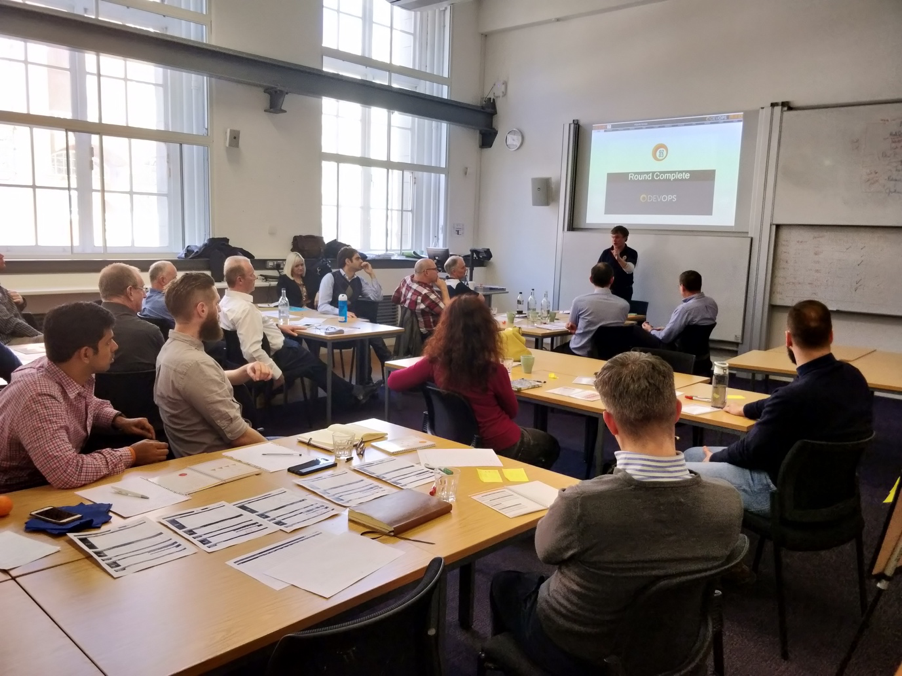
On arrival, I met with Jaro and Chris from G2G3 who were leading the day. The participants consisted of a variety of people from different backgrounds, some trainers, some practitioners, but all with a shared interest in DevOps. Big shout out as well to the guys who came all the way from Brazil!!! Shows how good these sessions are!

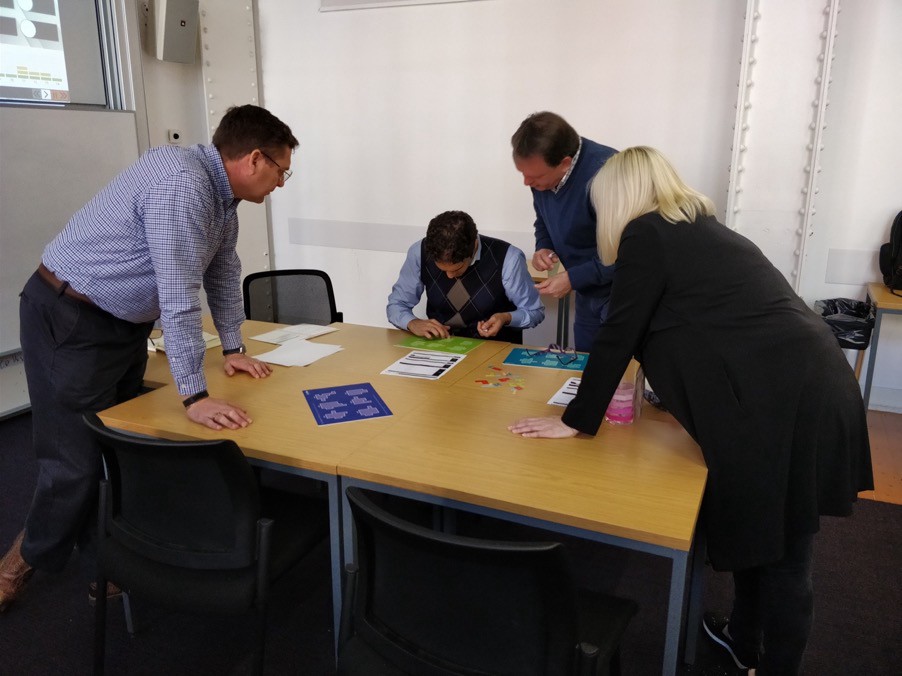
The day kicked off with us taking our places at the tables that are scattered around the room as we are given an explanation of how the sim works. I do not want to go into detail about what happens over the day, as you really need to approach these sessions with an open mind, rather than know the answers. What I can tell you is that the rest of the day consisted of rounds of activity, with each one followed by opportunities for learning and improving and planning. There are times when you find yourself doing something you would never normally do, amidst the chaos of the first round. This was summed up by my colleague, another service management professional, who had to admit that they “put it in untested”, much to the enjoyment of the rest of the room!

The day itself went by in a blur! People who you met at the beginning of the day, are now old friends that you go down the pub with at the end of the day! These new-found friends are also a fantastic pot of knowledge, with everyone able to share ideas and approaches.

The day was a rollercoaster of emotions — At the beginning of the day, I was apprehensive about whether I had enough knowledge of DevOps. Apprehension quickly changed to a general feeling of frustration and confusion through round one, as I tried to use my Tetris knowledge to develop products! I finished the day with a real sense of satisfaction — I had held my own and the whole team had been successful in developing products and delivering a profit for the business. There were some light-bulb moments for me along the way, in particular around needing to make sure that any developments should integrate with each other and also meet the user acceptance criteria. I also realised that DevOps is more structured than I thought with checkpoints along the way to ensure success. The unique way in which simulations are delivered serves to immerse people in a subject whilst encouraging them to change behaviours through self-discovery.

I have always received very good feedback for ITSM simulations, and I can see that the DevOps simulation will prove to be as successful.

Several of us also returned to Imperial College the next day to attend the Train the Trainer session for the DevOps simulation. This means that we can now offer tailored simulations either as an individual session or as part of a wider programme of change.

Simulations are always difficult to explain, without giving away the content of the day, but if you would like to find out more, please contact me onsandra.lewis@bedifrent.com


Written by Sandra Lewis — Difrent Service Mannagement Lead
@sandraattp | sandra.lewis@bedifrent.com | +44(0) 1753 752 220

Case Study – Renier Botha’s Game-Changing Leadership at Systems Powering Healthcare (2015-2017)

Posted on November 1, 2017

Introduction:
Back in December 2015, Renier Botha stepped in as the big boss—Managing Director and Head of Service at Systems Powering Healthcare, aka SPHERE. This place is all about delivering top-notch IT services and infrastructure to a whole lot of NHS healthcare workers—over 10,000 to be exact. Let’s dive into how Botha totally revamped SPHERE in his two year tenure, turning it into a powerhouse through his sharp strategic moves, cool innovations, and rock-solid leadership.

Facing the Music and Setting Goals:
Right off the bat, Botha was up against some big challenges. He had to shift SPHERE from an old-school cost-plus model to a snazzy commercial-service-catalogue model while also trying to attract more clients. His main to-dos were to get the company on stable footing, map out a strategic game plan, and make sure they were all about putting customers first.

Key Moves and Wins:

  1. Strategic Master Plan: Botha wasted no time. Within the first three months, he whipped up a six-year strategic plan that laid out all the key investments and milestones to get SPHERE to grow and thrive.
  2. From Startup to Star: Managing a team of 75, Botha steered SPHERE from its startup phase to become a well-known medium-sized business, hitting their three-year targets way ahead of schedule – in just two years!
  3. Tech Makeover: One of his big programmes was pouring £42M into beefing up SPHERE’s tech – think better networks, better hosting, the works. This move was all about making sure they could keep up and stay ahead in the long run.
  4. Service Delivery Shake-up: Botha brought in a new, customer-focused operating model and rolled out Service-Now to up their tech game. This not only made things run smoother but also saved a ton of money, giving them a killer return on investment.
  5. Financial Growth: Under his guidance, SPHERE’s dough rolled in 42% thicker thanks to smart mergers, acquisitions, and raking in new clients. They also managed to save the NHS about £3m a year with their shared service gig.
  6. Cost-Cutting Genius: He managed to slash the “Cost per IT User” by 24% in two years, showing just how much bang for the buck SPHERE could offer.
  7. Big Win: Thanks to a revamped service catalogue, SPHERE nailed a whopping £10m contract to provide IT services for Northumbria Healthcare NHS Foundation Trust.
  8. Happy Campers: Botha didn’t just focus on the numbers; he also built a workplace where people actually wanted to stick around. Employee retention jumped from 82% to a whopping 98% by the end of his run.

Conclusion:
Renier Botha’s time at SPHERE shows just what can happen when you mix visionary leadership with a knack for making smart moves in healthcare IT. He not only met the big challenges head-on but also made sure that SPHERE became a go-to example of how IT can seriously improve healthcare services. His story isn’t just about a job well done; it’s about setting a whole new standard in the industry.