Harnessing the Power of Artificial Intelligence and Machine Learning

Day 1 of Renier Botha’s 10-Day Blog Series on Navigating the Future: The Evolving Role of the CTO

Artificial Intelligence (AI) and Machine Learning (ML) have swiftly transitioned from futuristic concepts to fundamental components of modern business strategy. These technologies are revolutionizing industries by enhancing business processes and significantly improving customer experiences. For Chief Technology Officers (CTOs), understanding and leveraging AI and ML is essential to gaining a competitive edge in today’s fast-paced market.

The Transformative Power of AI and ML

AI and ML are not just buzzwords, they are transformative technologies that are reshaping industries. According to Sundar Pichai, CEO of Alphabet Inc., “AI is probably the most important thing humanity has ever worked on. I think of it as something more profound than electricity or fire.”

Enhancing Business Processes

AI and ML enhance business processes by automating repetitive tasks, improving decision-making, and enabling predictive analytics. For example, in manufacturing, AI-powered predictive maintenance systems can anticipate equipment failures before they occur, reducing downtime and saving costs. General Electric (GE) has implemented AI-driven predictive maintenance in its industrial operations, resulting in a 20% reduction in maintenance costs.

In the finance sector, AI algorithms analyze vast amounts of data to detect fraudulent activities in real-time. JPMorgan Chase’s COiN platform uses ML to review legal documents and extract critical data points, a task that previously took thousands of hours of manual review. This automation has drastically increased efficiency and accuracy.

Improving Customer Experiences

AI and ML also play a crucial role in enhancing customer experiences. Personalization is a prime example. Companies like Amazon and Netflix use ML algorithms to analyze user behavior and preferences, providing personalized recommendations that enhance customer satisfaction and loyalty. Reed Hastings, CEO of Netflix, stated, “Machine learning is the foundation for creating a personalized experience on a global scale.”

Chatbots and virtual assistants, powered by AI, offer another way to improve customer service. These tools provide instant responses to customer inquiries, handle routine tasks, and escalate complex issues to human agents. For instance, Bank of America’s virtual assistant, Erica, helps customers with banking transactions and financial advice, improving overall customer engagement and satisfaction.

Strategies for CTOs to Leverage AI and ML

To harness the power of AI and ML effectively, CTOs need to implement strategic approaches that align with their organization’s goals.

1. Building a Data-Driven Culture

AI and ML thrive on data. CTOs must foster a data-driven culture where data is seen as a valuable asset. This involves investing in data management, data cloud platforms and associated profesional data management and analytics tools, ensuring data quality, and promoting data literacy across the organization. As DJ Patil, former U.S. Chief Data Scientist, said, “Data science is a team sport.”

2. Investing in Talent and Training

The success of AI and ML initiatives depends on skilled talent. CTOs should invest in hiring and training data scientists, AI specialists, and ML engineers. Continuous learning and development programs help keep the team updated with the latest advancements in the field.

3. Collaborating with Experts

Collaborating with AI and ML experts, whether through partnerships with tech companies, research institutions, or hiring consultants, can provide valuable insights and accelerate AI adoption. For example, Airbus partnered with Palantir Technologies to develop Skywise, a data platform that improves aircraft maintenance and operations.

4. Implementing Scalable Infrastructure

AI and ML require significant computational power. CTOs should ensure their infrastructure can scale to meet the demands of AI workloads. Cloud-based solutions like AWS, Google Cloud, and Microsoft Azure offer scalable and cost-effective platforms for AI and ML applications.

5. Focusing on Ethical AI

As AI becomes more integrated into business processes, ethical considerations become paramount. CTOs must ensure that their AI systems are transparent, fair, and accountable. Addressing biases in AI algorithms and safeguarding data privacy are critical steps in building trust with customers and stakeholders.

Real-World Examples

Healthcare

In healthcare, AI and ML are driving innovations in diagnostics and treatment. IBM’s Watson Health uses AI to analyze medical data and provide insights for cancer treatment, helping doctors make more informed decisions. The technology has shown promise in identifying patterns that human doctors might miss, potentially leading to earlier and more accurate diagnoses.

Retail

Retailers are using AI to optimize inventory management and enhance the shopping experience. Zara, the global fashion retailer, employs AI to predict fashion trends and manage stock levels, ensuring that popular items are always available while minimizing overstock. This approach has improved operational efficiency and customer satisfaction.

Transportation

In transportation, AI-powered systems are enhancing safety and efficiency. Tesla’s Autopilot uses ML to improve its self-driving capabilities, learning from millions of miles driven by Tesla vehicles. This continuous learning loop enhances the system’s ability to navigate complex driving environments and improve overall safety.

Conclusion

AI and ML are no longer optional for businesses aiming to stay competitiv -they are essential. By harnessing these technologies, CTOs can transform business processes, enhance customer experiences, and drive innovation. As Satya Nadella, CEO of Microsoft, aptly puts it, “AI is the defining technology of our time.”

For CTOs, the journey of integrating AI and ML into their organizations is both challenging and rewarding. By building a data-driven culture, investing in talent, collaborating with experts, implementing scalable infrastructure, and focusing on ethical AI, they can unlock the full potential of these transformative technologies and lead their organizations into the future.

Read more blog post on AI here : https://renierbotha.com/tag/ai/

Stay tuned as we delve deeper into these topics and more in our 10-day blog series, “Navigating the Future: A 10-Day Blog Series on the Evolving Role of the CTO” by Renier Botha.

Visit www.renierbotha.com for more insights and expert advice.
AI Revolution 2023: Transforming Businesses with Cutting-Edge Innovations and Ethical Challenges


Introduction

The blog post Artificial Intelligence Capabilities written in Nov’18 discusses the significance and capabilities of AI in the modern business world. It emphasises that AI’s real business value is often overshadowed by hype, unrealistic expectations, and concerns about machine control.

The post clarifies AI’s objectives and capabilities, defining AI simply as using computers to perform tasks typically requiring human intelligence. It outlines AI’s three main goals: capturing information, determining what is happening, and understanding why it is happening. I used an example of a lion chase to illustrate how humans and machines process information differently, highlighting that machines, despite their advancements, still struggle with understanding context as humans do (causality).

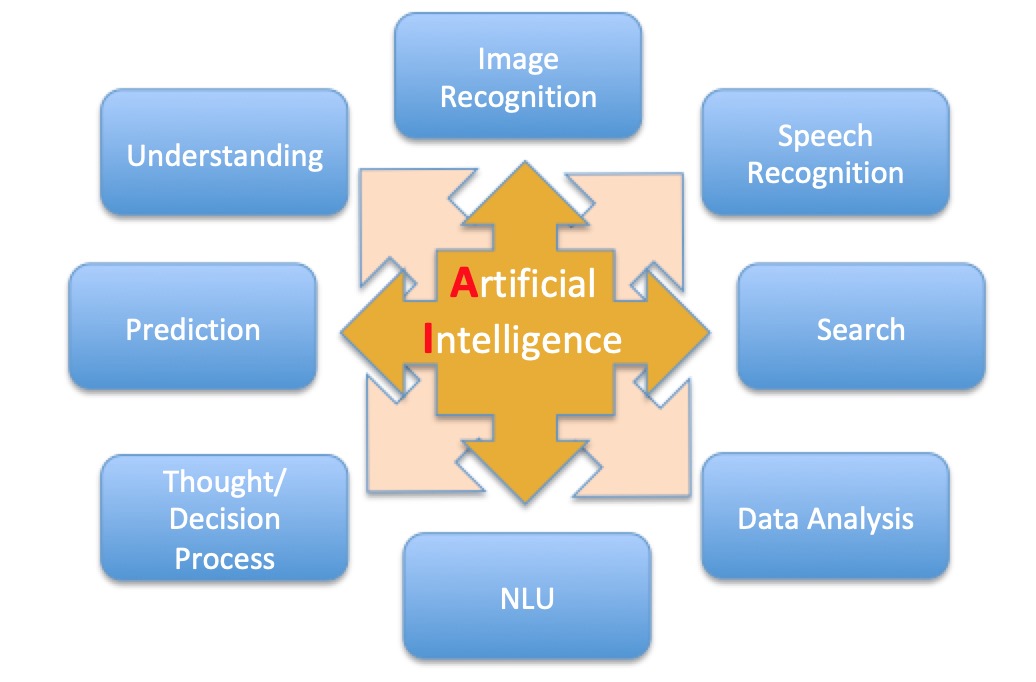
Additionally, it lists eight AI capabilities in use at the time: Image Recognition, Speech Recognition, Data Search, Data Patterns, Language Understanding, Thought/Decision Process, Prediction, and Understanding.

Each capability, like Image Recognition and Speech Recognition, is explained in terms of its function and technological requirements. The post emphasises that while machines have made significant progress, they still have limitations compared to human reasoning and understanding.

The landscape of artificial intelligence (AI) capabilities has evolved significantly since that earlier focus on objectives like capturing information, determining events, and understanding causality. In 2023, AI has reached impressive technical capabilities and has become deeply integrated into various aspects of everyday life and business operations.

2023 AI technical capabilities and daily use examples

Generative AI’s Breakout: AI in 2023 has been marked by the explosive growth of generative AI tools. Companies like OpenAI have revolutionised how businesses approach tasks that traditionally required human creativity and intelligence. Advanced models like GPT-4 and DALL-E 2, which have demonstrated remarkable humanlike outputs, significantly impacting the way businesses operate in the generation of unique content, design graphics, or even code software more efficiently, thereby reducing operational costs and enhancing productivity. For example, organisations are using generative AI in product and service development, risk and supply chain management, and other business functions. This shift has allowed companies to optimise product development cycles, enhance existing products, and create new AI-based products, leading to increased revenue and innovative business models​​​​.

AI in Data Management and Analytics: The use of AI in data management and analytics has revolutionised the way businesses approach data-driven decision-making. AI algorithms and machine learning models are adept at processing large volumes of data rapidly, identifying patterns and insights that would be challenging for humans to discern. These technologies enable predictive analytics, where AI models can forecast trends and outcomes based on historical data. In customer analytics, AI is used to segment customers, predict buying behaviours, and personalise marketing efforts. Financial institutions leverage AI in risk assessment and fraud detection, analysing transaction patterns to identify anomalies that may indicate fraudulent activities. In healthcare, AI-driven data analytics assists in diagnosing diseases, predicting patient outcomes, and optimizing treatment plans. In the realm of supply chain and logistics, AI algorithms forecast demand, optimise inventory levels, and improve delivery routes. The integration of AI with big data technologies also enhances real-time analytics, allowing businesses to respond swiftly to changing market dynamics. Moreover, AI contributes to the democratisation of data analytics by providing tools that require less technical expertise. Platforms like Microsoft Fabric and Power BI, integrate AI (Microsoft Copilot) to enable users to generate insights through natural language queries, making data analytics more accessible across organizational levels. Microsoft Fabric, with its integration of Azure AI, represents a significant advancement in the realm of AI and analytics. This innovative platform, as of 2023, offers a unified solution for enterprises, covering a range of functions from data movement to data warehousing, data science, real-time analytics, and business intelligence. The integration with Azure AI services, especially the Azure OpenAI Service, enables the deployment of powerful language models, which facilitates a variety of AI applications such as data cleansing, content generation, summarisation, and natural language to code translation, auto-completion and quality assurance. Overall, AI in data management covering data engineering, analytics and science not only improves efficiency and accuracy but also drives innovation and strategic planning in various industries.

Regulatory Developments: The AI industry is experiencing increased regulation. For example, the U.S. has introduced guidelines to protect personal data and limit surveillance, and the EU is working on the AI Act, potentially the world’s first broad standard for AI regulation. These developments are likely to make AI systems more transparent, with an emphasis on disclosing data usage, limitations, and biases​​.

AI in Recruitment and Equality: AI is increasingly being used in recruitment processes. LinkedIn, a leader in professional networking and recruitment, has been utilising AI to enhance their recruitment processes. AI algorithms help filter through vast numbers of applications to identify the most suitable candidates. However, there’s a growing concern about potential discrimination, as AI systems can inherit biases from their training data, leading to a push for more impartial data sets and algorithms. The UK’s Equality Act 2010 and the General Data Protection Regulation in Europe regulate such automated decision-making, emphasising the importance of unbiased and fair AI use in recruitment​​. Moreover, LinkedIn has been working on AI systems that aim to minimise bias in recruitment, ensuring a more equitable and diverse hiring process.

AI in Healthcare: AI’s application in healthcare is growing rapidly. It ranges from analysing patient records to aiding in drug discovery and patient monitoring through to the resource demand and supply management of healthcare professionals. The global market for AI in healthcare, valued at approximately $11 billion in 2021, is expected to rise significantly. This includes using AI for real-time data acquisition from patient health records and in medical robotics, underscoring the need for safeguards to protect sensitive data​​. Companies like Google Health and IBM Watson Heath are utilizing AI to revolutionise healthcare with AI algorithms being used to analyse medical images for diagnostics, predict patient outcomes, and assist in drug discovery. Google’s AI system for diabetic retinopathy screening has shown to be effective in identifying patients at risk, thereby aiding in early intervention and treatment.

AI for Face Recognition: AI-powered face recognition technology is widely used, from banking apps to public surveillance. Face recognition technology is widely used in various applications, from unlocking smartphones to enhancing security systems. Apple’s Face ID technology, used in iPhones and iPads, is an example of AI-powered face recognition providing both convenience and security to users. Similarly, banks and financial institutions are using face recognition for secure customer authentication in mobile banking applications. However, this has raised concerns about privacy and fundamental rights. The EU’s forthcoming AI Act is expected to regulate such technologies, highlighting the importance of responsible and ethical AI usage​​.

AI’s Role in Scientific Progress: AI models like PaLM and Nvidia’s reinforcement learning agents have been used to accelerate scientific developments, from controlling hydrogen fusion to improving chip designs. This showcases AI’s potential to not only aid in commercial ventures but also to contribute significantly to scientific and technological advancements​​. AI’s impact on scientific progress can be seen in projects like AlphaFold by DeepMind (a subsidiary of Alphabet, Google’s parent company). AlphaFold’s AI-driven predictions of protein structures have significant implications for drug discovery and understanding diseases at a molecular level, potentially revolutionising medical research.

AI in Retail and E-commerce: Amazon’s use of AI in its recommendation system exemplifies how AI can drive sales and improve customer experience. The system analyses customer data to provide personalized product recommendations, significantly enhancing the shopping experience and increasing sales.

AI’s ambition of causality – the 3rd AI goal

AI’s ambition to evolve towards understanding and establishing causality represents a significant leap beyond its current capabilities in pattern recognition and prediction. Causality, unlike mere correlation, involves understanding the underlying reasons why events occur, which is a complex challenge for AI. This ambition stems from the need to make more informed and reliable decisions based on AI analyses.

For instance, in healthcare, an AI that understands causality could distinguish between factors that contribute to a disease and those that are merely associated with it. This would lead to more effective treatments and preventative strategies. In business and economics, AI capable of causal inference could revolutionise decision-making processes by accurately predicting the outcomes of various strategies, taking into account complex, interdependent factors. This would allow companies to make more strategic and effective decisions.

The journey towards AI understanding causality involves developing algorithms that can not only process vast amounts of data but also recognise and interpret the intricate web of cause-and-effect relationships within that data. This is a significant challenge because it requires the AI to have a more nuanced understanding of the world, akin to human-like reasoning. The development of such AI would mark a significant milestone in the field, bridging the gap between artificial intelligence and human-like intelligence – then it will know why the lion is chasing and why the human is running away – achieving the third AI goal.

In conclusion

AI in 2023 is not only more advanced but also more embedded in various sectors than ever before. Its rapid development brings both significant opportunities and challenges. The examples highlight the diverse applications of AI across different industries, demonstrating its potential to drive innovation, optimise operations, and create value in various business contexts.

For organisations, leveraging AI means balancing innovation with responsible use, ensuring ethical standards, and staying ahead in a rapidly evolving regulatory landscape. The potential for AI to transform industries, drive growth, and contribute to scientific progress is immense, but it requires a careful and informed approach to harness these benefits effectively.

The development of AI capable of understanding causality represents a significant milestone, as it would enable AI to have a nuanced, human-like understanding of complex cause-and-effect relationships, fundamentally enhancing its decision-making capabilities.

Looking forward to see where this technology will be in 2028…?

Insightful Quotes on Artificial Intelligence

Artificial Intelligence (AI) today, is a practical reality. It captivated the minds of geniuses and materialised through science fiction as I grew up. During the past 70 years (post WWII) AI has evolved from a philosophical theory to a game changing emerging technology, transforming the way digital enhances value in every aspect of our daily lives.

Great minds have been challenged with the opportunities and possibilities that AI offers.  Here are some things said on the AI subject to date. Within these quotes, the conundrum in people’s minds become clear – does AI open up endless possibilities or inevitable doom?

“I believe that at the end of the century the use of words and general educated opinion will have altered so much that one will be able to speak of machines thinking without expecting to be contradicted.”; Alan Turing (1950)

“It seems probable that once the machine thinking method has started, it would not take long to outstrip our feeble powers… They would be able to converse with each other to sharpen their wits. At some stage therefore, we should have to expect the machines to take control.”; Alan Turing

“The study is to proceed on the basis of the conjecture that every aspect of learning or any other feature of intelligence can in principle be so precisely described that a machine can be made to simulate it. An attempt will be made to find how to make machines use language, form abstractions and concepts, solve kinds of problems now reserved for humans, and improve themselves.”; John McCarthy (1956)

“AI scientists tried to program computers to act like humans without first understanding what intelligence is and what it means to understand. They left out the most important part of building intelligent machines, the intelligence … before we attempt to build intelligent machines we have to first understand how the brain things, and there is nothing artificial about that.”; Jeff Hawkins

“The question of whether a computer can think is no more interesting than the question of whether a submarine can swim.”; Edsger Dijkstra

“Whether we are based on carbon or on silicon makes no fundamental difference; we should each be treated with appropriate respect.”; Arthur Clarke (2010)

“…everything that civilisation has to offer is a product of human intelligence. We cannot predict what we might achieve when this intelligence is magnified by the tools that AI may provide, but the eradication of war, disease, and poverty would be high on anyone’s list. Success in creating AI would be the biggest event in human history.”; Stephen Hawking and colleagues wrote in an article in the Independent

“Why give a robot an order to obey orders—why aren’t the original orders enough? Why command a robot not to do harm—wouldn’t it be easier never to command it to do harm in the first place? Does the universe contain a mysterious force pulling entities toward malevolence, so that a positronic brain must be programmed to withstand it? Do intelligent beings inevitably develop an attitude problem? …Now that computers really have become smarter and more powerful, the anxiety has waned. Today’s ubiquitous, networked computers have an unprecedented ability to do mischief should they ever go to the bad. But the only mayhem comes from unpredictable chaos or from human malice in the form of viruses. We no longer worry about electronic serial killers or subversive silicon cabals because we are beginning to appreciate that malevolence—like vision, motor coordination, and common sense—does not come free with computation but has to be programmed in. …Aggression, like every other part of human behavior we take for granted, is a challenging engineering problem!”; Steven Pinker – How the Mind Works

“Ask not what AI is changing, ask what AI is not changing.”; Warwick Oliver Co-Founder at hut3.ai (2018)

“Sometimes at night I worry about TAMMY. I worry that she might get tired of it all. Tired of running at sixty-six terahertz, tired of all those processing cycles, every second of every hour of every day. I worry that one of these cycles she might just halt her own subroutine and commit software suicide. And then I would have to do an error report, and I don’t know how I would even begin to explain that to Microsoft.”; Charles Yu

“As more and more artificial intelligence is entering into the world, more and more emotional intelligence must enter into leadership.”; Amit Ray

“We’ve been seeing specialized AI in every aspect of our lives, from medicine and transportation to how electricity is distributed, and it promises to create a vastly more productive and efficient economy …”; Barrack Obama

“Artificial intelligence is the future, not only for Russian, but for all of humankind. It comes with colossal opportunities, but also threats that are difficult to predict. Whoever becomes the leader in this sphere will become the ruler of the world.”; Vladimir Putin

“I think we should be very careful about artificial intelligence. If I had to guess at what our biggest existential threat is, I’d probably say that. So we need to be very careful.”; Elon Musk

“Whenever I hear people saying AI is going to hurt people in the future I think, yeah, technology can generally always be used for good and bad and you need to be careful about how you build it … if you’re arguing against AI then you’re arguing against safer cars that aren’t going to have accidents, and you’re arguing against being able to better diagnose people when they’re sick.”; Mark Zuckerberg

“Most of human and animal learning is unsupervised learning. If intelligence was a cake, unsupervised learning would be the cake, supervised learning would be the icing on the cake, and reinforcement learning would be the cherry on the cake. We know how to make the icing and the cherry, but we don’t know how to make the cake. We need to solve the unsupervised learning problem before we can even think of getting to true AI.”; Yan Lecun

“Artificial intelligence would be the ultimate version of Google. The ultimate search engine that would understand everything on the web. It would understand exactly what you wanted and it would give you the right thing. We’re nowhere near doing that now. However, we can get incrementally closer to that, and that is basically what we’re working on.”; Larry Page,  Co-Founder at Google (2000)

If you had all of the world’s information directly attached to your brain, or an artificial brain that was smarter than your brain, you’d be better off.” – Sergey Brin Co-Founder at Goolgle (2004)