

Skip to content

renierbotha ltd

Lead : Direct : Innovate : Integrate

  • Blog Posts
  • Blog Search
  • Services
  • About
  • Clients
  • Case Studies
  • Contact
  • Testimonials
  • Publications

Tag: Metadata

Metadata-Driven Data Lakehouse Architecture: A Unified Framework for Data Ingestion and Transformation Across Time Contexts

November 26, 2024November 26, 2024Leave a comment

Blog 2#2: A Unified Framework for Data Ingestion and Transformation Across Time Contexts

The explosion of diverse data sources – ranging from real-time IoT streams to historical archives – has made it critical for organizations to adopt architectures that handle this complexity seamlessly. The data lakehouse has emerged as a solution, blending the scalability of data lakes with the analytical rigor of data warehouses. Central to its success is metadata-driven architecture, which enables organizations to not only manage but also harmonize data from different sources and time contexts effectively.

This second blog on metadata driven data lakehouse architecture explores how metadata powers the ingestion, transformation, and integration of diverse data sources in a lakehouse, with particular focus on handling time context – an often overlooked but crucial dimension of modern data architectures.

The Challenge of Time Context in Data Integration

When integrating data from multiple sources, time context presents unique challenges:

  1. Real-Time vs. Batch Data:
    • Real-time data streams from IoT devices, clickstreams, or financial transactions require immediate processing and storage.
    • Historical data, often loaded in batches, needs to coexist with real-time data for comprehensive analysis.
  2. Temporal Data Structures:
    • Different systems use varying temporal formats (e.g., Unix timestamps, ISO 8601).
    • Some datasets capture event timestamps, while others represent data as snapshots or aggregates.
  3. Evolving Data Over Time:
    • Data schemas and business definitions change over time, requiring careful version control and lineage tracking.

Without a robust strategy, these discrepancies can lead to data inconsistencies, failed queries, and unreliable insights. Metadata-driven lakehouse architecture addresses these challenges head-on.

Metadata as the Key to Time-Aware Data Integration

Metadata acts as the connective tissue that unifies data ingestion and transformation processes, ensuring data from different time contexts can be ingested, transformed, and analyzed harmoniously.

1. Metadata-Driven Ingestion

Metadata defines how data from various sources and time contexts is ingested into the lakehouse:

  • Source Definition: Metadata captures details about the source system (e.g., streaming vs. batch, API vs. file-based ingestion) and its temporal properties (e.g., timestamp format, latency expectations).
  • Schema Evolution: Metadata tracks schema versions over time, ensuring that schema changes in source systems do not disrupt downstream processes. For example, adding a new column to a real-time stream can be handled without breaking existing pipelines.
  • Time Partitioning: Metadata drives time-based partitioning strategies, storing data efficiently for fast querying. For instance, real-time data might be partitioned by hour, while historical data is partitioned by day or month.

2. Metadata-Driven Transformation

Once ingested, data often needs to be transformed for consistency and usability. Metadata defines the rules and logic for these transformations:

  • Time Normalization: Metadata-driven pipelines can standardize temporal formats (e.g., converting Unix timestamps to ISO 8601) and align timestamps across different time zones.
  • Temporal Context Mapping: Metadata can encode business rules to map temporal data to specific contexts. For example:
    • IoT data might include a metadata tag linking each event to a “shift” or “workday.”
    • Sales data could include metadata to align transactions with fiscal quarters or promotional periods.
  • Deduplication and Merging: Metadata can define rules for deduplication and merging. For instance, a metadata tag might indicate whether the dataset uses append-only records or includes updates that overwrite previous entries.

3. Metadata-Driven Time Context Reconciliation

Reconciling data across different time contexts is critical for accurate analytics. Metadata facilitates this by:

  • Tracking Data Lineage Across Time: Metadata records the lineage of every dataset, capturing transformations, aggregations, and their time contexts. For example, metadata might show that a weekly sales summary was derived from daily transactional data ingested five days earlier.
  • Version Control: Metadata maintains a version history of datasets, ensuring that analysts can recreate past analyses using historical data and its corresponding transformations.
  • Defining Temporal Joins: Metadata can specify how to join datasets with different time granularities. For example:
    • Joining hourly web traffic data with daily revenue data might involve metadata-driven rules to aggregate traffic data to the daily level.
    • A metadata tag might define how to interpolate missing time points in IoT data.

Metadata in Action: Real-World Use Cases

Use Case 1: Retail Analytics

  • Challenge: Combine real-time inventory data with historical sales trends to optimize restocking.
  • Solution: Metadata tags specify:
    • Real-time inventory feeds as “streaming” data with minute-level granularity.
    • Historical sales as “batch” data aggregated by day.
    • Transformation rules to align both datasets to daily granularity for analysis.

Use Case 2: Smart Manufacturing

  • Challenge: Analyze equipment sensor data (real-time) alongside maintenance logs (historical).
  • Solution: Metadata defines:
    • Sensor streams with millisecond timestamps.
    • Maintenance logs with work order timestamps.
    • Temporal reconciliation rules to align sensor data with maintenance periods for predictive analytics.

Use Case 3: Financial Risk Management

  • Challenge: Monitor real-time market data alongside historical portfolio performance.
  • Solution: Metadata captures:
    • Market feeds as “high-frequency” data with second-level granularity.
    • Portfolio data as “low-frequency” daily snapshots.
    • Aggregation rules to down-sample market data for portfolio risk analysis.

Best Practices for Metadata-Driven Time Context Management in Lakehouses

  1. Adopt a Unified Metadata Layer: Use centralized tools (e.g., Apache Atlas, Databricks Unity Catalog) to manage and query metadata across all datasets.
  2. Enforce Metadata Standards: Establish standards for metadata tagging, including temporal properties, source details, and transformation rules.
  3. Automate Metadata Collection: Use tools that automatically harvest metadata from ingestion and transformation pipelines to ensure consistency and reduce manual effort.
  4. Enable Active Metadata: Invest in systems where metadata dynamically updates as data flows through the lakehouse. This ensures that time-sensitive transformations and reconciliations remain accurate.
  5. Prioritize Temporal Lineage: Ensure that metadata includes detailed lineage tracking to trace how datasets evolve over time, including their time contexts.

Conclusion

Metadata-driven architecture is the linchpin of modern data lakehouses, enabling organizations to harmonize data from diverse sources and time contexts. By leveraging metadata, organizations can ensure seamless ingestion, efficient transformation, and accurate reconciliation of data across real-time and historical dimensions.

As the demand for real-time analytics grows, metadata-driven lakehouses offer a scalable and future-proof solution. By adopting this approach, businesses can unlock deeper insights, drive innovation, and remain competitive in the data-first economy.
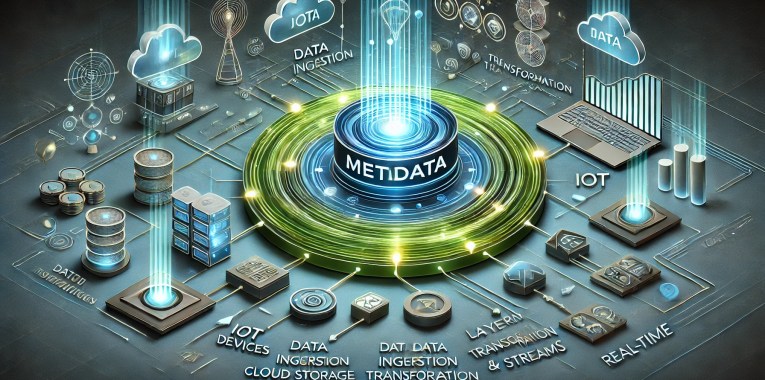
Metadata-Driven Data Lakehouse Architecture: Unlocking the Future of Data Management

November 26, 2024November 26, 2024Leave a comment

Blog 1#2: Unlocking the Future of Data Management

In a data-driven world, organizations face the challenge of managing massive amounts of structured, semi-structured, and unstructured data. Traditional data warehouses, though robust for structured data, struggle with scale and diversity, while data lakes, though flexible, often suffer from governance and performance issues. Enter the data lakehouse—a hybrid architecture that combines the best features of data lakes and warehouses. At the heart of an efficient data lakehouse lies metadata-driven architecture, a transformative approach to managing and leveraging data effectively.

What is a Metadata-Driven Architecture?

Metadata-driven architecture refers to a system design that uses metadata – information about data – to drive decisions, automate processes, and enhance data usability. Metadata in this context includes schema definitions, data lineage, data quality metrics, access controls, and business glossary information.

When applied to a data lakehouse, metadata-driven architecture provides the foundational layer for organizing, governing, and optimizing the data ecosystem. It transforms the data lakehouse from a passive storage repository to an active, intelligent system capable of delivering real-time insights.

Key Benefits of Metadata-Driven Data Lakehouse Architecture

  1. Enhanced Data Governance and Security Metadata enables organizations to enforce policies for data access, compliance, and usage effectively. With metadata tags defining sensitive or restricted data, organizations can easily comply with regulations such as GDPR, CCPA, or HIPAA. Role-based access control (RBAC) can also be automated through metadata rules, ensuring that the right users access the right data.
  2. Improved Data Discoverability With rich metadata, data consumers can easily find the datasets they need. Metadata-driven catalogs offer search and filtering capabilities based on tags, schemas, lineage, or business descriptions, making self-service analytics more accessible to users across the organization.
  3. Operational Efficiency Metadata-driven pipelines automate data movement, transformation, and quality checks. For example, ETL (Extract, Transform, Load) processes can dynamically adjust based on metadata, enabling faster data preparation and reducing operational overhead.
  4. Real-Time Insights With active metadata (metadata that updates dynamically in response to data events) the lakehouse can power real-time analytics. This is critical for industries like finance, healthcare, and e-commerce, where timely insights drive business decisions.
  5. Data Lineage and Provenance Metadata provides detailed data lineage, tracing how data flows through systems and transformations. This transparency not only aids debugging but also builds trust in data by ensuring accuracy and reproducibility.
  6. Unified Analytics Metadata bridges the gap between unstructured and structured data, enabling analytics tools to query data seamlessly across formats. With metadata driving schema-on-read capabilities, even raw, unstructured data can be analyzed alongside structured datasets.

How Metadata Powers Data Lakehouse Architecture

  1. Schema Management Metadata defines the structure of datasets in the lakehouse, ensuring consistency across data ingestion, storage, and querying. Schema evolution, a common challenge in dynamic environments, can also be managed via metadata rules.
  2. Data Partitioning and Indexing Metadata identifies the most efficient way to store and access data by guiding partitioning and indexing strategies. This minimizes query latencies and optimizes storage costs.
  3. Data Quality Enforcement Metadata tags and rules define quality standards for datasets. Automated quality checks based on these rules can flag anomalies, missing values, or inconsistencies during data ingestion and transformation.
  4. Workload Optimization Metadata can prioritize and allocate resources for different workloads (e.g., real-time streaming vs. batch processing). It also helps optimize query execution plans by providing the query engine with data statistics.
  5. Version Control and Auditing By maintaining historical metadata snapshots, organizations can version-control datasets and audit changes over time. This capability is essential for reproducibility and regulatory compliance.

Real-World Applications of Metadata-Driven Lakehouses

  1. Retail and E-Commerce Retailers use metadata to segment customers, track inventory, and optimize supply chains in real-time. Metadata-driven recommendations ensure personalized shopping experiences.
  2. Financial Services Metadata facilitates risk analysis, fraud detection, and compliance in financial institutions. By maintaining lineage and access controls, organizations ensure data integrity and regulatory adherence.
  3. Healthcare Metadata-driven architectures enable healthcare providers to integrate patient records, genomic data, and research datasets while adhering to strict privacy standards.
  4. Media and Entertainment Metadata organizes unstructured media files (e.g., videos, images) for content recommendation, copyright management, and analytics.

Best Practices for Implementing Metadata-Driven Lakehouses

  1. Invest in a Robust Metadata Management Tool Tools like Apache Atlas, AWS Glue Data Catalog, or Databricks Unity Catalog offer scalable metadata management capabilities for modern lakehouses.
  2. Adopt a Metadata-First Approach Treat metadata as a first-class citizen in your architecture. Design pipelines, governance frameworks, and analytics workflows around metadata from the start.
  3. Automate Metadata Collection Use automated tools to harvest metadata from various sources, including logs, schemas, and workflows. This reduces manual effort and ensures metadata remains up-to-date.
  4. Enable Collaboration Build a shared metadata repository accessible to all stakeholders. Encourage data stewards, engineers, and analysts to contribute, curate, and utilize metadata.
  5. Monitor and Maintain Metadata Quality Regularly audit metadata for accuracy, completeness, and relevance. Poor metadata quality can undermine trust in the entire lakehouse ecosystem.

Conclusion

Metadata-driven architecture is the cornerstone of modern data lakehouses, enabling organizations to achieve scalability, governance, and agility. By harnessing the power of metadata, businesses can move beyond static data management to create intelligent, responsive systems that drive innovation and growth.

As data volumes continue to explode, the importance of metadata-driven lakehouse architectures will only grow. Organizations that embrace this approach today will be well-positioned to thrive in tomorrow’s data economy.

Recent Posts

  • Ethics in Data and AI Management: A Detailed Article December 10, 2025
  • Beyond the Medallion: Cost-Saving Alternatives for Microsoft Fabric Data Estates November 29, 2025
  • The EU’s New AI Act: What It Means for the Future of Artificial Intelligence October 14, 2025
  • Harnessing Data to Drive Boardroom Decisions: Navigating Top Priorities for 2025 February 14, 2025
  • Saying “No” to Say “Yes”: Unlocking Tomorrow’s Innovation February 7, 2025
  • Mastering Client and Stakeholder Management in Software Development Projects January 5, 2025
  • Navigating the Impossible: When Tough Projects and Tougher People Collide December 29, 2024
  • What to Do in Software Development Projects When Words Lose Their Value December 22, 2024
  • Get the Top Line Right, and the Bottom Line Will Follow December 18, 2024
  • The Epiphany Moment of Euphoria in a Data Estate Development Project December 6, 2024

Tags

Agile AI Architecture Artificial Intelligence Automation Azure Big Data Board Business Business Leadership Business Transformation Case Study CEO Change CIO Cloud Coaching Collinson Commercial Awareness Communication CTO CTS Customer Feedback Systems CV Data Data Analytics Data Engineering Data Management Data Science Data Warehouse DevOps Digital Transformation Executives Finance Financial Intelligence GMS Governance ICLP Infrastructure Innovate Innovation Integration ITaaBusiness ITSM KPI Lead Leadership Loyalty Management Methodologies Microsoft Fabric Operations People Performance Planning Press Release Product Development Project Project Governance Project Management Projects Quotes Security SOA Software Development Software Engineering Solution Architecture Strategic Leadership Strategy Techniques Technology Technology Leadership Transformation Value What Is

Categories

  • AI
  • Architecture
  • Blockchain
  • Book Reviews
  • Case Studies
  • Customer Feedback Systems
  • Data
  • Entrepreneur
  • Finance
  • Guest Blogs
  • Infrastructure
  • Innovation
  • IoT
  • IT in Healthcare
  • IT Management
  • KAMOHA TECH
  • Leadership
  • Licensing
  • Loyalty Systems
  • Methodologies
  • Mobile
  • News
  • People
  • Product Management
  • Project Management
  • renierbotha Ltd
  • Security: Cyber & Information
  • Software Development
  • Strategy
  • Tooling
  • Transformation
  • UI/UX
  • Uncategorized

Follow on Twitter

My Tweets

renierbotha ltd

Lead : Direct : Innovate : Integrate

  • Facebook
  • Twitter
  • Pinterest
  • LinkedIn

Social

  • View renierbothaltd’s profile on Facebook
  • View renierbotha’s profile on Twitter
  • View renierbotha’s profile on LinkedIn
Website Powered by WordPress.com.
  • Subscribe Subscribed
    • renierbotha ltd
    • Join 56 other subscribers
    • Already have a WordPress.com account? Log in now.
    • renierbotha ltd
    • Subscribe Subscribed
    • Sign up
    • Log in
    • Report this content
    • View site in Reader
    • Manage subscriptions
    • Collapse this bar