
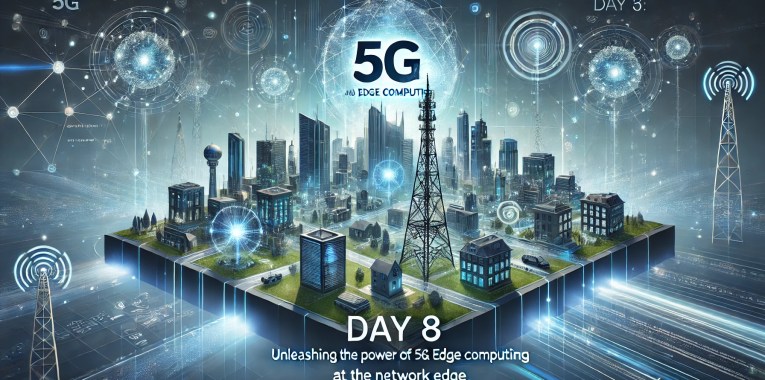
Day 8 of Renier Botha’s 10-Day Blog Series on Navigating the Future: The Evolving Role of the CTO
The advent of 5G and edge computing is set to revolutionize the technology landscape, offering unprecedented speed, low latency, and enhanced data processing capabilities. These technologies promise to drive innovation, support emerging applications, and significantly impact various industries. This comprehensive blog post explores how 5G and edge computing can be leveraged to transform business operations, featuring insights from industry leaders and real-world examples.
Understanding 5G and Edge Computing
What is 5G?
5G is the fifth generation of wireless technology, offering faster speeds, higher bandwidth, and lower latency than its predecessors. It is designed to connect virtually everyone and everything, including machines, objects, and devices.
Quote: “5G will enable a new era of connectivity, powering everything from smart cities to autonomous vehicles and advanced manufacturing.” – Hans Vestberg, CEO of Verizon
What is Edge Computing?
Edge computing involves processing data closer to the source of data generation, such as IoT devices, rather than relying solely on centralized cloud servers. This approach reduces latency, decreases bandwidth usage, and improves response times.
Quote: “Edge computing brings computation and data storage closer to the devices where it’s being gathered, rather than relying on a central location that can be thousands of miles away.” – Satya Nadella, CEO of Microsoft
Benefits of 5G and Edge Computing
- Reduced Latency: With data processed closer to the source, latency is significantly reduced, enabling real-time applications and enhancing user experiences.
- Enhanced Data Processing: Edge computing allows for efficient data processing, reducing the load on central servers and ensuring faster insights.
- Increased Bandwidth: 5G provides higher bandwidth, supporting more devices and data-intensive applications.
- Improved Reliability: Both technologies enhance network reliability, ensuring consistent performance even in remote or challenging environments.
- Support for Emerging Technologies: 5G and edge computing are foundational for emerging innovations such as autonomous vehicles, smart cities, and advanced manufacturing.
Strategies for Leveraging 5G and Edge Computing
1. Identify Use Cases
Determine specific use cases where 5G and edge computing can deliver the most value. Focus on applications that require low latency, high bandwidth, and real-time data processing.
Example: In healthcare, 5G and edge computing can enable remote surgeries and real-time monitoring of patient vitals, improving outcomes and expanding access to care.
2. Invest in Infrastructure
Build the necessary infrastructure to support 5G and edge computing. This includes deploying edge nodes, upgrading network components, and ensuring seamless integration with existing systems.
Example: Verizon has invested heavily in its 5G infrastructure, deploying small cells and edge computing nodes across major cities to ensure robust and reliable coverage.
3. Collaborate with Industry Partners
Partner with technology providers, telecom companies, and industry experts to leverage their expertise and resources. Collaboration can accelerate deployment and ensure successful integration.
Quote: “Collaboration is key to unlocking the full potential of 5G and edge computing. By working together, we can drive innovation and create new opportunities for businesses and consumers.” – Ajit Pai, Former Chairman of the FCC
4. Prioritize Security
Implement robust security measures to protect data and ensure the integrity of edge devices and networks. This includes encryption, authentication, and regular security audits.
Example: IBM’s Edge Application Manager provides a secure platform for managing and deploying edge applications, ensuring data integrity and protecting against cyber threats.
5. Leverage Data Analytics
Utilize data analytics to derive insights from the vast amounts of data generated by edge devices. Real-time analytics can drive informed decision-making and optimize operations.
Example: Siemens uses edge computing and data analytics to monitor and optimize its industrial equipment. By analyzing data at the edge, Siemens can predict maintenance needs and improve operational efficiency.
Real-World Examples of 5G and Edge Computing
Example 1: Autonomous Vehicles
Autonomous vehicles rely on real-time data processing to navigate and make decisions. 5G and edge computing enable ultra-low latency and high-speed data transfer, ensuring safe and efficient operation. Companies like Tesla and Waymo are leveraging these technologies to enhance the capabilities of their autonomous fleets.
Example 2: Smart Cities
Smart cities use 5G and edge computing to manage infrastructure, improve public services, and enhance the quality of life for residents. Barcelona, for instance, employs these technologies to optimize traffic management, reduce energy consumption, and enhance public safety through real-time surveillance and data analysis.
Example 3: Manufacturing
In manufacturing, 5G and edge computing support advanced automation and predictive maintenance. Bosch utilizes these technologies to monitor equipment in real-time, predict failures, and optimize production processes, leading to reduced downtime and increased efficiency.
Example 4: Gaming
The gaming industry benefits from 5G and edge computing by delivering immersive experiences with minimal latency. NVIDIA’s GeForce Now platform leverages edge computing to provide high-performance cloud gaming, ensuring smooth gameplay and real-time interactions.
Conclusion
5G and edge computing represent a transformative shift in how data is processed and transmitted, offering unparalleled speed, low latency, and enhanced capabilities. By leveraging these technologies, organizations can drive innovation, improve operational efficiency, and unlock new business opportunities.
To successfully integrate 5G and edge computing, businesses should identify relevant use cases, invest in infrastructure, collaborate with industry partners, prioritize security, and leverage data analytics. Real-world examples from healthcare, autonomous vehicles, smart cities, manufacturing, and gaming demonstrate the vast potential of these technologies.
As 5G and edge computing continue to evolve, staying ahead of the curve will require strategic planning, continuous innovation, and a commitment to embracing new technologies. By doing so, organizations can harness the power of 5G and edge computing to drive success and shape the future.
Stay tuned as we continue to explore critical topics in our 10-day blog series, “Navigating the Future: A 10-Day Blog Series on the Evolving Role of the CTO” by Renier Botha.
Visit www.renierbotha.com for more insights and expert advice.

 renierbotha ltd