
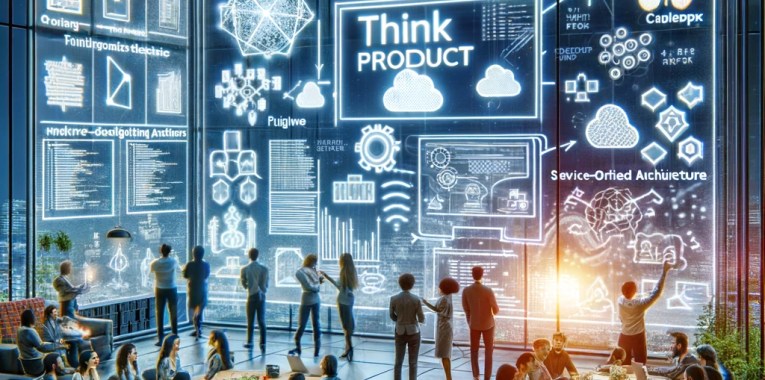
In the realm of software development, shifting from a project-centric to a product-oriented mindset can be a game-changer for both developers and businesses alike. This paradigm, often encapsulated in the phrase “think product,” urges teams to design and build software solutions with the flexibility, scalability, and vision of a product intended for a broad audience. This approach not only enhances the software’s utility and longevity but also maximises the economies of scale, making the development process more efficient and cost-effective in the long run.
The Core of “Think Product”
The essence of “think product” lies in the anticipation of future needs and the creation of solutions that are not just tailored to immediate requirements but are adaptable, scalable, and capable of evolving over time. This involves embracing best practices such as reusability, modularity, service orientation, generality, client-agnosticism, and parameter-driven design.
Reusability: The Building Blocks of Efficiency
Reusability is about creating software components that can be easily repurposed across different projects or parts of the same project. This approach minimises duplication of effort, fosters consistency, and speeds up the development process. By focusing on reusability, developers can construct a library of components, functions, and services that serve as a versatile toolkit for building new solutions more swiftly and efficiently.
Modularity: Independence and Integration
Modularity involves designing software in self-contained units or modules that can operate independently but can be integrated seamlessly to form a larger system. This facilitates easier maintenance, upgrades, and scalability, as changes can be made to individual modules without impacting the entire system. Modularity also enables parallel development, where different teams work on separate modules simultaneously, thus accelerating the development cycle.
Service Orientation: Flexibility and Scalability
Service-oriented architecture (SOA) emphasises creating software solutions as a collection of services that communicate and operate together. This approach enhances flexibility, as services can be reused, replaced, or scaled independently of each other. It also promotes interoperability, making it easier to integrate with external systems and services.
Generality: Beyond Specific Use Cases
Designing software with generality in mind means creating solutions that are not overly specialised to a specific task or client. Instead, they are versatile enough to accommodate a range of requirements. This broader applicability maximises the potential user base and market relevance of the software, contributing to its longevity and success.
Client Agnosticism: Serving a Diverse Audience
A client-agnostic approach ensures that software solutions are compatible across various platforms, devices, and user environments. This universality makes the product accessible to a wider audience, enhancing its marketability and usability across different contexts.
Parameter-Driven Design: Flexibility at Its Core
Parameter-driven design allows software behaviour and features to be customised through external parameters or configuration files, rather than hardcoded values. This adaptability enables the software to cater to diverse user needs and scenarios without requiring significant code changes, making it more versatile and responsive to market demands.
Cultivating the “Think Product” Mindset
Adopting a “think product” mindset necessitates a cultural shift within the development team and the broader organisation. It involves embracing long-term thinking, prioritising quality and scalability, and being open to feedback and adaptation. This mindset encourages continuous improvement, innovation, and a focus on delivering value to a wide range of users.
By integrating best practices like reusability, modularity, service orientation, generality, client agnosticism, and parameter-driven design, developers can create software solutions that stand the test of time. These practices not only contribute to the creation of superior products but also foster a development ecosystem that is more sustainable, efficient, and prepared to meet the challenges of an ever-evolving technological landscape.
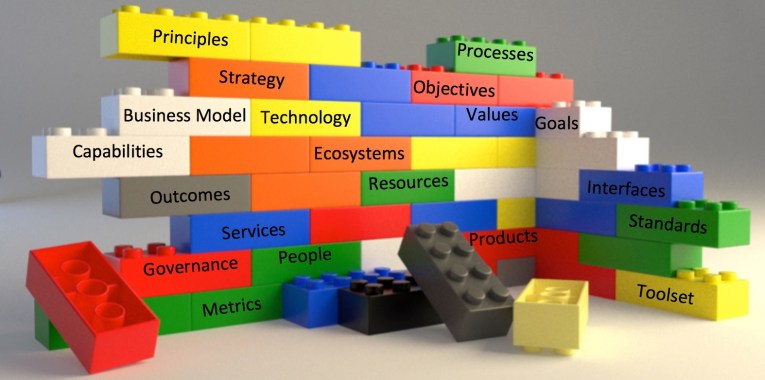
 to easily produce new business outcomes without having to deal with the complexities which are already defined within the individual building blocks – just like a Lego set using the same set of standardised and pre-defined blocks to build completely different things. The focus is on re-using the blocks and not on the design of the blocks itself. Off course a lot of thinking has gone into the design of the different building blocks, but through re-using the same block designs, the model design time is focussed on a new/different outcome and not on a component of an outcome.
 renierbotha ltd