Case Study: Renier Botha’s Leadership in Rivus’ Digital Strategy Implementation

Introduction

Rivus Fleet Solutions, a leading provider of fleet management services, embarked on a significant digital transformation to enhance its operational efficiencies and customer services. Renier Botha, a seasoned IT executive, played a crucial role in this transformation, focusing on three major areas: upgrading key database infrastructure, leading innovative product development, and managing critical transition projects. This case study explores how Botha’s efforts have propelled Rivus towards a more digital future.

Background

Renier Botha, known for his expertise in digital strategy and IT management, took on the challenge of steering Rivus through multiple complex digital initiatives. The scope of his work covered:

  1. Migration of Oracle 19c enterprise database,
  2. Development of a cross-platform mobile application, and
  3. Management of the service transition project with BT & Openreach.

Oracle 19c Enterprise Upgrade Migration

Objective: Upgrade the core database systems to Oracle 19c to ensure enhanced performance, improved security, and extended support.

Approach:
Botha employed a robust programme management approach to handle the complexities of upgrading the enterprise-wide database system. This involved:

  • Detailed planning and risk management to mitigate potential downtime,
  • Coordination with internal IT teams and external Oracle consultants,
  • Comprehensive testing phases to ensure system compatibility and performance stability.

Outcome:
The successful migration to Oracle 19c provided Rivus with a more robust and secure database environment, enabling better data management and scalability options for future needs. This foundational upgrade was crucial for supporting other digital initiatives within the company.

Cross-Platform Mobile Application Development

Objective: Develop a mobile application to facilitate seamless digital interaction between Rivus and its customers, enhancing service accessibility and efficiency.

Approach:
Botha led the product development team through:

  • Identifying key user requirements by engaging with stakeholders,
  • Adopting agile methodologies for rapid and iterative development,
  • Ensuring cross-platform compatibility to maximise user reach.

Outcome:
The new mobile application promissed to significantly transformed how customers interacted with Rivus, providing them with the ability to manage fleet services directly from their devices. This not only improved customer satisfaction but also streamlined Rivus’ operational processes.

BT & Openreach Exit Project Management

Objective: Manage the transition of fleet technology services of BT & Openreach ensuring minimal service disruption.

Approach:
This project was complex, involving intricate service agreements and technical dependencies. Botha’s strategy included:

  • Detailed project planning and timeline management,
  • Negotiations and coordination with multiple stakeholders from BT, Openreach, and internal teams,
  • Focusing on knowledge transfer and system integrations.

Outcome:
The project was completed efficiently, allowing Rivus to transition control of critical services succesfully and without business disruption.

Conclusion

Renier Botha’s strategic leadership in these projects has been pivotal for Rivus. By effectively managing the Oracle 19c upgrade, he laid a solid technological foundation. The development of the cross-platform mobile app under his guidance directly contributed to improved customer engagement and operational efficiency. Finally, his adept handling of the BT & Openreach transition solidified Rivus’ operational independence. Collectively, these achievements represent a significant step forward in Rivus’ digital strategy, demonstrating Botha’s profound impact on the company’s technological advancement.
Scrum of Scrums

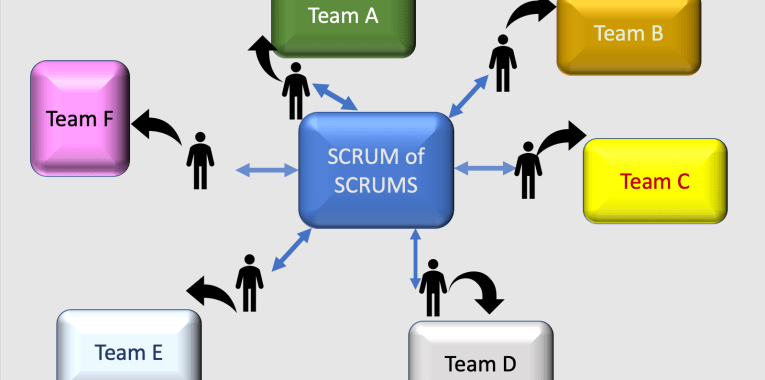
The Scrum of Scrums is a scaled agile framework used to coordinate the work of multiple Scrum teams working on the same product or project. It is a meeting or a communication structure that allows teams to discuss their progress, identify dependencies, and address any challenges that may arise during the development process. The Scrum of Scrums is often employed in large organisations where a single Scrum team may not be sufficient to deliver a complex product or project.

The primary purpose of the Scrum of Scrums is to facilitate coordination and communication among multiple Scrum teams. It ensures that all teams are aligned towards common goals and are aware of each other’s progress.

Here are some key aspects of the Scrum of Scrums:

Frequency:

  • The frequency of Scrum of Scrums meetings depends on the project’s needs, but they are often daily or multiple times per week to ensure timely issue resolution.
  • Shorter daily meetings focussing on progress, next steps and blockers can be substantiated by a longer weekly meeting covering an agenda of all projects and more detailed discussions.

Participants – Scrum Teams and Representatives:

  • In a large-scale project or programme, there are multiple Scrum teams working on different aspects of the product or project.
  • Each Scrum team is represented by one or more members (often the Scrum Masters or team leads) in the Scrum of Scrums meeting. Each team selects one or more representatives to attend the Scrum of Scrums meeting.
  • These representatives are typically Scrum Masters or team leads who can effectively communicate the status, challenges, and dependencies of their respective teams.
  • The purpose of these representatives is to share information about their team’s progress, discuss impediments, and collaborate on solutions.

Meeting Structure & Agenda:

  • The Scrum of Scrums meeting follows a structured agenda that may include updates on team progress, identification of impediments, discussion of cross-team dependencies, reviewing and updating the overall RAID log with associated mitigation action progress and and collaborative problem-solving.
  • A key focus of the Scrum of Scrums is identifying and addressing cross-team dependencies. Teams discuss how their work may impact or be impacted by the work of other teams, and they collaboratively find solutions to minimise bottlenecks and define a overall critical path / timeline for the project delivery.

Tools and Techniques:

  • While the Scrum of Scrums is often conducted through face-to-face meetings, organisations may use various tools and techniques for virtual collaboration, especially if teams are distributed geographically. Video conferencing, collaboration platforms, and digital boards are common aids.

Focus on Coordination:

  • The primary goal of the Scrum of Scrums is to facilitate communication and coordination among the different Scrum teams.
  • Teams discuss their plans, commitments, and any issues they are facing. This helps in identifying dependencies and potential roadblocks early on.

Problem Solving:

  • If there are impediments or issues that cannot be resolved within individual teams, the Scrum of Scrums provides a forum for collaborative problem-solving.
  • The focus is on finding solutions that benefit the overall project, rather than just individual teams.

Scaling Agile:

  • The Scrum of Scrums is in line with the agile principles of adaptability and collaboration. It allows organisations to scale agile methodologies effectively by maintaining the iterative and incremental nature of Scrum while accommodating the complexities of larger projects.

Information Flow: & Sharing

  • The Scrum of Scrums ensures that information flows smoothly between teams, preventing silos of knowledge and promoting transparency across the organisation.
  • The Scrum of Scrums provides a platform for teams to discuss impediments that go beyond the scope of individual teams. It fosters a collaborative environment where teams work together to solve problems and remove obstacles that hinder overall progress.
  • Transparency is a key element of agile development, and the Scrum of Scrums promotes it by ensuring that information flows freely between teams. This helps prevent misunderstandings, duplication of effort, and ensures that everyone is aware of the overall project status.

Adaptability:

  • The Scrum of Scrums is adaptable to the specific needs and context of the organisation. It can be tailored based on the size of the project, the number of teams involved, and the nature of the work being undertaken.
  • In summary, the Scrum of Scrums is a crucial component in the toolkit of agile methodologies for large-scale projects. It fosters collaboration, communication, and problem-solving across multiple Scrum teams, ensuring that the benefits of agile development are retained even in complex and extensive projects.

In Summary, the Scrum of Scrums is a crucial component in the toolkit of agile methodologies for large-scale projects. It fosters collaboration, communication, and problem-solving across multiple Scrum teams, ensuring that the benefits of agile development are retained even in complex and extensive projects.

It’s important to note that the Scrum of Scrums is just one of several techniques used for scaling agile. Other frameworks like SAFe (Scaled Agile Framework), LeSS (Large-Scale Scrum), and Nexus also provide structures for coordinating the work of multiple teams. The choice of framework depends on the specific needs and context of the organisation.

How to Innovate to stay Relevant

Staying relevant! The biggest challenge we all face – staying relevant within our market. Relevance to your customers is what keeps you in business.

With the world changing as rapidly as it does today, mainly due to the profound influence of technology on our lives, the expectations of the consumer is changing at pace. They have access to an increasing array of choice, not just in how they spend their money but also in how they are communicating and interacting – change fueled by a digital revolution. The last thing that anyone can afford, in this fast paced race, is losing relevance – that will cost us customers or worse…

Is what you are selling today, adaptable to the continuous changing ecosystems? Does your strategy reflect that agility? How can you ensure that your business stays relevant in the digital age? We have all heard about digital transformation as a necessity, but even then, how can you ensure that you are evolving as fast as your customers and stay relevant within your market?

Business, who has a culture of continuous evolvement, aligning their products and services with the digital driven customer, is the business that stays relevant. This is the kind of business that does not require a digital transformation to realign with customer’s demand to secure their future. A customer centric focus and a culture of continuous evolution within the business, throughout the business value chain, is what assure relevance. Looking at these businesses, their ability/agility to get innovation into production, rapidly, is a core success criterion.

Not having a strategy to stay relevant is a very high and real risk to business. Traditionally we deal with risk by asking “Why?”. For continuous improvement/evolution and agility, we should instead be asking “Why not?” and by that, introduce opportunities for pilots, prototypes, experimentation and proof of concepts. Use your people as an incubator for innovation.

Sure, you have a R&D team and you are continuously finding new ways to deliver your value proposition – but getting your innovative ideas into production is cumbersome, just to discover that it is already aged and possibly absolute in a year a two. R&D is expensive and time consuming and there are no guarantees that your effort will result in a working product or desired service. Just because you have the ability to build something, does not mean that you have to build something. Focusing the scares and expensive resources on the right initiatives makes sense, right! This is why many firms are shifting from a project-minded (short term) approach to a longer-term product-minded investment and management approach.

So, how do you remain customer centric, use your staff as incubators of innovation, select the ideas that will improve your market relevance and then rapidly develop those ideas into revenue earners while shifting to a product-minded investment approach?

You could combine Design Thinking with Lean Startup and Agile Delivery…

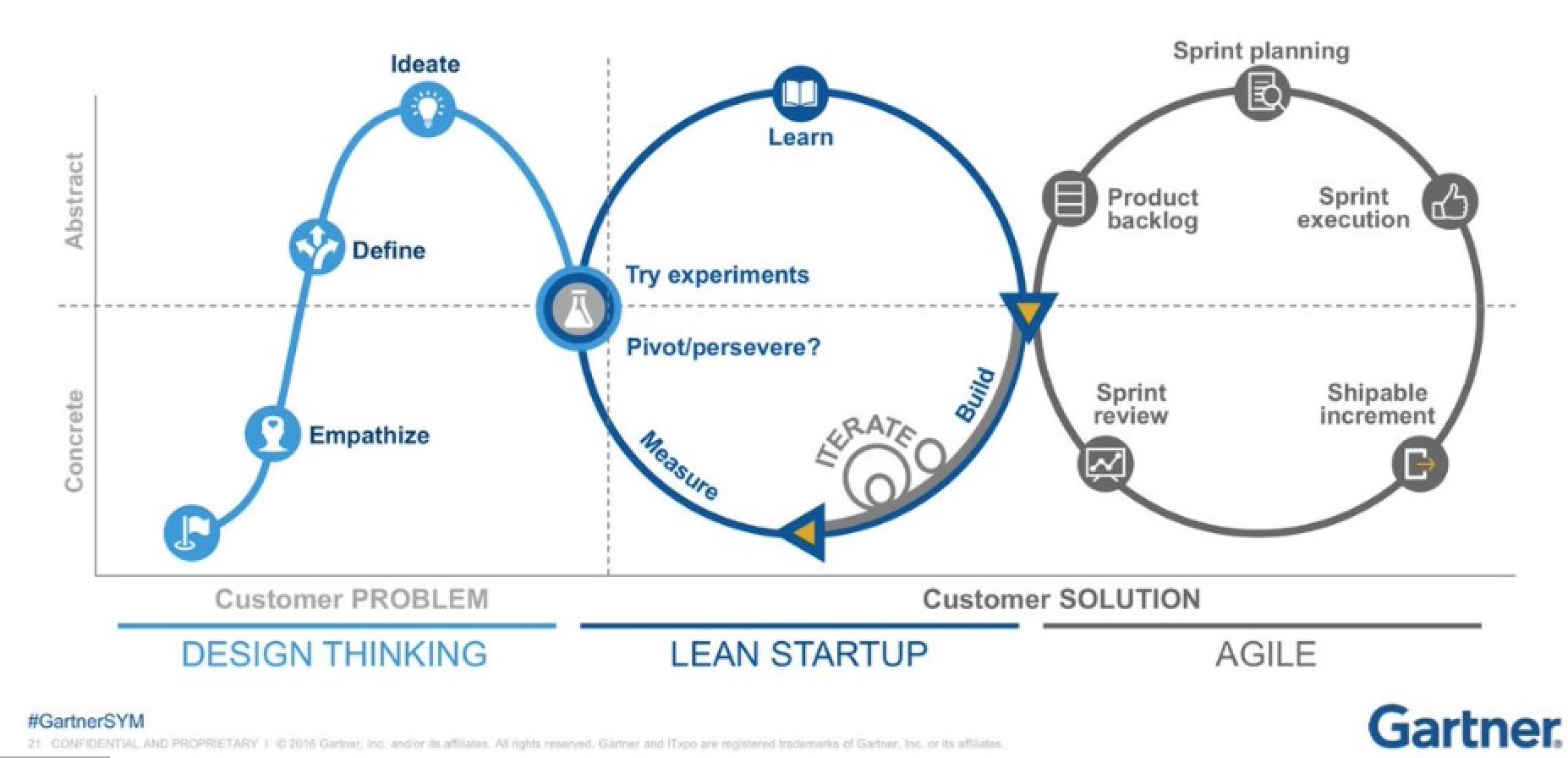
In 2016, I was attending the Gartner Symposium where Gartner brought these concepts together very well in this illustration:

Gartner - Design-Lean-Agile 2

Instead of selecting and religiously follow one specific delivery methodology, use the best of multiple worlds to get the optimum output through the innovation lifecycle.

Design-Lean-Agile 1

Using Design Thinking (Empathise >> Define >> Ideate >> Prototype) puts the customer at the core of customer centric innovation and product/service development. Starting by empathising with the customers and defining their most pressing issues and problems, before coming up with a variety of ideas to potentially solve the problems. Each idea is considered before developing a prototype. This dramatically reduces the risk of innovation initiatives, by engaging with what people (the customer) really need and want before actually investing further in development.

Lean Startup focuses on getting a product market fit, by moving a Prototype or MVP (minimum viable product) through a cycle of Build >> Measure >> Learn. This ensures a thorough knowledge of the user of the product/service is gained through an active and measureable engagement with the customer. Customer experience and feedback is captured and used to learn and adapt resulting in an improved MVP, better aligned to the target market, after every cycle.

Finally Agile Scrum, continuing the customer centric theme, involves multiple stakeholders, especially users (customers), in every step in maturing the MVP to a product they will be happy to use. This engagement enhances transparency, which in turn grow the trust between the business (Development Team) and the customer (user) who are vested in the product’s/service’s success. Through an iterative approach, new features and changes can be delivered in an accurate and predictable timeline quickly and according to stakeholder’s priorities. This continuous product/service evolvement, with full stakeholder engagement, builds brand loyalty and ensures market relevance.

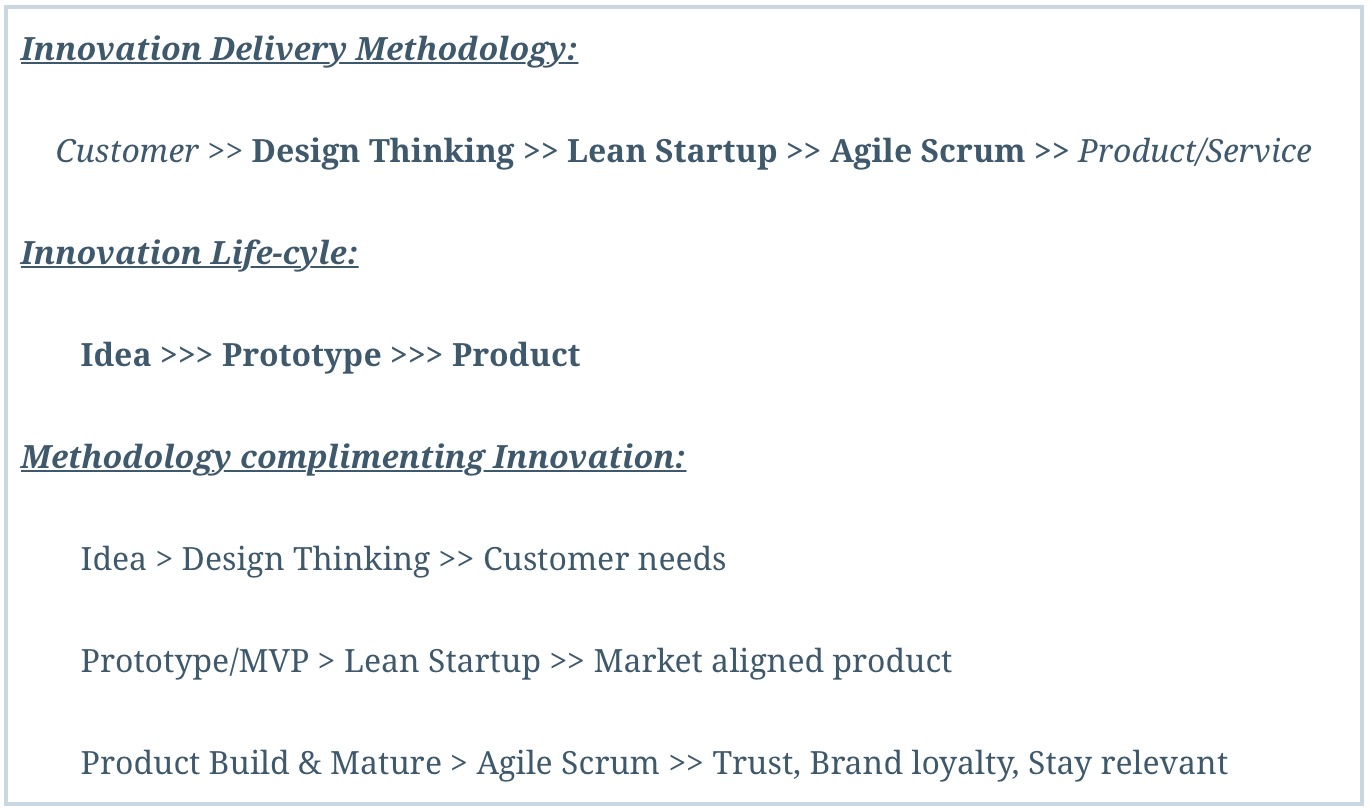
Looking at a typical innovation lifecycle you could identify three distinct stages: Idea, Prototype/MVP (Minimal Viable Product) and Product. Each of these innovation stages are complimented by some key value, gained from one of the three delivery methodologies:

Design-Lean-Agile 2

All of these methodologies, engage the stakeholders (especially the customer & user) in continuous feedback loops, measuring progress and capturing feedback to adapt and continuously improve, so maximum value creation is achieved.

No one wants to spend a lot of resource and time delivering something that adds little value and create no impact. Using this innovation methodology and associated tools, you will be building better products and service, in the eye of the user – and that’s what matters. You’ll be actively building and unlocking the potential of you’re A-team, to be involved in creating impact and value while cultivating a culture of continuous improvement.

The same methodology works very well for digital transformation programmes.

At the very least, you should be experimenting with these delivery approaches to find the sweat spot methodology for you.

Experiment to stay relevant!

Let’s Talk – renierbotha.com – Are you looking to develop an innovation strategy to be more agile and stay relevant? Do you want to achieve your goals faster? Create better business value? Build strategies to improve growth?

We can help – make contact!

Read similar articles for further insight in our Blog.

Executive Summary of 4 commonly used Agile Methodologies

AGILE – What business executives need to know #2: Overview of 4 most commonly used Agile Methodologies

In the first article in this series we focussed on an overview of what Agile software development is and referred to the Agile SCRUM methodology to describe the agile principles.

Let’s recap – Wikipedia describes Agile Software Development as an approach to software development under which requirements and solutions evolve through the collaborative effort of self-organizing cross functional teams and their customers / end users.  It advocates adaptive planning, evolutionary development, early delivery, and continuous improvement, and it encourages rapid and flexible response to change. For an overview see the first blog post…

Several agile delivery methodologies are in use for example: Adaptive Software Development (ASD); Agile Nodelling; Agile Unified Process (AUP); Disciplined Agile Delivery; Dynamic Systems Development Method (DSDM); Extreme Programming (XP); Feature-Driven Development (FDD); Lean Software Development (LEAN); Kanban; Rapid Application Development (RAD); Scrum; Scrumban.

This article covers a brief overview of the four most frequently used Agile Methodologies:

  • Scrum
  • Extreme Programming (XP)
  • Lean
  • Kanban


SCRUM

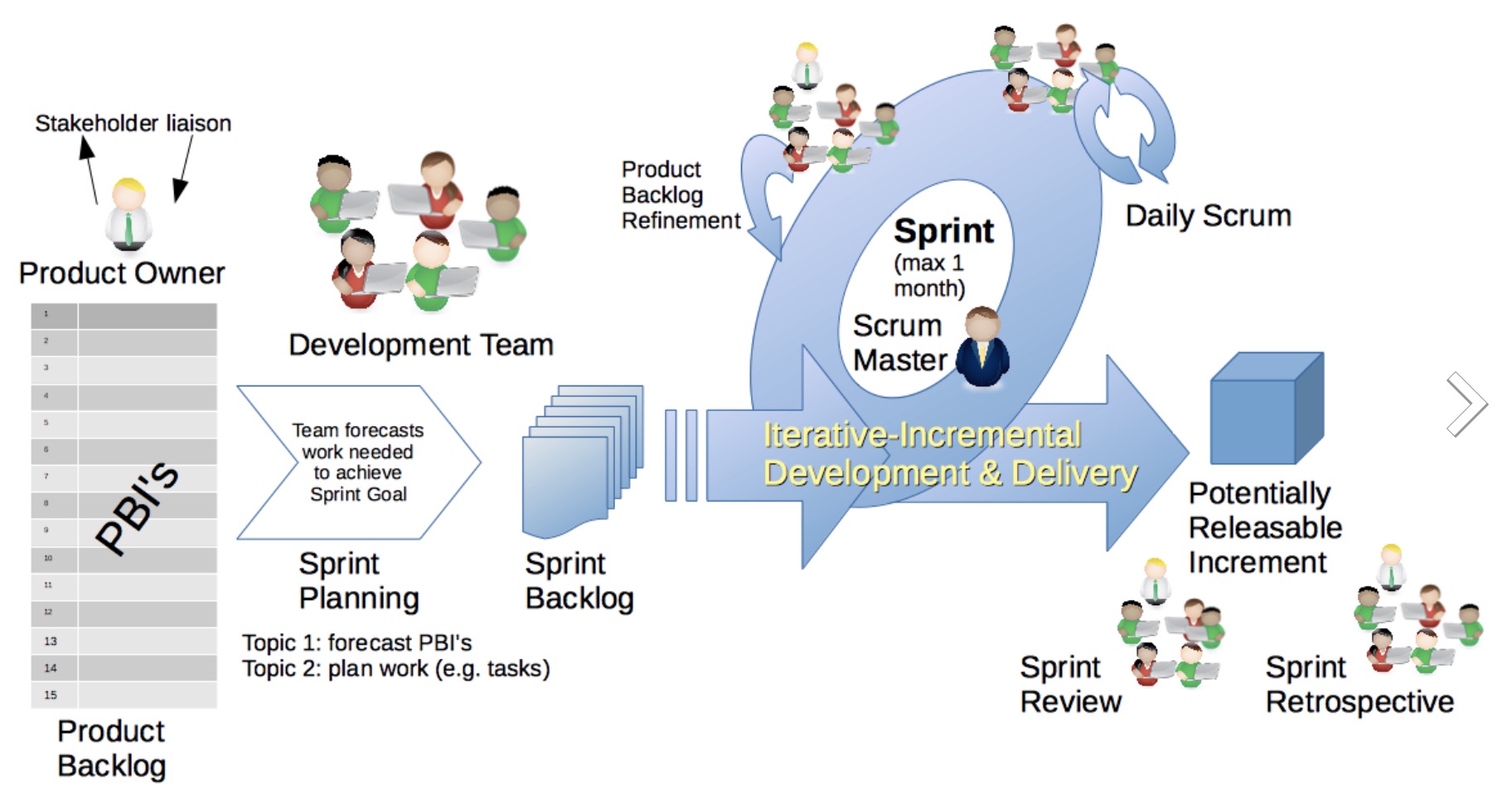
Using Scrum framework the project work is broken down into user stories (basic building blocks of agile projects – these are functional requirements explained in an in business context) which are collated in the backlog (work to be done). Stories, from the backlog, are grouped into sprints (development iteration) based on story functionality dependencies, priorities and resource capacity. The resource capacity is determined by the speed (velocity) at which the team can complete stories, which are categorised into levels of complexity and effort required to complete. Iterations are completed with fully functional deliverables for each story until all the needed stories are completed for functional solutions.

SCRUM

Scrum is based on three pillars:

  • Transparency – providing full visibility on the project progress and a clear understanding of project objectives to the project team but more importantly to the stakeholders responsible for the outcome of the project.
  • Inspection – Frequent and repetitive checks on project progress and milestones as work progresses towards the project goal. The focus of these inspections is to identify problems and differences from the project objectives as well as to identify if the objectives have changed.
  • Adaptation – Responding to the outcome of the inspections to adapt the project to realign in addressing problems and change in objectives.

Through the SCRUM methodology, four opportunities for Inspection and Adaptation are provided:

  • Sprint Retrospective
  • Daily Scrum meeting
  • Sprint review meeting
  • Sprint planning meeting

A Scrum team is made of a Product Owner, a Scrum Master and the Development Team.

Scrum activity can be summarised within the following events:

  • Sprint – a fixed time development iteration
  • Sprint Planning meetings
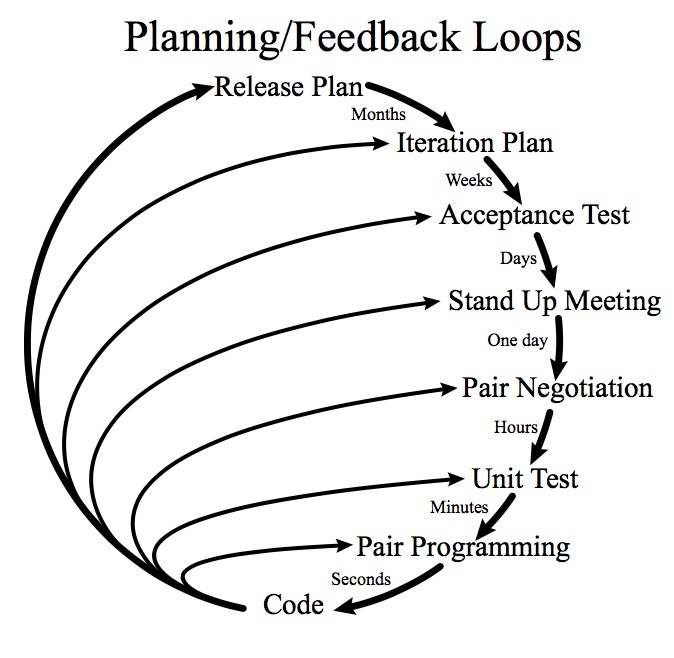
  • Daily Scrum meetings (Stand-Up meetings)
  • Sprint Review meetings
  • Sprint Retrospectives


XP – EXTREME PROGRAMMING

XP

Extreme Programming (XP) provides a set of technically rigorous, team-oriented practices such as Test Driven Development, Continuous Integration, and Pairing that empower teams to deliver high quality software, iteratively.


LEAN

LEAN

Lean grew from out of the Toyota manufacturing Production System (TPS). Some key elements of this methodology are:

  • Optimise the whole
  • Eliminate waste
  • Build quality in
  • Learn constantly
  • Deliver fast
  • Engage everybody
  • Keep improving

Lean five principles:

  1. Specify value from the customer’s point of view. Start by recognizing that only a small percentage of overall time, effort and resources in a organization actually adds value to the customer.
  2. Identify and map the value chain. This is the te entire set of activities across all part of the organization involved in delivering a product or service to the customer. Where possible eliminate the steps that do not create value
  3. Create flow – your product and service should flow to the customer without any interruptions, detours or waiting – delivering customer value.
  4. Respond to customer demand (also referred to as pull). Understand the demand and optimize the process to deliver to this demand – ensuring you deliver only what the customer wants and when they want it – just in time production.
  5. Pursue perfection – all the steps link together waste is identified – in layers as one waste rectification can expose another – and eliminated by changing / optimizing the process to ensure all assets add value to the customer.


KANBAN

Kanban is focussed the visual presentation and management of work on a kanban board to better balance the understanding of the volume of work with the available resources and the delivery workflow.

KANBAN

Six general work practices are exercised in kanban:

  • Visualisation
  • Limiting work in Progress (WIP)
  • Flow management
  • Making policies explicit
  • Using feedback loops to ensure customer and quality alignment
  • Collaborative & experimental evolution of process and solutions

By limiting WIP you are minimising waste through the elimination of multi tasking and context switching.

There is no prescription of the number of steps to follow but it should align with the natural evolution of the changes being made in resolving a problem or completing a specific peace of work.

It focuses on delivering to customer expectations and needs by promoting team collaboration including the customer.


A Pragmatic approach

These techniques together provide a powerful, compelling and effective software development approach that brings the needed flexibility / agility into the software development lifecycle.

Combining and borrowing components from different methodologies to find the optimum delivery method that will deliver to the needs of the organisation is key. Depending on the specific business needs/situation, these components are combined to optimise the design, development and deployment of the software.

Helpful references:

A good overview of different agile methodologies can be found on this slideshare at .

Further Reading:

-> What Is Agile? A Philosophy That Develops Through Practice from Umar Ali

Let’s Talk – Are you looking to achieve your goals faster? Create better business value? Build strategies to improve growth? We can help – make contact!