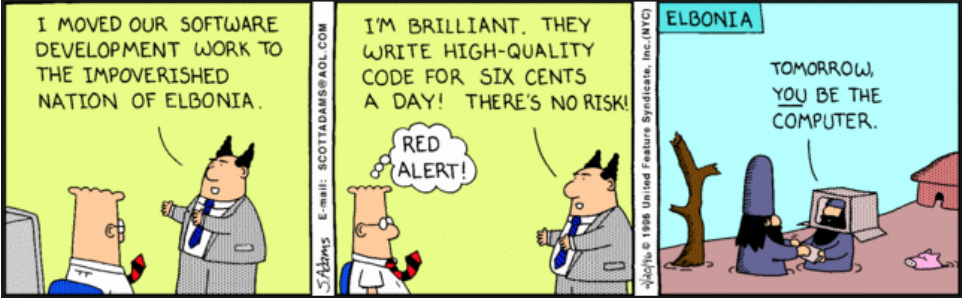

Embracing the “Think Product” Mindset in Software Development

In the realm of software development, shifting from a project-centric to a product-oriented mindset can be a game-changer for both developers and businesses alike. This paradigm, often encapsulated in the phrase “think product,” urges teams to design and build software solutions with the flexibility, scalability, and vision of a product intended for a broad audience. This approach not only enhances the software’s utility and longevity but also maximises the economies of scale, making the development process more efficient and cost-effective in the long run.

The Core of “Think Product”

The essence of “think product” lies in the anticipation of future needs and the creation of solutions that are not just tailored to immediate requirements but are adaptable, scalable, and capable of evolving over time. This involves embracing best practices such as reusability, modularity, service orientation, generality, client-agnosticism, and parameter-driven design.

Reusability: The Building Blocks of Efficiency

Reusability is about creating software components that can be easily repurposed across different projects or parts of the same project. This approach minimises duplication of effort, fosters consistency, and speeds up the development process. By focusing on reusability, developers can construct a library of components, functions, and services that serve as a versatile toolkit for building new solutions more swiftly and efficiently.

Modularity: Independence and Integration

Modularity involves designing software in self-contained units or modules that can operate independently but can be integrated seamlessly to form a larger system. This facilitates easier maintenance, upgrades, and scalability, as changes can be made to individual modules without impacting the entire system. Modularity also enables parallel development, where different teams work on separate modules simultaneously, thus accelerating the development cycle.

Service Orientation: Flexibility and Scalability

Service-oriented architecture (SOA) emphasises creating software solutions as a collection of services that communicate and operate together. This approach enhances flexibility, as services can be reused, replaced, or scaled independently of each other. It also promotes interoperability, making it easier to integrate with external systems and services.

Generality: Beyond Specific Use Cases

Designing software with generality in mind means creating solutions that are not overly specialised to a specific task or client. Instead, they are versatile enough to accommodate a range of requirements. This broader applicability maximises the potential user base and market relevance of the software, contributing to its longevity and success.

Client Agnosticism: Serving a Diverse Audience

A client-agnostic approach ensures that software solutions are compatible across various platforms, devices, and user environments. This universality makes the product accessible to a wider audience, enhancing its marketability and usability across different contexts.

Parameter-Driven Design: Flexibility at Its Core

Parameter-driven design allows software behaviour and features to be customised through external parameters or configuration files, rather than hardcoded values. This adaptability enables the software to cater to diverse user needs and scenarios without requiring significant code changes, making it more versatile and responsive to market demands.

Cultivating the “Think Product” Mindset

Adopting a “think product” mindset necessitates a cultural shift within the development team and the broader organisation. It involves embracing long-term thinking, prioritising quality and scalability, and being open to feedback and adaptation. This mindset encourages continuous improvement, innovation, and a focus on delivering value to a wide range of users.

By integrating best practices like reusability, modularity, service orientation, generality, client agnosticism, and parameter-driven design, developers can create software solutions that stand the test of time. These practices not only contribute to the creation of superior products but also foster a development ecosystem that is more sustainable, efficient, and prepared to meet the challenges of an ever-evolving technological landscape.
Modular Operating Model for Strategy Agility

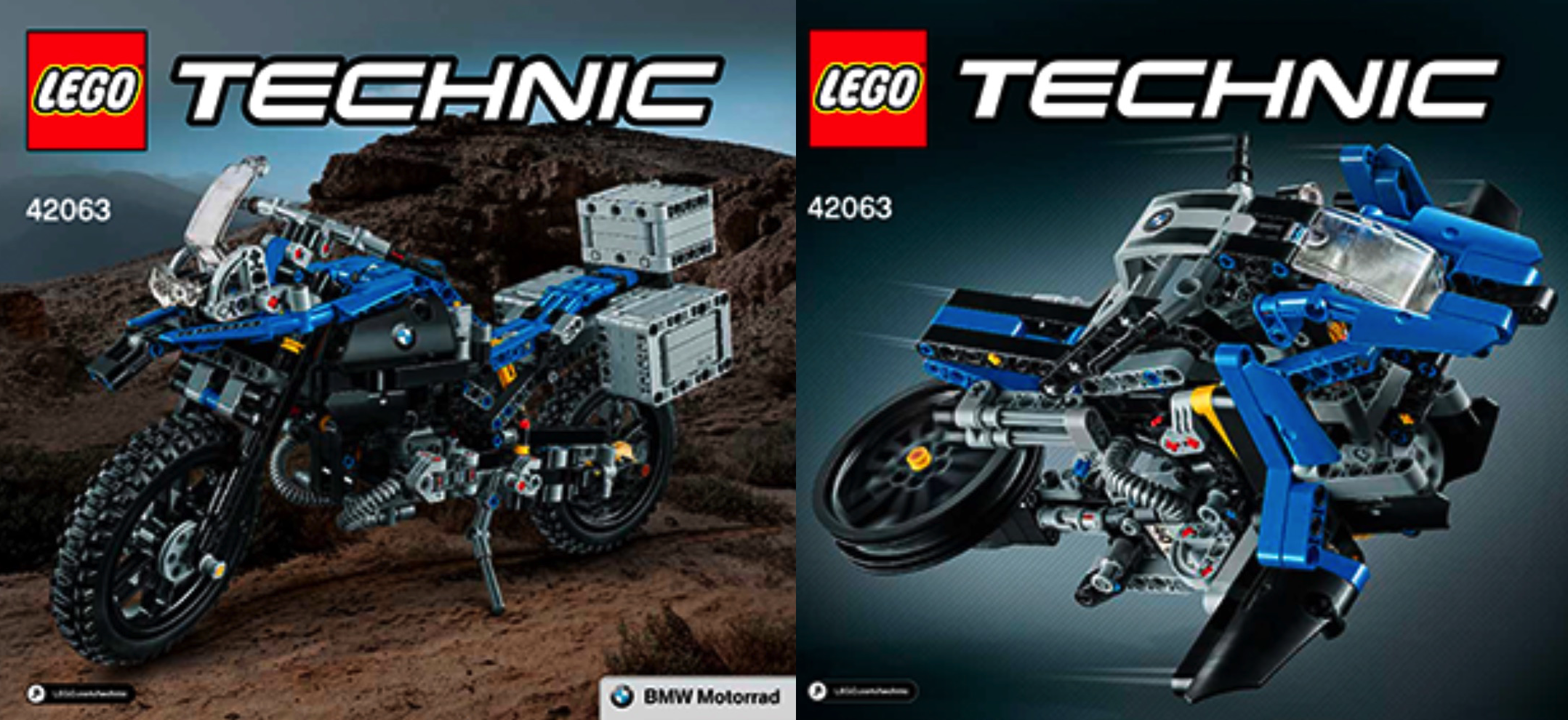
One of life’s real pleasures, is riding a motorcycle. The sense of freedom when it is just you, machine and the open road is something only sharing enthusiast would truly understand. Inspired, I recently completed a hobby project building the Lego Set 42063. The building blocks of this Technic model constructs the BMW R1200GS Adventure motorcycle, arguably the best allrounder, adapted to handle all road conditions. The same building blocks can also be used to build a futuristic flying scooter, or shall I call it a speedster in true Star Wars style… While building the model I was marvelled by the ingeniousness of the design and how the different components come together in a final product – fit for purpose today but easily adapted to be fit for future.

Lego-Technic-modular

This made me think about business agility – how can this modular approach be used within business. We know that SOA (Service Oriented Architecture) takes a modular approach in building adaptable software application and in the talk on “Structure Technology for Success – using SOA” I explained a modular approached to design a Service Orientated Organisation (SOO), to directly contribute to the business success.

Recently I’ve also written about how to construct a business Operating Models that delivers. Such an operating model aligns the business operations with the needs of it’s customers, while it provides the agility to continuously adapt to changes in this fast changing technological ecosystem we live in. An Operating Model that delivers, fit for purpose today but easy adaptable to be fit for the future, in other words – a Modular Operating Model.

As the environment for a company changes rapidly, static operating models lack the agility to respond. Successful companies are customer centric and embrace continuous innovation to enhance the ability of the organisation to re-design it’s operations. This requires an Operating Model that incorporates the agility to be responsive to changes in business strategy and customer needs. A modular operating model enables agility in business operations with a design that can respond to change by defining standard building blocks and how to dynamically combine them. Modular blocks (with the specific operational complexity contained) simplifies managing complexity. This reduces the time to produce a new operational outcome, irrespective of this being a new services, product or just an efficiency improvement within an existing value chain.  

An example of applying modular thinking to a operational delivery methodology is covered in the blog post: “How to Innovate to stay Relevant”. In combining the core principles and benefits of three different delivery methodologies, Design Thinking, Lean Startup and Agile Scrum as modular building blocks, a delivery methodology are constructed that ensures rapid delivery of innovation into customer centric revenue channels while optimising the chances of success through continuous alignment with customer and market demand.

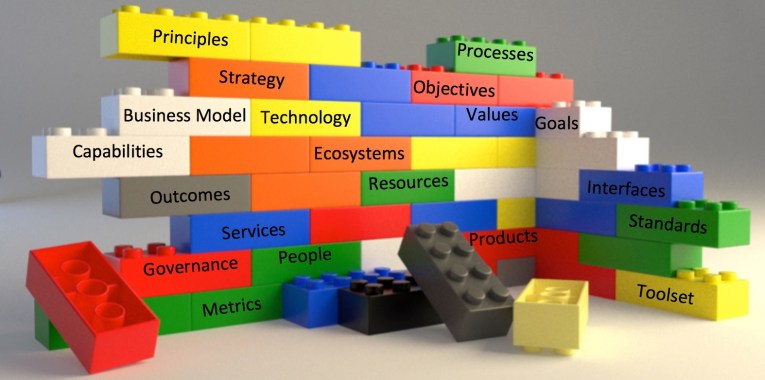
A modular operating model imbeds operational agility through the ability to use, re-use, plug and play different capabilities, processes and resources (building blocks) tech-TOMto easily produce new business outcomes without having to deal with the complexities which are already defined within the individual building blocks – just like a Lego set using the same set of standardised and pre-defined blocks to build completely different things. The focus is on re-using the blocks and not on the design of the blocks itself. Off course a lot of thinking has gone into the design of the different building blocks, but through re-using the same block designs, the model design time is focussed on a new/different outcome and not on a component of an outcome.

Designing modular capabilities, processes and resources that are used to design operating models have benefits not just in efficiencies and savings through economies of scale, but also in the reduction of time to market. These benefits are easier to accomplish in larger multi-divisional organisation with multiple operating models or organisations with complex operating models bringing together multiple organisations and different locations, where the re-use of modular operating model blocks bring demonstrable efficiencies – but is also possible for smaller organisations and start-ups.

If you want a Operating Model that Delivers and are agile to adapt to the challenges introduced by new technologies and digital business models – ensure the Target Operating Model (TOM) design methodology focusses on modular thinking from the offset and through the design process.

renierbotha Ltd has a demonstrable track record of compiling and delivering visionary Target Operating Models.

Talk to us – we can help you with the Digital Transformation to align your business operations and business model to the modern customers expectations.


Also read…

Bimodal Organisations

The continuous push towards business improvement combined with the digital revolution, that has changed the way the customer is engaging with business through the use of technology, have introduced the need for an agility in the delivery of IT services. This speed and agility in IT delivery, for the business to keep abreast of a fast evolving and innovative technology landscape and to gain an competitive advantage are not just required in the development and/or introduction of new technology into the business, but in the way “keep the lights on” IT operations are reliably delivered through stable platforms and processes enabling business growth as well.

IT Bimodal

We can agree that once systems and solutions are adopted and integrated into business operations, the business requirement for IT delivery changes with IT stability, reliability, availability and quality as key enablers to business performance optimisation. There are thus two very distinct and equally important ways or modes of delivering IT services that should seamlessly combine into the overall IT Service Operations contributing to business growth.

Gartner minted in 2016 the concept of IT Bimodal – the practise to manage two separate coherent modes of IT delivery.

Mode 1: Focussed on Stability Mode 2: Focussed on Agility
Traditional Exploratory
Sequential Non-linear
Emphasis on: Safety & Accuracy Emphasis on: Agility and Speed

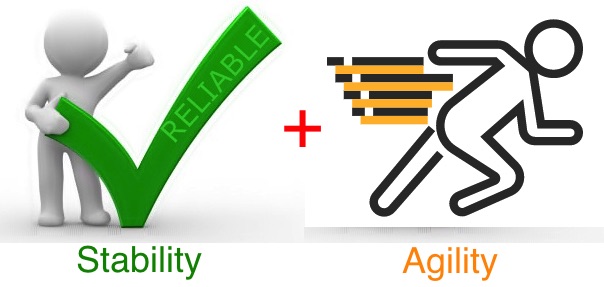
Each of the delivery modes has their own set of benefits and flaws depending on the business context – ultimately the best of both worlds must be adapted as the new way in which technology delivers into business value. Businesses require agility in change without compromising the stability of operations. Change to this new way and associated new Target Operating Model (TOM) is required.

Bimodal Organisation

This transformation is not just applicable to IT but the entire organisation. IT and “the business” are the two parts of the modern digital business. “The Business” needs to adapt and change their work style (operating model) towards digital as well. This transformation by both IT and “the business”, branded by Gartner as Bimodal, is the transformation towards a new business operating model (a new way of working) embracing a common goal of strategic alignment. Full integration of IT and business are the core of a successful digital organisation competing in the digital era.

The introduction of Agile development methodologies and DevOps, led to a transformation in how technology is being delivered into business operations. IT Service Management (ITSM) and the ITIL framework have matured the operational delivery of IT services, as a business (#ITaaBusiness) or within a business while Lean Six Sigma enables business process optimisation to ultimate quality delivery excellence. But these new “agile” ways of working, today mainly applied within IT, is not enough for the full bimodal transformation. Other aspects involving the overall organisation such as business governance and strategy, management structures and organisational architecture, people (Human Capital Management – HCM), skills, competencies, culture, change management, leadership and performance management as well as the formal management of business and technology innovation and integration, form additional service areas that have to be established or transformed.

How do organisations go about defining this new Bimodal TOM? – In come Bimodal Enablement Consulting Services in short BECS.

BECS – Bimodal Enablement Consulting Services

Gartner’s definition: “An emerging market that leverages a composite set of business and technology consulting services and IP assets to achieve faster more reliable and secure, as well as business aligned, solutions in support of strategic business initiatives.”

To establish a Bimodal enabled TOM, organisations need to architect/design the organisation to be customer centric, focussing on the value adding service delivered to the client/customer – a Service Oriented Organisation (SOO) designed using a Service Oriented Architecture (SOA). This set of customer services (external facing) should relay back to a comprehensive and integrated set of supporting and enabling business services (internal facing) that can quickly and effectively enable the business to innovate and rapidly adapt and deliver to changing customer needs and the use of technology within the digital era. This journey of change, that businesses needs to undergo, is exactly what digital transformation is about – not just focused on the technology, processes, quality and customer service, but on the business holistically, starting with the people working within the business and how they add value through the development and use of the right skills and tools, learning an applying it rapidly throughout the business value chain.

A customer centric delivery approach requires the development and adoption of new ways in which work are conducted – new management structures, building and enhancing A-teams (high performing individuals and teams, getting the job done), optimised processes and the right tool sets.

BECS must address the top bimodal drivers or goals, as identified by Gartner research:

  • Deliver greater IT value to the business
  • Shorten the time to deliver solutions
  • Enable digital business strategies
  • Accelerate IT innovation
  • Transform IT talent/culture/operations
  • Increase the interaction between business and IT
  • Embrace leading-edge technologies, tools and/or practices
  • Reduce IT costs (always a favourite)
  • Change the organisation’s culture

Take Action

Are you ready, aligned and actively engaging in the digital world?

Can you accelerate change and enable revenue growth with rock-solid service and business operations?

Are you actively practicing bimodal, continuously adapting to the changing digitally empowered customer demand?

The ultimate test to determine if you are bimodal: Every business process and every enterprise system needs to work without a blip, even as more innovation and disruptors are introduced to make the business more efficient and responsive.

It is time to be a bimodal organisation!

___________Renier Botha specialises in helping organisation to optimise their ability to better integrate technology and change into their main revenue channels – make contact today.

Related post: Success – People First; Performance ImprovementAGILE – What business executives need to know #1; AGILE – What business executives need to know #2; Lean Six Sigma; The Digital Transformation Necessity; Structure Tech for Success

Structure Technology for Success – using SOA

How do you structure your technology department for success?

What is your definition of success?

Business success is usually measured in monetary terms – does the business make a profit, does the business grow?

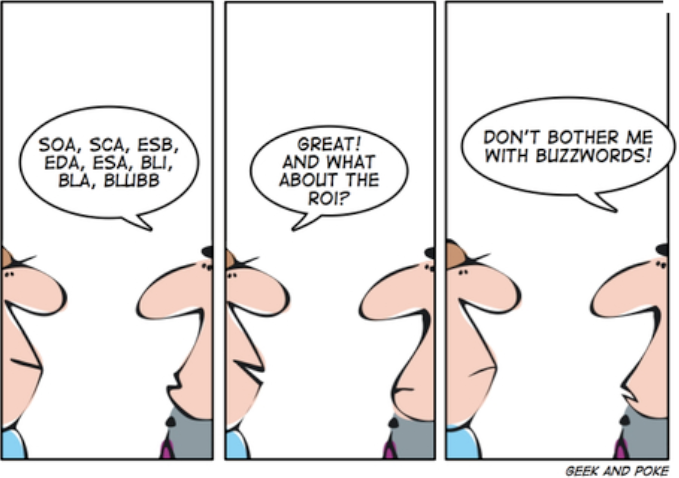
What_about_ROI

What is the value contribution on IT within the business?

Are the IT staff financially intelligent & commercially aware?

Renier spoke at Meet-Up about how you can design your IT function, using Service Orientated Architecture (SOA) to design a Service Orientated Organisation (SOO), to directly  contribute to the business success.

Slide Presentation pdf: Structure Technology for Success

Slide Share via LinkedIn: Structure technology for success

Also Read:

Managing Outsourced Relationships – an in-source approach

IT outsourcing is big business and a provide real business value, financial savings and resource flexibility.

But is cheaper really better?

Dilbert Outsourcing

You cannot outsource a mess! Get your own house in order first before engage in a outsourcing partnership and managing IT vendors.

You should not outsource your core business proposition! Determine what your business is about and excel in the delivery of that – everything that is not core can be candidates for outsourcing.

Renier Botha spoke at the CIO Dialogue in Brighton about the value and risk associated with IT outsourcing. He introduced an insource Service Orientated (SOA) approach to outsourcing to mitigate the risks and ensure the appropriate governance delivering the right quality and customer service are achieved.

Slide Presentation pdf: Managing Outsourced Relationships

Slide Share via LinkedIn: Managing Outsourced Relationships

Renier’s Biog for the Conference:

CIO-Dialogue8 Biog