
Essential AI Skills for Professionals in Every Sector

The demand for AI skills is no longer confined to the tech industry. From finance to healthcare, retail to manufacturing, artificial intelligence is reshaping how businesses operate and compete. As AI becomes increasingly integrated into various aspects of business processes, having AI skills is becoming a core requirement for professionals across all sectors.

Why AI Skills Are Essential

  • Automation and Efficiency: AI technologies are driving automation in routine and complex tasks, improving efficiency and accuracy. Employees who understand how to leverage AI tools can significantly enhance productivity, streamline operations, and reduce errors.
  • Data-Driven Decision Making: Businesses today collect massive amounts of data. AI helps in analysing this data to derive actionable insights. Professionals equipped with AI skills can interpret these insights to make informed decisions that drive business growth and innovation.
  • Competitive Edge: Incorporating AI into business strategies provides a competitive advantage. Companies that can develop and implement AI solutions can differentiate themselves in the market. Employees with AI expertise are therefore crucial for maintaining and advancing this edge.

Key Technical AI Skills in Demand

  1. Machine Learning (ML): Understanding machine learning algorithms and their applications is vital. Professionals should be able to develop, train, and deploy ML models to solve business problems.
  2. Data Science: Skills in data collection, cleaning, and analysis are fundamental. Knowledge of programming languages like Python and R, along with experience in data visualization tools, is highly sought after.
  3. Natural Language Processing (NLP): NLP skills are essential for working with text data and developing applications like chatbots, sentiment analysis, and language translation.
  4. AI Ethics and Governance: As AI usage grows, so does the importance of ethical considerations. Professionals need to be aware of the ethical implications of AI, including issues of bias, transparency, and accountability.
  5. AI Integration: Understanding how to integrate AI solutions into existing systems and workflows is crucial. This includes skills in APIs, cloud computing, and software development.

How to Acquire AI Skills

  • Online Courses and Certifications: There are numerous online platforms offering courses in AI and ML, such as Coursera, edX, Udemy and Udacity. Earning certifications from these platforms can bolster your resume and provide foundational knowledge.
  • Hands-On Projects: Practical experience is invaluable. Working on real-world projects, participating in hackathons, or contributing to open-source AI projects can provide practical insights and experience.
  • Advanced Degrees: Pursuing a degree in data science, computer science, or related fields can provide a deeper understanding of AI technologies and methodologies.
  • Company Training Programs: Many organisations offer in-house training programs to upskill their employees in AI. Taking advantage of these opportunities can help you stay current with industry trends and technologies.

AI Skills for Business Employees: Enhancing Efficiency and Boosting Productivity

As AI permeates every aspect of business operations, employees who are not directly involved in technical roles also need to acquire certain AI skills. These skills empower them to utilise AI tools effectively in their daily tasks, thereby enhancing efficiency and boosting productivity. Here are some key AI skills that are particularly beneficial for business employees:

Essential AI Skills for Business Employees

  1. Understanding AI Tools and Platforms: Business employees should become familiar with various AI tools and platforms that can automate routine tasks, such as customer relationship management (CRM) systems with AI capabilities, project management tools, and virtual assistants. Knowledge of how to use these tools effectively can streamline workflows and reduce the time spent on repetitive tasks.
  2. Data Literacy: Data literacy involves understanding how to interpret and use data effectively. Employees should be able to work with data, understand its sources, assess its quality, and derive insights using AI-powered analytics tools. This skill is crucial for making data-driven decisions and identifying trends and patterns that can inform business strategies.
  3. Basic Programming Knowledge: While not every business employee needs to be a coding expert, having a basic understanding of programming languages like Python or R can be beneficial. This knowledge enables employees to perform simple data manipulations, automate tasks, and customize AI tools to better fit their specific needs.
  4. Data Visualization: Being able to visualize data effectively helps in presenting complex information in an easily understandable format. Familiarity with AI-powered data visualization tools, such as Tableau or Power BI, can help employees create impactful reports and presentations that drive better decision-making.
  5. Process Automation: Robotic Process Automation (RPA) tools allow employees to automate repetitive and mundane tasks, freeing up time for more strategic activities. Understanding how to implement and manage RPA solutions can lead to significant productivity gains.
  6. Natural Language Processing (NLP) for Communication: NLP tools can enhance communication and customer service through applications like chatbots and automated response systems. Employees should understand how to use these tools to improve customer interactions and support services efficiently.
  7. AI-Enhanced Marketing Tools: In marketing, AI tools can optimize campaigns, analyze consumer behavior, and personalize customer experiences. Employees in marketing roles should be adept at using these tools to increase the effectiveness of their campaigns and achieve better ROI.
  8. Ethical AI Usage: Understanding the ethical implications of AI is important for ensuring that AI applications are used responsibly. Business employees should be aware of issues like data privacy, algorithmic bias, and transparency to ensure their use of AI aligns with ethical standards and regulations.

Practical Applications in Daily Work

  • Customer Service: AI chatbots and virtual assistants can handle routine customer inquiries, providing quick and efficient service while freeing up human agents to tackle more complex issues.
  • Sales Forecasting: AI-powered analytics tools can predict sales trends and customer behaviors, helping sales teams to make more accurate forecasts and better allocate resources.
  • Marketing Automation: AI can automate email campaigns, social media posts, and content recommendations, ensuring timely and personalized communication with customers.
  • Financial Analysis: AI tools can analyze financial data to detect anomalies, forecast trends, and assist in budgeting and financial planning, enabling more informed financial decisions.
  • Human Resources: AI can streamline recruitment processes by screening resumes, scheduling interviews, and even conducting preliminary interviews through AI-powered chatbots.
  • Supply Chain Management: AI can optimize supply chain operations by predicting demand, managing inventory, and identifying potential disruptions before they impact the business.

Conclusion

As AI continues to transform industries, having AI skills is becoming essential for professionals across all sectors. The ability to understand, develop, and implement AI solutions is no longer a niche skill set but a core requirement. Investing in AI education and gaining hands-on experience will not only enhance your career prospects but also contribute to the growth and innovation of your organization. In a world where AI is increasingly prevalent, those who embrace and master these skills will lead the charge in the future of work.

Incorporating AI skills into the daily work of business employees not only enhances efficiency but also boosts overall productivity. By understanding and leveraging AI tools and platforms, business employees can automate mundane tasks, make data-driven decisions, and contribute more strategically to their organizations. As AI continues to evolve, staying abreast of these skills will be crucial for maintaining competitiveness and driving business success.

The Transformative Impact of AI in the Workplace

In just a few short years, the landscape of work as we know it has undergone a dramatic transformation, driven largely by the rapid evolution of artificial intelligence (AI). What once seemed like futuristic technology is now an integral part of our daily professional lives, reshaping industries, workflows, and job markets at an unprecedented pace. From enhancing productivity and creativity to redefining job roles and career paths, AI’s influence is profound and far-reaching. This post delves into the findings of the 2024 Work Trend Index, offering a comprehensive look at how AI is revolutionising the workplace and setting the stage for future innovations.

The 2024 Work Trend Index, released jointly by Microsoft and LinkedIn, provides an in-depth look at how AI is reshaping the workplace and the broader labor market. This comprehensive report, based on data from 31,000 individuals across 31 countries, offers valuable insights into the current state and future trajectory of AI in professional settings.

The Proliferation of AI in the Workplace

In the past year, generative AI has emerged as a transformative force, fundamentally changing how employees interact with technology. The relentless pace of work, accelerated by the pandemic, has driven employees to adopt AI tools on a significant scale. However, while leaders acknowledge AI’s critical role in maintaining competitiveness, many are still grappling with how to implement and measure its impact effectively.

Key Findings from the Work Trend Index

  1. Employee-Driven AI Adoption:
    • Widespread AI Usage: A significant 75% of knowledge workers are now integrating AI into their daily tasks.
    • Productivity Boosts: AI is helping employees save time, enhance creativity, and focus on essential work.
    • Leadership Challenges: Despite the widespread use of AI, many leaders find it difficult to quantify its productivity gains and feel unprepared to create a comprehensive AI strategy.
  2. AI’s Influence on the Job Market:
    • Talent Shortages: More than half of business leaders (55%) express concerns about filling open positions, especially in fields like cybersecurity, engineering, and creative design.
    • Career Shifts: With a high number of professionals considering career changes, AI skills are becoming increasingly crucial. LinkedIn data reveals a significant rise in professionals adding AI competencies to their profiles.
    • Training Disparities: While leaders prefer hiring candidates with AI expertise, only 39% of employees have received formal AI training from their employers, prompting many to upskill independently.
  3. Emergence of AI Power Users:
    • Workflow Optimisation: Power users of AI have restructured their workdays, saving significant time and improving job satisfaction.
    • Supportive Work Environments: These users often work in companies where leadership actively promotes AI usage and provides tailored training.

Enhancing AI Utilisation with Copilot for Microsoft 365

To address the challenges of effectively utilising AI, Microsoft has introduced a suite of new features in Copilot for Microsoft 365. These innovations are meticulously designed to simplify AI interactions, making them more intuitive and significantly enhancing overall productivity. Here’s a closer look at the key features:

  • Prompt Auto-Completion: One of the standout features of Copilot for Microsoft 365 is the Prompt Auto-Completion tool. This functionality aims to streamline the process of interacting with AI by offering intelligent suggestions to complete user prompts. Here’s how it works:
    • Contextual Suggestions: When users begin typing a prompt, Copilot leverages contextual understanding to offer relevant completions. This helps in formulating more precise queries or commands, saving users time and effort.
    • Enhanced Creativity: By providing detailed and nuanced suggestions, Prompt Auto-Completion helps users explore new ways to leverage AI, sparking creativity and innovation in task execution.
    • Efficiency Boost: This feature reduces the cognitive load on users, allowing them to focus on critical aspects of their work while Copilot handles the intricacies of prompt formulation.
  • Rewrite Feature: The Rewrite Feature is another powerful tool within Copilot for Microsoft 365, designed to elevate the quality of AI interactions:
    • Transformation of Basic Prompts: Users can input basic, rudimentary prompts, and the Rewrite Feature will enhance them into rich, detailed commands. This ensures that users can maximize the capabilities of AI without needing to craft complex prompts themselves.
    • User Empowerment: This feature empowers all users, regardless of their technical proficiency, to harness the full potential of AI. It acts as a bridge, turning simple ideas into fully realised AI-driven solutions.
    • Consistency and Accuracy: By refining prompts, the Rewrite Feature helps in achieving more accurate and consistent results from AI, leading to better decision-making and outcomes.
  • Catch Up Interface: The Catch Up Interface is an innovative chat-based feature designed to keep users informed and prepared, enhancing their ability to manage tasks effectively:
    • Personalised Insights: This interface provides personalized insights based on the user’s recent activities and interactions. It surfaces relevant information, such as project updates, deadlines, and upcoming meetings, tailored to the individual’s workflow.
    • Responsive Recommendations: Catch Up Interface offers proactive recommendations, like preparing for meetings by providing detailed notes or suggesting resources. These recommendations are dynamically generated, helping users stay ahead of their schedule.
  • Streamlined Communication: By consolidating essential information into an easy-to-navigate chat format, this feature ensures that users have quick access to what they need, reducing the time spent searching for information and improving overall efficiency.
  • Seamless Integration and User Experience: These features within Copilot for Microsoft 365 are designed to work seamlessly together, providing a cohesive and intuitive user experience. The integration of these tools into daily workflows means that users can interact with AI in a more natural and productive manner. The aim is to not only simplify AI utilisation but also to enhance the overall quality of work by leveraging AI’s full potential.

The introduction of these advanced features in Copilot for Microsoft 365 marks a significant step forward in AI utilisation within the workplace. By simplifying interactions, enhancing prompt formulation, and providing personalised insights, Microsoft is making it easier for employees to integrate AI into their daily tasks. These innovations are set to transform the way we work, driving productivity and fostering a more creative and efficient work environment. As AI continues to evolve, tools like Copilot for Microsoft 365 will be crucial in helping businesses and employees stay competitive and ahead of the curve.

The Introduction of AI-Enabled PCs

Building on the momentum of AI integration, Microsoft has launched the CoPilot+ PC, marking a significant advancement in personal computing. This AI-enabled PC, powered by state-of-the-art processor technology, is designed to maximise AI capabilities, offering several key benefits:

  • Enhanced Performance: The new processors significantly boost computing power, enabling faster data processing and more efficient multitasking. This ensures that AI applications run smoothly, enhancing overall user experience.
  • Seamless AI Integration: CoPilot+ PCs are optimised to work seamlessly with AI tools like Microsoft 365’s Copilot, providing users with intuitive and responsive AI interactions that streamline workflows and boost productivity.
  • Improved Multitasking: With advanced hardware designed to handle multiple AI-driven tasks simultaneously, users can manage their workload more effectively, reducing downtime and increasing efficiency.
  • User-Friendly Experience: These PCs are designed to be user-friendly, making it easier for individuals to harness AI technology without needing extensive technical knowledge.

The launch of the CoPilot+ PC represents a significant leap forward in how hardware and AI can combine to enhance productivity and efficiency in the workplace. This innovation underscores the critical role that advanced technology will continue to play in driving the future of work.

Conclusion

The 2024 Work Trend Index underscores the transformative potential of AI in the workplace. As AI continues to evolve, both employees and leaders must adapt, upskill, and embrace new technologies to stay ahead. The introduction of AI-enabled PCs like the CoPilot+ marks an exciting development in this journey, promising to further revolutionize how we work. For a deeper exploration of these insights, the full Work Trend Index report is available on WorkLab, alongside extensive resources on AI and the labor market provided by LinkedIn.

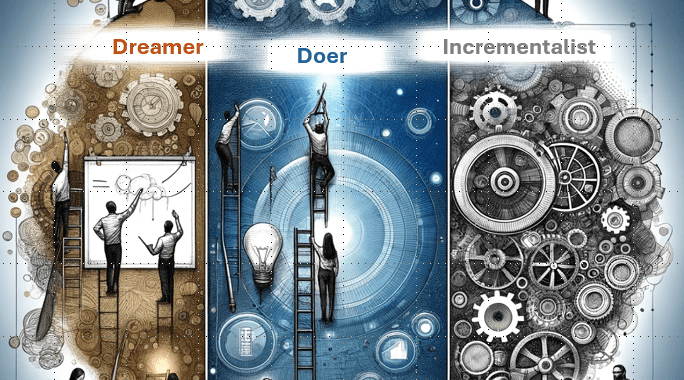
Optimising Team Dynamics: The Dreamer, Doer, and Incrementalist Framework

With over 30 years of experience in managing diverse teams, I’ve learnt that one of the key components of successful leadership is a deep understanding of your workforce’s character. Recognising the unique strengths and preferences of each individual not only enhances job satisfaction and personal development but also significantly boosts the overall productivity and harmony within the team. The Dream, Doer, and Incrementalist framework provides an invaluable tool in this regard, offering insights into effectively harnessing diverse talents and fostering an environment where innovative ideas, efficient execution, and continuous improvement thrive together.

The Dream, Doer, and Incrementalist framework offers a perspective on team dynamics and personal strengths within a professional environment. By analysing the characteristics, strengths, challenges, and synergistic potential of each type, organisations can optimise collaboration and enhance outcomes. This article delves into each of these aspects, providing a comprehensive understanding of how these personality types interact and contribute to success.

The Dreamer

Characteristics: Dreamers are visionary thinkers. They excel at big-picture thinking and are often the source of innovative ideas and ambitious goals. They thrive on possibilities and what could be, often pushing boundaries and challenging the status quo.

Strengths: The primary strength of Dreamers lies in their ability to envision and articulate a compelling future. They are great at motivating others and are often seen as charismatic leaders. Their creativity is a catalyst for innovation and inspiration within teams.

Challenges: Dreamers can sometimes struggle with the practical aspects of project execution. Their focus on visions can lead to difficulties in managing details or maintaining interest in the mundane aspects of implementation. They may also face challenges in setting realistic goals or timelines.

Examples: Visionary leaders like Steve Jobs or Elon Musk embody the Dreamer archetype, driving their companies towards groundbreaking innovations.

The Doer

Characteristics: Doers are action-oriented and pragmatic. They excel in environments where clear objectives and efficiency are prioritised. Doers are the workforce engines, turning ideas into reality through hard work and dedication.

Strengths: The primary strength of Doers lies in their ability to execute. They are dependable, often excel at managing resources, and can navigate the logistics of how to accomplish tasks effectively and efficiently.

Challenges: Doers may struggle with ambiguity and are less comfortable in situations where the goals are not clear or the pathway to them is not well defined. They may also be resistant to change and less receptive to abstract ideas that cannot be immediately acted upon.

Examples: Operations managers or project leads often fit the Doer profile, expertly translating strategic objectives into actionable plans and ensuring that goals are met on time.

The Incrementalist

Characteristics: Incrementalists are systematic thinkers who focus on gradual improvement. They excel at optimising processes and are adept at identifying and implementing small changes that cumulatively lead to significant improvements.

Strengths: Incrementalists bring a level of stability and continuous improvement to teams. They are great at problem-solving within existing frameworks and excel in environments where they can make iterative adjustments to enhance performance.

Challenges: Incrementalists may be perceived as overly cautious or resistant to radical change. Their preference for small, safe steps can sometimes hinder innovation or rapid adaptation in fast-paced environments.

Examples: Quality assurance managers or continuous improvement specialists who focus on refining processes and systems gradually are typical Incrementalists.

Collaboration and Team Dynamics

Dream and Doer: When Dreamers and Doers collaborate, they balance each other’s strengths. Dreamers provide the vision and motivation, while Doers handle the logistics and execution. This partnership can lead to high productivity and effective realisation of innovative ideas.

Dream and Incrementalist: This pairing can stabilise the radical ideas of the Dreamer with the practical, step-wise approach of the Incrementalist. It ensures that innovation is grounded in reality and is implemented progressively.

Doer and Incrementalist: Together, Doers and Incrementalists form an efficient and reliable team. They excel in environments that require high operational efficiency and risk management. However, this pairing might lack the creative spark provided by Dreamers.

All Three Together: When Dreamers, Doers, and Incrementalists work together, they form a powerful trio that can dream, plan, and refine continuously. This combination ensures that visionary ideas are not only executed efficiently but are also continuously improved upon.

Key Insights

Understanding the characteristics of Dreams, Doers, and Incrementalists allows organisations to form teams that can leverage diverse strengths. Effective management of these personalities requires recognising their unique contributions and challenges, and strategically pairing them to balance creativity, execution, and improvement. When these types are aligned with roles that suit their strengths, and when they are paired thoughtfully, they can significantly enhance team dynamics and drive successful outcomes.

Unlocking Developer Potential: Strategies for Building High-Performing Tech Teams

Introduction

Attracting and retaining top developer talent is crucial for technology leaders, especially in a highly competitive landscape. With software innovation driving business growth, organisations with high-performing engineering cultures gain a significant advantage. Fostering this culture goes beyond perks; it requires a thoughtful approach to talent management that prioritises the developer experience.

This blog post explores strategies to enhance talent management and create an environment where developers thrive. By fostering psychological safety, investing in top-tier tools, and offering meaningful growth opportunities, we can boost innovation, productivity, and satisfaction. Let’s dive in and unlock the full potential of our development teams.

1. Understanding the Importance of Developer Experience

Before diving into specific tactics, it’s important to understand why prioritising developer experience matters:

  • Attracting Top Talent: In a competitive job market, developers can choose their employers. Organisations that offer opportunities for experimentation, stay abreast of the latest technologies, and focus on outcomes over outputs have an edge in attracting the best talent.
  • Boosting Productivity and Innovation: Supported, empowered, and engaged developers bring their best to work daily, resulting in higher productivity, faster problem-solving, and innovative solutions.
  • Reducing Turnover: Developers who feel valued and fulfilled are less likely to leave, improving retention rates and reducing the costs associated with constant hiring and training.

2. Fostering Psychological Safety

Psychological safety—the belief that one can speak up, take risks, and make mistakes without fear of punishment—is essential for high-performing teams. Here’s how to cultivate it:

  • Encourage Open Communication: Create an environment where developers feel safe sharing ideas, asking questions, and providing feedback. Use one-on-ones, team meetings, and anonymous surveys to solicit input.
  • Embrace Failure as Learning: Frame mistakes as learning opportunities rather than assigning blame. Encourage developers to share their failures and lessons learned.
  • Model Vulnerability: Leaders set the tone. By admitting mistakes and asking for help, we create space for others to do the same.

3. Investing in World-Class Tools

Providing the best tools boosts productivity, creativity, and job satisfaction. Focus on these areas:

  • Hardware and Software: Equip your team with high-performance computers, multiple monitors, and ergonomic peripherals. Regularly update software licences.
  • Development Environments: Offer cutting-edge IDEs, version control systems, and collaboration tools. Automate tasks like code formatting and testing.
  • Infrastructure: Ensure your development, staging, and production environments are reliable, scalable, and easy to work with. Embrace cloud technologies and infrastructure-as-code for rapid iteration and deployment.

4. Providing Meaningful Growth Opportunities

Developers thrive on challenge and growth. Here’s how to keep them engaged:

  • Tailored Learning Paths: Work with each developer to create a personalised learning plan aligned with their career goals. Provide access to online courses, face-to-face training, conferences, and mentorship.
  • Encourage Side Projects: Give developers time for passion projects to stretch their skills. Host hackathons or innovation days to spark new ideas.
  • Create Leadership Opportunities: Identify high-potential developers and offer chances to lead projects, mentor juniors, or present work to stakeholders.

5. Measuring and Iterating

Measure the impact of talent management efforts and continuously improve:

  • Developer Satisfaction: Survey your team regularly to gauge happiness, engagement, and psychological safety. Look for trends and areas for improvement.
  • Productivity Metrics: Track key performance indicators such as Objectives and Key Results (OKRs), cycle time, defect rates, and feature throughput. Celebrate successes and identify opportunities to streamline processes.
  • Retention Rates: Monitor turnover and conduct exit interviews to understand why developers leave. Use these insights to refine your approach.

6. Partnering with HR

Enhancing developer experience requires collaboration with HR:

  • Collaborate on Hiring: Work with recruiters to create compelling job descriptions and interview processes that highlight your commitment to the developer experience.
  • Align on Performance Management: Ensure that performance reviews, compensation, and promotions align with your talent management philosophy. Advocate for practices that reward innovation and growth.
  • Champion Diversity, Equality, and Inclusion: Partner with HR to create initiatives that foster a diverse and inclusive culture, driving innovation through multiple perspectives.

7. Building a Community of Practice

Build a sense of community among your developers:

  • Host Regular Events: Organise meetups, lunch-and-learns, or hackathons for knowledge sharing and collaboration.
  • Create Communication Channels: Use Slack, Microsoft Teams, or other tools for technical discussions and informal conversations.
  • Celebrate Successes: Regularly recognise and reward developers who exemplify your values or achieve significant milestones.

Conclusion

In conclusion, cultivating a high-performing tech team goes beyond simply hiring skilled developers, it requires a strategic and holistic approach to talent management. By prioritising psychological safety, investing in superior tools, and providing avenues for meaningful growth, organisations can not only attract top talent but also nurture a culture of innovation and satisfaction. Regular assessment of these strategies through feedback, performance metrics, and collaboration with HR can further refine and enhance the developer experience. By committing to these principles, technology leaders can build resilient, innovative teams that are well-equipped to drive business success in an ever-evolving digital landscape. Let’s take these insights forward and transform our development teams into powerful engines of growth and innovation.