
Ethics in Data and AI Management: A Detailed Article

As organisations collect more data and embed artificial intelligence into decision-making, the ethical implications become unavoidable. Ethical data and AI management is no longer a “nice to have”, it is a foundational requirement for trust, regulatory compliance, and long-term sustainability. This article explores the principles, challenges, and practical frameworks for managing data and AI responsibly.

1. Why Ethics in Data & AI Matters

AI systems increasingly influence everyday life – loan approvals, medical diagnostics, hiring, policing, education, marketing, and more. Without ethical oversight:

  • Bias amplifies discrimination.
  • Data can be misused or leaked.
  • Automated decisions can harm individuals and communities.
  • Organisations face reputational and legal risk.

Ethical management ensures AI systems serve people, not exploit them.

2. Core Principles of Ethical Data & AI Management

2.1 Transparency

AI systems should be understandable. Users deserve to know:

  • When AI is being used,
  • What data it consumes,
  • How decisions are made (in broad terms),
  • What recourse exists when decisions are disputed.

2.2 Fairness & Bias Mitigation

AI models learn patterns from historical data, meaning:

  • Biased data → biased outcomes
  • Underrepresented groups → inaccurate predictions

Fairness practices include:

  • Bias testing before deployment,
  • Diverse training datasets,
  • Human review for high-impact decisions.

2.3 Privacy & Data Protection

Ethical data management aligns with regulations (GDPR, POPIA, HIPAA, and others). Core obligations include:

  • Minimising data collection,
  • Anonymising where possible,
  • Strict access controls,
  • Retention and deletion schedules,
  • Clear consent for data use.

2.4 Accountability

A human must always be responsible for the outcomes of an AI system.
Key elements:

  • Documented decision logs,
  • Clear chain of responsibility,
  • Impact assessments before deployment.

2.5 Security

AI models and datasets should be protected from:

  • Data breaches,
  • Model theft,
  • Adversarial attacks (inputs designed to trick AI),
  • Internal misuse.

Security frameworks should be embedded from design to deployment.

2.6 Human-Centric Design

AI must augment—not replace—human judgment in critical domains (healthcare, justice systems, finance).
Ethical AI preserves:

  • Human dignity,
  • Autonomy,
  • The ability to contest machine decisions.

3. Ethical Risks Across the AI Lifecycle

3.1 Data Collection

Risks:

  • Collecting unnecessary personal information.
  • Hidden surveillance.
  • Data gathered without consent.
  • Data sourced from unethical or unverified origins.

Mitigation:

  • Explicit consent,
  • Data minimisation,
  • Clear purpose specification,
  • Vendor due diligence.

3.2 Data Preparation

Risks:

  • Hidden bias,
  • Wrong labels,
  • Inclusion of sensitive attributes (race, religion, etc.),
  • Poor data quality.

Mitigation:

  • Bias audits,
  • Diverse annotation teams,
  • Removing/obfuscating sensitive fields,
  • Rigorous cleaning and validation.

3.3 Model Training

Risks:

  • Propagation of historical inequities,
  • Black-box models with low transparency,
  • Overfitting leading to unreliable outcomes.

Mitigation:

  • Explainable AI models where possible,
  • Bias correction algorithms,
  • Continuous evaluation.

3.4 Deployment

Risks:

  • Misuse beyond original purpose,
  • Lack of monitoring,
  • Opaque automated decision-making.

Mitigation:

  • Usage policies,
  • Monitoring dashboards,
  • Human-in-the-loop review for critical decisions.

3.5 Monitoring & Maintenance

Risks:

  • Model drift (performance decays as conditions change),
  • New biases introduced as populations shift,
  • Adversarial exploitation.

Mitigation:

  • Regular retraining,
  • Ongoing compliance checks,
  • Ethical review committees.

4. Governance Structures for Ethical AI

4.1 AI Ethics Committees

Cross-functional groups providing oversight:

  • Data scientists,
  • Legal teams,
  • Business stakeholders,
  • Ethics officers,
  • Community/consumer representatives (where applicable).

4.2 Policy Frameworks

Organisations should adopt:

  • A Responsible AI Policy,
  • Data governance policies,
  • Consent and privacy frameworks,
  • Security and breach-response guidelines.

4.3 Auditing & Compliance

Regular audits ensure:

  • Traceability,
  • Fairness testing,
  • Documentation of model decisions,
  • Risk registers with mitigation steps.

4.4 Education & Upskilling

Training teams on:

  • Bias detection,
  • Data privacy laws,
  • Ethical design practices,
  • Risk management.

5. Real-World Examples

Example 1: Biased Hiring Algorithms

A major tech company’s automated CV-screening tool downgraded CVs from women because historical data reflected a male-dominated workforce.

Lessons: Models reflect society unless actively corrected.

Example 2: Predictive Policing

AI crime-prediction tools disproportionately targeted minority communities due to biased arrest data.

Lessons: Historical inequities must not guide future decisions.

Example 3: Health Prediction Algorithms

Medical AI underestimated illness severity in certain groups because algorithmic proxies (such as healthcare spending) did not accurately reflect need.

Lessons: Choosing the wrong variable can introduce systemic harm.

6. The Future of Ethical Data & AI

6.1 Regulation Will Intensify

Governments worldwide are introducing:

  • AI safety laws,
  • Algorithmic transparency acts,
  • Data sovereignty requirements.

Organisations that proactively implement ethics frameworks will adapt more easily.

6.2 Explainability Will Become Standard

As AI is embedded into critical systems, regulators will demand:

  • Clear logic,
  • Confidence scores,
  • Decision pathways.

6.3 User-Centric Data Ownership

Emerging trends include:

  • Personal data vaults,
  • User-controlled consent dashboards,
  • Zero-party data.

6.4 AI Sustainability

Ethics also includes environmental impact:

  • Model training consumes enormous energy,
  • Ethical AI optimises computation,
  • Encourages efficient architectures.

7. Conclusion

Ethical data and AI management is not just about avoiding legal consequences—it is about building systems that society can trust. By embedding transparency, fairness, privacy, and accountability throughout the AI lifecycle, organisations can deliver innovative solutions responsibly.

Ethics is no longer optional – it is a core part of building intelligent, human-aligned technology.


Harnessing Data to Drive Boardroom Decisions: Navigating Top Priorities for 2025

How Data Can Inform Top Board Priorities for 2025

As businesses navigate an increasingly complex landscape, data-driven decision-making is critical for boards looking to stay ahead.

The percentages cited for these top 15 board priorities are based on research conducted by the National Association of Corporate Directors (NACD), as part of their 2024 Board Trends and Priorities Report, which identifies the key issues expected to shape boardroom agendas in 2025. This research reflects input from board members across various industries, offering a comprehensive view of the strategic, operational, and risk-related concerns that will demand board attention in the year ahead.

The percentages shown next to each of the top 15 board priorities represent the proportion of board members who identified each issue as a critical focus area for 2025. These figures reflect the varying levels of concern and strategic emphasis boards are placing on different challenges. For example, 78% of boards prioritize growth strategies, making it the most pressing focus, while 47% highlight M&A transactions and opportunities, and 43% emphasize both CEO/C-suite succession and financial conditions and uncertainty. Other areas like competition (31%), product/service innovation (30%), and digital transformation (29%) also feature prominently. Cybersecurity and data privacy concerns (27%) remain significant, while business continuity (18%), regulatory compliance (17%), and workforce planning (14%) reflect ongoing operational and risk considerations. Less frequently cited, but still noteworthy, are shareholder engagement (11%), executive compensation (8%), and environmental/sustainability strategy (7%). The remaining 3% represents other emerging issues boards anticipate addressing in 2025. These percentages provide insight into the collective mindset of corporate leadership, illustrating the diverse and evolving priorities shaping governance in the year ahead.

The top board priorities for 2025 reflect a blend of strategic growth, risk management, and operational resilience.

Here’s how data can provide valuable insights across these key areas:

1. Growth Strategies (78%)

Data analytics helps boards identify emerging markets, customer behavior trends, and competitive advantages. By leveraging market intelligence, businesses can optimize pricing strategies, expand into new regions, and tailor their product offerings. Predictive analytics can also forecast demand and identify high-growth segments.

2. M&A Transactions and Opportunities (47%)

Boards can use financial modeling and risk assessment tools to evaluate potential mergers and acquisitions. Data-driven due diligence, including AI-powered sentiment analysis and real-time financial metrics, helps assess the value and risks of potential deals.

3. CEO/C-Suite Succession (43%)

HR analytics can track leadership performance, identify high-potential candidates, and assess cultural fit. Predictive modeling can also help boards anticipate leadership gaps and prepare for smooth transitions.

4. Financial Conditions and Uncertainty (43%)

Real-time financial data, scenario modeling, and macroeconomic indicators can help boards navigate uncertainty. Machine learning models can predict cash flow trends, economic downturns, and investment risks, ensuring proactive financial planning.

5. Competition (31%)

Competitive intelligence tools analyze market trends, pricing strategies, and customer sentiment to keep businesses ahead. Social listening and web scraping can provide insights into competitor moves and consumer preferences.

6. Product/Service Innovation (30%)

Customer feedback, AI-driven R&D insights, and market analytics guide product development. Data-driven innovation strategies ensure companies invest in solutions that meet evolving consumer demands.

7. Digital Transformation (Including AI Risks) (29%)

AI-driven automation, cloud computing, and data analytics enhance efficiency, but boards must assess AI-related risks such as bias, compliance, and cybersecurity vulnerabilities. AI governance frameworks based on data insights can help mitigate these risks.

8. Cybersecurity/Data Privacy (27%)

Boards can use threat intelligence, anomaly detection, and predictive analytics to assess and mitigate cybersecurity threats. Data encryption, compliance monitoring, and real-time breach detection enhance security postures.

9. Business Continuity/Crisis Management (18%)

Predictive analytics and scenario planning enable organizations to anticipate disruptions. Real-time monitoring and data-driven contingency planning improve crisis response.

10. Regulatory Compliance (17%)

Data-driven compliance tracking ensures businesses meet evolving regulations. AI-powered monitoring tools flag potential violations and streamline reporting processes.

11. Workforce Planning (14%)

HR analytics track workforce trends, skills gaps, and employee engagement. Predictive modeling aids in talent retention and future workforce planning.

12. Shareholder Engagement/Activism (11%)

Sentiment analysis and shareholder data provide insights into investor concerns. Data-driven communication strategies enhance shareholder relations and transparency.

13. Executive Compensation (8%)

Benchmarking tools use industry data to inform fair and performance-based compensation structures. Data-driven compensation models ensure alignment with company goals and shareholder expectations.

14. Environmental/Sustainability Strategy (7%)

Sustainability metrics, ESG (Environmental, Social, and Governance) data, and carbon footprint tracking guide eco-friendly business strategies. Data transparency helps align sustainability efforts with regulatory and investor expectations.

15. Other Priorities (3%)

Boards can use custom data solutions tailored to specific business challenges, ensuring agility and informed decision-making across all functions.

Final Thoughts

Data is the cornerstone of effective board governance. In 2025, organizations that harness real-time insights, predictive analytics, and AI-driven decision-making will be best positioned to navigate challenges and seize opportunities. Boards must prioritize data-driven strategies to stay competitive, resilient, and future-ready.

Get the Top Line Right, and the Bottom Line Will Follow

“Get the Top Line Right, and the Bottom Line Will Follow: The Role of the Right People”

Every company dreams of a healthy bottom line – profitability that ensures sustainability and growth. But too often, leaders and teams focus solely on cost-cutting measures and operational efficiency in a desperate attempt to shore up their bottom line. While these are important, they are only half the story. True success lies in focusing on the top line – revenue generation. Why? Because when you get the top line right, the bottom line will naturally follow. However, there’s a critical factor that underpins both top-line growth and bottom-line stability: your people.

The right team can supercharge your top-line growth, ensuring sustained success. After all, when you get the top line—and your people—right, the bottom line will naturally follow.

The Top Line vs. The Bottom Line: A Quick Overview

The top line refers to your business’s gross revenue or total sales, while the bottom line represents net profit after deducting expenses. While businesses often focus on improving the bottom line (net income – what’s left after deducting all expenses, taxes, and costs from revenue) by cutting costs, it’s a short-term strategy with diminishing returns. Instead, driving top-line growth – through sales, customer acquisition, and retention – is critical for lasting profitability. While both are crucial indicators of a business’s health, prioritizing the top line creates a foundation for sustainable profitability.

Why the Top Line Matters

  1. Revenue Drives Growth Opportunities
    Revenue is the lifeblood of a business. A strong top line means your business has the means to invest in new products, enter new markets, and scale operations. Without sufficient revenue, even the most cost-efficient operations can’t thrive.
  2. Top-Line Growth Inspires Confidence
    Investors, partners, and employees look for signs of growth. A consistently increasing top line signals a growing market presence and customer demand, instilling confidence in stakeholders and boosting morale.
  3. Cost-Cutting Has Limits
    While reducing expenses is important, there’s only so much you can cut. Revenue, on the other hand, has virtually no ceiling. A laser focus on driving sales and expanding market share is the only way to unlock unlimited potential.

Strategies to Get the Top Line Right

  1. Customer-Centric Approach
    Happy customers mean repeat business and referrals, which drive revenue. Focus on delivering exceptional value and improving the customer experience to build loyalty.
  2. Invest in Marketing and Sales
    Effective marketing and a high-performing sales team are essential for attracting and converting leads. Adopt data-driven strategies, leverage digital tools, and invest in training to maximize their impact.
  3. Innovate Constantly
    Offer products or services that solve real problems or provide unique value. Whether through innovation or iteration, keeping your offerings relevant and appealing ensures sustained customer interest.
  4. Expand Your Reach
    Enter new markets, diversify your product lines, or explore partnerships to tap into new revenue streams. The more diversified your top line, the more resilient your business becomes.
  5. Empower Your Team
    Employees are at the core of driving revenue. Equip them with the tools, training, and motivation they need to perform at their best.

The Bottom Line Follows

Once you’ve secured a robust and growing top line, optimizing the bottom line becomes significantly easier. Increased revenue allows you to:

  • Absorb Costs: With more cash flow, fixed costs become a smaller percentage of revenue, improving profit margins.
  • Reinvest Wisely: You can allocate resources to high-return initiatives like R&D, employee development, and customer acquisition.
  • Weather Challenges: A strong revenue base provides a cushion during economic downturns or industry disruptions.

But what many businesses overlook is that the key to both revenue growth and efficiency is having the right people in the right roles.

Why People Are the Key to Driving the Top Line

  1. Innovators Bring Unique Value
    Innovation is essential for creating products or services that attract and retain customers. The right employees are those who bring creativity, problem-solving skills, and a commitment to improvement. They generate ideas that keep your offerings relevant and competitive.
  2. Customer Experience Starts with Employees
    Happy, engaged employees deliver better service. This translates to higher customer satisfaction, retention, and word-of-mouth referrals, which all drive revenue growth. The right people are those who align with your values and prioritize your customers’ success.
  3. A High-Performing Sales and Marketing Team
    Your sales and marketing team directly impacts the top line. Talented professionals who understand your market and know how to communicate value effectively will help capture leads, close deals, and drive sustainable growth.
  4. Strategic Thinkers Create Growth Opportunities
    The right leaders and strategists within your organization will find ways to expand your market share, enter new verticals, and develop partnerships that increase revenue streams. These visionaries take your business to the next level.

The Cost of the Wrong People

Just as the right employees are your greatest asset, the wrong ones can hinder growth. Poorly aligned team members may drain resources, slow productivity, and negatively affect morale. High turnover, which often results from hiring misfits, not only disrupts operations but also creates significant recruitment and onboarding costs.

Retaining the right people is as important as hiring them. Employees need a culture that fosters growth, collaboration, and purpose. Without it, even the best talent may disengage or leave.

Strategies to Hire and Retain the Right People

  1. Focus on Cultural Fit and Values
    Skills can be taught, but values and attitudes are harder to change. Hire people who align with your company’s mission, vision, and culture. They’ll be more motivated to contribute to long-term success.
  2. Invest in Employee Development
    Top performers want opportunities to learn and grow. By offering training, mentoring, and career advancement opportunities, you build a loyal team that consistently drives top-line results.
  3. Compensation and Recognition
    A competitive compensation package and recognition of achievements are essential for attracting and retaining top talent. When employees feel valued, they’re more likely to go above and beyond for your business.
  4. Create an Inclusive and Collaborative Culture
    Foster an environment where diverse perspectives are welcomed, and collaboration is encouraged. A strong team dynamic results in better ideas, solutions, and customer experiences.
  5. Measure and Optimize Engagement
    Use tools like employee satisfaction surveys to understand your team’s needs and identify potential pain points. Addressing these proactively helps retain your best talent.

Getting the Top Line and Your People Right

To achieve top-line growth, focus on building a team that can execute your vision and deliver results. Employees who are aligned, motivated, and engaged will naturally contribute to higher sales, better customer experiences, and a stronger brand.

Once you have the right people driving your revenue, the bottom line becomes a byproduct of their success. Higher revenue provides the flexibility to invest further in your workforce, fueling a cycle of growth and profitability.

Conclusion: The People Factor

The phrase “Get the top line right, and the bottom line will follow” rings true, but it’s incomplete without the recognition that the right people are what make the top line soar. Hiring and retaining the right employees isn’t just an HR function, it’s a growth strategy.

Prioritizing revenue generation fuels growth, inspires confidence, and lays the groundwork for long-term profitability. While keeping an eye on the bottom line is essential, don’t lose sight of the bigger picture: if you’re not actively working to grow your top line, you’re limiting your potential. Focus on the top line, and let your success cascade down to the bottom.

When you combine top-line focus with a strong, capable team, you create a resilient business that’s ready to tackle challenges, seize opportunities, and achieve sustainable success. Remember: invest in your people, prioritize growth, and the bottom line will take care of itself.

“Get the Top Line Right, and the Bottom Line Will Follow”

Top 10 Strategic Technology Trends for 2025 -Aligning Your Technology Strategy

A Guide for Forward-Thinking CIOs

As 2025 approaches, organisations must prepare for a wave of technological advancements that will shape the business landscape. This year’s Gartner Top Strategic Technology Trends serves as a roadmap for CIOs and IT leaders, guiding them to navigate a future marked by both opportunity and challenge. These trends reveal new ways to overcome obstacles in productivity, security, and innovation, helping organisations embrace a future driven by responsible innovation.

Planning for the Future: Why These Trends Matter

CIOs and IT leaders face unprecedented social and economic shifts. To thrive in this environment, they need to look beyond immediate challenges and position themselves for long-term success. Gartner’s Top Strategic Technology Trends for 2025 encapsulates the transformative technologies reshaping how organisations operate, compete, and grow. Each trend provides a pathway towards enhanced operational efficiency, security, and engagement, serving as powerful tools for navigating the future.

Using Gartner’s Strategic Technology Trends to Shape Tomorrow

Gartner has organised this year’s trends into three main themes: AI imperatives and risks, new frontiers of computing, and human-machine synergy. Each theme presents a unique perspective on technology’s evolving role in business and society, offering strategic insights to help organisations innovate responsibly.


Theme 1: AI Imperatives and Risks – Balancing Innovation with Safety

1. Agentic AI

Agentic AI represents the next generation of autonomous systems capable of planning and acting to achieve user-defined goals. By creating virtual agents that work alongside human employees, businesses can improve productivity and efficiency.

  • Benefits: Virtual agents augment human work, enhance productivity, and streamline operations.
  • Challenges: Agentic AI requires strict guardrails to align with user intentions and ensure responsible use.

2. AI Governance Platforms

AI governance platforms are emerging to help organisations manage the ethical, legal, and operational facets of AI, providing transparency and building trust.

  • Benefits: Enables policy management for responsible AI, enhances transparency, and builds accountability.
  • Challenges: Consistency in AI governance can be difficult due to varied guidelines across regions and industries.

3. Disinformation Security

As misinformation and cyber threats increase, disinformation security technologies are designed to verify identity, detect harmful narratives, and protect brand reputation.

  • Benefits: Reduces fraud, strengthens identity validation, and protects brand reputation.
  • Challenges: Requires adaptive, multi-layered security strategies to stay current against evolving threats.

Theme 2: New Frontiers of Computing – Expanding the Possibilities of Technology

4. Post-Quantum Cryptography (PQC)

With quantum computing on the horizon, PQC technologies are essential for protecting data from potential decryption by quantum computers.

  • Benefits: Ensures data protection against emerging quantum threats.
  • Challenges: PQC requires rigorous testing and often needs to replace existing encryption algorithms, which can be complex and costly.

5. Ambient Invisible Intelligence

This technology integrates unobtrusively into the environment, enabling real-time tracking and sensing while enhancing the user experience.

  • Benefits: Enhances efficiency and visibility with low-cost, intuitive technology.
  • Challenges: Privacy concerns must be addressed, and user consent obtained, for certain data uses.

6. Energy-Efficient Computing

Driven by the demand for sustainability, energy-efficient computing focuses on greener computing practices, optimised architecture, and renewable energy.

  • Benefits: Reduces carbon footprint, meets sustainability goals, and addresses regulatory and commercial pressures.
  • Challenges: Requires substantial investment in new hardware, training, and tools, which can be complex and costly to implement.

7. Hybrid Computing

Hybrid computing blends multiple computing methods to solve complex problems, offering a flexible approach for various applications.

  • Benefits: Unlocks new levels of AI performance, enables real-time personalisation, and supports automation.
  • Challenges: The complexity of these systems and the need for specialised skills can present significant hurdles.

Theme 3: Human-Machine Synergy – Bridging Physical and Digital Worlds

8. Spatial Computing

Spatial computing utilises AR and VR to create immersive digital experiences, reshaping sectors like gaming, healthcare, and e-commerce.

  • Benefits: Enhances user experience with immersive interactions, meeting demands in gaming, education, and beyond.
  • Challenges: High costs, complex interfaces, and data privacy concerns can limit adoption.

9. Polyfunctional Robots

With the ability to switch between tasks, polyfunctional robots offer flexibility, enabling faster return on investment without significant infrastructure changes.

  • Benefits: Provides scalability and flexibility, reduces reliance on specialised labour, and improves ROI.
  • Challenges: Lack of industry standards on price and functionality makes adoption unpredictable.

10. Neurological Enhancement

Neurological enhancement technologies, such as brain-machine interfaces, have the potential to enhance cognitive abilities, creating new opportunities for personalised education and workforce productivity.

  • Benefits: Enhances human skills, improves safety, and supports longevity in the workforce.
  • Challenges: Ethical concerns, high costs, and security risks associated with direct brain interaction present significant challenges.

Embrace the Future with Responsible Innovation

As 2025 nears, these technological trends provide organisations with the strategic insights needed to navigate a rapidly evolving landscape. Whether adopting AI-powered agents, protecting against quantum threats, or integrating human-machine interfaces, these trends offer a framework for responsible and innovative growth. Embracing them will allow CIOs and IT leaders to shape a future where technology serves as a bridge to more efficient, ethical, and impactful business practices.

Ready to Dive Deeper?

Partnering with RenierBotha Ltd (reierbotha.com) provides your organisation with the expertise needed to seamlessly align your technology strategy with emerging trends that will shape the future of business. With a focus on driving digital transformation through strategic planning, RenierBotha Ltd helps organisations incorporate top technology advancements into their digital ambitions, ensuring that each step is optimised for impact, scalability, and long-term success. By leveraging our deep industry knowledge, innovative approaches, and tailored solutions, RenierBotha Ltd empowers your team to navigate complex challenges, integrate cutting-edge technologies, and lead responsibly in a rapidly evolving digital landscape. Together, we can shape a future where technology and business strategies converge to unlock sustainable growth, resilience, and a competitive edge.

Handling Underqualified or Inexperienced Team Members in Leadership Positions

One of the most challenging dynamics in a software development project is when underqualified, underskilled, or inexperienced individuals are placed in positions of leadership. This can result in poor decision-making, lack of direction, and demotivated team members. It’s crucial to address this issue tactfully to protect the project’s success and maintain a collaborative environment.

The Challenges of Inexperienced Leadership

When unqualified leaders are part of the equation, several challenges may arise:

  • Poor Decision-Making: Inadequate technical or managerial knowledge can lead to unrealistic timelines, poor resource allocation, or misguided priorities.
  • Micromanagement or Overreach: Lacking confidence in their own skills, inexperienced leaders may micromanage, creating friction within the team.
  • Failure to Empower the Team: Leadership requires enabling others to excel, but an inexperienced leader may stifle creativity and productivity.
  • Erosion of Trust: If the team perceives the leader as incapable, respect and trust diminish, further undermining the leader’s authority.

Strategies for Navigating This Dynamic

  1. Focus on Collaboration, Not Authority Approach the situation with empathy and focus on collaboration rather than challenging their authority directly. Demonstrate your willingness to work together for the project’s benefit, which can alleviate tension and create a sense of partnership.
    • Example: If they make a questionable decision, frame your input as a suggestion: “I see where you’re coming from, but have you considered [alternative]?”
  2. Provide Constructive Feedback If the leader’s decisions or actions are harming the project, it’s essential to provide feedback. Focus on behaviors and outcomes rather than personal traits. Use examples to illustrate your points.
    • Example: “In our last sprint, we underestimated the time required for testing. I think we could avoid this next time by involving the QA team earlier in planning.”
  3. Support Their Growth Inexperienced leaders often struggle because they lack the necessary tools or mentorship. Offer your support:
    • Share relevant resources, like documentation or articles.
    • Suggest training or professional development opportunities.
    • Offer to mentor them in specific areas where you have expertise.
    By positioning yourself as a partner rather than a critic, you foster goodwill and mutual respect.
  4. Leverage Collective Expertise Encourage a team-driven approach to decision-making. This reduces the pressure on the leader and ensures better outcomes for the project.
    • Example: Use retrospectives, brainstorming sessions, or collaborative planning tools to democratize the decision-making process.
  5. Escalate Through the Proper Channels If the leader’s inexperience is causing significant harm to the project, escalate the issue to the appropriate stakeholders:
    • Present documented examples of the impact (missed deadlines, low morale, etc.).
    • Focus on solutions rather than blaming the individual.
    • Suggest implementing a mentoring system, co-leadership, or involving senior team members in decision-making.

Strengthening Leadership in the Organization

To prevent unqualified leaders from being placed in critical roles, organizations should:

  • Vet Leadership Roles Thoroughly: Implement more rigorous evaluation processes for leadership appointments, focusing on both technical and soft skills.
  • Foster a Mentorship Culture: Pair new leaders with experienced mentors to guide them through their responsibilities.
  • Invest in Leadership Training: Provide resources, courses, and workshops to help team members develop the skills necessary for leadership.
  • Encourage Honest Feedback: Create an environment where team members can provide feedback about leadership without fear of repercussions.

When the System Fails

If all efforts to address the issue fail and the unqualified leader remains in their role, you may need to:

  • Adapt Your Role: Focus on how you can contribute effectively despite the challenges.
  • Protect Team Morale: Foster camaraderie and collaboration within the team to minimize the impact of weak leadership.
  • Evaluate Long-Term Options: If poor leadership is a systemic issue within the organization, consider whether the environment aligns with your professional goals.

Conclusion

An inexperienced leader doesn’t have to doom a project. By taking proactive steps to support their growth, providing constructive feedback, and fostering team collaboration, you can mitigate the challenges posed by underqualified leadership. While addressing this issue requires tact and patience, it’s an opportunity to model the kind of leadership that inspires respect, drives success, and builds stronger teams for the future.

Navigating the Future: A 10-Day Blog Series on the Evolving Role of the CTO by Renier Botha

The Constantly Evolving Role of the CTO in a Rapidly Advancing World

In a technological driven world and business landscape, the role of the Chief Technology Officer (CTO) is more critical than ever. As businesses strive to stay competitive and innovative, the CTO must navigate a complex array of challenges and opportunities, driven by rapid advancements in technology and shifting business priorities. At renierbotha Ltd, we understand the vital role of the CTO and the strategic insights needed to lead effectively in this dynamic environment.

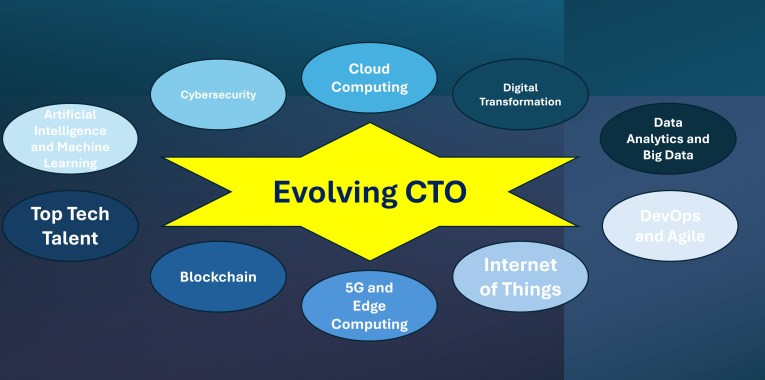
Over the next 10 days, Renier Botha, Principal Consultant at renierbotha Ltd (www.renierbotha.com) will be diving deep into the top 10 topics that are currently shaping the CTO’s agenda. Each blog post will provide valuable insights and actionable strategies to help CTOs thrive in their roles.

Here’s a preview of the series:

Day 1: Harnessing the Power of Artificial Intelligence and Machine Learning

AI and ML are transforming industries by enhancing business processes and improving customer experiences. Discover how CTOs can leverage these technologies to gain a competitive edge.

Day 2: Strengthening Cybersecurity in an Era of Increasing Threats

With cyber-attacks becoming more frequent and sophisticated, robust cybersecurity measures are essential. Explore the latest strategies for protecting sensitive data and maintaining trust.

Day 3: Cloud Computing: Strategies for Scalability and Flexibility

Cloud technologies offer significant benefits, but also come with challenges. Learn about hybrid and multi-cloud strategies that provide scalability, flexibility, and cost savings.

Day 4: Leading Digital Transformation Initiatives

Digital transformation is crucial for modernizing IT infrastructure and driving innovation. Gain insights into successful transformation strategies that streamline operations and foster growth.

Day 5: Data Analytics and Big Data: Turning Insights into Action

Data is a powerful asset when used effectively. Discover how to utilize data analytics and big data to drive decision-making and create data-driven strategies.

Day 6: Embracing DevOps and Agile Practices

DevOps and agile methodologies are key to enhancing collaboration and software quality. Learn how to foster a culture that promotes these practices and achieves faster deployment speeds.

Day 7: Exploring the Potential of the Internet of Things (IoT)

IoT technologies connect and manage devices, offering new opportunities for operational efficiency and business models. Explore the integration and management of IoT in your organization.

Day 8: Unleashing the Power of 5G and Edge Computing

5G and edge computing are set to revolutionize data processing and reduce latency. Understand how these technologies can support emerging innovations and drive business success.

Day 9: Blockchain Technology: Beyond Cryptocurrency

Blockchain offers enhanced security, transparency, and traceability. Delve into the various applications of blockchain technology beyond the realm of cryptocurrency.

Day 10: Attracting and Retaining Top Tech Talent

In a competitive market, attracting and retaining top tech talent is crucial. Discover strategies for talent acquisition, development, and retention to build a strong, innovative team.

Join Us on This Journey

Stay tuned as we embark on this 10-day blog series, exploring each of these critical topics in depth. Whether you’re a seasoned CTO or an aspiring technology leader, these insights will equip you with the knowledge and strategies needed to excel in your role.

Visit renierbotha Ltd for more information or follow us on Linkedin, X and Facebook, to follow the series. Let’s navigate the future of technology leadership together.

The Perils of Losing Perspective: Why Senior Leaders Must “Stay in the Helicopter” for Strategic Success

Introduction

Have you ever found yourself so deeply immersed in a hectic period that your operational duties blur the lines of strategic focus? In the fast-paced world of business, senior leadership often faces the challenge of balancing day-to-day operations with long-term strategic planning. This reminded me of a book I’ve read in 2016 – “Staying in the Helicopter: The Key to Sustained Strategic Success,” in which Richard Harrop, uses the metaphor of “staying in the helicopter” to emphasize the importance of maintaining a high-level perspective. This book has been invaluable in helping me understand the importance of maintaining a high-level perspective while managing the complexities of daily operations, ensuring that an organisation remains agile, innovative, and competitive. However, what happens when senior leaders get too involved in the minutiae of daily operations? This blog post explores the risks businesses face when their leaders “get out of the helicopter” and lose sight of the broader strategic picture.

Staying in the Helicopter – maintaining a strategic, high-level perspective

“Staying in the Helicopter: The Key to Sustained Strategic Success” by Richard Harrop is a business leadership book that emphasizes the importance of maintaining a strategic, high-level perspective to achieve long-term success. Harrop uses the metaphor of “staying in the helicopter” to illustrate the necessity for leaders to rise above daily operations and view their organization and its environment from a broader perspective.

Key themes of the book include:

  1. Strategic Vision: Encourages leaders to develop and maintain a clear, long-term vision for their organizations.
  2. Adaptability: Stresses the need for organizations to be flexible and adaptable in response to changing market conditions.
  3. Leadership Skills: Discusses the qualities and skills necessary for effective leadership, including decision-making, communication, and the ability to inspire and motivate others.
  4. Continuous Improvement: Advocates for a culture of continuous learning and improvement within organizations.
  5. Balanced Perspective: Emphasizes balancing short-term operational demands with long-term strategic goals.

Through practical advice, case studies, and personal anecdotes, Harrop provides insights and tools for leaders to enhance their strategic thinking and ensure sustained success in their organisations.

Risks of not staying in the helicopter

If senior leadership gets “out of the helicopter” and becomes overly focused on day-to-day operations, several risks to the business can arise:

  1. Loss of Strategic Vision: Without a high-level perspective, leaders may lose sight of the long-term goals and vision of the organization, leading to a lack of direction and strategic focus.
  2. Inability to Adapt: Being too immersed in daily operations can make it difficult to notice and respond to broader market trends and changes, reducing the organization’s ability to adapt to new challenges and opportunities.
  3. Missed Opportunities: Leaders might miss out on identifying new opportunities for growth, innovation, or strategic partnerships because they are too focused on immediate issues.
  4. Operational Myopia: Overemphasis on short-term operational issues can result in neglecting important strategic initiatives, such as research and development, marketing, and expansion plans.
  5. Resource Misallocation: Resources may be allocated inefficiently, focusing too much on immediate problems rather than investing in strategic projects that ensure long-term success.
  6. Employee Disengagement: Employees may feel directionless and unmotivated if they perceive that leadership lacks a clear vision or strategic direction, leading to decreased morale and productivity.
  7. Competitive Disadvantage: Competitors who maintain a strategic perspective can outmaneuver the organization, leading to a loss of market share and competitive edge.
  8. Risk Management Failures: A lack of high-level oversight can result in inadequate risk management, leaving the organization vulnerable to unforeseen threats and crises.
  9. Innovation Stagnation: Innovation may stagnate if leaders are too focused on maintaining the status quo rather than exploring new ideas and fostering a culture of creativity.
  10. Leadership Burnout: Senior leaders might experience burnout from being overly involved in day-to-day operations, which can impair their ability to lead effectively and make sound strategic decisions.

Maintaining a balance between operational oversight and strategic vision is crucial for sustainable success and long-term growth.

Conclusion

In summary, while attention to daily operations is vital for the smooth running of any organization, senior leaders must not lose sight of the bigger picture. Richard Harrop’s concept of “staying in the helicopter” serves as a critical reminder of the importance of strategic oversight. By maintaining a high-level perspective, leaders can ensure their organizations remain adaptable, innovative, and competitive. Failing to do so can lead to a host of risks, from missed opportunities to operational myopia and beyond. Balancing immediate operational demands with long-term strategic vision is essential for sustained success and growth in today’s dynamic business environment.

The Dynamics of Managing IT Staff: Non-Technical Business Leaders vs. Business-Savvy Technical Leaders

Introduction

In today’s technology driven business environment, the interplay between technical and non-technical roles is crucial for the success of many companies, particularly in industries heavily reliant on IT. As companies increasingly depend on technology, the question arises: Should IT staff be managed by non-technical people, or is it more effective to have IT professionals who possess strong business acumen?

The question of whether non-technical people should manage IT staff is a significant one, as the answer can impact the efficiency and harmony of operations within an organisation. This blog post delves into the perspectives of both IT staff and business staff to explore the feasibility and implications of such managerial structures.

Understanding the Roles

IT Staff: Typically includes roles such as software developers, data and analytics professionals, system administrators, network engineers, and technical support specialists. These individuals are experts in their fields, possessing deep technical knowledge and skills.

Business Staff (Non-Technical Managers): Includes roles like cleint account managers, project managers, team leaders, sales, marketing and human resources and other managerial positions that may not require detailed technical expertise but focus on project delivery, client interaction, and meeting business objectives.

Undeniably, the relationship between technical and non-technical roles is pivotal but there are different perspectives on who is best suited to manage technical staff which introduces specific challenges but also benefits and advantages to the business as a whole.

Perspectives on Non-Technical Management of IT Staff

IT Staff’s Point of View

Challenges:

  • Miscommunication: Technical concepts and projects often involve a language of their own. Non-technical managers may lack the vocabulary and understanding needed to effectively communicate requirements or constraints to their IT teams.
  • Mismatched Expectations: Without a strong grasp of technical challenges and what is realistically achievable, non-technical managers might set unrealistic deadlines or fail to allocate sufficient resources, leading to stress and burnout among IT staff.
  • Inadequate Advocacy: IT staff might feel that non-technical managers are less capable of advocating for the team’s needs, such as the importance of technical debt reduction, to higher management or stakeholders.

Benefits:

  • Broader Perspective: Non-technical managers might bring a fresh perspective that focuses more on the business or customer impact rather than just the technical side.
  • Enhanced Focus on Professional Development: Managers with a non-technical background might prioritize soft skills and professional growth, helping IT staff develop in areas like communication and leadership.

Business Staff’s Point of View

Advantages:

  • Focus on Business Objectives: Non-technical managers are often more attuned to the company’s business strategies and can steer IT projects to align more closely with business goals.
  • Improved Interdepartmental Communication: Managers without deep technical expertise might be better at translating technical jargon into business language, which can help bridge gaps between different departments.

Challenges:

  • Dependency on Technical Leads: Non-technical managers often have to rely heavily on technical leads or senior IT staff to make key decisions, which can create bottlenecks or delay decision-making.
  • Potential Underestimation of Technical Challenges: There’s a risk of underestimating the complexity or time requirement for IT projects, which can lead to unrealistic expectations from stakeholders.

Best Practices for Non-Technical Management of IT Teams

  • Education and Learning: Non-technical managers should commit to learning basic IT concepts and the specific technologies their team works with to improve communication and understanding.
  • Hiring and Leveraging Technical Leads: Including skilled technical leads who can act as a bridge between the IT team and the non-technical manager can mitigate many challenges.
  • Regular Feedback and Communication: Establishing strong lines of communication through regular one-on-ones and team meetings can help address issues before they escalate.
  • Respecting Expertise: Non-technical managers should respect and trust the technical assessments provided by their team, especially on the feasibility and time frames of projects.

The Role of IT Professionals with Strong Business Acumen and Commercial Awareness

The evolving landscape of IT in business settings, has begun to emphasise the importance of IT professionals who not only possess technical expertise but also a strong understanding of business processes and commercial principles – technology professionals with financial intelligence and a strong commercial awareness. Such dual-capacity professionals can bridge the gap between technical solutions and business outcomes, effectively enhancing the strategic integration of IT into broader business goals.

Advantages of IT Staff with Business Skills

  • Enhanced Strategic Alignment: IT professionals with a business acumen can better understand and anticipate the needs of the business, leading to more aligned and proactive IT strategies. They are able to design and implement technology solutions that directly support business objectives, rather than just fulfilling technical requirements.
  • Improved Project Management: When IT staff grasp the broader business impact of their projects, they can manage priorities, resources, and timelines more effectively. This capability makes them excellent project managers who can oversee complex projects that require a balance of technical and business considerations.
  • Effective Communication with Stakeholders: Communication barriers often exist between technical teams and non-technical stakeholders. IT staff who are versed in business concepts can translate complex technical information into terms that are meaningful and impactful for business decision-makers, improving decision-making processes and project outcomes.
  • Better Risk Management: Understanding the business implications of technical decisions allows IT professionals to better assess and manage risks related to cybersecurity, data integrity, and system reliability in the context of business impact. This proactive risk management is crucial in protecting the company’s assets and reputation.
  • Leadership and Influence: IT professionals with strong business insights are often seen as leaders who can guide the direction of technology within the company. Their ability to align technology with business goals gives them a powerful voice in strategic decision-making processes.

Cultivating Business Acumen within IT Teams

Organizations can support IT staff in developing business acumen through cross-training, involvement in business operations, mentorship programs, and aligning performance metrics with business outcomes.

  • Training and Development: Encouraging IT staff to participate in cross-training programs or to pursue business-related education, such as MBA courses or workshops in business strategy and finance, can enhance their understanding of business dynamics.
  • Involvement in Business Operations: Involving IT staff in business meetings, strategy sessions, and decision-making processes (appart form being essential to be succesful in technology delivery alignment) can provide them with a deeper insight into the business, enhancing their ability to contribute effectively.
  • Mentorship Programs: Pairing IT professionals with business leaders within the organization as mentors can facilitate the transfer of business knowledge and strategic thinking skills.
  • Performance Metrics: Aligning performance metrics for IT staff with business outcomes, rather than just technical outputs, encourages them to focus on how their roles and projects impact the broader business objectives.

The Dynamics of Managing IT Staff: Non-Technical Managers vs. Tech-Savvy Business Leaders

In the intricate web of modern business operations, the relationship between technical and non-technical roles is crucial. This article explores both scenarios, highlighting the perspectives of IT and business staff, along with the advantages of having tech-savvy business leaders within IT.

Conclusion

Whether non-technical managers or IT staff with strong business acumen should lead IT teams depends largely on their ability to understand and integrate technical and business perspectives. Effective management in IT requires a balance of technical knowledge and business insight, and the right approach can differ based on the specific context of the organisation. By fostering understanding and communication between technical and non-technical realms, companies can harness the full potential of their IT capabilities to support business objectives.

IT professionals who develop business acumen and commercial awareness can significantly enhance the value they bring to their organisations. By understanding both the technical and business sides of the equation, they are uniquely positioned to drive innovations that are both technologically sound and commercially viable. This synergy not only improves the effectiveness of IT enablement but also elevates the strategic role of IT within the organisation.

A good book on the topic: What the numbers mean” by Renier Botha

As more and more companies become increasingly digitally driven, the trend is that smart companies are investing more in their digital strategies and the conversion of technology innovation into revenue earning products and services.

Leading businesses in this technology age, will be the technologist, the IT leaders of today is becoming the business leaders of the future.

This book provides a concise overview of the most important financial functions, statements, terms, practical application guidelines and performance measures.

You’ll learn the value that commercial awareness and financial intelligence bring to setting strategy, increasing productivity and efficiency and how it can support you in making more effective decisions.

Optimising Team Dynamics: The Dreamer, Doer, and Incrementalist Framework

With over 30 years of experience in managing diverse teams, I’ve learnt that one of the key components of successful leadership is a deep understanding of your workforce’s character. Recognising the unique strengths and preferences of each individual not only enhances job satisfaction and personal development but also significantly boosts the overall productivity and harmony within the team. The Dream, Doer, and Incrementalist framework provides an invaluable tool in this regard, offering insights into effectively harnessing diverse talents and fostering an environment where innovative ideas, efficient execution, and continuous improvement thrive together.

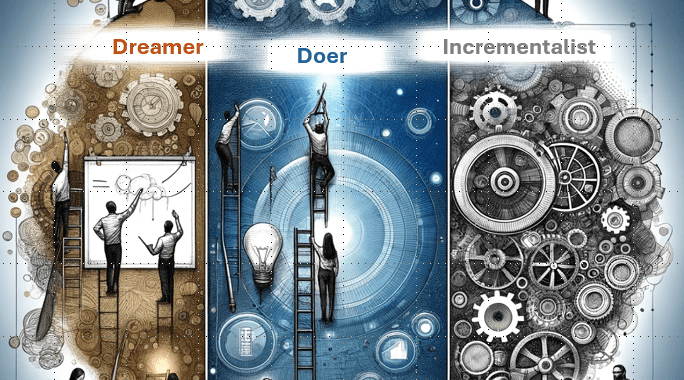
The Dream, Doer, and Incrementalist framework offers a perspective on team dynamics and personal strengths within a professional environment. By analysing the characteristics, strengths, challenges, and synergistic potential of each type, organisations can optimise collaboration and enhance outcomes. This article delves into each of these aspects, providing a comprehensive understanding of how these personality types interact and contribute to success.

The Dreamer

Characteristics: Dreamers are visionary thinkers. They excel at big-picture thinking and are often the source of innovative ideas and ambitious goals. They thrive on possibilities and what could be, often pushing boundaries and challenging the status quo.

Strengths: The primary strength of Dreamers lies in their ability to envision and articulate a compelling future. They are great at motivating others and are often seen as charismatic leaders. Their creativity is a catalyst for innovation and inspiration within teams.

Challenges: Dreamers can sometimes struggle with the practical aspects of project execution. Their focus on visions can lead to difficulties in managing details or maintaining interest in the mundane aspects of implementation. They may also face challenges in setting realistic goals or timelines.

Examples: Visionary leaders like Steve Jobs or Elon Musk embody the Dreamer archetype, driving their companies towards groundbreaking innovations.

The Doer

Characteristics: Doers are action-oriented and pragmatic. They excel in environments where clear objectives and efficiency are prioritised. Doers are the workforce engines, turning ideas into reality through hard work and dedication.

Strengths: The primary strength of Doers lies in their ability to execute. They are dependable, often excel at managing resources, and can navigate the logistics of how to accomplish tasks effectively and efficiently.

Challenges: Doers may struggle with ambiguity and are less comfortable in situations where the goals are not clear or the pathway to them is not well defined. They may also be resistant to change and less receptive to abstract ideas that cannot be immediately acted upon.

Examples: Operations managers or project leads often fit the Doer profile, expertly translating strategic objectives into actionable plans and ensuring that goals are met on time.

The Incrementalist

Characteristics: Incrementalists are systematic thinkers who focus on gradual improvement. They excel at optimising processes and are adept at identifying and implementing small changes that cumulatively lead to significant improvements.

Strengths: Incrementalists bring a level of stability and continuous improvement to teams. They are great at problem-solving within existing frameworks and excel in environments where they can make iterative adjustments to enhance performance.

Challenges: Incrementalists may be perceived as overly cautious or resistant to radical change. Their preference for small, safe steps can sometimes hinder innovation or rapid adaptation in fast-paced environments.

Examples: Quality assurance managers or continuous improvement specialists who focus on refining processes and systems gradually are typical Incrementalists.

Collaboration and Team Dynamics

Dream and Doer: When Dreamers and Doers collaborate, they balance each other’s strengths. Dreamers provide the vision and motivation, while Doers handle the logistics and execution. This partnership can lead to high productivity and effective realisation of innovative ideas.

Dream and Incrementalist: This pairing can stabilise the radical ideas of the Dreamer with the practical, step-wise approach of the Incrementalist. It ensures that innovation is grounded in reality and is implemented progressively.

Doer and Incrementalist: Together, Doers and Incrementalists form an efficient and reliable team. They excel in environments that require high operational efficiency and risk management. However, this pairing might lack the creative spark provided by Dreamers.

All Three Together: When Dreamers, Doers, and Incrementalists work together, they form a powerful trio that can dream, plan, and refine continuously. This combination ensures that visionary ideas are not only executed efficiently but are also continuously improved upon.

Key Insights

Understanding the characteristics of Dreams, Doers, and Incrementalists allows organisations to form teams that can leverage diverse strengths. Effective management of these personalities requires recognising their unique contributions and challenges, and strategically pairing them to balance creativity, execution, and improvement. When these types are aligned with roles that suit their strengths, and when they are paired thoughtfully, they can significantly enhance team dynamics and drive successful outcomes.

Debunking Five Leadership Myths That Hinder Success

Leadership is an evolving skill that demands constant cultivation. While some individuals may naturally step into leadership roles, no one is born fully equipped to be a CEO.

Numerous misconceptions about leadership persist, often clashing with the actual demands and realities that new CEOs encounter upon assuming their positions.

From my professional experience, I’ve encountered several prevalent myths about leadership. With time and experience, I have observed how successful CEOs reshape their thinking and develop unique leadership philosophies, guiding them towards improved leadership.

Myth 1: Leaders Must Be Perfect
A prevalent myth is that leaders must be flawless, possessing an inherent knack for impeccable decision-making. This belief compels leaders to appear unshakeably strong. However, effective leadership involves nuances.

Accomplished leaders embrace vulnerability and understand that decision-making is an ongoing learning process. By fostering an environment where learning from mistakes is encouraged, leaders can genuinely connect with their teams, enhancing trust and openness.

As a new CEO, I initially isolated myself, mistakenly thinking I needed all the answers. I quickly learned that this was not the case.

Eventually, every leader faces decisions that do not pan out as expected. The best leaders are those who remain resilient, adaptable, and receptive to new information, fostering a culture of mutual learning and improvement.

Myth 2: Leadership Equals Commanding
Another myth is that leadership primarily involves issuing commands, supporting a directive or authoritarian approach. True leadership is dynamic, with leaders serving as key decision-makers. However, a directive approach can quash creativity and hinder open communication.

Exceptional leaders create inclusive workplaces where collaboration thrives, ideas are exchanged freely, and team members feel empowered to share their insights, even if it challenges established views.

Leadership is not about merely giving orders; it is about inspiring, guiding, and facilitating team success. Leaders can harness their teams’ diverse skills and perspectives by delegating and letting go of the need for absolute control.

Myth 3: One Correct Way to Lead
It’s a misconception that there is a single “correct” way to lead. Many influential leaders and mentors adopt vastly different leadership styles. While some believe that all successful leaders are extroverts, introverted leaders often excel by capitalising on their strong listening skills for thoughtful decision-making.

Most successful leaders share common traits: emotional intelligence and empathy. They demonstrate genuine care for their team members, fostering trust, enhancing communication, and creating a positive atmosphere.

Myth 4: Leaders Should Only Communicate Positive News
Some leaders believe they should shield their employees from negative news to prevent demoralisation. However, when leaders cease open communication, team members begin to speculate, leading to isolation for the leader.

As noted by Jim Collins, confronting harsh realities is essential. Great leaders engage their team’s trust and cooperation by being transparent, treating them as partners in tackling challenges together, and fostering a sense of shared responsibility.

Myth 5: Leadership is a Lonely Journey
Leadership might appear to be a solitary role, but it is far from being a lone endeavour. Effective leaders deliberately assemble a diverse team and often engage with other CEOs who face similar challenges.

Leaders benefit from diverse perspectives, which help them differentiate between facts and personal biases or assumptions. Engaging with peers allows for constructive feedback and opportunities for adjustment.

Interacting with leaders outside one’s organisation provides space for open discussions about strengths, weaknesses, and challenges, unveiling a critical truth: no leader has all the answers. Acknowledging this reality can enhance leadership abilities and cultivate a supportive network that encourages collective growth.

Overcoming these myths is crucial for personal and organisational advancement. Embracing vulnerability, fostering transparent communication, and promoting collaboration, while moving away from a controlling leadership style, are vital for becoming an effective leader.

Leadership is not a final destination but a unique, dynamic journey that demands lifelong dedication to growth, adaptability, and learning.

Leaders Eat Last: Fostering Trust and Collaboration in the Workplace

Leadership styles can significantly impact the culture, morale, and productivity of an organisation. Among the myriad of leadership philosophies, one concept that stands out for its profound simplicity and transformative power is “Leaders Eat Last.” This principle, popularised by Simon Sinek in his book of the same name, serves as a powerful metaphor for the selfless attitude and actions of true leaders, focusing on creating an environment of trust and safety within organisations.

With the dynamics of the workplace continuously evolving, the principle of “Leaders Eat Last” emerges as a profound illustration of the “People Come First” philosophy in action. This leadership approach, championed by thinkers like Simon Sinek, underscores the importance of prioritising the well-being and development of employees as the cornerstone of effective leadership and organisational success. By placing people at the heart of leadership decisions, organisations can foster a culture of trust, collaboration, and shared success.

The Foundation of “People Come First”

The phrase “People Come First” encapsulates a leadership ethos that values the well-being, growth, and satisfaction of employees above all else. As covered in the blog post “Success?… People come first” (link here) in 2017, it’s a commitment to creating a work environment that respects individuals’ contributions and recognises their intrinsic value to the organisation’s success. In such cultures, leaders are seen not just as figures of authority but as caretakers of their team’s welfare and growth.

The Essence of “Leaders Eat Last

At its core, “Leaders Eat Last” is about prioritising the needs of the team over the individual needs of the leader. It’s a leadership approach that emphasises empathy, support, and the welfare of the team members. This concept is inspired by the military tradition where higher-ranking officers eat after their troops, symbolising their commitment to their team’s well-being above their own.

Leaders Eat Last: A Manifestation of Putting People First

“Leaders Eat Last” is a tangible manifestation of the “People Come First” philosophy. It’s about leaders demonstrating through their actions that they are deeply committed to the welfare of their team members. This approach signals to employees that their leaders are invested in their safety, growth, and well-being, effectively building a foundation of trust. Trust, in turn, fosters an environment where employees feel valued and secure, encouraging them to invest their energy and creativity back into the organisation.

Creating a Circle of Safety

A critical aspect of putting people first is creating what Sinek describes as a “Circle of Safety” — an environment where employees feel protected from internal and external threats. This sense of security enables team members to focus on innovation and collaboration rather than self-preservation. Leaders who prioritise their team’s needs above their own, even in small acts like eating last, reinforce this circle of safety, promoting a culture where people feel they truly come first.

Trust: The Linchpin of Organisational Success

The relationship between trust and organisational success cannot be overstated. When leaders put people first, they lay the groundwork for a culture of trust. This culture not only enhances communication and collaboration but also empowers employees to take ownership of their work and the organisation’s goals. The trust that emanates from a people-first approach creates a virtuous cycle of loyalty, innovation, and collective achievement.

Impacting Organisational Culture

Embracing a “People Come First” mentality through actions like “Leaders Eat Last” can profoundly influence an organisation’s culture. It nurtures an environment where employees feel genuinely cared for and respected, making the organisation more attractive to both current and potential talent. Such a culture encourages mentorship, lifelong learning, and a shared commitment to excellence, driving the organisation toward sustained success.

Navigating the Challenges

Implementing a people-first leadership approach requires more than aspirational rhetoric – it demands a sincere and consistent commitment from leaders at all levels. The challenge lies in genuinely embracing and living out the values of empathy, service, and sacrifice. Leaders must be prepared to listen actively, make tough decisions for the greater good, and remain steadfast in their dedication to their teams’ well-being, even when faced with adversity.

Conclusion

“Leaders Eat Last” serves as a powerful embodiment of the “People Come First” philosophy, illustrating how leadership that prioritises the well-being and development of employees can transform an organisation. By fostering a culture of trust, safety, and mutual respect, leaders can unlock the full potential of their teams, driving innovation, performance, and loyalty. As the workplace continues to evolve, the principles of putting people first and leading by example remain timeless guides to creating thriving organisations where people are truly valued and empowered to succeed.

Streamlining Success: How a Single Page Can Shape Your Strategic Vision

In the 2015 conference in Barcelona, Gartner introduced me to the One-Page strategy. Still today, nine years later, a One-Page Strategy, is an exceedingly effective instrument for organisations aiming to streamline their strategic planning process and succinctly communicate their vision, goals, and initiatives.

This innovative approach condenses the essence of a company’s strategic plan onto a single, easily digestible page. It serves not only as a strategic compass for decision-makers but also as a rallying point for the entire organisation. In this blog post, we’ll delve into the use and benefits of a One-Page Strategy, highlighting why it has become a favoured tool among forward-thinking leaders.

A strategy is only ever as good as the information available at the time when we create it.

Simplifying Complexity

In today’s fast-paced business environment, complexity is a given. However, the challenge lies not in the complexity itself but in managing and communicating it effectively. The One-Page Strategy addresses this by distilling complex strategic plans into their most essential elements. This simplification process forces leaders to prioritise and focus on what truly matters, making strategic objectives clearer to every member of the organisation.

Enhancing Communication

Publishing your strategy is not the same as communicating your strategy. A good communicated strategy has a far better chance to success as it inspires, excites and motivates. In 2018 I wrote about effective leadership communication – click here to read the post.

One of the most significant benefits of a One-Page Strategy is its role in improving communication within an organisation. A document that is concise and accessible ensures that everyone, from top executives to entry-level employees, understands the strategic direction of the company. This clarity fosters alignment and ensures that all efforts are directed towards common goals, thereby enhancing organisational coherence and efficiency.

Good strategy communication takes the audience through three levels:

  • Understanding – the audience know what the strategy is
  • Support – the audience think the strategy is good and support it
  • Commitment – the audience is willing to play their part to work with you to achieve the strategy

Facilitating Decision Making

By clearly outlining the organisation’s strategic priorities, a One-Page Strategy serves as a valuable reference for decision-making. It helps leaders and teams evaluate new opportunities and challenges through the lens of their strategic objectives, ensuring that resources are allocated efficiently and that actions are aligned with long-term goals.

Encouraging Engagement and Accountability

A clear and concise strategy document is more likely to be read, understood, and embraced by the entire organisation. When employees understand how their work contributes to the broader strategic objectives, they are more engaged and motivated. Moreover, a One-Page Strategy promotes accountability by making it easier to track progress against key metrics and milestones.

Streamlining the Strategic Review Process

The dynamic nature of today’s business environment necessitates frequent strategic reviews. A One-Page Strategy makes these reviews more manageable and focused. Instead of wading through voluminous strategic plans, leaders can quickly assess progress, adapt to changes, and make necessary adjustments, keeping the organisation agile and responsive.

Key Components of a Successful Strategy

A successful technology strategy is pivotal for organisations aiming to leverage technology for competitive advantage, innovation, and efficiency. The key components of a successful technology strategy encompass a holistic approach that aligns with the organisation’s business goals, anticipates future trends, and ensures adaptability to change. Here are the essential elements:

1. Alignment with Business Objectives

The technology strategy must be closely aligned with the organisation’s overall business strategy and objectives. This alignment ensures that technological investments and initiatives directly support the organisation’s goals, such as market growth, customer satisfaction, and operational efficiency.

2. Stakeholder Engagement

Involvement from stakeholders across the organisation is crucial for the development and implementation of a successful technology strategy. This includes engaging leadership, IT staff, end-users, and even customers to gather insights, expectations, and requirements, ensuring the strategy meets the needs of all parties involved.

3. Technology Assessment

A comprehensive assessment of current technology assets, infrastructure, and capabilities helps identify areas of strength, as well as gaps that need to be addressed. This assessment should consider hardware, software, data management practices, and cybersecurity measures.

4. Future Trends and Innovation

A forward-looking perspective that accounts for emerging technologies and industry trends is vital. This component involves exploring and potentially adopting innovative technologies (e.g., AI, blockchain, IoT) that can drive competitive advantage and address future challenges.

5. Scalability and Flexibility

The strategy should provide a framework that is both scalable and flexible, allowing the organisation to adapt to changes in the business environment, technological advancements, or shifts in customer demand without significant disruptions.

6. Risk Management and Security

Identifying, assessing, and mitigating risks associated with technological investments and operations is essential. This includes cybersecurity threats, data privacy concerns, and compliance with relevant regulations.

7. Talent and Skills Development

Investing in the right talent and continuously developing the skills of the existing workforce to keep pace with technological advancements ensures the organisation can effectively implement and utilise new technologies.

8. Implementation Roadmap

A clear and detailed implementation roadmap outlines the steps, timelines, and resources required to achieve the strategic objectives. This roadmap should include milestones, key performance indicators (KPIs), and a governance model to monitor progress and make adjustments as necessary.

9. Budget and Resource Allocation

A realistic and well-defined budget ensures that the necessary financial and human resources are available to support the technology strategy. It should account for both immediate needs and long-term investments in innovation.

10. Continuous Evaluation and Adaptation

Finally, a mechanism for ongoing evaluation and adaptation of the technology strategy is critical. This allows the organisation to respond to new opportunities, technological breakthroughs, and market changes, ensuring the strategy remains relevant and effective over time.

Incorporating these key components into a technology strategy can help organisations navigate the complexities of digital transformation, stay ahead of technological trends, and achieve sustainable success in an increasingly competitive landscape.

Conclusion

The One-Page Strategy is not a replacement for a detailed strategy document but it’s a powerful strategic tool that encapsulates the essence of an organisation’s strategic vision and plans. By simplifying complexity, enhancing communication, facilitating decision-making, encouraging engagement, and streamlining the strategic review process, it offers a myriad of benefits. As organisations continue to navigate the uncertainties and opportunities of the digital age, adopting a One-Page Strategy could well be the key to staying focused, agile, and aligned in pursuit of their long-term goals.

Quotes to shape Principles of Business Leadership

“Develop success from failures. Discouragement and failure are two of the surest stepping stones to success.” – Dale Carnegie

“There are only two ways to live life. One is as though nothing is a miracle. The other is as though everything is.” – Albert Einstein

“Do not look for approval except for the consciousness of doing your best.” – Andrew Carnegie

“The true measure of a person is how they treat someone who can do him absolutely no good.” – Samuel Johnson

“You’ve got to be very careful if you don’t know where you are going because you might not get there.” – Yogi Berra

“Expect more than others think possible.” – Howard Schultz

“If people aren’t calling you crazy, you aren’t thinking big enough.” – Richard Branson

“Never, never, never give up.” – Winston Churchill