
Harnessing Data to Drive Boardroom Decisions: Navigating Top Priorities for 2025

How Data Can Inform Top Board Priorities for 2025

As businesses navigate an increasingly complex landscape, data-driven decision-making is critical for boards looking to stay ahead.

The percentages cited for these top 15 board priorities are based on research conducted by the National Association of Corporate Directors (NACD), as part of their 2024 Board Trends and Priorities Report, which identifies the key issues expected to shape boardroom agendas in 2025. This research reflects input from board members across various industries, offering a comprehensive view of the strategic, operational, and risk-related concerns that will demand board attention in the year ahead.

The percentages shown next to each of the top 15 board priorities represent the proportion of board members who identified each issue as a critical focus area for 2025. These figures reflect the varying levels of concern and strategic emphasis boards are placing on different challenges. For example, 78% of boards prioritize growth strategies, making it the most pressing focus, while 47% highlight M&A transactions and opportunities, and 43% emphasize both CEO/C-suite succession and financial conditions and uncertainty. Other areas like competition (31%), product/service innovation (30%), and digital transformation (29%) also feature prominently. Cybersecurity and data privacy concerns (27%) remain significant, while business continuity (18%), regulatory compliance (17%), and workforce planning (14%) reflect ongoing operational and risk considerations. Less frequently cited, but still noteworthy, are shareholder engagement (11%), executive compensation (8%), and environmental/sustainability strategy (7%). The remaining 3% represents other emerging issues boards anticipate addressing in 2025. These percentages provide insight into the collective mindset of corporate leadership, illustrating the diverse and evolving priorities shaping governance in the year ahead.

The top board priorities for 2025 reflect a blend of strategic growth, risk management, and operational resilience.

Here’s how data can provide valuable insights across these key areas:

1. Growth Strategies (78%)

Data analytics helps boards identify emerging markets, customer behavior trends, and competitive advantages. By leveraging market intelligence, businesses can optimize pricing strategies, expand into new regions, and tailor their product offerings. Predictive analytics can also forecast demand and identify high-growth segments.

2. M&A Transactions and Opportunities (47%)

Boards can use financial modeling and risk assessment tools to evaluate potential mergers and acquisitions. Data-driven due diligence, including AI-powered sentiment analysis and real-time financial metrics, helps assess the value and risks of potential deals.

3. CEO/C-Suite Succession (43%)

HR analytics can track leadership performance, identify high-potential candidates, and assess cultural fit. Predictive modeling can also help boards anticipate leadership gaps and prepare for smooth transitions.

4. Financial Conditions and Uncertainty (43%)

Real-time financial data, scenario modeling, and macroeconomic indicators can help boards navigate uncertainty. Machine learning models can predict cash flow trends, economic downturns, and investment risks, ensuring proactive financial planning.

5. Competition (31%)

Competitive intelligence tools analyze market trends, pricing strategies, and customer sentiment to keep businesses ahead. Social listening and web scraping can provide insights into competitor moves and consumer preferences.

6. Product/Service Innovation (30%)

Customer feedback, AI-driven R&D insights, and market analytics guide product development. Data-driven innovation strategies ensure companies invest in solutions that meet evolving consumer demands.

7. Digital Transformation (Including AI Risks) (29%)

AI-driven automation, cloud computing, and data analytics enhance efficiency, but boards must assess AI-related risks such as bias, compliance, and cybersecurity vulnerabilities. AI governance frameworks based on data insights can help mitigate these risks.

8. Cybersecurity/Data Privacy (27%)

Boards can use threat intelligence, anomaly detection, and predictive analytics to assess and mitigate cybersecurity threats. Data encryption, compliance monitoring, and real-time breach detection enhance security postures.

9. Business Continuity/Crisis Management (18%)

Predictive analytics and scenario planning enable organizations to anticipate disruptions. Real-time monitoring and data-driven contingency planning improve crisis response.

10. Regulatory Compliance (17%)

Data-driven compliance tracking ensures businesses meet evolving regulations. AI-powered monitoring tools flag potential violations and streamline reporting processes.

11. Workforce Planning (14%)

HR analytics track workforce trends, skills gaps, and employee engagement. Predictive modeling aids in talent retention and future workforce planning.

12. Shareholder Engagement/Activism (11%)

Sentiment analysis and shareholder data provide insights into investor concerns. Data-driven communication strategies enhance shareholder relations and transparency.

13. Executive Compensation (8%)

Benchmarking tools use industry data to inform fair and performance-based compensation structures. Data-driven compensation models ensure alignment with company goals and shareholder expectations.

14. Environmental/Sustainability Strategy (7%)

Sustainability metrics, ESG (Environmental, Social, and Governance) data, and carbon footprint tracking guide eco-friendly business strategies. Data transparency helps align sustainability efforts with regulatory and investor expectations.

15. Other Priorities (3%)

Boards can use custom data solutions tailored to specific business challenges, ensuring agility and informed decision-making across all functions.

Final Thoughts

Data is the cornerstone of effective board governance. In 2025, organizations that harness real-time insights, predictive analytics, and AI-driven decision-making will be best positioned to navigate challenges and seize opportunities. Boards must prioritize data-driven strategies to stay competitive, resilient, and future-ready.

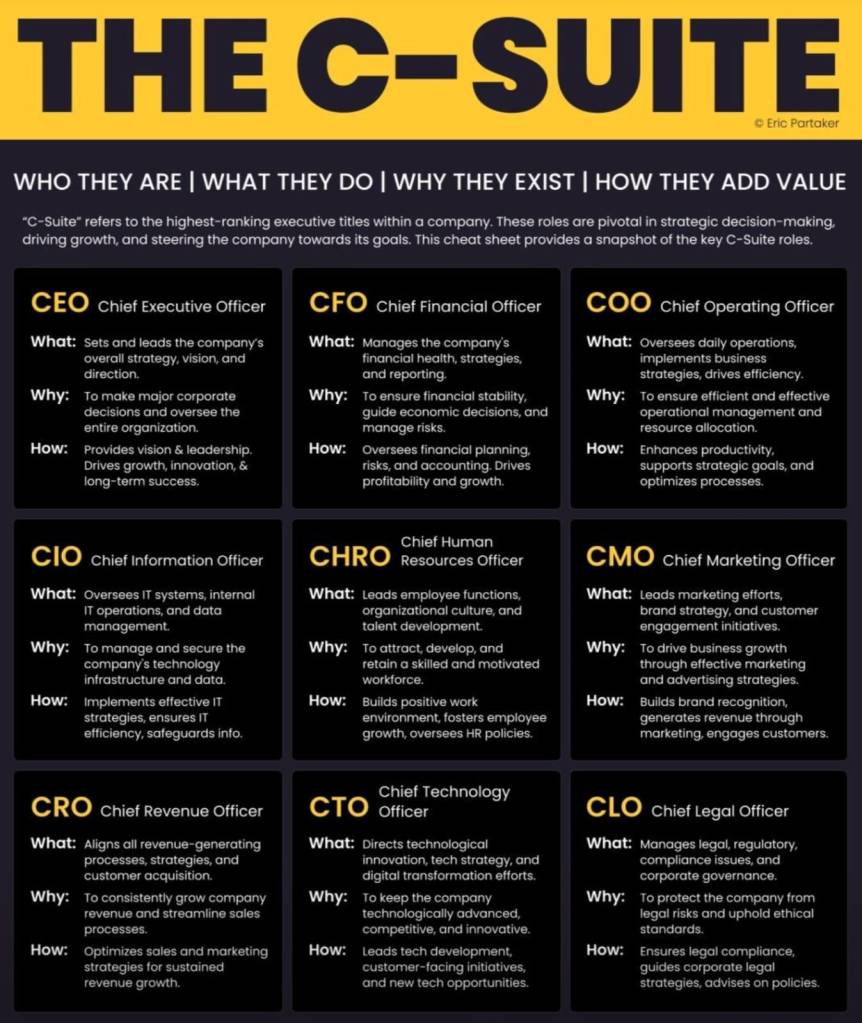
The C-Suite

WHO they are, What the do, Why they exist, How they add value

In corporate leadership, the C-Suite stands as the command centre, where strategic decisions are made, and the future of the company is shaped. Comprising key executives with specialised roles, the C-Suite plays a crucial role in steering organisations towards success. In this blog post, we’ll delve into the world of the C-Suite, shedding light on the responsibilities and value each role brings to the table.

  1. CEO – Chief Executive Officer

The CEO, or Chief Executive Officer, is the captain of the ship, responsible for charting the company’s course and ensuring its overall success. The CEO sets the vision, mission, and strategy, providing leadership to the entire organisation. They are the ultimate decision-maker, accountable to the board of directors and stakeholders.

  1. CFO – Chief Financial Officer

The CFO, or Chief Financial Officer, is the financial maestro of the C-Suite. Tasked with overseeing the financial health of the organisation, the CFO manages budgets, financial planning, and investment strategies. They play a pivotal role in risk management, ensuring sustainable growth and profitability.

  1. COO – Chief Operating Officer

The COO, or Chief Operating Officer, is the executor of the CEO’s vision. Responsible for day-to-day operations, the COO ensures that the company’s processes and systems align with strategic goals. They focus on efficiency, productivity, and scalability, optimising internal functions for maximum performance.

  1. CIO – Chief Information Officer

In the digital age, the CIO, or Chief Information Officer, holds a critical role. Charged with managing the company’s technology infrastructure, the CIO ensures that information systems align with business objectives. They play a pivotal role in driving innovation and digital transformation.

  1. CHRO – Chief Human Resources Officer

The CHRO, or Chief Human Resources Officer, is the guardian of the company’s most valuable asset—its people. Responsible for talent acquisition, employee development, and creating a positive work culture, the CHRO plays a key role in shaping the organisation’s human capital strategy.

  1. CMO – Chief Marketing Officer

The CMO, or Chief Marketing Officer, is the storyteller-in-chief. Charged with building and promoting the company’s brand, the CMO develops marketing strategies to drive growth and customer engagement. They are instrumental in shaping the company’s public image and market positioning.

  1. CRO – Chief Revenue Officer

The CRO, or Chief Revenue Officer, is the architect of revenue streams. Focused on driving sales and revenue growth, the CRO collaborates with sales, marketing, and other departments to optimise customer acquisition and retention strategies.

  1. CTO – Chief Technology Officer

The CTO, or Chief Technology Officer, is the technology visionary. Tasked with leading technological innovation, the CTO develops and implements technology strategies that align with the company’s business goals. They often play a crucial role in product development and ensuring technological competitiveness.

  1. CLO – Chief Legal Officer

The CLO, or Chief Legal Officer, is the legal guardian of the organisation. Responsible for managing legal risks and ensuring compliance with laws and regulations, the CLO provides legal counsel to the executive team and oversees matters such as contracts, intellectual property, and litigation.

Summary – Cheat sheet

Conclusion

The C-Suite represents a powerhouse of expertise, each member contributing their unique skills to the overall success of the organisation. By understanding the roles and responsibilities of the CEO, CFO, COO, CIO, CHRO, CMO, CRO, CTO, and CLO, we gain insights into the intricate workings of corporate leadership. Together, these leaders form a cohesive unit, steering the ship through the complexities of the business world, adding significant value to the organisation and its stakeholders.

Digital Strategy & the Board

Digital Strategy is a plan that uses digital resources to achieve one or more objectives. With Technology changing at a very fast pace, Organisations have many digital resources to choose from.

Digital Resources can be defined as materials that have been conceived and created digitally or by converting analogue materials to a digital format for example:

  • Utilising the internet for commerce (web-shops, customer service portals, etc…)
  • Secure working for all employees from anywhere via VPN
  • Digital documents, scanning paper copies and submitting online correspondence to customers i.e. online statements and payment facilities via customer portals
  • Digital resources via Knowledge Base, Wiki, Intranet site and Websites
  • Automation – use digital solutions like robotics and AI to complete repetitive tasks more efficiently
  • Utilising social media for market awareness, customer engagement and advertising

A Digital Strategy is typically a plan that helps the business to transform it’s course of action, operations and activities into a digital nature by utilising available applicable technology.

Many directors know that digital strategies, and there related spending, can be difficult to understand. From blockchain and virtual reality to artificial intelligence, no business can afford to fall behind with the latest technological innovations that are redefining how businesses connect with their customers, employees, and myriad of other stakeholders. Read this post that covers “The Digital Transformation Necessity“…

As a Board Director what are the crucial factors that the Board should consider when building a digital strategy?

Here are five critical aspects, in more detail, and the crucial things to be conscious of when planning a digital transformation strategy as part of a board.

Stakeholders

A stakeholder, by definition, is usually an individual or a group impacted by the outcome of a project. While in previous roles you may have worked with stakeholders at senior management level, when planning a digital strategy, it’s important to remember that your stakeholders could also include customers, employees or anyone that could be affected by a new digital initiative.

Digital strategies work from the top down, if you’re looking to roll out a digital transformation project, you need to consider how it will affect every person inside or outside of your business.

Investment

Digital transformation almost always involves capital and technology-intensive investments. It is not uncommon for promising transformation projects to stall because of a lack of funds, or due to technology infrastructure that cannot cope with increased demands.

Starting a budgeting process right at the start of planning a digital transformation project is essential. This helps ensure that the scope of a project does not grow beyond the capabilities of an enterprise to fund it. A realistic budgeting and funding approach is crucial because a stalled transformation project creates disruption, confusion and brings little value to a business.

Communications

From the get-go, any digital strategy, regardless of size, should be founded on clear and constant communication between all stakeholders involved in a project. This ensures everyone is in the loop on the focus of the project, their specific roles within it, and which processes are going to change. In addition, continuous communication helps build a spirit of shared success and ensures everyone has the information they need to address any frustrations or challenges that may occur as time passes. When developing an effective communication plan, Ian’s advice is to hardly mention the word digital at all.

The best digital strategies explain what digital can do and also explain the outcomes. Successful communication around digital strategies uses language that everyone can understand, plain English, no buzzwords, no crazy acronyms and no silly speak.

Also read “Effective Leadership Communication” which covers how you can communicate effectively to ensure that everyone in the team are on the same page.

Technology

While there are many technologies currently seeing rapid growth and adoption, it doesn’t necessarily mean that you will need to implement all of them in your business. The choice of technology depends upon the process you are trying to optimise. Technology, as a matter of fact, is just a means to support your idea and the associated business processes.

People often get overwhelmed with modern technologies and try to implement all of them in their current business processes. The focus should be on finding the technologies that rightly fit your business objectives and implement them effectively.

Never assume that rolling out a piece of technology is just going to work. When embarking on a digital project, deciding what not to do is just as important as deciding what to do. Look at whether a piece of technology can actually add value to your business or if it’s just a passing trend. Each digital project should hence be presented to Board with a business case that outlines the business value, return on investment and the associated benefits and risks, for board consideration.

Measurement

No strategy is complete without a goal and a Digital Strategy is no different. To measure the effectiveness of your plan you will need to set up some key performance indicators (KPIs). These metrics will demonstrate the effectiveness of the plan and will also guide your future decision making. You will need to set up smart goals that have clear achievable figures along with a timeline. These goals will guide and optimise the entire execution of a transformation project and ensure that the team does not lose focus.

Any decent strategy should say where we are now, where we want to get to and how we’re going to get there, but also, more importantly, how are we going to monitor and track against our progress.

Also Read

Risk Management – for NEDs

Arguably the most significant adjustment to the NED role over the past seven years is that all NEDs must now be well versed in identifying and managing all forms of risk – operational, financial and reputational…

As a Chairman once described: “Risk is a massive issue now: You need to understand the risks and be clear about what the board is doing about mitigating those risk.”

So, how can you ensure that risks are being articulated appropriately and how can you probe into how risks are being mitigated, irrespective if risk management is well established within an industry or not? In the first part of this article I give some steer on how you can assess current risk management practises (governance) and the latter part covers some best practises.

Risk Maturity

If not already done within the company, you could do a Risk Maturity Assessment which gives an indication of the organisation’s engagement with risk management.

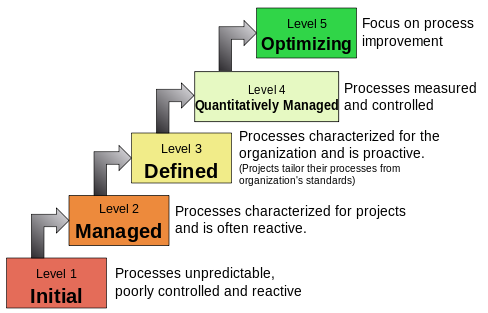
There are various models, usually with five levels of maturity (see the 5 Level Maturity Model in diagram below): from an immature Level 1 organisation where there are no formal risk management policies, processes or associated activities, tools or techniques, through a Level 2 managed organisation where policies are in place but risk reviews are generally reactive, all the ay up to the mature or ‘risk intelligent’ Level 5 enterprise where the risk management tone is set at the top and built into decision making, with risk management activities proactively embedded at all levels of the organisation.

Maturity - 5 Levels

     5 Level Maturity Model 

The outcome of such an assessment will give you clear indication of the risk management maturity level of the organisation. Dependant on how that aligns with the Shareholders’ and Board’s expected level, the needed change actions can be initiated to mature the organisation to the expected level. It will also give you measure of clarity of the rigour of process and review that is likely to have gone into the risk reporting that you see as a Board.

Risk Score/Rating Matrix

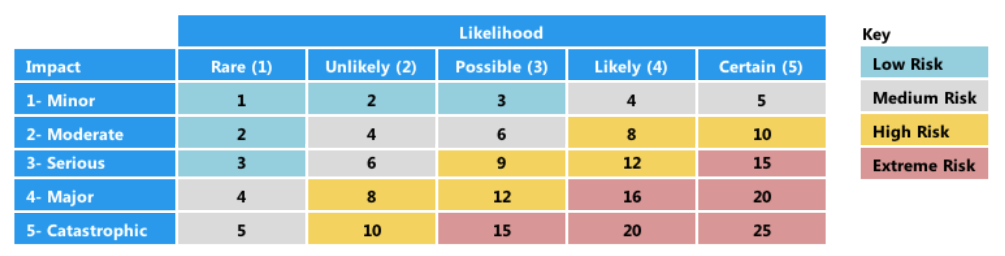
As risks are identified, logged in the Risk Register and then assessed based on likelihood of it happening and the impact to the business if it should happen, a Risk Scoring Matrix (with preferably a 5 point scal as per diagram below) is very useful to assign a Risk Score to each risk.

The higher the score the higher the priority of mitigating the risk should be.

RISK Matrix

Risk Score Matrix

As a NED you need to assess the completeness of the Key Risks in the Risk Register. Engaging with the executives prior board meetings goes a long way to get input and a feel for risks existing on the floor (day to day running/operations) of the business. You should also ask if there is something that you are talking about in every meeting that either is not on the risk register, or is rated as a low risk?  If that is true, then you need to explore why you are talking about it as a Board but management are not giving it greater focus.

Risk Heat Chart

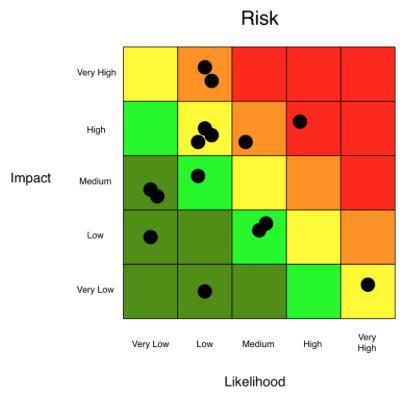
A heat chart (as per diagram below) enables a holistic view of risks with high scoring risks in the top right (coloured red) corner and low risks in the bottom left corner (coloured green).Risk-HeatMap

   Risk Heat Map

For a board to get an overview of what the key risks are, I don’t think you can beat a heat chart.

As a NED, you can use this to sense check: Are the risks in the top quadrants, the Red Risks, the ones that the Board feel are the highest risk? Are you talking about these risks regularly and challenging the business on what mitigating actions they are doing to reduce them?

Approach on Risk Review

The popular parlance these days is a ‘deep dive’ into the highest risks, usually undertaken by the Audit Committee.

Apart from the “deep dive’ into risks usually undertaken by the Audit Committee you, as a NED, want to do your own exploring, below is an approached…

1. Current Risk Score

What is the justification for the current rating – does this feel right? The impact should be measured by the potential impact of the risk on strategic objectives, and is usually quite easy to define, but likelihood can be more subjective.

Also known as the mitigated risk rating, the current rating should recognise mitigations or controls that are already in place, and how effective these are.

2. Target Risk Score

What is a reasonable target risk rating for this risk, ie where are we trying to get to?

As a Board, you need to set the risk appetite (which equates to target risk ratings).  This may vary by the type of risk, for example, targeting a very low risk rating might be necessary on something that is a matter of compliance or safety, but in commercial matters, the trade-off between risk and reward needs to be considered, so a higher risk appetite is likely to be acceptable.

There won’t be a limitless budget to spend on mitigating every risk to a minimal level, so as a Board you will have to decide what level of risk you are comfortable with; and where the balance sits between reducing the risk and the cost of mitigation.  Why would you spend more on mitigations than the financial impact of the risk crystallising?

3. Mitigating actions

How are you going to get to your target level of risk?  Planned mitigating actions should drive the risk rating to its target level.  This is a focus area for audit committee deep dives – what actions are planned, and will they be sufficient to bring you to your target risk rating?  Progress on these actions should be monitored regularly – if no progress, ask if this risk being taken seriously enough? Or is it not as big a risk as you first thought?

Good risk management should aid decision making, avoid or minimise losses, but also identify opportunities.

Let’s look now into Risk Mitigation in more detail…

Approach on Risk Mitigation

Risk mitigation can be defined as taking steps to reduce adverse effects and impact to the business while reducing the likelihood of the risk.

There are four types of risk mitigation strategies that hold unique to Business Continuity and Disaster Recovery. When mitigating risk, it’s important to develop a strategy that closely relates to and matches your company’s risk profile.

four types of risk mitigation

Risk Acceptance

Risk acceptance does not reduce any effects however it is still considered a strategy. This strategy is a common option when the cost of other risk management options such as avoidance or limitation may outweigh the cost of the risk itself. A company that doesn’t want to spend a lot of money on avoiding risks that do not have a high possibility of occurring will use the risk acceptance strategy.

Risk Avoidance

Risk avoidance is the opposite of risk acceptance. It is the action that avoids any exposure to the risk whatsoever. It’s important to note that risk avoidance is usually the most expensive of all risk mitigation options.

Risk Limitation/Reduction

Risk limitation is the most common risk management strategy used by businesses. This strategy limits a company’s exposure by taking some action. It is a strategy employing a bit of risk acceptance along with a bit of risk avoidance or an average of both. An example of risk limitation would be a company accepting that a disk drive may fail and avoiding a long period of failure by having backups.

Risk Transference

Risk transference is the involvement of handing risk off to a willing third party. For example, numerous companies outsource certain operations such as customer service, payroll services, etc. This can be beneficial for a company if a transferred risk is not a core competency of that company. It can also be used so a company can focus more on their core competencies.

All of these four risk mitgiation strategies require montioring. Vigilence is needed so that you can recognize and interrperet changes to the impact of that risk.


Case Study: Renier Botha’s Role as Non-Executive Director at KAMOHA Tech

Introduction

In this case study, we examine the strategic contributions of Renier Botha, a Non-Executive Director (NED) at KAMOHA Tech, a company specialising in Robotic Process Automation (RPA) and IT Service Management (ITSM). Botha’s role involves guiding the company through corporate governance and product development to establish KAMOHA Tech as a standalone IT service provider.

Background of KAMOHA Tech

KAMOHA Tech operates within the rapidly evolving IT industry, focusing on RPA and ITSM solutions. These technologies are crucial for businesses looking to automate processes and enhance their IT service offerings, thereby increasing efficiency and reducing costs.

Role and Responsibilities of Renier Botha

Renier Botha joined KAMOHA Tech with a wealth of experience in IT governance and service management. His primary responsibilities as a NED include:

  • Corporate Governance: Ensuring that KAMOHA Tech adheres to the highest standards of corporate governance, which is essential for the company’s credibility and long-term success. Botha’s oversight ensures that the company’s operations are transparent and align with shareholder interests.
  • Strategic Guidance on Product and Service Development: Botha plays a pivotal role in shaping the strategic direction of KAMOHA Tech’s product offerings in RPA and ITSM. His expertise helps in identifying market needs and aligning the product development to meet these demands.
  • Mentoring and Leadership: As a NED, Botha also provides mentoring to the executive team, offering insights and advice drawn from his extensive experience in the IT industry. His guidance is crucial in steering the company through phases of growth and innovation.

Impact of Botha’s Involvement

Botha’s contributions have had a significant impact on KAMOHA Tech’s trajectory:

  • Enhanced Governance Practices: Under Botha’s guidance, KAMOHA Tech has strengthened its governance frameworks, which has improved investor confidence and positioned the company as a reliable partner in the IT industry.
  • Product Innovation and Market Fit: Botha’s strategic insights into the RPA and ITSM sectors have enabled KAMOHA Tech to innovate and develop products that are well-suited to the market’s needs. This has been crucial in distinguishing KAMOHA Tech from competitors and capturing a larger market share.
  • Sustainable Growth: Botha’s emphasis on sustainable practices and long-term strategic planning has positioned KAMOHA Tech for sustainable growth. His influence ensures that the company does not only focus on immediate gains but also invests in long-term capabilities.

Challenges and Solutions

Despite the successes, Botha’s role involves navigating challenges such as:

  • Adapting to Market Changes: The IT industry is known for its rapid changes. Botha’s experience has been instrumental in helping the company quickly adapt to these changes by foreseeing industry trends and aligning the company’s strategy accordingly.
  • Balancing Innovation with Governance: Ensuring that innovation does not come at the expense of governance has been a delicate balance. Botha has managed this by setting clear boundaries and ensuring that all innovations adhere to established governance protocols.

Conclusion

Renier Botha’s role as a Non-Executive Director at KAMOHA Tech highlights the importance of experienced leadership in navigating the complexities of the IT sector. His strategic guidance in corporate governance and product development has not only enhanced KAMOHA Tech’s market position but has also set a foundation for its future growth. As KAMOHA Tech continues to evolve, Botha’s ongoing influence will be pivotal in maintaining its trajectory towards becoming an independent and robust IT service provider.

NED :: Non-Executive Director’s proposition

Are you aware of the substantive and measurable value a Non-Executive Director can bring to you and your business…?

Introduction

The Non-Executive Director, no longer a role that is associated just with large organisations. There is a growing awareness of the NED role and more and more organisations are appointing NEDs of various types, and specific specialities, often within technology and digital transformation, to enhance the effectiveness of their boards as standard practise.

With the pressure on organisations to compete globally, deal with digital transformation and respond to rapidly changing market conditions, new skills are needed at board level. This leads to the role of the NED diversifying and introduces a need to refresh the NEDs as circumstances change, bringing in new specialities, experience and challenge when the organisation needs it.

A good NED can, and should make a substantive and measurable contribution to the effectiveness of the board. Do not see a NED as a consulting advisor – a NED, within the remit of the role of a company director, play a full and active part in the success efforts of an organisation. Irrespective of the skills, experience and network contacts that NEDs will bring, they must above all, provide appropriate independent and constructive challenge to the board.

Both the organisation and the NED must understand the purpose of being a NED, within the specific organisation, for the role to be effective. This includes a clear understanding of what value the NED is expected to bring. A NED’s value goes beyond just the statutory requirements.

On appointment a Non-executive director can:

  • Broaden the horizons and experience of existing executive directors.
  • Facilitate the cross-fertilisation of ideas, particularly in terms of business strategy and planning.
  • Have a vital part to play in appraising and commenting on a company’s investment/expenditure plans.
  • Bring wisdom, perspective, contacts and credibility to your business.
  • Be the lighthouse that helps you find your way and steer clear of near and present dangers.

The role of the NED

All directors, including NEDs, are required to:

  • provide entrepreneurial leadership of the company
  • set the company’s vision, strategy and strategic objectives
  • set the company’s values and standards
  • ensure that its obligations to its shareholders and others are understood and met.

In addition, the role of the NED has the following key elements:

  • Strategy: NEDs should constructively challenge and help develop proposals on strategy.
  • Performance: NEDs should scrutinise the performance of management in meeting agreed goals and objectives and monitor the reporting of performance.
  • Risk: NEDs should satisfy themselves on the integrity of financial information and that financial controls and systems of risk management are robust and defensible.
  • People: NEDs are responsible for determining appropriate levels of remuneration of executive directors and have a prime role in appointing, and where necessary removing, executive directors, and in succession planning.

“In broad terms, the role of the NED, under the leadership of the chairman, is: to ensure that there is an effective executive team in place; to participate actively in the decision–takingprocess of the board; and to exercise appropriate oversight over execution of the agreed strategy by the executive team.”; Walker Report, 2009


A non-executive director will bring the follow benefits to your company:

  • strengthen the board and provide an independent viewpoint
  • contribute to the creation of a sound business plan, policy and strategy
  • review plans and budgets that will implement policy and strategy
  • be a confidential and trusted sounding board for the MD/CEO and keep the focus of the MD/CEO
  • have the experience to objectively assess the company’s overall performance
  • have the experience and confidence to stand firm when he or she believes the executive directors are acting in an inappropriate manner
  • ensure good corporate governance
  • provide outside experience of the workings of other companies and industries, and have beneficial sector contacts and experience gained in previous businesses
  • have the ability to clearly communicate with fellow directors
  • have the ability to gain the respect of the other directors
  • possess the tact and skill to work with the executive directors, providing support and encouragement where difficult decisions are being made
  • have contacts with third parties such as financial sources, grant providers and potential clients

Looking for a NED?

Now that you understand what a NED can do – What are you waiting for?

Contact Renier Botha if you are looking for an experienced director with strong technology and digital transformation skills.

Renier has demonstrable success in developing and delivering visionary business & technology strategies. His experience include Mergers & Acquisitions (M&A), major capital projects, growth, governance, compliance, risk management as well as business and organisation development. From startup to FTSE listed enterprise, the value Renier can bring as NED is substantive, driving business growth.