Leadership Styles

1. Autocratic Leadership
Autocratic leadership is an extreme form of transactional leadership, where leaders have a lot of power over their people. Staff and team members have little opportunity to make suggestions, even if these would be in the team’s or the organization’s best interest.

The benefit of autocratic leadership is that it’s incredibly efficient. Decisions are made quickly, and work gets done efficiently. The downside is that most people resent being treated this way. Therefore, autocratic leadership can often lead to high levels of absenteeism and high staff turnover. However, the style can be effective for some routine and unskilled jobs: in these situations, the advantages of control may outweigh the disadvantages.

Autocratic leadership is often best used in crises, when decisions must be made quickly and without dissent. For instance, the military often uses an autocratic leadership style; top commanders are responsible for quickly making complex decisions, which allows troops to focus their attention and energy on performing their allotted tasks and missions.

2. Bureaucratic Leadership
Bureaucratic leaders work “by the book.” They follow rules rigorously, and ensure that their people follow procedures precisely. This is an appropriate leadership style for work involving serious safety risks (such as working with machinery, with toxic substances, or at dangerous heights) or where large sums of money are involved. Bureaucratic leadership is also useful in organizations where employees do routine tasks (as in manufacturing).

The downside of this leadership style is that it’s ineffective in teams and organizations that rely on flexibility, creativity, or innovation.
Much of the time, bureaucratic leaders achieve their position because of their ability to conform to and uphold rules, not because of their qualifications or expertise. This can cause resentment when team members don’t value their expertise or advice.

3. Charismatic Leadership
A charismatic leadership style can resemble transformational leadership because these leaders inspire enthusiasm in their teams and are energetic in motivating others to move forward. This ability to create excitement and commitment is an enormous benefit.

The difference between charismatic leaders and transformational leaders lies in their intention. Transformational leaders want to transform their teams and organizations. Charismatic leaders are often focused on themselves, and may not want to change anything.

The downside to charismatic leaders is that they can believe more in themselves than in their teams. This can create the risk that a project or even an entire organization might collapse if the leader leaves. A charismatic leader might believe that she can do no wrong, even when others are warning her about the path she’s on; and this feeling of invincibility can ruin a team or an organisation.

Also, in the followers’ eyes, success is directly connected to the presence of the charismatic leader. As such, charismatic leadership carries great responsibility, and it needs a long-term commitment from the leader.

4. Democratic/Participative Leadership
Democratic leaders make the final decisions, but they include team members in the decision-making process. They encourage creativity, and team members are often highly engaged in projects and decisions.
There are many benefits of democratic leadership. Team members tend to have high job satisfaction and are productive because they’re more involved in decisions. This style also helps develop people’s skills. Team members feel in control of their destiny, so they’re motivated to work hard by more than just a financial reward.

Because participation takes time, this approach can slow decision-making, but the result is often good. The approach can be most suitable when working as a team is essential, and when quality is more important than efficiency or productivity.

The downside of democratic leadership is that it can often hinder situations where speed or efficiency is essential. For instance, during a crisis, a team can waste valuable time gathering people’s input. Another downside is that some team members might not have the knowledge or expertise to provide high quality input.

5. Laissez-Faire Leadership
This French phrase means “leave it be,” and it describes leaders who allow their people to work on their own. This type of leadership can also occur naturally, when managers don’t have sufficient control over their work and their people.

Laissez-faire leaders may give their teams complete freedom to do their work and set their own deadlines. They provide team support with resources and advice, if needed, but otherwise don’t get involved.
This leadership style can be effective if the leader monitors performance and gives feedback to team members regularly. It is most likely to be effective when individual team members are experienced, skilled, self-starters.

The main benefit of laissez-faire leadership is that giving team members so much autonomy can lead to high job satisfaction and increased productivity.

The downside is that it can be damaging if team members don’t manage their time well or if they don’t have the knowledge, skills, or motivation to do their work effectively.

6. People-Oriented/Relations-Oriented Leadership
With people-oriented leadership, leaders are totally focused on organizing, supporting, and developing the people on their teams. This is a participatory style and tends to encourage good teamwork and creative collaboration. This is the opposite of task-oriented leadership.
People-oriented leaders treat everyone on the team equally. They’re friendly and approachable, they pay attention to the welfare of everyone in the group, and they make themselves available whenever team members need help or advice.

The benefit of this leadership style is that people-oriented leaders create teams that everyone wants to be part of. Team members are often more productive and willing to take risks, because they know that the leader will provide support if they need it.

The downside is that some leaders can take this approach too far; they may put the development of their team above tasks or project directives.

7. Servant Leadership
This term, created by Robert Greenleaf in the 1970s, describes a leader often not formally recognized as such. When someone at any level within an organization leads simply by meeting the needs of the team, he or she can be described as a “servant leader.”

Servant leaders often lead by example. They have high integrity and lead with generosity. In many ways, servant leadership is a form of democratic leadership because the whole team tends to be involved in decision making. However, servant leaders often “lead from behind,” preferring to stay out of the limelight and letting their team accept recognition for their hard work.

Supporters of the servant leadership model suggest that it’s a good way to move ahead in a world where values are increasingly important, and where servant leaders can achieve power because of their values, ideals, and ethics. This is an approach that can help to create a positive corporate culture and can lead to high morale among team members.

However, other people believe that in competitive leadership situations, people who practice servant leadership can find themselves left behind by leaders using other leadership styles. This leadership style also takes time to apply correctly: it’s ill-suited in situations where you have to make quick decisions or meet tight deadlines.

Although you can use servant leadership in many situations, it’s often most practical in politics, or in positions where leaders are elected to serve a team, committee, organisation, or community.

8. Task-Oriented Leadership
Task-oriented leaders focus only on getting the job done and can be autocratic. They actively define the work and the roles required, put structures in place, and plan, organize, and monitor work. These leaders also perform other key tasks, such as creating and maintaining standards for performance.

The benefit of task-oriented leadership is that it ensures that deadlines are met, and it’s especially useful for team members who don’t manage their time well.

However, because task-oriented leaders don’t tend to think much about their team’s well-being, this approach can suffer many of the flaws of autocratic leadership, including causing motivation and retention problems.

9. Transactional Leadership
This leadership style starts with the idea that team members agree to obey their leader when they accept a job. The “transaction” usually involves the organization paying team members in return for their effort and compliance. The leader has a right to “punish” team members if their work doesn’t meet an appropriate standard.

Although this might sound controlling and paternalistic, transactional leadership offers some benefits. For one, this leadership style clarifies everyone’s roles and responsibilities. Another benefit is that, because transactional leadership judges team members on performance, people who are ambitious or who are motivated by external rewards – including compensation – often thrive.

The downside of this leadership style is that team members can do little to improve their job satisfaction. It can feel stifling, and it can lead to high staff turnover.

Transactional leadership is really a type of management, not a true leadership style, because the focus is on short-term tasks. It has serious limitations for knowledge-based or creative work. However, it can be effective in other situations.

10. Transformational Leadership
Transformation leadership is often the best leadership style to use in business situations.
Transformational leaders are inspiring because they expect the best from everyone on their team as well as themselves. This leads to high productivity and engagement from everyone in their team.
The downside of transformational leadership is that while the leader’s enthusiasm is passed onto the team, he or she can need to be supported by “detail people.”

That’s why, in many organisations, both transactional and transformational leadership styles are useful. Transactional leaders (or managers) ensure that routine work is done reliably, while transformational leaders look after initiatives that add new value.
It’s also important to use other leadership styles when necessary – this will depend on the people you’re leading and the situation that you’re in.
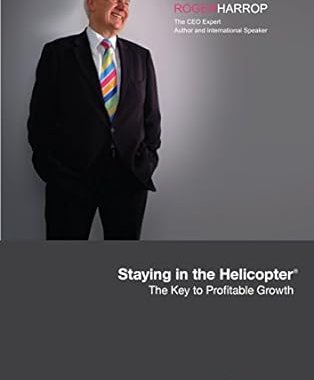
Book Summary: “Staying in the Helicopter: The Key to Sustained Strategic Success” by Richard Harrop

“Staying in the Helicopter: The Key to Sustained Strategic Success” by Richard Harrop is a business leadership book that emphasises the importance of maintaining a strategic, high-level perspective to achieve long-term success. Harrop uses the metaphor of “staying in the helicopter” to illustrate the necessity for leaders to rise above daily operations and view their organisation and its environment from a broader perspective.

Key themes of the book include:

  • Strategic Vision: Encourages leaders to develop and maintain a clear, long-term vision for their organisations.
  • Adaptability: Stresses the need for organisations to be flexible and adaptable in response to changing market conditions.
  • Leadership Skills: Discusses the qualities and skills necessary for effective leadership, including decision-making, communication, and the ability to inspire and motivate others.
  • Continuous Improvement: Advocates for a culture of continuous learning and improvement within organisations.
  • Balanced Perspective: Emphasises balancing short-term operational demands with long-term strategic goals.

Through practical advice, case studies, and personal anecdotes, Harrop provides insights and tools for leaders to enhance their strategic thinking and ensure sustained success in their organisations.

As a senior business leader, I highly recommend reading “Staying in the Helicopter: The Key to Sustained Strategic Success” by Richard Harrop. This book has been invaluable in helping me understand the importance of maintaining a high-level perspective while managing the complexities of daily operations. Harrop’s practical advice and compelling case studies provide the tools needed to balance immediate demands with long-term vision, ensuring sustained success and growth. This guide has enhanced my strategic thinking and enabled me to lead my organisation with greater clarity and foresight.

New Amberlight chief executive heralds a fresh emphasis on design

LONDON, May”15 — Change is afoot here at Amberlight – some very exciting changes that mean our clients will see a new, improved service from our executives, consultants and researchers.

Renier Botha is our new Chief Executive Officer, while our founder, Mark Milton, is moving to a new role as Chief Innovation Officer. Together, they will be driving Amberlight forward to add a new dimension to our services, with a new focus on design.

Amberlight has always been an experience design company but sometimes that has taken second place to our reputation as the market leader in user research. Renier is putting design back at the heart of Amberlight’s proposition.

“We want to have a deeper relationship with our clients,” Renier says. “Amberlight is renowned for having one of the finest user research teams out there. Our research suggests that not everyone realises the work of our design practice.“

“For years Amberlight has worked on design from concept to completed service, and the rigour of our user research teams ensures that our clients launch needed services that people love to use. So we’re going to be doing much more of that in the future.”

Renier joins the team from Regus PLC, the international workplace provider, where he was Global Head of Systems and Head of Professional Services. He has a reputation as an accomplished leader, with a track record of working with high-growth software companies across multiple market verticals, and brings a mix of leadership, inspiration, operational experience, technical breadth, and passion for customer care.

He is impressed by Amberlight’s history as a company with market-leading expertise in user experience research and design.

“As a technologist at heart, I am excited to see so many new opportunities and I am deeply honoured to have this opportunity to lead the Amberlight team during this important time of transformation,” he says.

“Amberlight has a long history in experience design, connecting end users with products. We are well positioned to tap into the continuous opportunities in technology innovation. The incredible talent and passion of the Amberlight team provide us with a unique opportunity to help shape the future of our clients.”

With Mark taking on the role of Chief Innovation Officer, Renier is excited about the possibilities that come from embedding change in the organisation structure.

“By concentrating on innovation and growth initiatives we are planning to expand on the strong foundation we have built over the past fifteen years,” Renier says. “We will also continue to develop industry-leading user experience research, design and product development expertise that drives our client technologies and products across a diverse set of markets to secure sustainable and profitable growth.”

Mark cofounded Amberlight in 2000 and he has spent the last few months acting as interim managing director trying to map out a new future for us, and as part of that process found Renier.

“I am proud to welcome such an experienced industry professional as Renier to lead the company as CEO.   He will be building on the strengths of the company and working with our clients to shape the future of the business.”

As the new Chief Innovation Officer, Mark will be responsible for managing the innovation process inside Amberlight. His role will be to identify strategies, business opportunities and new technologies and to develop ideas for new products and services.

He will also be developing new capabilities and architectures with partners, new business models and new industry structures to serve those opportunities.

“I’m excited to be able to focus on the area in which I can make the most significant contribution.

“Working with Renier means that I can focus exclusively on our future with and help ensure that the business is agile in responding to the needs of a developing market.”

Amberlight strengthens with new appointments to senior management team


May’15 – Amberlight today announces several high-level changes to its board and senior management team.

Renier Botha is appointed as Chief Executive Officer, while co-founder Mark Milton is taking on the role of Chief Innovation Officer.

They take up their positions with immediate effect.

Renier joins the team from Regus PLC where he was Global Head of Systems and Head of Professional Services. Renier is an accomplished leader, with a track record of working with high-growth software companies across multiple market verticals. He brings a great mix of leadership, inspiration, operational experience, technical breadth, and passion for customer care. He will be responsible for working with the team to deliver against the company strategy.

Mark Milton, the company Chairman, moves from interim MD to take a permanent executive role as Chief Innovation Officer where he will lead the innovation process. His role will be to identify strategies, business opportunities and new technologies and develop new capabilities and architectures with partners and new business models to serve those opportunities.

Renier Botha said: “As a technologist at heart, I am excited to see so many new opportunities and I am deeply honoured to have this opportunity to lead the Amberlight team during this important time of transformation.

Amberlight has a long history in experience design, creating needed services that people love to use. We are well positioned to tap into the continuous opportunities in technology innovation and have a unique opportunity to help shape the future of our clients. 

“Amberlight has a deep experience in product design, connecting end users with products. We are well positioned to tap into the continuous opportunities in technology innovation. 

“By concentrating on innovation and growth initiatives we are planning to expand on the strong foundation we have built over the past fifteen years. 

“We will also continue to develop industry-leading user experience research, design and product development expertise that drives our client technologies and products across a diverse set of markets to secure sustainable and profitable growth. 

“I look forward to work with the newly appointed leadership and every member of the Amberlight team.”

Mark Milton said: “I am proud to welcome such an experienced industry professional as Renier to lead the company as CEO.   He will be building on the strengths of the company and working with our clients to shape the future of the business.”

“I’m excited to be able to focus on the area in which I can make the most significant contribution. 

“Working with Renier means that I can focus exclusively on our future and with help ensure that the business is agile in responding to the needs of a developing market.”

Case Study: IT Transformation and Operational Excellence at Regus

Background:

Regus, a global leader in providing flexible workspaces and business solutions, faced the challenge of enhancing its IT systems and professional services to meet the growing demands of a dynamic market. To address this, Regus appointed Renier Botha from renierbotha Ltd, as the Global Head of Systems and Professional Services on a contractual basis. Renier’s objective was to lead the IT Systems and Professional Services teams, ensuring the delivery of a comprehensive portfolio of IT programmes and projects, and maintaining high availability of operational IT systems across 25 countries.

Challenges:

  1. Diverse Geographical Presence: Regus operated in 25 countries, each with unique IT needs and challenges, requiring a cohesive global strategy.
  2. Legacy Systems: Outdated legacy systems led to technical debt, hindering operational efficiency and scalability.
  3. Operational Costs: High operational costs required optimisation without compromising service quality.

Solution:

Renier Botha, with his expertise, initiated a transformative approach focusing on efficient IT service delivery, cost optimisation, and integration of modern technologies.

Achievements:

  1. Strategic Leadership: Renier led a team of 105 multi-disciplined technologists across 25 countries. His strategic vision and effective team management ensured streamlined operations and standardised services globally.
  2. IT Department Transformation: Renier developed a comprehensive IT Department transformation plan. By modelling technology requirements into a service delivery framework, the plan accomplished an annual operational saving of £3.6m. This was achieved through process optimisation, resource reallocation, and leveraging cost-effective technologies.
  3. Oracle Sales Cloud Deployment: Renier successfully programme managed the deployment of Oracle Sales Cloud, a £7m initiative covering 32 projects and workstreams. This integration of Enterprise Resource Planning (ERP) and Customer Relations Management (CRM) solutions replaced legacy systems, reducing technical debt and improving operational agility.

Results:

  1. Operational Efficiency: The implementation of the IT transformation plan significantly enhanced operational efficiency. Standardised processes and optimised resource allocation led to streamlined operations, reducing costs and improving productivity.
  2. Modernised IT Infrastructure: The deployment of Oracle Sales Cloud and integration of ERP and CRM solutions modernised Regus’ IT infrastructure. This enhanced system performance, scalability, and flexibility, enabling Regus to adapt swiftly to market changes and customer demands.
  3. Cost Optimisation: Through strategic planning and efficient resource allocation, Renier achieved an annual operational saving of £3.6m. These savings were reinvested into innovation and further enhancing customer experience, ensuring long-term sustainability.

Conclusion:

Renier Botha’s tenure as the Global Head of Systems and Professional Services at Regus exemplifies how strategic leadership, meticulous planning, and effective team management can drive transformative change within a global organisation. By optimising operational efficiency, integrating modern technologies, and achieving significant cost savings, Renier not only enhanced Regus’ IT capabilities but also positioned the company for sustained growth in a competitive market. His achievements stand as a testament to the impact of visionary leadership on organisational success and operational excellence.

For High Performing Teams, CIOs must Lead by Character

Guest Blog: Doug Moran via Heller Search Associates

As CIO, you can lead with character, by knowing what are your values and what you believe.

Character is the attribute we ascribe to people whose lives and actions reflect their beliefs and values.  Strong character requires emotional maturity and self-confidence.  But leading with character goes beyond simply havingcharacter.  Our ability to lead is in large part based on our ability to trust ourselves and  instill trust in others.  Those we lead want and need to trust us.  And to trust us, they must know us.  That means allowing them to get close.  It means sharing and exposing our beliefs and values.

Leading with character can be uncomfortable.  We are in essence giving others insight into who we truly are.  Leading with character also means exposing ourselves to criticism and doubt, especially when our actions diverge (or appear to diverge) from our stated values.

The Part Character Plays in the CIO Role

Character has special importance for CIOs and other IT leaders.  This has nothing to do with moral superiority.  It is simply a function of the unique perspective our roles provide.  Because technology is a critical enabler connecting and touching every part of the enterprise, we have the ability to see how the groups or functions interact and interrelate.  We can see what works well and where challenges exist.  We can see the unintended consequences of actions and the knock-on value that no one anticipated.

“Strong character forms a strong leadership foundation.  It gives us the confidence to do what is right regardless of the doubts and complaints of others..”


Connecting Character to Great Leadership

Our unique perspective is an invaluable resource.  Unfortunately, we often fail to exploit it fully.  The problem is that most of us fail to see how important our character is.  We fail to see the connection between our beliefs and values and the service we provide.  Great leaders, however, see the connection.  They recognize that their character enables them to guide and propel their organizations into the future.

Although I’ve spent nearly 20 years working in IT, my greatest challenges have rarely been technical.  My biggest obstacles to overcome have been organizational complexities or dysfunctions.   These challenges provide CIOs many opportunities to develop their ability to lead with character.

CIOs play a key role in the softer side of business.  We are key contributors to things like defining and promoting corporate culture and organizational identity.   The character of an organization is often a reflection of its leaders’ beliefs and values.  As we provide solutions that cut across the enterprise and connect different parts of the organization together, we can often see things as they really are.  We observe the behaviors that reinforce or undermine the organization’s values.  For example, an organization may place a premium on collaboration and honesty.  Do our business partners look for ways to share resources or collaborate when they acquire new capabilities?  Does our reward and compensation system promote or discourage this type of behavior?  Our perspective enables us to see the interactions that either reflect a particular value or run counter to that value.

Why Character Matters in IT Leadership

It is easy to see the role character plays in the softer side of business.  What about the more objective functions?  How does character contribute to things like strategic planning, R&D, technology innovation, project prioritization, capacity planning, vendor/product selection, and the myriad other tasks for which we are accountable?  Character matters for these things, because our values determine what and how things are done.  For example, we all strive for objectivity and intellectual rigor in our decision-making processes.  Look at how business cases are evaluated and priorities are set.  How often do sponsors “game” the system to get their project done?  Does the CEO’s pet project that has questionable value make the cut because no one is willing to ask the hard questions?  How can you influence those processes to ensure that they remain objective and analytically sound?

Ultimately, we can use our position and visibility to understand and change fundamentally how our organizations operate and behave.  We can encourage positive behavior while identifying and correcting problems.  The challenge for us is to overcome our trepidation about the personal (and often polarizing) aspects of character.  It is important to find balance in how we express our values and beliefs.  At one extreme, we can come across as self-righteous.  At the other, we seem irresolute.

Strong character comes from knowing oneself.  Self-knowledge gives us the confidence to trust ourselves.  The more we demonstrate the strength of our character – by ensuring that our words and deeds are consistent with our beliefs and values – the stronger that trust grows.  Strong character forms a strong leadership foundation.  It gives us the confidence to do what is right regardless of the doubts and complaints of others.

How do we build and demonstrate a strong character?  Here are five steps that one can take to begin the process.

  1. Decide that character matters.  The simple act of making character important will raise your awareness of whether your actions are harmonious with your beliefs.
  2. Take time to inventory and examine your beliefs and values.  Your beliefs and values are your character’s foundation.  The process of fully understanding them is unending, so get started now!  While you are at it, take a look at your organization’s beliefs and values.  Examine the character of other leaders around you. Are your beliefs and values aligned?
  3. Share your beliefs and values.  Leading with character means being open and explicit about what truly matters.  This means talking about your personal beliefs, your organization’s beliefs and what they mean to you.
  4. Test your actions and decisions. Critical self-examination will help us maintain alignment between our actions and our beliefs and values.
  5. Have the character to act on your self-examination.  It takes character to stay the course when all doubt you.  It also takes character to change your position, especially one that you hold dear.  Leadership demands that we be able to do both as the situation dictates.

Character builds our self-confidence and trust.  It allows us to trust ourselves and others.  Being a leader often means taking unpopular positions.  It means making difficult decisions.  Our positions and decisions may cause others to doubt us.  At times, we may even share their doubt.  When our actions are based on who we are and what we believe, we will have the strength of character to endure these doubts.  Success in the face of doubt depends on our ability to remain true to our principles and beliefs.  Failures will occur, and we will make mistakes.  Character is not about perfection.  It is about striving to seek the wisdom to know what is right and having the conviction to do it regardless of the opinion of others.