

Introduction
Product Operations, often referred to as Product Ops, is a relatively new yet increasingly vital role within technology companies, particularly those experiencing rapid growth. While operations functions like Sales Operations (Sales Ops) and Marketing Operations (Marketing Ops) have been well-established for years, Product Ops is just beginning to gain traction. However, for companies scaling their operations, the presence of a dedicated Product Ops team can be the difference between seamless expansion and significant operational challenges.
This comprehensive guide delves into the role of Product Ops, its importance within an organization, how it functions, and why it is becoming indispensable. We will also explore the different models of Product Ops, its core responsibilities, and how to get started with implementing this function in your organization.
Understanding Product Operations
At its core, Product Ops is the intersection of Product Management, Engineering, and Customer Success. It acts as a bridge, ensuring that these departments are aligned and working together efficiently to support the Research and Development (R&D) team as well as the go-to-market strategies. The role of Product Ops involves streamlining communication, refining processes, and fostering better alignment during the entire product lifecycle—from development to launch and subsequent iterations.
However, the definition and responsibilities of Product Ops can vary significantly depending on the organization. This variation is largely due to the novelty of the role and the specific needs of different teams and businesses. Despite these differences, there are three primary models of Product Ops that have emerged:
- Outcomes-driven Model: In this model, Product Ops focuses on gathering insights and scoping out business needs at the very beginning of the product development process. This often involves going out into the field, talking to users, and understanding their needs. Product Ops plays a critical role in launch execution, working closely with operations counterparts globally to ensure that the go-to-market strategy is effective. Uber is a prime example of a company that uses an outcomes-driven approach in its Product Ops function.
- Efficiency-focused Model: Here, the primary objective of Product Ops is to deliver more value to users more quickly. This model emphasizes strengthening product feedback loops, operationalizing products, and scaling product knowledge across the organization. Stripe employs this efficiency-focused model, where Product Ops ensures that the product delivers maximum value at the fastest pace possible.
- Customer-centric Model: In this model, Product Ops is heavily involved in the customer experience, providing insights that span the entire customer journey through the lens of the product. Theresa Baker’s role at Comcast exemplifies this approach, where Product Ops focuses on understanding and enhancing the end-to-end customer experience for their Digital Home product.
Where Does Product Ops Fit in an Organization?
Product Ops is typically embedded within the Product Management team or positioned in an adjacent function that reports directly to the Head of Product. The role serves as a shared resource across the product management organization, driving initiatives that enhance product efficiency, effectiveness, and alignment with broader business objectives.
The Dual Nature of Product Ops: Role and Skillset
Product Ops is not just a job title; it’s also a critical skill set that can benefit any product professional. Some organizations view Product Ops as a specific role that needs to be filled, while others see it as a capability that should be developed across the entire product team. Ideally, product-led organizations should have a designated Product Ops leader, but they should also encourage all product team members to cultivate an operational mindset.
The demand for Product Ops professionals is on the rise. A search on LinkedIn reveals nearly 5,700 users with the title “Product Operations,” an 8% increase in the last year alone. Even more striking is the 80% year-over-year increase in LinkedIn users listing Product Operations as a skill. This surge indicates that while the role is still evolving, its importance is being increasingly recognized across the industry.
The Growing Importance of Product Ops
Several key factors contribute to the rising prominence of Product Ops:
- Heightened Customer Expectations: Today’s customers demand seamless, personalized experiences. Product Ops ensures that the product meets these expectations by optimizing the development process and enhancing the customer experience from trial and purchase through onboarding, expansion, and referrals.
- The Proliferation of Operations Roles: The success of other operational roles, such as Sales Ops and Marketing Ops, has paved the way for Product Ops. As companies recognize the value of operations in driving efficiency and effectiveness, they are beginning to apply these principles to product development.
- Availability of Product Usage Data: The explosion of data has made it essential for organizations to have dedicated roles focused on analyzing and acting on this information. Product Ops plays a crucial role in turning product usage data into actionable insights that inform decision-making.
- Product-Led Growth: Companies that adopt a product-led growth strategy—where the product itself is the primary driver of customer acquisition, retention, and expansion—tend to outperform their peers. These companies are more likely to employ a Product Ops leader or even an entire team to ensure that their product development and go-to-market strategies are optimized for success.
Core Responsibilities of Product Ops
The responsibilities of Product Ops can be broadly categorized into five key areas:
- Tools Management: Product Ops is responsible for managing the product team’s tech stack, including tool selection, integration, and maintenance. This role involves overseeing relationships with vendors and ensuring that the tools are used effectively across the organization. Product Ops also establishes best practices for tool usage, ensuring that the team operates efficiently and effectively.
- Data Management and Analysis: With the proliferation of tools comes an increase in available data. Product Ops ensures that this data is clean, organized, and easily accessible, providing a strong foundation for data-driven decision-making. Product Ops plays a critical role in collecting, analyzing, and synthesizing data from multiple sources to inform product strategy and improve product outcomes. This includes reconciling usage data with customer feedback, performing data analysis, and providing insights to necessary stakeholders.
- Experimentation: One of the key benefits of having a dedicated Product Ops role is the ability to run more experiments with less friction. Product Ops tracks all active experiments, ensuring they do not overlap or interfere with each other. This role also streamlines the sequencing and implementation of experiments, establishing workflows, documentation, and segmentation of user populations to ensure clean and accurate data collection.
- Strategy and Cross-Team Collaboration: Product Ops acts as a strategic partner to teams across the organization, driving collaboration around product initiatives. This role involves aligning with teams like Revenue Operations (RevOps), Development Operations (DevOps), Customer Success, Marketing, and Sales to ensure that product data informs broader business decisions. Product Ops also scales product knowledge across the organization, acting as a central resource for product information, new learnings, and roadmap updates.
- Trusted Advisor to Leadership: As companies scale, the need for informed decision-making becomes critical. Product Ops serves as a trusted advisor to Chief Product Officers (CPOs), VPs of Product, and other R&D leaders, providing data-driven insights that guide strategic decisions. This role involves advising on the product roadmap, supplying product health data to the executive team, and ensuring that product decisions align with overall business objectives.
The Impact of Product Ops on the Organization
The introduction of a Product Ops function can significantly impact the organization in several ways:
- Shifts in Ownership: Product Ops takes on many of the administrative and organizational tasks that Product Managers previously handled, allowing them to focus more on product strategy and development. This shift includes gathering and organizing data, running experimentation processes, collecting customer feedback, and training and enabling other teams.
- Improved Cross-Team Communication: By serving as the product expert for other teams, Product Ops establishes clearer communication channels and ensures that everyone knows where to find the information they need. This improves communication around the product and enhances collaboration across the organization.
- Increased Efficiency: Better communication leads to greater efficiency. When teams have access to the right information at the right time, they can make decisions more quickly and effectively. Additionally, by relieving Product Managers of operational tasks, Product Ops enables them to build and release products faster.
- Connecting Product to the Bottom Line: Product Ops helps organizations connect product decisions with their overall business strategy, driving key business objectives and positively impacting the bottom line. For example, at Comcast, the Product Ops team helps identify product enhancements that reduce support calls or technician visits, leading to operational savings.
The Future of Product Ops
As more companies adopt data-driven approaches and recognize the value of product-led growth, the role of Product Ops is expected to continue evolving and growing in importance. The future of Product Ops may involve the merging of different analytical and operational functions, creating a more comprehensive product operations team.
Industry experts predict that the number of tools available for Product Ops will increase, mirroring the maturity of tools in Sales Ops. Additionally, the role may become more strategic, with Product Ops leaders acting as mini Chief Operating Officers (COOs) within product teams.
Getting Started with Product Ops
For organizations looking to implement a Product Ops function, the best approach is to start small and demonstrate results. Begin by identifying a few key areas where Product Ops can add value, such as managing the tech stack, improving data quality, or streamlining experimentation processes. As the function proves its worth, it can be scaled to take on additional responsibilities.
It’s also important to hire or develop the right talent for Product Ops. Successful Product Ops professionals are analytical, comfortable with systems, collaborative, great communicators, entrepreneurial, and have strong business acumen. They should also have a solid understanding of product management and leadership skills, even if they do not have direct reports.
Conclusion
Product Ops is an emerging function that is quickly becoming a cornerstone of successful product-led organizations. As technology companies scale, the need for a dedicated function to manage the complexities of product development, data analysis, and cross-team collaboration becomes increasingly apparent. Product Ops fills this gap, providing the necessary infrastructure to ensure that products are developed efficiently, aligned with customer needs, and contribute to the overall business strategy.
The Long-Term Vision for Product Ops
Looking ahead, the evolution of Product Ops will likely involve deeper integration with other operational roles and a more pronounced influence on strategic decision-making within organizations. Here are some key trends and developments that could shape the future of Product Ops:
- Greater Emphasis on Data-Driven Decision Making: As companies continue to accumulate vast amounts of data, the role of Product Ops in synthesizing this information into actionable insights will become even more critical. This will likely lead to the development of more sophisticated data tools and methodologies, enabling Product Ops teams to provide even more granular and impactful recommendations.
- Integration with Emerging Technologies: The rise of artificial intelligence (AI) and machine learning (ML) will offer new opportunities for Product Ops to enhance their data analysis capabilities. By leveraging AI and ML, Product Ops can automate routine tasks, identify patterns and trends that may not be immediately apparent, and make more accurate predictions about product performance and customer behavior.
- Expansion of the Product Ops Skill Set: As the role of Product Ops expands, so too will the skill set required to succeed in this field. Future Product Ops professionals will need to be well-versed not only in data analysis and product management but also in emerging technologies, customer experience strategies, and advanced project management techniques.
- Cross-Functional Leadership: Product Ops is poised to become a key player in cross-functional leadership, bridging the gap between product teams and other departments such as marketing, sales, and customer success. As the role becomes more strategic, Product Ops leaders may find themselves involved in broader organizational decisions, influencing everything from go-to-market strategies to company-wide operational efficiencies.
- Product Ops as a Strategic Partner: The evolution of Product Ops into a strategic partner means that this function will not only support product development but also shape the direction of the company’s growth. This shift will require Product Ops teams to develop a deep understanding of the business landscape, competitive dynamics, and customer expectations, allowing them to contribute to high-level strategic planning.
- Educational and Professional Development Opportunities: As the importance of Product Ops continues to grow, educational institutions and professional organizations are likely to develop specialized programs and certifications to prepare the next generation of Product Ops leaders. These programs could cover a wide range of topics, from data science and analytics to product strategy and customer experience management.
Getting Started: Building Your Product Ops Function
For organizations considering the implementation of a Product Ops function, here are some practical steps to get started:
- Assess Your Current Needs: Begin by evaluating where your current product processes are experiencing friction or inefficiencies. Identify areas where improved alignment, data analysis, or process optimization could have the most significant impact. This assessment will help you determine the specific responsibilities and focus areas for your Product Ops team.
- Define the Scope and Structure: Based on your needs assessment, define the scope of your Product Ops function. Will it primarily focus on data management, experimentation, or cross-team collaboration? Consider the structure of the team—will it be a small, centralized group, or will Product Ops professionals be embedded within different product teams?
- Start Small and Scale: Start by implementing Product Ops on a small scale, focusing on one or two key areas where you can quickly demonstrate value. As the function proves its worth, you can expand the team’s responsibilities and scale the function across the organization.
- Hire or Develop the Right Talent: Look for individuals who possess the core skills needed for Product Ops: strong analytical abilities, comfort with systems, excellent communication skills, and a collaborative mindset. Consider providing training or professional development opportunities to help your team members grow into their roles.
- Establish Clear Processes and Best Practices: Develop clear processes and best practices for the Product Ops function. This includes defining workflows for data collection and analysis, setting up tools and systems for experimentation, and creating communication channels between Product Ops and other departments.
- Measure and Iterate: Continuously measure the impact of your Product Ops function and be prepared to iterate on your approach. Use key performance indicators (KPIs) such as product delivery predictability, feature adoption rates, and customer satisfaction scores to assess the effectiveness of Product Ops and make data-driven adjustments as needed.
Final Thoughts
The rise of Product Ops represents a significant shift in how technology companies approach product development and operational efficiency. By centralizing and optimizing key processes, Product Ops enables organizations to build better products, respond more effectively to customer needs, and achieve sustainable growth.
As the role of Product Ops continues to evolve, it will undoubtedly become a strategic pillar within the most successful organizations. Those who invest in developing a robust Product Ops function today will be well-positioned to navigate the complexities of tomorrow’s business landscape, ensuring that their products—and their companies—thrive in an increasingly competitive market.
Whether you are just starting to explore Product Ops or looking to refine an existing function, this guide provides the foundational knowledge and actionable insights needed to succeed. Embrace the potential of Product Ops, and watch as it transforms your product team into a powerhouse of efficiency, innovation, and customer satisfaction.
Join the Product Ops Revolution
Ready to elevate your product operations to the next level? Explore the Radical Product Thinking: Vision Setting course today, or request a demo to see how we can help your team achieve operational excellence. Together, we can build great products and drive transformative success in the digital era.


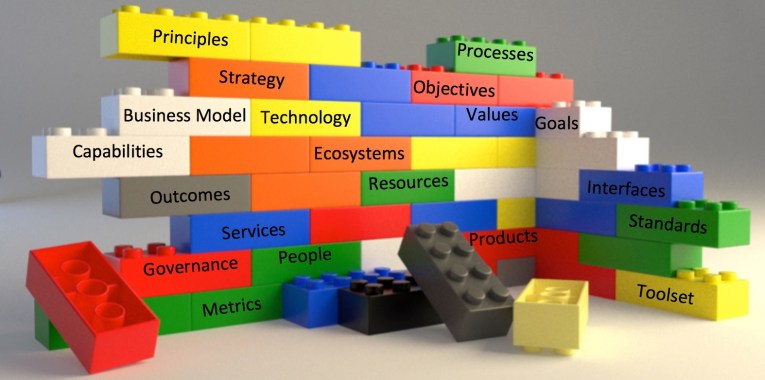
 to easily produce new business outcomes without having to deal with the complexities which are already defined within the individual building blocks – just like a Lego set using the same set of standardised and pre-defined blocks to build completely different things. The focus is on re-using the blocks and not on the design of the blocks itself. Off course a lot of thinking has gone into the design of the different building blocks, but through re-using the same block designs, the model design time is focussed on a new/different outcome and not on a component of an outcome.
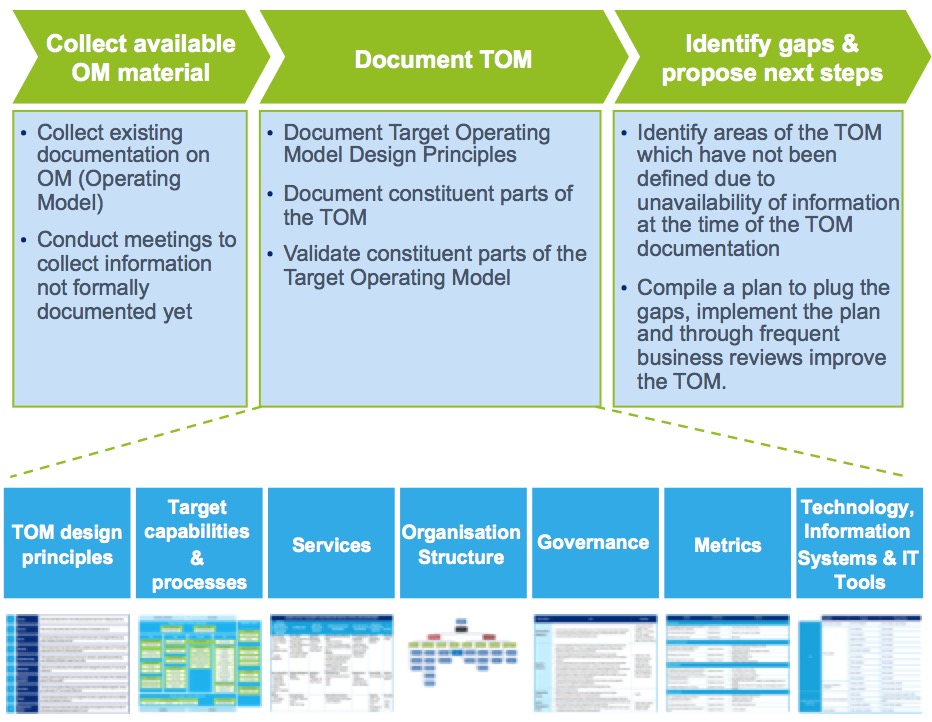

 renierbotha ltd