Beyond Welcomes Renier Botha as Group Chief Technology Officer to Drive Innovation and Transformative Solutions in Data Analytics

We’re delighted to announce that we welcome Renier Botha MBCS CITP MIoD to the group as #cto.

His strategic vision and leadership will enhance our technological capabilities, fostering #innovation and enabling us to further push the boundaries of what is possible in the world of #dataanalytics. His track record of delivering #transformative technological solutions will be instrumental in driving our mission to help clients maximise the value of their #data assets.

Renier has over 30 years of experience, mostly recently as a management consultant working with organisations to optimise their technology. Prior to this he was CTO at a number of businesses including Collinson Technology Service and Customer First Solutions (CFS). He is renowned for his ability to lead cross-functional teams, shape technology strategy, and execute on bold initiatives. 

On his appointment, Renier said: “I am delighted to join Beyond and be part of a group that is known for its innovation. Over the course of my career, I have been committed to driving the technological agenda and I look forward to working with likeminded people in order to further unlock the power of data.”

Paul Alexander adds :” Renier’s extensive experience in technology, marketing and data analytics aligns perfectly with our business. His technological leadership will be pivotal in developing groundbreaking solutions that our clients need to thrive in today’s data-driven, technologically charged world.”

Case Study: Renier Botha’s Leadership in Rivus’ Digital Strategy Implementation

Introduction

Rivus Fleet Solutions, a leading provider of fleet management services, embarked on a significant digital transformation to enhance its operational efficiencies and customer services. Renier Botha, a seasoned IT executive, played a crucial role in this transformation, focusing on three major areas: upgrading key database infrastructure, leading innovative product development, and managing critical transition projects. This case study explores how Botha’s efforts have propelled Rivus towards a more digital future.

Background

Renier Botha, known for his expertise in digital strategy and IT management, took on the challenge of steering Rivus through multiple complex digital initiatives. The scope of his work covered:

  1. Migration of Oracle 19c enterprise database,
  2. Development of a cross-platform mobile application, and
  3. Management of the service transition project with BT & Openreach.

Oracle 19c Enterprise Upgrade Migration

Objective: Upgrade the core database systems to Oracle 19c to ensure enhanced performance, improved security, and extended support.

Approach:
Botha employed a robust programme management approach to handle the complexities of upgrading the enterprise-wide database system. This involved:

  • Detailed planning and risk management to mitigate potential downtime,
  • Coordination with internal IT teams and external Oracle consultants,
  • Comprehensive testing phases to ensure system compatibility and performance stability.

Outcome:
The successful migration to Oracle 19c provided Rivus with a more robust and secure database environment, enabling better data management and scalability options for future needs. This foundational upgrade was crucial for supporting other digital initiatives within the company.

Cross-Platform Mobile Application Development

Objective: Develop a mobile application to facilitate seamless digital interaction between Rivus and its customers, enhancing service accessibility and efficiency.

Approach:
Botha led the product development team through:

  • Identifying key user requirements by engaging with stakeholders,
  • Adopting agile methodologies for rapid and iterative development,
  • Ensuring cross-platform compatibility to maximise user reach.

Outcome:
The new mobile application promissed to significantly transformed how customers interacted with Rivus, providing them with the ability to manage fleet services directly from their devices. This not only improved customer satisfaction but also streamlined Rivus’ operational processes.

BT & Openreach Exit Project Management

Objective: Manage the transition of fleet technology services of BT & Openreach ensuring minimal service disruption.

Approach:
This project was complex, involving intricate service agreements and technical dependencies. Botha’s strategy included:

  • Detailed project planning and timeline management,
  • Negotiations and coordination with multiple stakeholders from BT, Openreach, and internal teams,
  • Focusing on knowledge transfer and system integrations.

Outcome:
The project was completed efficiently, allowing Rivus to transition control of critical services succesfully and without business disruption.

Conclusion

Renier Botha’s strategic leadership in these projects has been pivotal for Rivus. By effectively managing the Oracle 19c upgrade, he laid a solid technological foundation. The development of the cross-platform mobile app under his guidance directly contributed to improved customer engagement and operational efficiency. Finally, his adept handling of the BT & Openreach transition solidified Rivus’ operational independence. Collectively, these achievements represent a significant step forward in Rivus’ digital strategy, demonstrating Botha’s profound impact on the company’s technological advancement.

Case Study: Renier Botha’s Transformational Work at BCA and Constellation Automotive Group

Overview

Renier Botha’s tenure at BCA (British Car Auctions), part of the Constellation Automotive Group, highlights his strategic and operational expertise in leveraging technology to enhance business functions. His initiatives have significantly influenced BCA’s financial and operational landscapes, aligning them with modern e-commerce and compliance frameworks.

Project Objectives

The overarching goal of Botha’s projects at BCA was to enable the financial teams with innovative and integrated cloud-based tools that automate and streamline financial operations and e-commerce. Key objectives included:

  • Enhancing expense management through cloud platforms.
  • Integrating diverse IT estates into a unified service offering.
  • Ensuring compliance with new tax legislation.
  • Streamlining vehicle documentation processes.
  • Improving operational efficiency through technology alignment.

Key Projects and Achievements

1. Deployment of Chrome River Expense Management

Botha managed the enterprise-wide deployment of the Chrome River Expense Management cloud platform. This initiative provided BCA’s financial teams with advanced tools to automate expense reporting and approvals, thereby reducing manual interventions and enhancing operational efficiency.

2. System Integration Strategy with MuleSoft

Under Botha’s guidance, BCA adopted MuleSoft as their API management, automation, and integration toolset. This critical move facilitated the integration of previously disconnected IT estates, creating a cohesive and efficient environment that supported robust service delivery across the organisation.

3. Making Tax Digital Project

Botha played a pivotal role in managing the delivery of the Making Tax Digital project, a key legislative requirement. His leadership ensured that BCA’s systems were fully compliant with new tax regulations, thereby avoiding potential legal and financial repercussions.

4. Vehicle Life Cycle Services Dashboard Project

Another significant achievement was the delivery of the Vehicle Life Cycle Services Dashboard replacement project. This was part of the preparation for an extensive ERP migration aimed at modernising the core operational systems.

5. Integration with VW Financial Services

Botha successfully implemented the integration of VW Financial Services and BCA finance estates. This project enabled the secure automation of vehicle documentation exchanges, which is crucial for maintaining data integrity and streamlining vehicle sales processes.

6. Portfolio Management Office Development

Finally, Botha supported the growth and maturity of BCA’s Portfolio Management Office. He introduced new working practices that aligned technology delivery with business operations, optimising efficiency and effectiveness across projects.

Impact and Outcomes

The initiatives led by Botha have transformed BCA’s financial and operational frameworks. Key impacts include:

  • Increased Operational Efficiency: Automated systems reduced manual workload, allowing staff to focus on more strategic tasks.
  • Enhanced Compliance and Security: Projects like Making Tax Digital and the integration with VW Financial Services ensured that BCA stayed compliant with legislative mandates and enhanced data security.
  • Improved Decision-Making: The new systems and integrations provided BCA’s management with real-time data and analytics, supporting better decision-making processes.

Conclusion

Renier Botha’s strategic vision and execution at BCA have significantly boosted the company’s technological capabilities, aligning them with modern business practices and legislative requirements. His work not only streamlined operations but also set a foundation for future innovations and improvements, demonstrating the critical role of integrated technology solutions in today’s automotive and financial sectors.

Case Study: Renier Botha’s Leadership in the Winning NHS Professionals Tender Bid for Beyond

Introduction

Renier Botha, a seasoned technology leader, spearheaded Beyond’s successful response to a Request for Proposal (RFP) from NHS Professionals (NHSP) for outsourced data services. This case study examines the strategic approaches, leadership, and technical expertise employed by Botha and his team in securing this critical project.

Context and Challenge

NHSP sought to outsource its data engineering services to enhance data science and reporting capabilities. The challenge was multifaceted, requiring a deep understanding of NHSP’s current data operations, stringent data governance and GDPR compliance, and the integration of advanced cloud technologies.

Strategy and Implementation

1. Stakeholder Engagement:
Botha led the initial stages by conducting key stakeholder interviews and meetings to gauge the current state and expectations. This hands-on approach ensured alignment between NHSP’s needs and Beyond’s proposal.

2. Gap Analysis:
By understanding the existing Data Engineering function, Botha identified inefficiencies and gaps. His team offered strategic recommendations for process improvements, directly addressing NHSP’s operational challenges.

3. Infrastructure Assessment:
Botha’s review of the current data processing systems uncovered dependencies that could impact future scalability and integration. This was crucial for designing a solution that was not only compliant with current standards but also adaptable to future technological advancements.

4. Data Governance Review:
Given the critical importance of data security in healthcare, Botha prioritised a thorough review of data governance practices, ensuring all proposed solutions were GDPR compliant.

5. Future State Architecture:
Utilising cloud technologies, Botha proposed a high-level architecture and design for NHSP’s future data estate. This included a blend of strategic and BAU tasks aimed at transforming NHSP’s data handling capabilities.

6. Team and Service Delivery Design:
Botha defined the composition of the Data Engineering team necessary to deliver on NHSP’s objectives. This included detailed job descriptions and a clear division of responsibilities, ensuring a match between team capabilities and service delivery goals.

7. KPIs and Service Levels:
Critical to the project’s success was the definition of KPIs and proposed service levels. Botha’s strategic vision included measurable outcomes to track progress and ensure accountability.

8. RFP Response and Roadmap:
Botha’s provided a detailed response to the RFP, outlining a clear and actionable data engineering roadmap for the first two years of service, broken down into six-month intervals. This detailed planning demonstrated a strong understanding of NHSP’s needs and showcased Beyond’s commitment to service excellence.

9. Technical Support:
Beyond also supported NHSP with system architecture queries, ensuring that all technical aspects were addressed comprehensively.

Results and Impact

Under Botha’s leadership, Beyond won the NHSP contract by effectively demonstrating a profound understanding of the project requirements and crafting a tailored, forward-thinking solution. The strategic approach not only aligned with NHSP’s operational goals but also positioned them for future scalability and innovation.

Conclusion

Botha’s expertise in data engineering and project management was pivotal in Beyond’s success. By meticulously planning and executing each phase of the RFP response, he not only led his team to a significant business win but also contributed to the advancement of data management practices within NHSP. This project serves as a benchmark in effective stakeholder management, strategic planning, and technical execution in the field of data engineering services.

Case Study: Driving Transformation and Innovation at Shawbrook Bank

Background:
Shawbrook Bank, a specialised savings and lending institution, faced the challenge of enhancing its service delivery, operational efficiency, and fostering a culture of innovation. In late 2019, Renier Botha, the Head of Delivery and Innovation (Central Functions), took charge to lead the bank’s central functions, including Risk & Regulatory, Compliance, Finance, Human Resources, Procurement, Cyber Security, and IT Infrastructure, towards achieving annual growth and service delivery targets.

Challenge:
Renier Botha was tasked with initiating and sustaining strategic changes across various departments. The objective was not just to meet the annual growth and service delivery targets but also to establish a culture of innovation and excellence within the bank.

Solution:
1. Strategic Change Leadership:
Renier Botha played a pivotal role in overseeing a £5.5m Central Functions strategic & continuous change portfolio. Under his guidance, 16 programmes, projects, and continuous change workstreams were executed, resulting in a 10.1% saving against the budget.

2. Talent Empowerment:
Botha’s key initiative involved building a highly skilled and customer-focused core change team. By empowering the team and ensuring knowledge retention, Shawbrook Bank could rely on a group of experts capable of driving change and innovation forward.

3. Vendor Management and Partnerships:
Effective negotiation of commercial and Service Level Agreements (SLAs) ensured strong relationships with vendors and flexible resource partners. This approach guaranteed specialised service delivery and viable solutions for the bank’s diverse needs.

4. Innovation and Automation:
The establishment of the Change Portfolio Management Office (PMO), under Renier Botha’s leadership, marked a significant milestone. Skilled staff, mentored by Botha, collected key performance metrics to produce real-time Management Information (MI). Automation and data-driven insights facilitated proactive governance, setting new standards for efficiency and decision-making.

5. Mentorship and Coaching:
Renier Botha took on the responsibility of coaching and mentoring technology and project management staff. This personalised approach not only helped individuals achieve their career objectives but also aligned their goals with the broader business strategy.

Results:

  • Operational Efficiency: Streamlining processes and embracing automation led to a substantial increase in operational efficiency. Issues that previously took over 30 days to resolve were now tackled within 2 days, ensuring uninterrupted services.
  • Innovation Culture: The bank’s culture shifted towards innovation, with the establishment of the Testing Capability initiative being a testament to this. By reducing regression testing efforts by 95%, continuous delivery became a reality, fostering a culture of innovation and rapid adaptation.
  • Recognition and Acclaim: Shawbrook Bank’s transformation efforts, especially the successful Ambit Enterprise upgrade, received accolades from the board, positioning the bank as a leader in managed delivery practices.

Conclusion:
Under the leadership of Renier Botha, the Head of Delivery and Innovation, Shawbrook Bank successfully reshaped its central functions. By embracing change and cultivating a culture of excellence and innovation, Shawbrook Bank not only met its growth and service delivery targets but also set new industry standards, positioning itself as a beacon of success and innovation in the competitive financial sector. Renier Botha’s strategic vision and hands-on leadership were instrumental in this transformative journey, making Shawbrook Bank a leader in the ever-evolving landscape of banking and finance.

Case Study: Transformational Leadership at Shawbrook Bank – Establishing the Tech-Hub in Glasgow

Programme Director (Contractor): Renier Botha

Objective:
Renier Botha, Principal Consultant and Director at renierbotha Ltd in his role as Programme Director at Shawbrook Bank from August 2018 to September 2019, was tasked with establishing the Tech-Hub in Glasgow as a centre of excellence. His objective was to introduce innovative new standards and agile-driven governance to project and service delivery teams within the Business Finance division.

Assignments & Achievements:

1. Tech-Hub Maturity Transformation Programme:
Renier Botha led the “Tech-Hub Maturity Transformation” Programme, implementing a new Target Operating Model (TOM) in Glasgow. Through innovative ways of working, delivery targets were achieved approximately 9% more efficiently. Notably, support issue resolution time was drastically reduced from over 30 days to fewer than 2 days.

2. Establishment of Business Finance PMO:
He established the Business Finance Portfolio Management Office (PMO) from the ground up. Renier developed portfolio governance processes, templates, metrics, KPIs, and real-time management information (MI). This approach facilitated measurable improvements and set new standards for data-driven, commercially focused delivery. These practices were adopted across the entire bank.

3. Testing Capability Initiative:
Renier spearheaded an innovative initiative to create a Testing Capability for the bank. This included developing a risk-mitigating test strategy, automation framework, and associated Azure cloud development and test environments. He successfully delivered the operating model and a test-automation toolset proof of concept (POC). This initiative enabled continuous delivery (CD) and remarkably reduced regression testing efforts by 95%.

4. Ambit Enterprise Upgrade Programme:
Renier took on the challenge of managing the £1.3 million Ambit Enterprise upgrade (asset management system) across 14 business units, each with multiple product offerings. Despite the complexity, the upgrade was completed on time and under budget. This achievement earned accolades from the board, recognising it as the best-managed delivery in Shawbrook Bank.

Conclusion:

Under Renier Botha’s leadership as Programme Director, Shawbrook Bank witnessed a significant transformation within its Business Finance division. Renier’s innovative approach and strategic acumen not only established the Tech-Hub in Glasgow as a centre of excellence but also revolutionised the bank’s project and service delivery methodologies. His achievements, from efficiency improvements to groundbreaking testing capabilities, have left a lasting impact, setting new standards for excellence within Shawbrook Bank.

Ambit Enterprise Upgrade

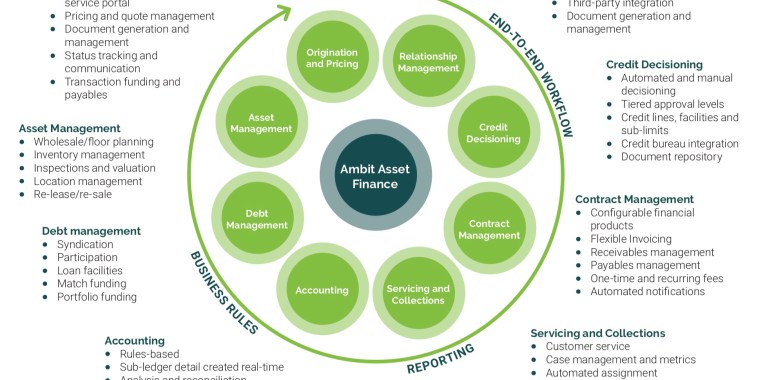
Sep ’19 – The latest version of Ambit Enterprise software have been deployed for Shawbrook Bank’s Business Finance division.
As Programme Director, Renier was responsible for managing the integration and delivery, software development and implementation of the Enterprise version of Ambit for 15 specialist asset-finance business units and their associated product offerings.
Ambit Asset Finance Software meets its customer’s diverse set of requirements by not only bringing to market scalable, flexible, and industry-leading software solutions, but delivering and supporting these applications in fully managed and hosted environments.
Read more about the FIS Asset Manage Solution – Ambit, FIS Ambit Asset Finance Solution.
#Lead #Direct #ProjectManagement #AssetFinance

Case Study: Renier Botha’s Role as Non-Executive Director at KAMOHA Tech

Introduction

In this case study, we examine the strategic contributions of Renier Botha, a Non-Executive Director (NED) at KAMOHA Tech, a company specialising in Robotic Process Automation (RPA) and IT Service Management (ITSM). Botha’s role involves guiding the company through corporate governance and product development to establish KAMOHA Tech as a standalone IT service provider.

Background of KAMOHA Tech

KAMOHA Tech operates within the rapidly evolving IT industry, focusing on RPA and ITSM solutions. These technologies are crucial for businesses looking to automate processes and enhance their IT service offerings, thereby increasing efficiency and reducing costs.

Role and Responsibilities of Renier Botha

Renier Botha joined KAMOHA Tech with a wealth of experience in IT governance and service management. His primary responsibilities as a NED include:

  • Corporate Governance: Ensuring that KAMOHA Tech adheres to the highest standards of corporate governance, which is essential for the company’s credibility and long-term success. Botha’s oversight ensures that the company’s operations are transparent and align with shareholder interests.
  • Strategic Guidance on Product and Service Development: Botha plays a pivotal role in shaping the strategic direction of KAMOHA Tech’s product offerings in RPA and ITSM. His expertise helps in identifying market needs and aligning the product development to meet these demands.
  • Mentoring and Leadership: As a NED, Botha also provides mentoring to the executive team, offering insights and advice drawn from his extensive experience in the IT industry. His guidance is crucial in steering the company through phases of growth and innovation.

Impact of Botha’s Involvement

Botha’s contributions have had a significant impact on KAMOHA Tech’s trajectory:

  • Enhanced Governance Practices: Under Botha’s guidance, KAMOHA Tech has strengthened its governance frameworks, which has improved investor confidence and positioned the company as a reliable partner in the IT industry.
  • Product Innovation and Market Fit: Botha’s strategic insights into the RPA and ITSM sectors have enabled KAMOHA Tech to innovate and develop products that are well-suited to the market’s needs. This has been crucial in distinguishing KAMOHA Tech from competitors and capturing a larger market share.
  • Sustainable Growth: Botha’s emphasis on sustainable practices and long-term strategic planning has positioned KAMOHA Tech for sustainable growth. His influence ensures that the company does not only focus on immediate gains but also invests in long-term capabilities.

Challenges and Solutions

Despite the successes, Botha’s role involves navigating challenges such as:

  • Adapting to Market Changes: The IT industry is known for its rapid changes. Botha’s experience has been instrumental in helping the company quickly adapt to these changes by foreseeing industry trends and aligning the company’s strategy accordingly.
  • Balancing Innovation with Governance: Ensuring that innovation does not come at the expense of governance has been a delicate balance. Botha has managed this by setting clear boundaries and ensuring that all innovations adhere to established governance protocols.

Conclusion

Renier Botha’s role as a Non-Executive Director at KAMOHA Tech highlights the importance of experienced leadership in navigating the complexities of the IT sector. His strategic guidance in corporate governance and product development has not only enhanced KAMOHA Tech’s market position but has also set a foundation for its future growth. As KAMOHA Tech continues to evolve, Botha’s ongoing influence will be pivotal in maintaining its trajectory towards becoming an independent and robust IT service provider.

6 reasons why learning Rainbird is beneficial for your career

  1. You’ll be a better consultant

Rainbird’s human-centric automation is a unique emerging technology in the industry, and understanding how it works is a huge advantage – both in being able to sell a Rainbird solution to your clients, but also through being the gate-keeper for a desirable commodity.

  1. You’ll improve your analytical skills

The skills needed to break down what we call ‘subject matter expertise’ for Rainbird involve understanding a set of human inferences that are not widely understood in the wider RPA (robotic process automation) landscape or by automation consultancies. The nature of the subject matter itself is also very different: whilst the data on which human judgements are based has long been available as subject matter, human judgements, and how those judgements are reached, has never been subject matter for automation before. We’ve even had clients tell us that the process of mapping out their business logic has forced them into the invaluable exercise of confronting, and re-evaluating, their own thinking.

  1. You’ll look at things differently

Traditionally, RPA technologies require that decisions are broken down into formalised logic, requiring the removal of nuance and complete, unambiguous datasets and processes for successful implementation. Before Rainbird, there was an industry standard possible for if-this-then-that process automation; now, authors in Rainbird learn to structure their reasoning, a skill that is completely unfamiliar to most solution consultants.

  1. You’ll be able to do business with clients that no one else can help

Successfully replicating human reasoning, instead of relying on a decision tree, is industry-changing. Applying a new technology to use cases that we’ve never been able to automate before, due to the multi-faceted nature of human inference, provides an undeniable competitive edge.

  1. You’ll be a sought-after resource.

Maintenance of this emerging strand of unique automated reasoning technology is going to be a sought-after and exceptionally rare skill – you can capitalise on your Rainbird understanding as knowledge maps proliferate in the RPA marketplace.

  1. You’ll be able to maximise other technologies more scalably.

Infrastructure in process flow automation is maturing, with big players like Blue Prism and PEGA expanding in the space. Learning Rainbird – the only technology that can tie together these embedded process flow systems in the same way as human reasoning currently does – is crucial in maximising these flow techs scalably.

Empowering Healthcare through Strategic Leadership: Systems Powering Healthcare Case Study (2015-2017)

Introduction:
In December 2015, Renier Botha assumed the role of Managing Director (CEO) & Head of Service (CIO) at Systems Powering Healthcare (SPHERE), an IT specialist organisation providing essential IT infrastructure and shared IT services to over 10,000 healthcare workers in the NHS. This case study delves into Botha’s transformative journey, focusing on his strategic vision, innovative solutions, and steadfast leadership that reshaped SPHERE into a thriving and client-focused enterprise.

Challenges and Objectives:
When Botha took charge, SPHERE faced the challenge of transitioning from a cost-plus model to a commercial-service-catalogue model while expanding its clientele. His primary objectives included stabilising the newly founded business, developing a strategic roadmap, and establishing a customer-centric approach to service delivery.

Strategic Initiatives and Achievements:

  1. Strategic Planning: Within the initial three months, Botha meticulously crafted a six-year strategic business plan for SPHERE. This plan outlined clear annual investment and service delivery milestones, providing a roadmap for the organisation’s growth and development.
  2. Operational Excellence: Botha directed a workforce of 75 employees, overseeing the execution of the strategic plan. Under his leadership, SPHERE transformed from a startup to an established medium-sized enterprise, achieving its third-year targets by the end of the second financial year.
  3. IT Infrastructure Transformation: Botha led a comprehensive IT estate refresh strategy, investing £42M in core capabilities like IP Networks, Service Hosting, End User Computing, and more. This initiative not only modernised SPHERE’s infrastructure but also ensured long-term sustainability and efficiency.
  4. Service Delivery Innovation: Botha introduced a customer-centric Target Operating Model (TOM) and implemented Service-Now as the supporting ERP toolset. This digital transformation not only increased business maturity but also resulted in a five-year £2.4m NPV saving and a remarkable ROI of 493%.
  5. Financial Growth: Through strategic M&A, business transformation, and the onboarding of new clients, SPHERE’s revenue grew by 42%. This growth not only secured significant ROI for shareholders but also saved the NHS approximately £3m per annum through a shared service solution.
  6. Operational Efficiency: Botha defined and achieved the “Cost per IT User” KPI, showcasing SPHERE’s value proposition. The strategic business plan led to an 11% reduction in the Cost per IT User in 2016 and a further 13% reduction in 2017, surpassing the target KPI by 12%.
  7. Commercial Success: Botha developed a compelling commercial Service Catalogue, instrumental in winning a £10m tender bid to become an IT Service Provider to Northumbria Healthcare NHS Foundation Trust.
  8. Cultural Transformation: Through a focus on commercial awareness, customer-centricity, and employee empowerment, Botha fostered a high-performing team. Staff retention rates increased from 82% in early 2016 to an impressive 98% by the end of 2017.

Conclusion:
Renier Botha’s strategic foresight, operational acumen, and emphasis on innovation and client satisfaction transformed Systems Powering Healthcare into a robust, client-focused organisation. His leadership not only steered SPHERE through critical transitions but also positioned it as a beacon of efficiency and excellence within the healthcare technology sector. This case study exemplifies the profound impact of visionary leadership on organisational growth and success.

SPHERE enables Two NHS trusts to deploy Citrix cloud services

Two London trusts are to deploy cloud-based services which are expected to be used by more than 7,000 staff.

Systems Powering Healthcare (SPHERE), a provider of IT systems and infrastructure to hospitals, is to deploy Citrix Cloud services at Chelsea and Westminster NHS Foundation Trust and The Royal Marsden NHS Foundation Trust.

Chelsea and Westminster is one of NHS England’s global digital exemplars.

The trusts are currently piloting Citrix Workspace Service running on Microsoft Azure, but are expected to deploy fully within three to six months. Once fully live, staff will be able quickly and securely access data and applications from anywhere.

“The NHS healthcare organisations we service are faced with ageing IT infrastructure and little capital funds available to replace it”, Aaron Aldrich, vice president and head of operations at SPHERE told Digital Health News.

“We were tackling an inability to scale up or down rapidly to meet customer demands without significantly over-investing in technology kit.

“The Citrix-Azure cloud combination offers us rapid scalability. It also reduces time and spend on maintaining, producing, installing and configuring on-premise infrastructure.”

Aldrich added that cloud infrastructure will reduce the need for organisations to own and maintain large amounts of IT equipment.

“Requiring fewer devices and apps as well as less infrastructure and real-estate will allow NHS trusts to cut down cost per device and greatly reduce time and money spent on IT.”

In recent years, increasing numbers of healthcare organisations have been investigating the potential benefits of cloud-based software, infrastructure and platforms. Last month, Digital Health News reported that BT and East Sussex were partnering to create dedicated virtual networks.

SPHERE – Growth through M&A – Due Diligence Case Study

SPHERE – M&A Due Diligence – An Intuitus Case Study

Intuitus logo

Sector: IT Services, Healthcare
Region: UK
Date: September 2017

Summary

Organisations in the healthcare sector, including the NHS, are increasingly reliant on technology to ensure the smooth-running of day-to-day business. It’s important that costs are reduced wherever possible, including within technology and IT operations, to help alleviate the financial pressure faced by businesses in this sector.

West Middlesex University Hospital Trust was acquired by Chelsea and Westminster Hospital NHS Foundation Trust in 2015. IT service provider SPHERE, which is co-owned by Chelsea and Westminster, will be incorporating the IT infrastructure of West Middlesex into their existing IT service provision. Intuitus was approached to provide M&A IT due diligence on West Middlesex in order to identify potential synergies and key risks ahead of the integration by SPHERE.

The Client

SPHERE (Systems Powering Healthcare Ltd) is an IT service provider delivering IT service management and shared IT infrastructure services to the healthcare sector.

The company is jointly and wholly owned by Chelsea and Westminster Hospital and the Royal Marsden NHS Foundation Trusts – SPHERE represents a collaboration and pooling of resources between the Trusts to deliver improved IT services to its members.

Challenges

The management team at SPHERE required full visibility of the current status of the IT services currently in place at West Middlesex, including data centre management, network and communications, computing infrastructure and storage, end-user computing, IT service management, and IT security. This would allow management to plan for the integration of the IT infrastructure at West Middlesex into the existing service offering provided by SPHERE.

The recent transition and merger of the two Trusts, coupled with SPHERE’s planned acquisition of the IT infrastructure at West Middlesex, meant that the merger of the two IT teams had to be handled with sensitivity. This had to be taken into account by any third-party consultant brought in.

How we helped

Intuitus was approached to undertake M&A due diligence on the IT infrastructure and associated service contracts and service provisions at West Middlesex, and advise on how these services align with the service proposition provided by SPHERE. The Intuitus team included Alan Lorimer, who has 20 years’ experience in IT, including many years reviewing the processes and operations of managed service companies in order to provide investment advice.

“Intuitus brought a wealth of experience, wisdom and knowledge to the engagement,” says Renier Botha, Managing Director at SPHERE. “It was a sensitive situation and we needed to get an expert, unbiased, impartial opinion. The Intuitus team was respected by everyone involved because they had been in similar situations many times before and knew exactly where to look and which questions to ask.”

The result was a comprehensive report that clearly outlined what actions were required to ensure the successful integration of the West Middlesex IT infrastructure. This report was then converted into a project initiation document, which acted as a foundation for the entire project. SPHERE was also able to use the report findings to compile a full remediation project scope with costings, which was presented to the senior management team. This clearly outlined the key risks and remediation required to successfully onboard the new infrastructure environment.

Results, Return on Investment and Future Plans

In the short term, SPHERE is focusing on delivering the IT services as they are outlined in the SLAs, and meeting the service expectations of the West Middlesex staff.

The major strategic benefit of the incorporation of the West Middlesex infrastructure in the longer term is in the economies of scale, as Renier Botha points out: “With the onboarding of West Middlesex, the scale of the service delivered by SPHERE has increased by 27%. As a result, we’ve been able to reduce the cost per user by 12%. Furthermore, the cost of running the service is 24% lower than what it would have cost the trusts individually were they to run the IT service without SPHERE. If SPHERE can successfully identify additional trusts to work with then there will be an opportunity to further drive down the total cost of providing a shared service.”

About our M&A Due Diligence

Intuitus’ M&A due diligence is an independent, bespoke assessment on behalf of an acquiring company (or strategic buyer) of a target company’s technology and/or IT operations and, where required, either an assessment or production of the technology and/or IT integration strategy and plan, including potential synergies and key risks. The buyer gains commercially focused, pragmatic insight in the form of an actionable report. Our findings and recommendations form an important part of the (integration) plan going forward and overall value enhancement strategy.

http://www.intuitusadvisory.com


Testimonial

“Intuitus brought a wealth of experience, wisdom and knowledge to the engagement. As a result of the M&A due diligence we’ve been able to make significant cost-savings, without compromising the quality of the IT service offering.”; Renier Botha, Managing Director at SPHERE

Original Case Study – intuitusadvisory.com

SPHERE grows – delivering shared IT services to the NHS’ West-Middlesex University Hospital

West-Mid logo

SPHERE grows – delivering IT Shared Services to West Middlesex University Hospital NHS Trust

SPHERE, Systems Powering Healthcare Ltd, is incorporating West Middlesex University Hospital NHS Trust into the shared IT service provision that they supply to a number of NHS Trusts. This includes Chelsea & Westminster Hospital NHS Foundation Trust, which acquired West Middlesex in 2015.

The project results from several months of preparatory work by SPHERE, assessing its scope and provisioning the service transfer, with completion scheduled for October 2017.

SPHERE is an IT shared services provider to the healthcare sector, primarily NHS Foundation Trusts. It was set up by Chelsea and Westminster and the Royal Marsden NHS Foundation Trusts to deliver and support IT infrastructure for both trusts to achieve economies of scale and bring down the cost per user, says Renier Botha, Managing Director of SPHERE:

“Chelsea and Westminster NHS Foundation Trusts is one of the founding members of SPHERE and it made sense for the West Middlesex Trusts to join the shared services management that we provide. We have a proven services model that we can take to a range of other healthcare providers to realise cost savings whilst improving service quality.

“SPHERE will now be supporting an additional 2,000 end users with the commissioning of West Middlesex. This financial year will see the cost per user for member trusts fall substantially through economies of scale,” says Renier Botha.

SPHERE is currently gearing up to support the deployment of the Cerner EPR (Electronic Patient Record) system across the Chelsea Westminster and West-Middlesex NHS Trusts for which it provides shared services.

West Middlesex will be the first Trust to go live with Cerner. Sphere will manage the provision of infrastructure and the overall IT support services and are currently assessing which first line support services will be prioritised for the Cerner platform.

In 2014 Kevin Jarrold, Director on the SPHERE board and CIO at Imperial Healthcare Trust and Chelsea and Westminster, oversaw the deployment of Cerner at Imperial. Sphere will look to capitalise on the learnings of the Imperial team to ensure trouble-free integration of the support services.

To take advantage of the capabilities of cloud computing, SPHERE is moving its primary data centre and specific systems to Equinix, a leading colocation provider, in London.

Equinix has hosted the Cerner platform since 2010 and SPHERE says that this offers a robust solution for the Trusts, improving the IT infrastructure resilience and business continuity capabilities mitigating the key business risks associated with location and services required from IT hosting facilities.

“SPHERE is well positioned to provide improved IT services to the healthcare sector – expanding on the presence of Cerner within the same data centre and utilising the capabilities of the Microsoft Azure cloud platform at Equinix,” says Renier Botha.

For further information please contact SPHERE Head Office – Systems Powering Healthcare Ltd, Unit 101, Harbour Yard London, SW10 0XD – Tel: 020 331 5888.


Revolutionizing Healthcare Technology Management: Systems Powering Healthcare Case Study

Introduction:
Systems Powering Healthcare, a leading healthcare technology solutions provider, faced a critical challenge in optimizing their service delivery. Renier Botha, the Managing Director, and Head of Service recognised the need for innovation and efficiency to meet the evolving demands of the healthcare industry. This case study explores how Botha’s strategic vision and decisive actions transformed Systems Powering Healthcare into a trailblazer in healthcare technology share service management solutions.

Background:
Systems Powering Healthcare specialised in providing cutting-edge technology solutions to healthcare providers, aiming to streamline operations and enhance patient care. Despite their reputation, the company grappled with inefficiencies in service delivery, leading to customer dissatisfaction and internal frustrations.

Challenges Faced:

  1. Inefficient Service Delivery: Systems Powering Healthcare struggled with delays in product deployments and customer support, impacting client satisfaction.
  2. Outdated Systems: Legacy software hindered the company’s ability to adapt to emerging technologies and market demands.
  3. Competitive Pressure: Rising competition in the healthcare technology sector necessitated innovative solutions to maintain market leadership.

Renier Botha’s Strategy:
Renier Botha, recognizing the urgency of change, devised a multifaceted strategy to address these challenges.

  1. Investment in R&D: Botha spearheaded a robust Research and Development initiative, focusing on developing state-of-the-art healthcare management software tailored to the unique needs of clients.
  2. Process Optimization: He implemented lean methodologies, optimizing internal processes to reduce operational bottlenecks and enhance efficiency.
  3. Talent Development: Botha championed training programs and talent acquisition, ensuring the team was equipped with the latest skills and knowledge.
  4. Client-Centric Approach: Systems Powering Healthcare adopted a client-centric approach, actively engaging with customers to understand their needs and concerns, shaping product development accordingly.
  5. Technological Upgrade: Outdated systems were replaced with cutting-edge technology, enabling the company to offer scalable and adaptable solutions.

Results:
Renier Botha’s strategic initiatives led to significant improvements at Systems Powering Healthcare:

  1. Enhanced Service Delivery: Streamlined processes and innovative solutions reduced deployment times by 40%, delighting clients and improving customer satisfaction.
  2. Market Leadership: Systems Powering Healthcare regained its competitive edge, securing new contracts and partnerships, expanding its market share.
  3. Innovation Recognition: The company gained recognition for its innovative products, earning accolades and awards in the healthcare technology sector.
  4. Revenue Growth: Efficient operations and increased client satisfaction translated into a 30% growth in revenue within the first year of implementing Botha’s strategies.
  5. Employee Morale: Talent development and a focus on employee well-being improved morale, fostering a positive work environment and increasing productivity.

Conclusion:
Renier Botha’s visionary leadership and strategic acumen revitalized Systems Powering Healthcare, transforming it into a market leader in healthcare technology solutions. His emphasis on innovation, efficiency, and customer satisfaction not only resolved the company’s challenges but also positioned it for sustained success in the dynamic healthcare industry. This case study stands as a testament to the transformative power of strategic leadership in overcoming challenges and achieving organizational excellence.

New Amberlight chief executive heralds a fresh emphasis on design

LONDON, May”15 — Change is afoot here at Amberlight – some very exciting changes that mean our clients will see a new, improved service from our executives, consultants and researchers.

Renier Botha is our new Chief Executive Officer, while our founder, Mark Milton, is moving to a new role as Chief Innovation Officer. Together, they will be driving Amberlight forward to add a new dimension to our services, with a new focus on design.

Amberlight has always been an experience design company but sometimes that has taken second place to our reputation as the market leader in user research. Renier is putting design back at the heart of Amberlight’s proposition.

“We want to have a deeper relationship with our clients,” Renier says. “Amberlight is renowned for having one of the finest user research teams out there. Our research suggests that not everyone realises the work of our design practice.“

“For years Amberlight has worked on design from concept to completed service, and the rigour of our user research teams ensures that our clients launch needed services that people love to use. So we’re going to be doing much more of that in the future.”

Renier joins the team from Regus PLC, the international workplace provider, where he was Global Head of Systems and Head of Professional Services. He has a reputation as an accomplished leader, with a track record of working with high-growth software companies across multiple market verticals, and brings a mix of leadership, inspiration, operational experience, technical breadth, and passion for customer care.

He is impressed by Amberlight’s history as a company with market-leading expertise in user experience research and design.

“As a technologist at heart, I am excited to see so many new opportunities and I am deeply honoured to have this opportunity to lead the Amberlight team during this important time of transformation,” he says.

“Amberlight has a long history in experience design, connecting end users with products. We are well positioned to tap into the continuous opportunities in technology innovation. The incredible talent and passion of the Amberlight team provide us with a unique opportunity to help shape the future of our clients.”

With Mark taking on the role of Chief Innovation Officer, Renier is excited about the possibilities that come from embedding change in the organisation structure.

“By concentrating on innovation and growth initiatives we are planning to expand on the strong foundation we have built over the past fifteen years,” Renier says. “We will also continue to develop industry-leading user experience research, design and product development expertise that drives our client technologies and products across a diverse set of markets to secure sustainable and profitable growth.”

Mark cofounded Amberlight in 2000 and he has spent the last few months acting as interim managing director trying to map out a new future for us, and as part of that process found Renier.

“I am proud to welcome such an experienced industry professional as Renier to lead the company as CEO.   He will be building on the strengths of the company and working with our clients to shape the future of the business.”

As the new Chief Innovation Officer, Mark will be responsible for managing the innovation process inside Amberlight. His role will be to identify strategies, business opportunities and new technologies and to develop ideas for new products and services.

He will also be developing new capabilities and architectures with partners, new business models and new industry structures to serve those opportunities.

“I’m excited to be able to focus on the area in which I can make the most significant contribution.

“Working with Renier means that I can focus exclusively on our future with and help ensure that the business is agile in responding to the needs of a developing market.”

Amberlight strengthens with new appointments to senior management team


May’15 – Amberlight today announces several high-level changes to its board and senior management team.

Renier Botha is appointed as Chief Executive Officer, while co-founder Mark Milton is taking on the role of Chief Innovation Officer.

They take up their positions with immediate effect.

Renier joins the team from Regus PLC where he was Global Head of Systems and Head of Professional Services. Renier is an accomplished leader, with a track record of working with high-growth software companies across multiple market verticals. He brings a great mix of leadership, inspiration, operational experience, technical breadth, and passion for customer care. He will be responsible for working with the team to deliver against the company strategy.

Mark Milton, the company Chairman, moves from interim MD to take a permanent executive role as Chief Innovation Officer where he will lead the innovation process. His role will be to identify strategies, business opportunities and new technologies and develop new capabilities and architectures with partners and new business models to serve those opportunities.

Renier Botha said: “As a technologist at heart, I am excited to see so many new opportunities and I am deeply honoured to have this opportunity to lead the Amberlight team during this important time of transformation.

Amberlight has a long history in experience design, creating needed services that people love to use. We are well positioned to tap into the continuous opportunities in technology innovation and have a unique opportunity to help shape the future of our clients. 

“Amberlight has a deep experience in product design, connecting end users with products. We are well positioned to tap into the continuous opportunities in technology innovation. 

“By concentrating on innovation and growth initiatives we are planning to expand on the strong foundation we have built over the past fifteen years. 

“We will also continue to develop industry-leading user experience research, design and product development expertise that drives our client technologies and products across a diverse set of markets to secure sustainable and profitable growth. 

“I look forward to work with the newly appointed leadership and every member of the Amberlight team.”

Mark Milton said: “I am proud to welcome such an experienced industry professional as Renier to lead the company as CEO.   He will be building on the strengths of the company and working with our clients to shape the future of the business.”

“I’m excited to be able to focus on the area in which I can make the most significant contribution. 

“Working with Renier means that I can focus exclusively on our future and with help ensure that the business is agile in responding to the needs of a developing market.”

Case Study: IT Transformation and Operational Excellence at Regus

Background:

Regus, a global leader in providing flexible workspaces and business solutions, faced the challenge of enhancing its IT systems and professional services to meet the growing demands of a dynamic market. To address this, Regus appointed Renier Botha from renierbotha Ltd, as the Global Head of Systems and Professional Services on a contractual basis. Renier’s objective was to lead the IT Systems and Professional Services teams, ensuring the delivery of a comprehensive portfolio of IT programmes and projects, and maintaining high availability of operational IT systems across 25 countries.

Challenges:

  1. Diverse Geographical Presence: Regus operated in 25 countries, each with unique IT needs and challenges, requiring a cohesive global strategy.
  2. Legacy Systems: Outdated legacy systems led to technical debt, hindering operational efficiency and scalability.
  3. Operational Costs: High operational costs required optimisation without compromising service quality.

Solution:

Renier Botha, with his expertise, initiated a transformative approach focusing on efficient IT service delivery, cost optimisation, and integration of modern technologies.

Achievements:

  1. Strategic Leadership: Renier led a team of 105 multi-disciplined technologists across 25 countries. His strategic vision and effective team management ensured streamlined operations and standardised services globally.
  2. IT Department Transformation: Renier developed a comprehensive IT Department transformation plan. By modelling technology requirements into a service delivery framework, the plan accomplished an annual operational saving of £3.6m. This was achieved through process optimisation, resource reallocation, and leveraging cost-effective technologies.
  3. Oracle Sales Cloud Deployment: Renier successfully programme managed the deployment of Oracle Sales Cloud, a £7m initiative covering 32 projects and workstreams. This integration of Enterprise Resource Planning (ERP) and Customer Relations Management (CRM) solutions replaced legacy systems, reducing technical debt and improving operational agility.

Results:

  1. Operational Efficiency: The implementation of the IT transformation plan significantly enhanced operational efficiency. Standardised processes and optimised resource allocation led to streamlined operations, reducing costs and improving productivity.
  2. Modernised IT Infrastructure: The deployment of Oracle Sales Cloud and integration of ERP and CRM solutions modernised Regus’ IT infrastructure. This enhanced system performance, scalability, and flexibility, enabling Regus to adapt swiftly to market changes and customer demands.
  3. Cost Optimisation: Through strategic planning and efficient resource allocation, Renier achieved an annual operational saving of £3.6m. These savings were reinvested into innovation and further enhancing customer experience, ensuring long-term sustainability.

Conclusion:

Renier Botha’s tenure as the Global Head of Systems and Professional Services at Regus exemplifies how strategic leadership, meticulous planning, and effective team management can drive transformative change within a global organisation. By optimising operational efficiency, integrating modern technologies, and achieving significant cost savings, Renier not only enhanced Regus’ IT capabilities but also positioned the company for sustained growth in a competitive market. His achievements stand as a testament to the impact of visionary leadership on organisational success and operational excellence.

Structure Technology for Success – using SOA

How do you structure your technology department for success?

What is your definition of success?

Business success is usually measured in monetary terms – does the business make a profit, does the business grow?

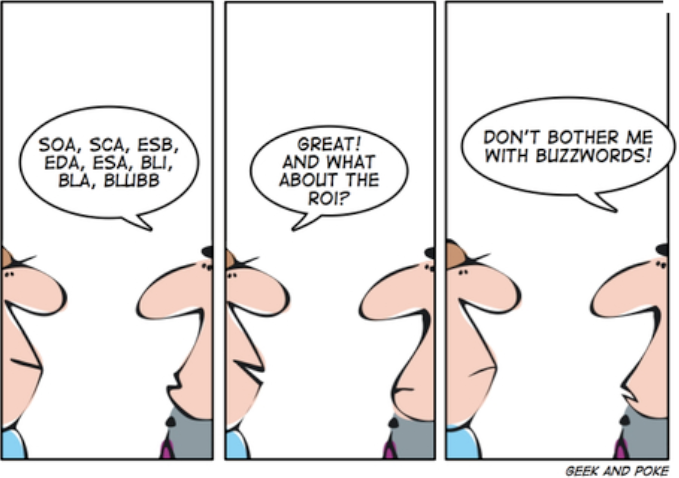
What_about_ROI

What is the value contribution on IT within the business?

Are the IT staff financially intelligent & commercially aware?

Renier spoke at Meet-Up about how you can design your IT function, using Service Orientated Architecture (SOA) to design a Service Orientated Organisation (SOO), to directly  contribute to the business success.

Slide Presentation pdf: Structure Technology for Success

Slide Share via LinkedIn: Structure technology for success

Also Read:

Managing Outsourced Relationships – an in-source approach

IT outsourcing is big business and a provide real business value, financial savings and resource flexibility.

But is cheaper really better?

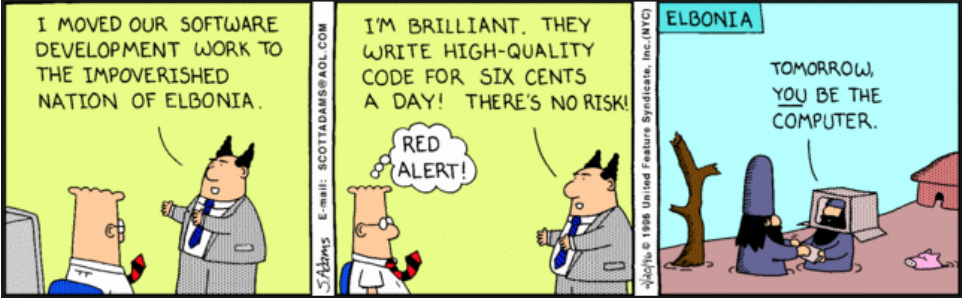
Dilbert Outsourcing

You cannot outsource a mess! Get your own house in order first before engage in a outsourcing partnership and managing IT vendors.

You should not outsource your core business proposition! Determine what your business is about and excel in the delivery of that – everything that is not core can be candidates for outsourcing.

Renier Botha spoke at the CIO Dialogue in Brighton about the value and risk associated with IT outsourcing. He introduced an insource Service Orientated (SOA) approach to outsourcing to mitigate the risks and ensure the appropriate governance delivering the right quality and customer service are achieved.

Slide Presentation pdf: Managing Outsourced Relationships

Slide Share via LinkedIn: Managing Outsourced Relationships

Renier’s Biog for the Conference:

CIO-Dialogue8 Biog


Allegiant Air Loyalty – Case Study

Consulting to Cloud Troopers as the Interim Head of Loyalty Products & Programmes – Renier directed the design, software development and implementation of the points based Allegiant Airlines Loyalty and Rewards Programme to fully leverage the Allegiant services and brand strength to provide new revenue streams and increase the effectiveness of others. The Allegiant Rewards programme is based on a co-branded credit card provided by an American Bank.


Guest Blog by Brian Sumers – 1 Sep 2016

Allegiant Air knows less about its most loyal customers than it would like. Its new co-branded credit card could help change that. But will anyone apply for it?

Despite being among the world’s most consistently profitable airlines, Allegiant Air knows relatively little about its customers, though it has learned, through surveys and from Mastercard that they have an average household income slightly above $100,000 and prefer to eat at Olive Garden and shop at TJ Maxx.

The problem is that Allegiant’s customers fly the airline infrequently, with about 80 percent booking one or two tickets per year. And since Allegiant has not had a frequent flyer program, it has fewer opportunities than other airlines to learn about its customers.

But Allegiant, which has reported 53 consecutive profitable quarters, believes it has finally solved its problem. Almost two decades after its first flight, the airline on Thursday launched a co-branded credit card — a Bank of America Mastercard — the first for Allegiant, a niche carrier that prefers routes other airlines avoid, such as St. Cloud, Minnesota to Phoenix, Minot, North Dakota to Las Vegas and Belleville, Illinois to Jacksonville. Allegiant will enter a market saturated with travel-themed cards from nearly every airline and hotel company, but it is hopeful the new card will give it more insights into its passengers.

“I am surprised it has taken them this long,” said Jay Sorensen, president of IdeaWorks Company and an authority on airline ancillary revenue schemes. “But what is unique about Allegiant is their base of business is probably very distinct from the traditional airlines. It is an interesting position.”

Credit card deals can be lucrative, and when American re-upped deals with Barclays and Citi in July, it said they could produce $1.5 billion in pre-tax revenue over two and a half years. Allegiant is tiny compared to American — the discounter had 85 aircraft at the end of June — but its deal should be lucrative, too.

“We think it is going to be valuable piece of business,” said Brian Davis, Allegiant’s vice president for marketing and sales, declining to give exact numbers. “We see our peers and the revenue generated from programs like this.”

The card comes as Allegiant, long an iconoclast in the U.S. airline industry, starts to look more like its competitors, all of whom have long had co-branded credit cards and loyalty programs. Allegiant, which had bought only used planes, recently placed its first order for new aircraft from Airbus. And, despite mostly flying between small and medium sized markets for most of its history, Allegiant is expanding at larger ones, including Newark, New Jersey. It is even starting to compete with larger airlines on some routes after having long avoided direct competition.

Still, with its co-branded credit card, Allegiant is trying something different. Unlike every other U.S. airline, Allegiant will not award points for travel. Instead, only card-holders, who will pay a $59 annual fee, will earn them. They’ll receive three points for each dollar they spend on Allegiant, two for spending on dining, and one for all other purchases. They can use points for discounts on travel, and the 15,000 points that come as a sign-up bonus can be redeemed for $150 off the price of any ticket. As sweeteners, cardholders receive a free drink when flying Allegiant, as well as discounts on hotel packages. (Allegiant hopes this will help it sell more packages.)

There’s no chance for travelers to redeem for business class airfare to Asia, but Davis said Allegiant’s customers have little interest in complicated redemption schemes.

“Those are built around travelers who travel a ton, and it is worth their time to learn about the rules,” he said. “If you only travel once a year, you’re not going to tolerate a lot of rules and conditions.”

Monitoring customer habits

When card members start spending, Allegiant will have access to more data about its core customers. Bank of America will not share information about individuals, but it will give the airline macro-level insights it does not have today.

“To the extent that people use it as their primary card, you have opened up the window to a lot more data,” Sorensen said. “That data can include, ‘Are they buying products from your competitors? And where are they using the card?”

This is a big deal for Davis. If a customer books a ticket using any credit card on Allegiant, he can learn some details about where else those customers shop, but a branded credit card will give Allegiant access to more aggregate data about what key customers want.

“If through this card, we learn our customers have a really strong affinity for a particular chain of restaurant, then I hope in the next year or two I would hope we would reach out to that restaurant chain about a [tie-in,]” Davis said.

Sorensen said an airline can use data to tailor offers to customers. Allegiant makes considerable revenue on vacation packages, but presumably many of its customers buy hotels independently on Orbitz or another site. If Allegiant can learn more about where its card-holders are staying, it will know more about which hotels to show in prominent positions on its website.

Allegiant also expects to use the card to maintain a year-round relationship with its most loyal customers. Today, it emails customers with deals, but it wants to have other reasons to contact them.

“For the first time, many customers will have a reason to stay connected with us for the other 51 weeks of the year,” Davis said. The goal is to “expand the company’s relationship” with customers, he said.

A challenge to attract card members

Many airlines first start a frequent flyer program and then add a credit card. They create the programs in this order because a carrier with millions of customers in a database has a natural market for its cards.

“It will be a handicap,” Sorensen said. “A general rule of thumb is that once you have a million or more people in a frequent flyer program, then you can start talking to a bank.”

But Allegiant expects to have something other airlines do not — motivated flight attendants. On every flight, they will make announcements and give out paper applications. They will ask passengers to fill them out and will collect them before landing. The on-plane collection is important, Davis said, because the airline fears customers will forget to mail them in.

With the card, Allegiant expects to the same people who buy the bulk of the airline’s tickers — the female head-of-householders. The airline says its core customer is Christie, 48, a married former school teacher with two kids living in Sioux Falls, South Dakota. Her husband is co-owner of the local insurance company. “Christie has always been in charge of booking vacations for the family and hates wasting time and money,” Allegiant says in internal documents.

Ultimately, though, the card’s success may on how aggressively flight attendants sell it. Other airlines also ask flight attendants to promote cards with limited success, but Allegiant is optimistic its employees, who already earn commissions for other on-plane sales, will be motivated. The flight attendant responsible for each credit card approval will receive a $30 commission.

“At legacy airlines, there is almost always pushback,” Sorensen said. “Flight attendants say, ‘We’re not sales people.’ Hopefully, Allegiant is an airline where the flight attendants understand they are sales people.”

Original Article from Skift click here

GHA Discovery – Loyalty Programme

GHA ICLP GMS Case Study

“GHA Discovery is an innovative program created to recognise and reward guests who embrace our dynamic collection of hotel brands across the globe. We require communications that reflect our unique position, cater to member preferences, and deliver an engaging experience. ICLP has been a great support in launching and running a communication platform across both email and print mediums, proving to be a dedicated partner to our company. ”, KRISTI GOLE, LOYALTY MARKETING MANAGER, GLOBAL HOTEL ALLIANCE

iRedeem Product Development – Case Study

iRedeem Product Overview

iRedeem is an online redemption programme enabling members of a loyalty or membership programme to spend their loyalty currency on a range of exciting travel, lifestyle and leisure rewards.

Built on leading e-commerce technology and with a network of global partners iRedeem currently serves blue chip companies across the globe, offering them a personalised customer experience. You can incorporate your own inventory to provide greater redemption choice and reduce distressed inventory.

Also read the case study… iRedeem – A Global Airline Case Study

Global tech Provider: Loyalty in Technology – Case Study

Global Technology Provider – Case Study

As a world-leading silicon component manufacturer, our client is entirely dependent on 3rd  party multi-national Original Equipment Manufacturers (OEMs), systems integrators and channel resellers to manufacture, market and sell finished products to end customers. Their Channel Partner Programme creates a relationship between the Company and its independent global channel partner community…

Harrods Rewards

“Launching Harrods Rewards is an integral part of our CRM strategy. It gives us the opportunity to understand our customers and their spending behaviour. We are pleased with our performance and the ongoing support from the ICLP team has been outstanding. It is a hugely exciting time for us.”; JOSE MAJLUF, CRM CONTROLLER, HARRODS

Read the full case study here… Harrods ICLP GMS Case Study

Tracka in the NHS

Tracka – NHS DrFoster Case Study

Challenge: It was recognised that NHS Stoke on Trent Community Health Services needed to ensure that the organisation has timely, auditable, and accurate information about patient experience. In order to get an understanding of patient satisfaction, a more systematic and reliable approach was required.

Solution: NHS Stoke on Trent Community Health Services started using PET in 2008 with ten devices to monitor how patients perceived the range of health services provided.

Outcome: Within the first two months of using PET, it became apparent that tangible improvements were required where hygiene and hospital meals were concerned. PET is providing the organisation with a tool to benchmark core patient experience along with key organisational objectives as set out in its strategic direction. As a result, a further 20 PET units have since been installed across all services.



Also read this case study… Erewash Case-Study

Tracka in M&S

Marks & Spencer – CFS Tracka Case Study

Marks & Spencer wanted to prove internally that the information gathered by the CFS system was accurate and representative. To do this they checked the system results against known factors. The system accurately reflected known situations.

Thus the system provided M&S with two things:

1. An accurate measure on which to base performance evaluation for service delivery

2. A system that would illustrate new and unexpected areas for focus and improvement.

Microsoft & CFS

The South African company, Customer Feedback Systems, has witnessed rapid growth since it introduced a real-time service that measures customer service levels. This led to plans for overseas expansion through an international distribution network. But the company was keen to replace its existing reporting software, which was too complex and expensive to support worldwide operations.

By implementing Microsoft® SQL ServerTM 2000 Reporting Services, Customer Feedback Systems dramatically reduced costs, significantly cut the time spent on generating ad hoc reports, and provided a cost-effective and flexible environment that guaranteesthe success of its international strategy.

Read the full case study… MS CaseStudy CFS 2

Tracka in Specsavers

CFS Specsavers – Case Study

Specsavers were keen to upgrade the manual system the company had in place for collecting customer feedback data to help improve the levels of customer service. The optical group wanted to access professional service offered to its customers and provide store directors with an intuitive solution that would deliver rapid results which could be fed directly into the daily running of their businesses.

Innovation Rewarded

Engineering News – Innovation Reward

Innovation is crucial to industry and economic growth. That is why the South-African Department of Trade and Industry (DTI) has introduced the SPII (Support Programme for Industrial Innovation) initiative to support companies in the develop of new products.

The winners of the 7th SPII Awards was announced in Kimberley in Sep’04…

Customer Feedback Systems won the small enterprise category with its innovative CFS Version 2 Service Tracka project.

The CFS Version 2 “Service Tracka” product is an electronic tool designed to obtain useful and reliable service information with little inconvenience to the customer providing the information. Feedback Systems GM Renier Botha says direct-customer, real-time market intelligence and operational information is an indispensable tool for any business, particularly those involving a large number of individual customers. “Traditional methods include direct or telephone interviews and the completion of forms by customers – all methods that are expensive and time-consuming,” he notes.

With the CFS Version 2 Service Tracka, electronic input devices are located at tills or at strategic positions within a queuing system. The customer enters his responses to questions, without assistance, into the input device. The data is then hosted and managed by CFS and, upon input, is immediately written to a database and results delivered electronically to the client as often as daily. “This enables the client to focus on driving service improvement,” Botha explains.

The CFS system has a number of enhanced features, including a card reader for linking to loyalty programmes, the location of ‘intelligence’ in the central controller, which reduces input device costs, and the activation of the input devices from the central controller, which allows for the reduction of fictitious entries. The provision of question template updates by means of programmable chips in the lid also allows updates to be made before and after deployment of the input devices making question changes easy. Local customers include banks, hotel groups, healthcare, retailers and the South African Revenue Service.

Feedback Systems started developing the CFS Version 2 Service Tracka system at the end of 2001.

The product was subsequently released on the market at the end of January the next year. Today, the company has sold some 4 500 of these systems across South Africa.

Feedback Systems also has distributors located in Zimbabwe (servicing African countries, such as Tanzania, Kenya and Namibia), Australia, Singapore (servicing South East Asia), Dubai (servicing the Middle East) and London (servicing Europe). “We have a total of about 2 000 Service Tracka systems operating in these countries,” Botha says.

The company is also currently negotiating a distributorship deal for the US.

Read the full articel here… Engineering News – Innovation Reward

Reporting Services Pioneer

Microsoft Tech-Net Mag 10.2004

Renier Botha, Director and GM (General Manager) at CFS (Customer Feedback Systems – now Customer First Solutions), talks to Microsoft TechNet magazine about the pioneering work done using Microsoft SQL 2000 Reporting Services, making CFS the first company to go into production with their “Service Tracka” product using the new Reporting platform from Microsoft.

The first version of the “Service Tracka Reporting Suite”, developed on the Beta version of Microsoft’s Reporting Platform utilising SQL Reporting Services, DTS (Data Transformation Services), OLAP (Analysis Services) and SQL2000 Database, enabled CFS to crunch through a large amounts of data collated from accross the world and deliver thousands of daily scheduled reports to clients helping them to measure customer satisfaction as part of the NPS (Net Promoter Score) KPI (Key Performance Indicator).

Read the full article here… Microsoft Tech-Net Mag 10.2004